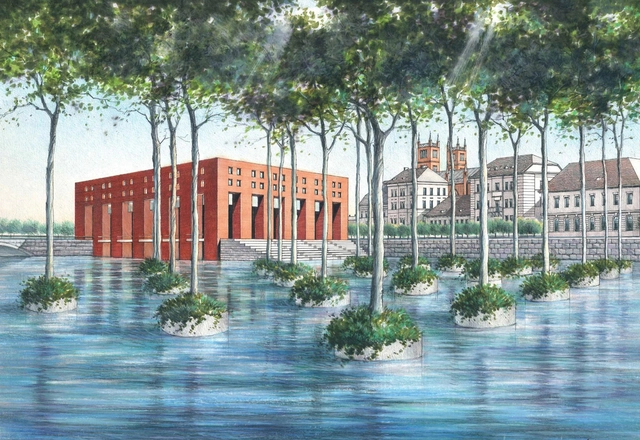
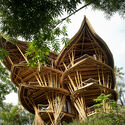
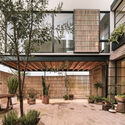
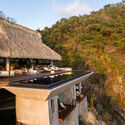
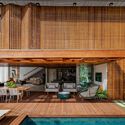
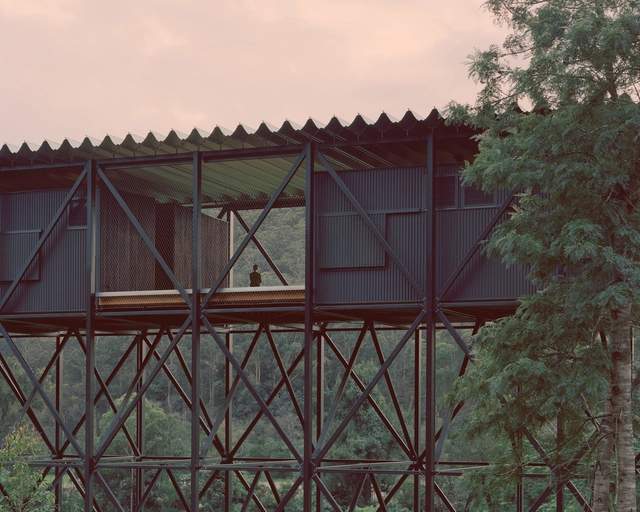
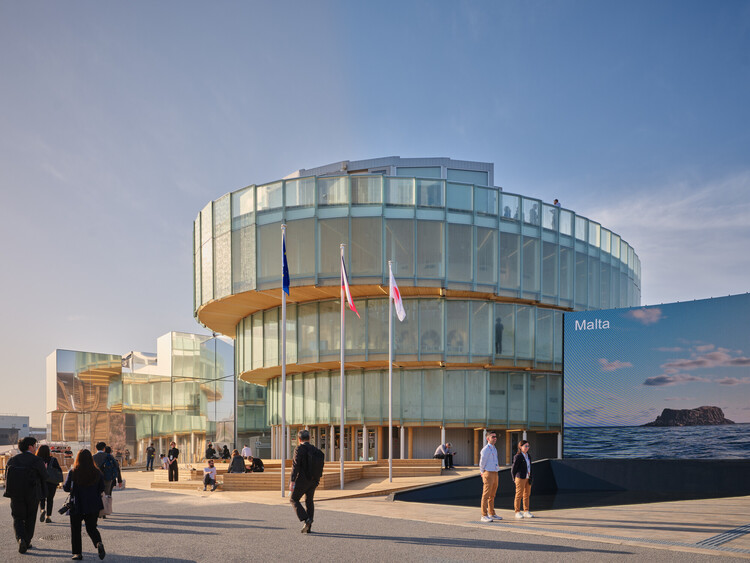
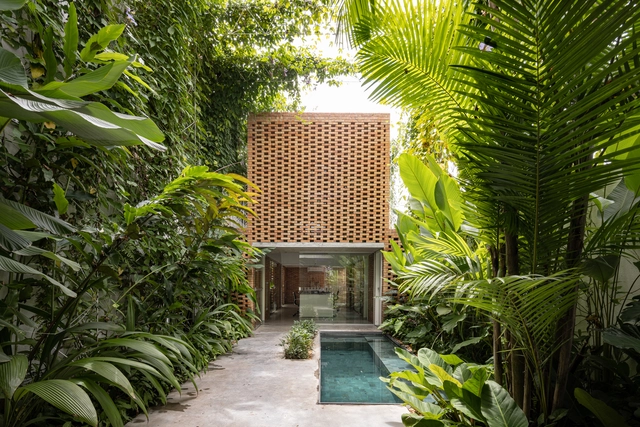
Perspectiva exterior por Nicolás Belcic. Image Cortesía de Bruno Stagno
From Costa Rica, architect Bruno Stagno not only reflects on how responses to the environment can be the main basis for inspiration and identity in architecture but also proposes going a little further, with contemporary tropical architecture for an entire latitude.
What happens when these limits are extended? What happens when these motivations escape outside of the tropical context? Bruno Stagno presents here the project "A Mangrove for Berlin", his participation in the 1995 competition for the Reconstruction of the Berlin Academy of Architecture, "Berliner Bauakademie", an emblematic work of the architect Friedrich Schinkel.
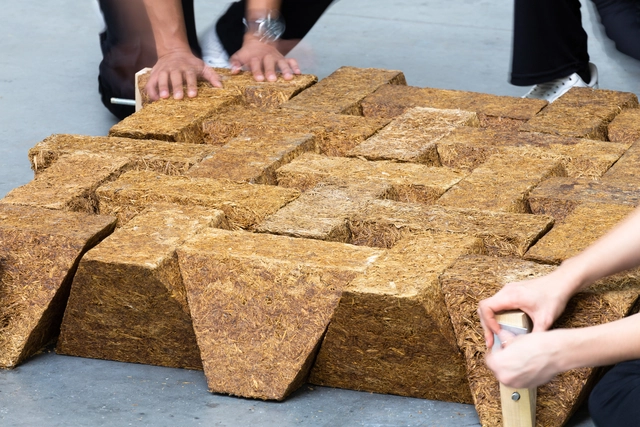
Finding effective and valuable solutions for agricultural waste management has been an inspiring challenge for researchers. By-products from monocultures, such as residues from soybean production, corn cobs, straw, sunflower seeds, and cellulose, are often destined for soil composting, used as animal feed, or even converted into energy in order to reduce waste and mitigate the environmental impacts associated with agricultural activities. Sugarcane production, for example, generates a significant amount of by-products, totaling about 600 million tons of bagasse fiber waste from an annual production of two billion tons of sugarcane. This by-product has a promising potential to replace energy-intensive building systems, such as concrete and brick, by providing building materials that combine sustainability and structural efficiency.
With this perspective in mind, the University of East London (UEL), in partnership with Grimshaw Architects and manufacturer Tate & Lyle Sugar, has developed an innovative building material called Sugarcrete™. The aim of the project is to explore sustainable building solutions by recycling biological by-products from sugarcane, which in turn reduces carbon emissions in the construction industry – all while prioritizing social and environmental sustainability during the production and implementation of these building materials.
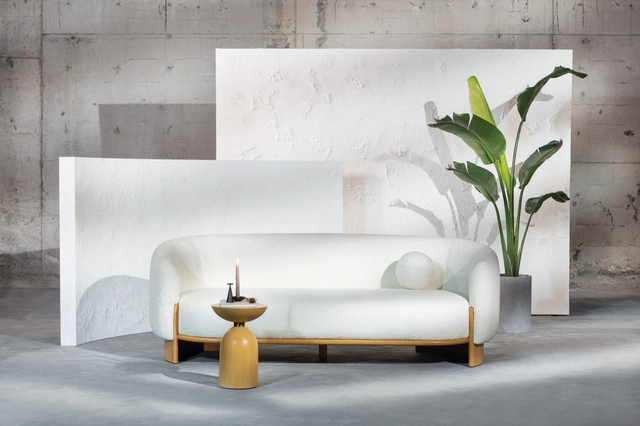
Parla Design is a third-generation furniture manufacturer that uses its extensive experience to inform its range of contemporary products. Image Courtesy of Parla
In today’s challenging climate for business, companies with a long and distinguished heritage have an advantage over younger enterprises as they can draw on decades of experience in overcoming market fluctuations. In the design industry, knowledge passed down over generations can be vital, as companies are required to adapt to shifts in consumer behavior or the latest revolutionary technologies. These established businesses are often able to thrive during difficult times by developing products that balance innovation with tradition and transcend trends to instead deliver lasting success.
We can define green technology as a set of instruments that enable sustainable production. This means managing product lifecycles more responsibly, always striving for minimal environmental impact.
The production stages span from raw material extraction, manufacturing, and distribution, to end-use and disposal. Consequently, the entire lifecycle can benefit from the application of green technologies, which help reduce environmental impact by using natural resources in a sustainable and conscious manner.
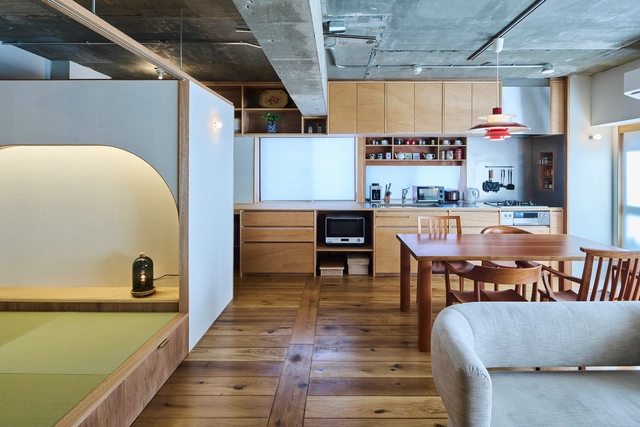
room206 Apartment / Daiki Awaya. Image Courtesy of Daiki Awaya
Kitchens encapsulate the essence of culture, acting as dynamic museums that preserve age-old recipes, processes, and traditions. Influenced by ethnic practices and culinary customs, kitchen architecture varies greatly across continents. In this context, kitchens transcend their domestic role and become insightful manifestations of cultural, societal, and regional factors. They not only serve as functional spaces for cooking and meal preparation but also stand as reflections of the rich tapestry of culture and lifestyles embraced by the individuals who inhabit them.
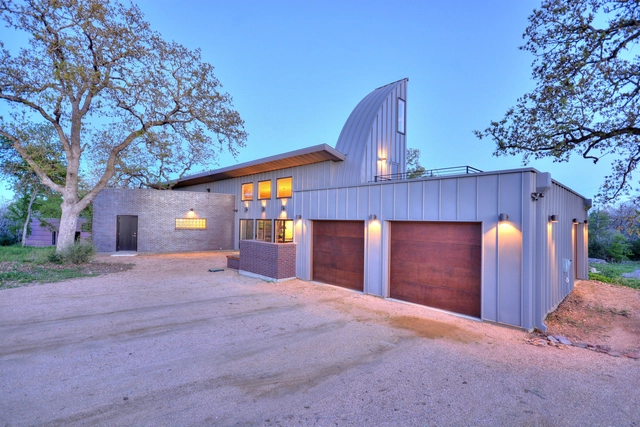
When François Lévy was asked to design a country home on a substantial piece of land, he immediately faced an issue: locating the building in a spot which required as little re-grading as possible while being able to reap the benefits of solar energy. The most desirable location —given site access and a range of mature oaks— would have left the building sitting slightly out of grade. And, if he had chosen the most obvious building orientation (long and narrow with broad elevations facing north and south), part of it would jut out of the ground and some crucial trees would be lost.
The Royal Commission for AlUla has appointed Lina Ghotmeh and Asif Khan as the lead architects for two upcoming museums to be added to the cultural oasis of AlUla, a destination in North-West Saudi Arabia displaying 7,000 years of continuous human history. Ghotmeh is set to design the contemporary art museum to house works by artists from the Red Sea, the Arabian Sea, and the Eastern Mediterranean in dialogue with their contemporaries from across the world. Asif Khan will design the Museum of the Incense Road, the first museum dedicated to the millennia-old network of major land and trading routes. The architects have been selected following an international competition.
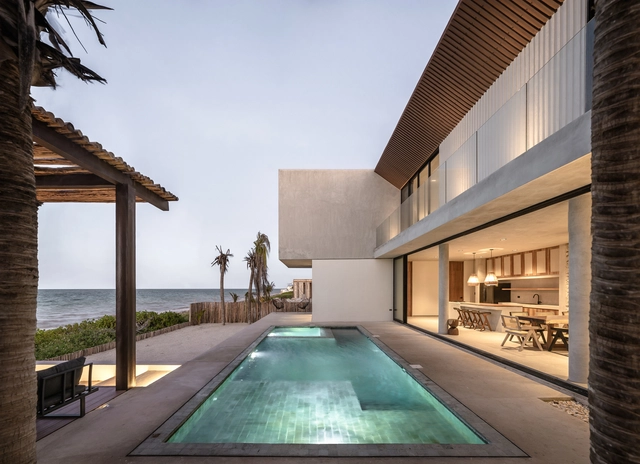
Pool design is an opportunity to create sophisticated, relaxing spaces that complement and enhance their surroundings. When choosing materials, it is essential to look for options that are not only aesthetically appealing but also durable and wear-resistant. One material that meets all these criteria is Sukabumi stone.
This natural stone is quarried in the region from which it takes its name, Sukabumi, Indonesia. In addition to its visual appeal and emerald green color, Sukabumi stone has slip-resistant properties and is highly resistant to erosion. These qualities make it a popular choice for pool projects and decorative accents with a natural aesthetic worldwide.
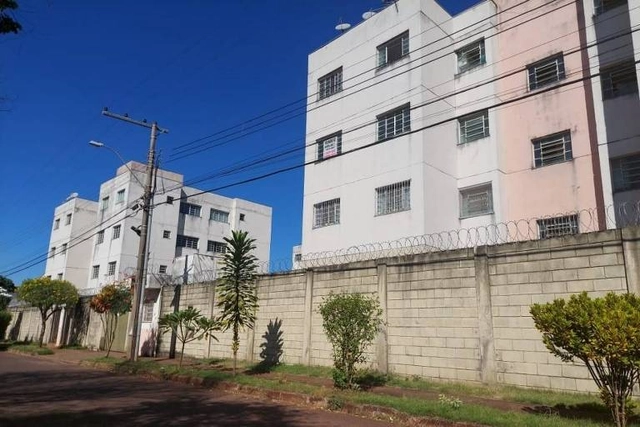
The pilot study was conducted at Residencial Baltimore in Uberlândia, Minas Gerais. Photo: Flávia Almeida
According to recent data, Brazil's housing deficit stands at 5.876 million households: 5.044 million in urban areas and 832,000 in rural areas. In percentage terms, this figure corresponds to 8.1% of the country's total stock of private, permanent, and improvised dwellings. Aiming to address, either fully or partially, this massive social debt, the Minha Casa Minha Vida (MCMV) program, launched in 2009, began offering affordable housing to low-income families.
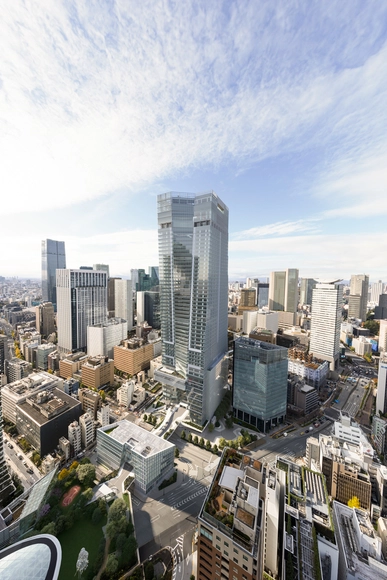
Toranomon Hills Station Tower. Image Courtesy of OMA and The Boundary
OMA’S inaugural tower in Tokyo and Japan, designed by Shohei Shigematsu and OMA New York, the Toranomon Hills Station Tower, will open this fall, 2023. The inauguration of the Toranomon Hills Station Tower will mark a significant milestone in Mori Building's Toranomon Hills development, an emerging global business center, and urban hub. A multi-layered transportation node integrated into the tower will establish a new gateway linking Central Tokyo with the rest of the world.
Vernacular architecture is a complex concept that has different meanings depending on where we are, and it is present in various architectural typologies. It is connected to its roots and place of origin, elements that define many of its characteristics based on specific aspects such as culture, climate, topography, vegetation, and the availability of materials and resources in each region. Its constructions are also often linked to traditional building techniques from each place. These techniques were developed by populations in a broader historical context based on available resources.
In this second feature, to learn more about the science panel on design for Climate Adaptation we met with Billie Faircloth, Partner and Research Director at KieranTimberlake, Adjunct Professor at the University of Pennsylvania, and Maibritt Pedersen Zari, Associate Professor at the School of Future Environments, Auckland University of Technology.
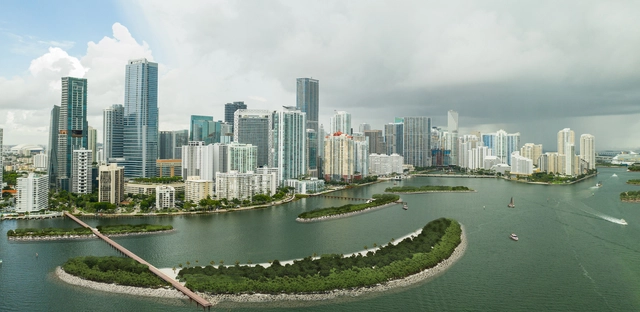
Response to the U.S. Army Corps of Engineers’ Back Bay Coastal Storm Risk Management Study / Curtis + Rogers Design Studio. Image Courtesy of Miami Downtown Development Authority
This Earth Day, U.S. Vice President Kamala Harris highlighted the many benefits of nature-based solutions and recognized the important role of landscape architects in this work. At the University of Miami, she also announced $562 million in funding for coastal resilience projects, supporting 149 projects in 30 states, through the Climate-Ready Coasts Initiative of the National Oceanic and Atmospheric Administration (NOAA). Vice President Harris’ remarks build on the Biden-Harris administration’s support for planning and designing with ecological systems in an equitable way.
Avenida Paulista. Circa 1920. Photo: Guilherme Gaensly (Acervo Instituto Moreira Salles)
A major urban axis where thousands of people, subways, buses, cars, and bicycles pass daily. High-rise buildings, cultural centers, banks, and shopping malls. As the symbol of São Paulo, Avenida Paulista once looked very different. As difficult as it may be to imagine today, it was once lined with grand mansions of the most diverse architectural styles, and its destiny was altered in a matter of days by heritage preservation disputes and... a pizza.
The Pritzker Architecture Prize presents The Role of Practice, the 2023 Laureate Lecture and Panel Discussion, today, Tuesday, May 23rd at 3:40 PM EEST, in partnership with the National Technical University of Athens, and with the participation of the Aristotle University of Thessaloniki, University of Patras and the Technical University of Crete.
The Pritzker Architecture Prize 2023 Laureate David Chipperfield will deliver the lecture, reflecting on architectural practice's role, responsibilities, and opportunities. Moreover, the 2023 winner will explore "how market forces have dominated architecture and become increasingly detached from its place, just as the challenges of the climate crisis, loss of biodiversity, and social inequality have heightened the urgency for a more proactive position". Alejandro Aravena, Jury Chair, and 2016 Laureate will introduce the lecture, which will be followed by a conversation between David Chipperfield, Francis Kéré, 2022 Laureate, and Anne Lacaton and Jean-Philippe Vassal, 2021 Laureates, as they each "reveal the successes and failures of their respective journeys which effected their architectural philosophies and works, and led them to the shared stage of the present".
Ayrson Heráclito, "O Sacudimento da Casa da Torre e o Sacudimento da Maison des Esclaves em Gorée", 2015, video installation. courtesy of the artist
Questioning the canonical history of architecture and shedding light on long-invisible spatial practices, Gabriela de Matos and Paulo Tavares propose the exhibition “Terra” [Earth], at the Brazilian pavilion at the Venice Architecture Biennale 2023. "It's our way of shaking things up," say the curators, who turn their attention to ancestral ways of dealing with the land, aiming for more fair and complete possibilities for the present and future.
Addressing "earth" in all its meanings, the curators overlay issues related to soil and territory with the planetary problems. They propose an approach to reparations and decoloniality - emerging in Brazil - with broad topics such as decarbonization and the environment, decisive in the contemporary global debate. The Brazilian Pavilion titled Terra [Earth], won the Golden Lion for Best National Participation at the 2023 Venice Architecture Biennale, on Saturday 20th of May, selected by a jury comprising Italian architect and curator Ippolito Pestellini Laparelli as president, Nora Akawi, Thelma Golden, Tau Tavengwa, and Izabela Wieczorek.
https://www.archdaily.com/1001311/earth-as-ancestral-and-future-technology-an-interview-with-gabriela-de-matos-and-paulo-tavares-curators-of-the-brazil-pavilion-and-winners-of-the-golden-lion-at-the-2023-venice-biennaleRomullo Baratto e Victor Delaqua
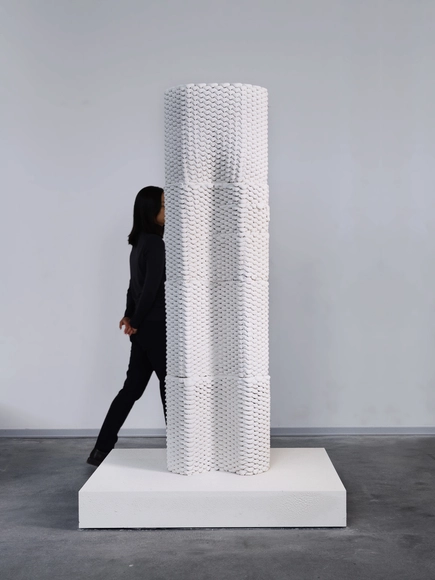
Harnessing the power of moldless manufacturing through large-scale robotic 3D printing, research at ETH Zürich in collaboration with FenX AG delves into the use of cement-free mineral foam made from recycled waste. The objective is to build wall systems that are monolithic, lightweight, and immediately insulated, minimizing material use, labor requirements, and associated costs.
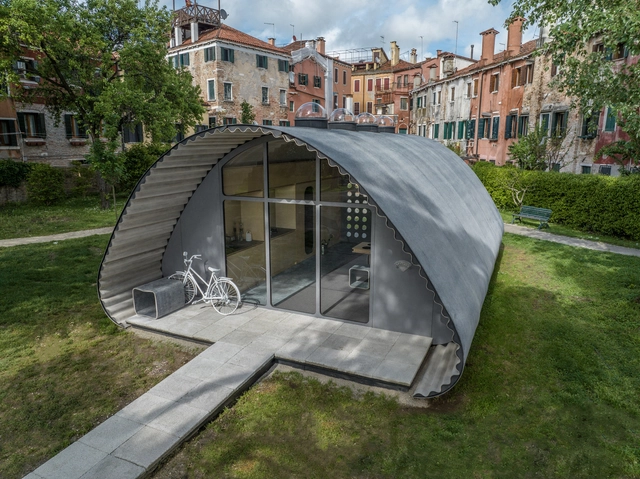
Currently at 103 million, the number of people forcibly displaced from their homes is continuously growing. Many seek shelter in settlements that are meant to be temporary, but where displaced people end up living years, even decades.
The Norman Foster Foundation and Holcim, global leader in sustainable building solutions, came together to form a response to this problem based on two firm beliefs: everyone has the right to a home, and everyone should have access to sustainable building.
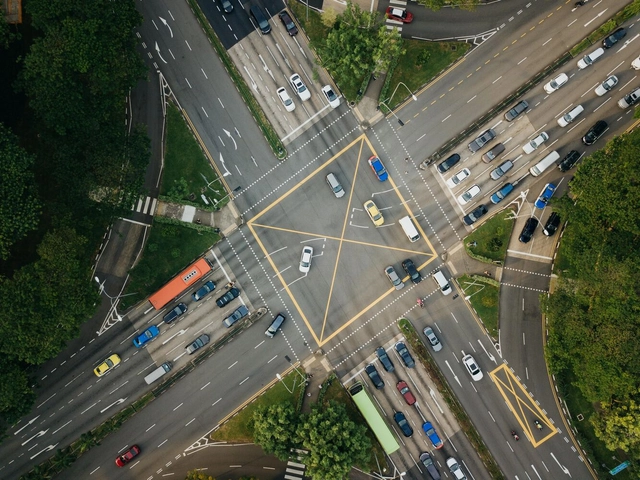
Cities worldwide can save thousands of lives every year through fairly simple measures: traffic calming and speed management. Readjusting vehicle speed limits on urban roads is one of the key initiatives highlighted by the UN and the WHO to help countries meet the target of halving traffic deaths and serious injuries by 2030.
https://www.archdaily.com/1136225/5-myths-about-reducing-urban-traffic-speedPaula Manoela dos Santos, Andressa Ribeiro e Adriana Jakovcevic
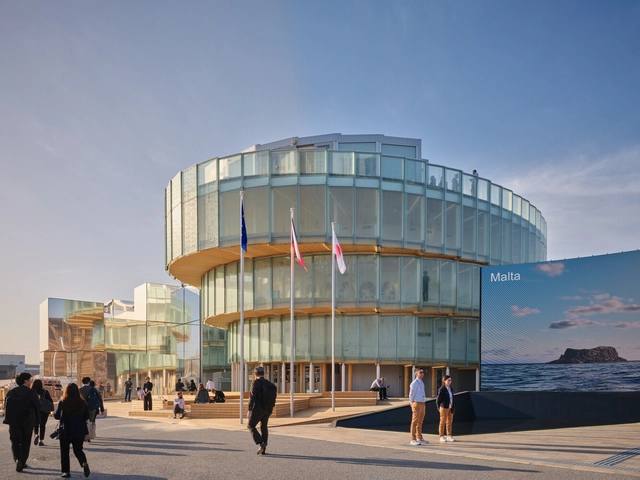
TheCzech Republic Pavilion at EXPO 2025Osaka embodies the concept of life energy and continuous growth through its thoughtful architectural design. Created by Apropos Architects, the pavilion is centered around the motif of a spiral. Visitors experience a 260-meter-long pathway that wraps around the building, ascending gradually across four floors before culminating on the observation roof. This dynamic journey reflects the passage of time, individual development, and broader themes of personal and social progress.
Architecture involves mobilizing several aspects of the environment where the building is located: the socio-cultural, political and economic context, aesthetics, legislation, and functionality. Functionality includes use efficiency, occupancy, and comfort. Laurent Troost's work has shown the articulation between these various factors, with particular attention to comfort, especially thermal comfort. His projects prioritize natural ventilation over artificial air conditioning, which has become almost mandatory in current city models.
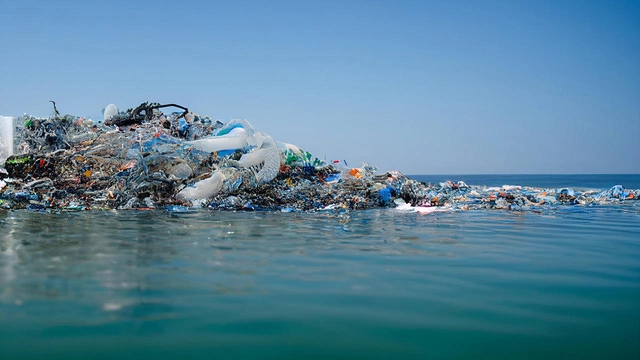
Environmental issues urgency and increasing temperatures on the planet are nothing new. There are many factors contributing to environmental degradation. However, two can be viewed as representative of critical points in the current world system: plastic and waste disposal, better known as garbage.
The environmental crisis cannot be attributed solely to these two examples. They are used here as examples to mobilize issues involving multiple agents, materials, and diverse methods. These issues lead to devastating consequences, increasingly irreversible.
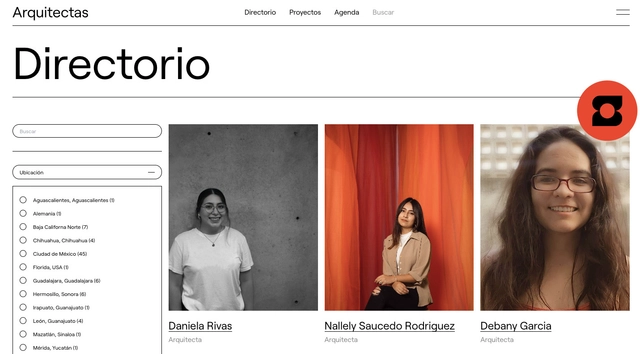
Nearly three years ago, the platform arquitectas.mx was launched as an initiative by Mexican architects Mónica Suberville and Laura A. Gómez. Born from the desire to find ways to support, mobilize, and bring visibility to women in architecture, the platform offers a gathering space for professionals across different practices within the field, aiming to steer the profession toward inclusion, equity, and the improvement of cities through a gender perspective.