City of the Future is a bi-weekly podcast from Sidewalk Labs that explores ideas and innovations that will transform cities.
In this episode, the first from season 2, hosts Eric Jaffe and Vanessa Quirk discuss the future of housing with Ori CEO Hasier Larrea, architect Eric Bunge, Starcity CEO Jon Dishotsky, Sidewalk Labs housing expert Annie Koo, and others.
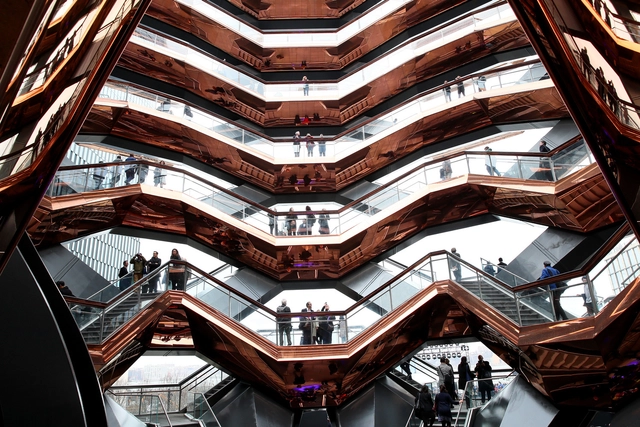
Vessel Public Landmark - Heatherwick Studio. Image Courtesy of Getty Images
Innovation can take on so many definitions. It can revolve around finding solutions, tackling with novel ideas, or just an original way of perceiving life. It can also be a very concrete technological advancement or an intangible concept. There is no right or wrong when it comes to innovation, just different points of view.
ArchDaily had the chance to discuss the topic of Innovation with Thomas Heatherwick and Yosuke Hayano from MAD Architects, during the reSITE 2019 event in Prague, where prominent thinkers from around the world shared their ideas about the future of cities under the theme of REGENERATE. The interdisciplinary conversation, in its 8th edition, explored natural and urban revitalization, as well as the recurring problems of our times like climate change and housing affordability.
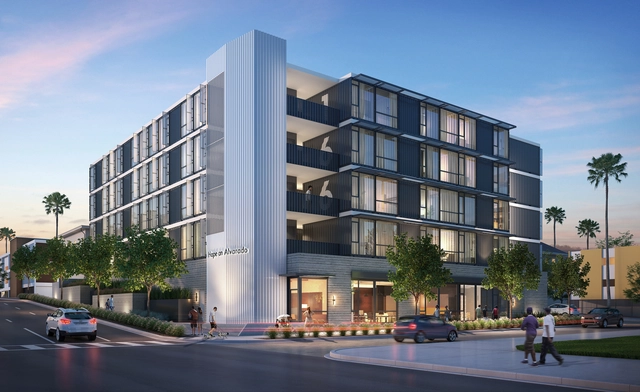
Hope on Alvarado, designed by KTGY Architecture + Planning, is the first modular housing project in the series of Hope On developments, aiming to find sheltering solutions for the chronically homeless, in Los Angeles.
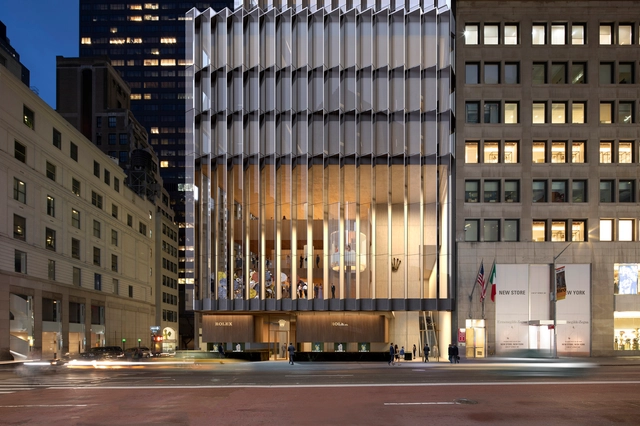
The international competition for the Rolex USA headquarters in New York selected the English firm, David Chipperfield Architects as the winning practice to design the anticipated tower. The new construction will replace the existing building, home to the Rolex company since the ’70s.
The six shortlisted concepts for the National Pulse Memorial & Museum will be on display at the Orange County Regional History Center where people can view and comment on the schemes, helping the jury choose the winning proposal, to be announced on October 30.
Twine: Series One. Image Courtesy of Antony Gibbon Designs
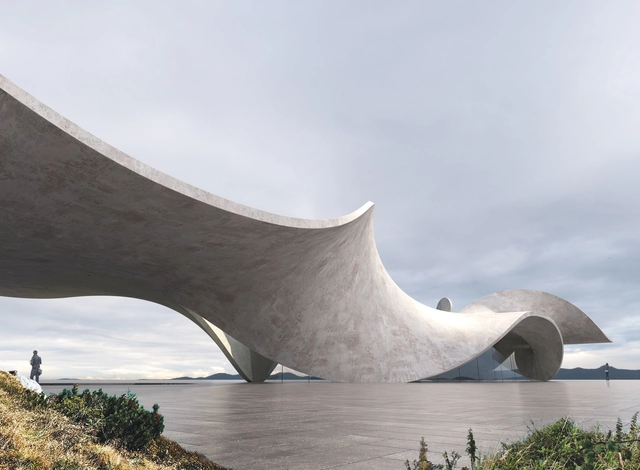
Experimenting with a very rigid material, Antony Gibbon imagines a residential project where the outer concrete shell twists and turns, in order to create livable spaces. With a very basic function, the proposal is an invitation to push technical boundaries and unleash the imagination.
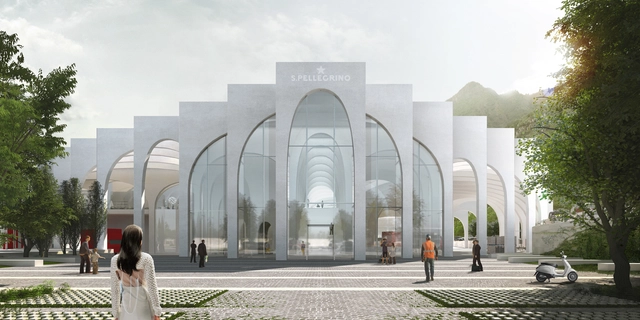
Works started on Sanpellegrino’s “Factory of the Future”, designed by BIG-Bjarke Ingels Group on the brand’s 120th year anniversary. Scheduled to open in 2022, the new production plant will showcase high levels of innovation, technological advancements, and social sustainability.
A new application takes visitors into the virtual world of the Palace of Versailles. A first in the cultural scene, the VR application offers a detailed tour of the Royal Grand Apartments, the Chapel and the Opera amongst others. With photogrammetry, a 3-dimensional universe is reconstructed from 2D images of the 24 emblematic rooms of the palace.
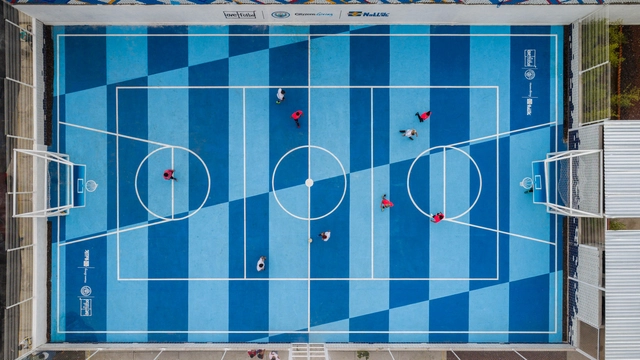
People often gather around sports activities, whether they are the ones exercising or the ones cheering. This internationally recognized social interest brings everyone together seamlessly, regardless of their background, gender, culture, ethnicity and so on.
Urban regeneration can take different aspects, and one of the most prominent and efficient solutions that can reconcile a community with itself and its surroundings is a sports function. In fact, this purpose encourages people to reclaim their fundamental right to public spaces and regenerate demoted, hostile or forgotten areas.
Read on to discover examples from all over the world, where physical activities made an urban impact on the neighborhood and the community.
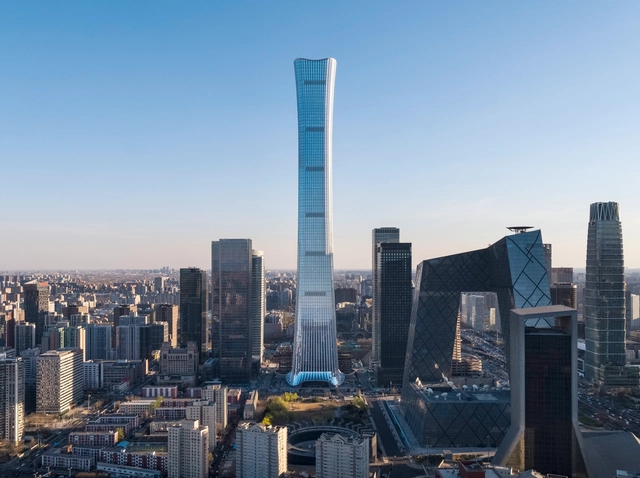
The 528 meters CITIC Tower, was inaugurated, standing tall as Beijing’s highest building to date. Designed by Kohn Pedersen Fox Associates (KPF), the supertall innovative architecture remains culturally appropriate, drawing inspiration from the “zun”, a ritual vessel originating in Bronze Age China.
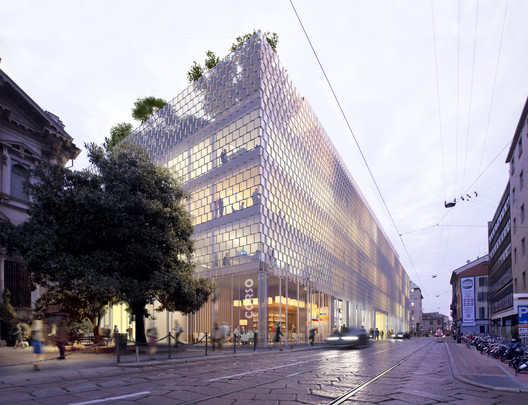
Skidmore, Owings & Merrill’s first venture in Milan is an adaptive reuse of an early 60’s building, originally designed by architects Gio Ponti, Piero Portaluppi and Antonio Fornaroli. The firm imagined a scheme that renovates the former Allianz Milanese headquarters while transforming the Corso Italia Complex into a modern office space.
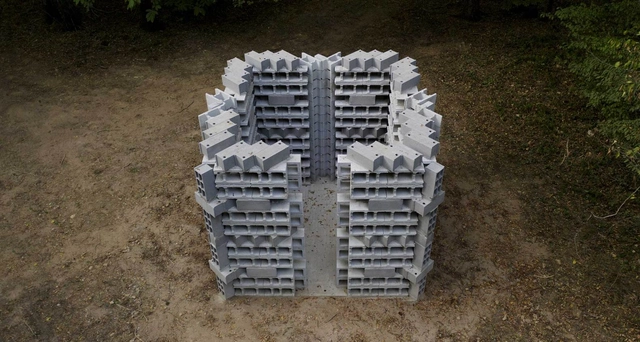
Building / Prototype II is an experimental architectural pavilion designed by architect Marc Leschelier for the Feÿ Arts Festival in Burgundy, France. Created in the middle of the forest, in the park of the Château du Feÿ, the permanent installation is the first of an acquired collection to be always displayed on site.
OMA's proposal won the competition for the new KaDeWe department store and hotel in Vienna’s Museumsquartier. Led by Ellen van Loon, Ippolito Pestellini Laparelli, and Laurence Bolhaar, the project will be OMA’s first venture in Vienna, upon its completion.
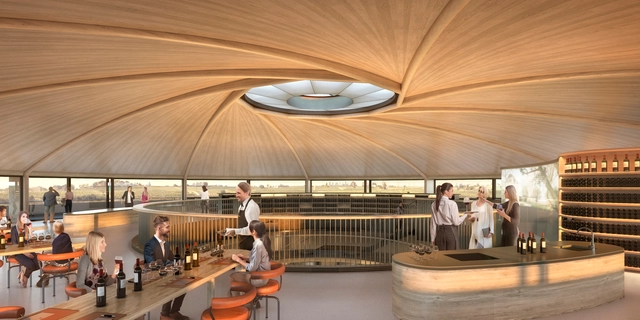
Le Dome Winery, Bordeaux, France. Image Courtesy of Foster + Partners
Foster + Partners have released images for their proposal for the new Le Dôme winery in Saint-Émilion, the firm’s second winery in the Bordeaux area, the first being Château Margaux in 2015. Located in a UNESCO World Heritage Cultural Landscape, the design blends seamlessly with the topography.
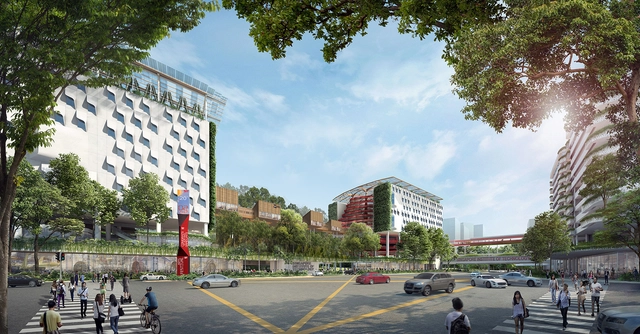
View along New Punggol Road - Singapore Institute of Technology. Image
Expected to be completed in 2023, construction works have started on the campus of the Singapore Institute of Technology designed by WOHA. The 91,000 square meter project located in an existing forest, will create a “Campus in a Park” experience, where learning spaces and green spaces will be combined.
Under the theme of “Science, Innovation, Art, and Creativity for Human Development. Creative Industries in Digital Convergence”, Buenos Aires will host the Expo 2023. Pablo Pschepiurca, Rodrigo Grassi, María Hojman, and Karla Montauti won the first prize in an international competition to create a bridge and a boulevard for the occasion.
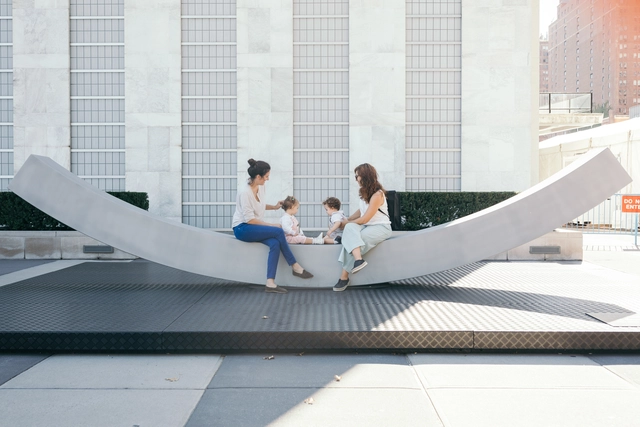
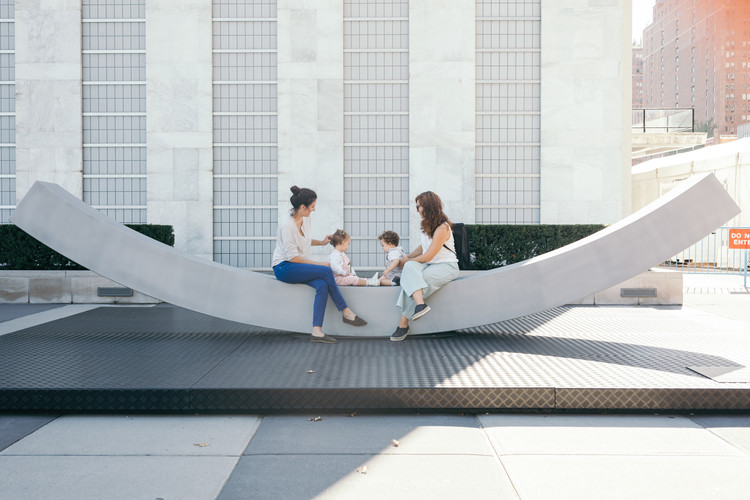
Commissioned by the Nobel Peace Center in Oslo, Norway, and designed by Snøhetta, the installation entitled The Best Weapon, was first unveiled to the public at the United Nations Headquarters’ Plaza in New York City. This urban peace bench aims to honor “the past Nobel Peace Prize laureates and their efforts to bring people together to find effective solutions for peace”.


.jpg?1570484550&format=webp&width=640&height=580)


_HG_Esch_(4).jpg?1570092438 "© Simon Menges")
_HG_Esch_(6).jpg?1570092512 "© Simon Menges")



_OMA.jpg?1570009419&format=webp&width=640&height=580)
_OMA.jpg?1570009583 "Courtesy of OMA")
_OMA.jpg?1570010089 "Courtesy of OMA")
_OMA.jpg?1570010492 "Courtesy of OMA")
_OMA.jpg?1570009989 "Courtesy of OMA")
_OMA.jpg?1570009419)
.jpg?1569833228&format=webp&width=640&height=580)
.jpg?1569833193 "Courtesy of Aisenson + ASN/nOISE")
.jpg?1569833520 "Courtesy of Aisenson + ASN/nOISE")
.jpg?1569833251 "Aisenson + ASN/nOISE. Image Courtesy of Aisenson + ASN/nOISE")
.jpg?1569833402 "Courtesy of Aisenson + ASN/nOISE")
.jpg?1569833228)