How do you start your day? Chances are that between opening your eyes, getting out of bed, heading for a cup of coffee and brushing your teeth, you're part of the majority of people who check their email within 15 minutes of the alarm clock sounding. It's a pretty intense way to begin the day, so we thought we'd share some daily email newsletters that lift our spirits, make us wiser, and give us the positive energy needed to tackle a long day's work. The best part is that you never stop learning.
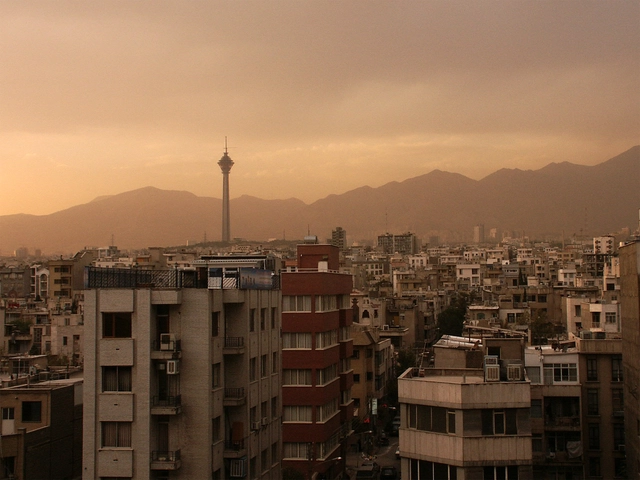
Taking a taxi from Tehran Imam Khomeini International Airport into the city, one cannot help but look at the seemingly random distribution of buildings along the road; an array of mismatched concrete blocks, worlds away from the images of Sheik Lotfollah Mosque that typically adorn the covers of Iran travel guides. “My observations about architecture in Iran are like that of many other countries that have changed in terms of architectural characteristics; Iran has changed too,” says Tehran-based architect, M. Reza Karfar. “Now we are in a time where everything is mass produced and we are just using and using, but not making memories with anything. That sense of belonging will, of course, go away. You see a 50 or 60, or 200-year-old house that just gets demolished and replaced by a 4 or 5-story building, and in 5 years they will demolish that 4 to 5-story building too.”
Not to say that Iran should be an exhibit for tourists, only consisting of beautiful tiled buildings, but this fear of memories fading in disappearing public spaces is one that, despite the numerous historical sites preserved around the country, is noticeable in Iran’s big cities. And while the subject is particularly pertinent in Iran, as Karfar points out this phenomenon is not unique to just one country. As a result, Iran might offer something of a case study for other countries around the world.
Sweden is home to the world’s longest public bench. At 240 feet (around 72 meters) in length, the Långa Soffan (“long sofa”) was installed by the citizens of Oskarshamn in 1867 to overlook its rather unspectacular harbour, which opens toward the Baltic Sea. The function of this bench was not for passing time and taking in the coastal views, however; in times gone by it was rhythmically occupied by the wives of sailors awaiting their husband’s return from sea voyages. It allowed people to gather under a sense of common melancholy and collectively recall the smiles of their distant spouses before the ocean’s broad, blue canvas.
Whether architecture is a form of art or not has often been a controversial topic of conversation within the architecture world. If one goes by the general definition of the word "art," architecture could potentially fit within the umbrella term: "the expression or application of human creative skill and imagination, typically in a visual form such as painting or sculpture, producing works to be appreciated primarily for their beauty or emotional power." As anyone involved in the architectural discipline probably knows, there is an abundance of varying definitions of the word "architecture," so whether its primary purpose is to achieve beauty or to organize space is evidently up for discussion.
Ask Jay A. Pritzker, founder of the Pritzker Prize, and he may say that "architecture is intended to transcend the simple need for shelter and security by becoming an expression of artistry." Ask The Guardian's Jonathan Jones and he may tell you that "architecture is the art we all encounter most often, most intimately, yet precisely because it is functional and necessary to life, it's hard to be clear about where the 'art' in a building begins." But this ambiguity is part of what makes the field of architecture challenging and exciting. To celebrate this complicated aspect of architecture, below we have collected a list of just some of the works that could be seen as art, architecture or both, depending on who’s looking, to provide some context to those blurry boundaries.
With 360 camera technology, the ability to transport people into a space through film has become all the more immersive. Viewers are able to turn the viewport in every direction to see the whole scene, or even to put on a headset for a more natural way of viewing a scene. Of course, this has important implications for viewing architecture, which many believe has become too image based, and therefore two-dimensional. 360 videos leave no corners conveniently hidden, as a traditional video or image would, perhaps providing a fuller picture of a place - could this perhaps open up a more human-scale understanding of space?
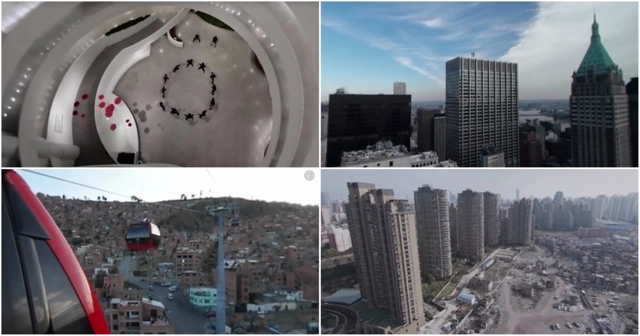
The New York Times have treated their Facebook followers to some great architectural insights through their Daily 360, getting more than their money’s worth out of their 360 camera equipment. Some of these must-see videos include a dance rehearsal taking place in the Guggenheim Museum’s rotunda, as well as an aerial view of La Paz, Bolivia. Read on to take a peek into the richness of earth’s urban spaces:
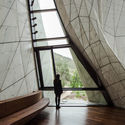
In a recent TED Talk, architect Siamak Hariri takes the audience inside his design process for the Bahá'í Temple of South America. Responding to an open call in 2003 to design the last of the faith's continental temples in Santiago, Chile, Hariri recalls a moment as a student at Yale when he learned about the transcendent power of architecture, a moment he tried to recreate in the twelve-year project.
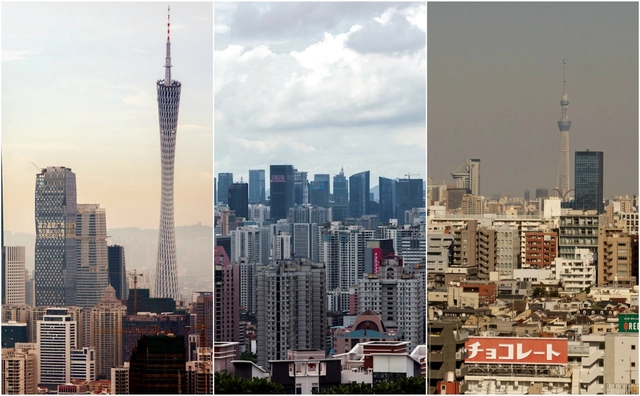
There’s a lot that the presence of skyscrapers can say about a city. They can be indicators of anything from wealth to modernization to density, or a combination of all three, depending on where you look. This potential to observe trends in a city through the height of its buildings makes data on those buildings valuable to a multitude of industries, so companies like Emporis conduct and distribute research on topics like the newest, tallest, and most expensive buildings in the world. Keep reading to find out about the ten tall cities that are home to the largest number of skyscrapers—as defined by Emporis' definition of a building that is 100 meters or more.
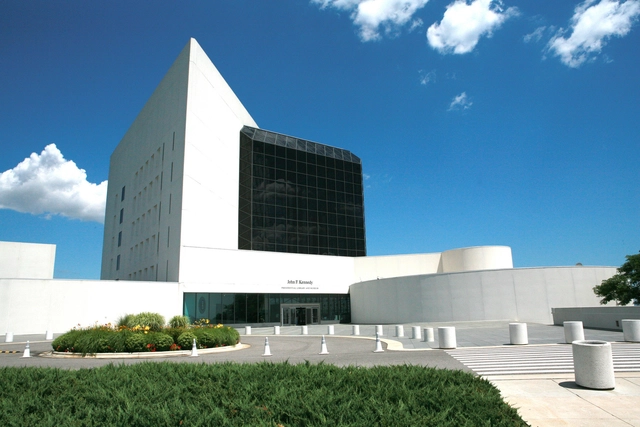
Today, April 26th 2017, marks I.M. Pei’s 100th birthday. The occasion offers a wonderful opportunity to take a retrospective look at one of the most significant and productive architects of the past 100 years, with many organizations hosting events, celebrations, and symposiums to talk about Master Pei and his notable projects. However at these events, just as throughout I.M. Pei’s career, there is unlikely to be much intellectual conversation about Pei’s architectural legacy. The main discussion around I.M. Pei is still focused on his design talent and intriguing narratives about the charisma he used to convince clients to continue through tough projects.
Though I.M. Pei himself has never talked at length about his design theory or the intellectual basis of his projects, these simple narratives leave certain questions unanswered: Where does I.M. Pei’s inspiration for architectural form come from? How did his architectural design affect his peer group of architects and artists, and contribute intellectually to the contemporary art world?
https://www.archdaily.com/870059/im-peis-inspiration-a-comparison-of-masterful-architecture-with-minimalist-artTianci Han
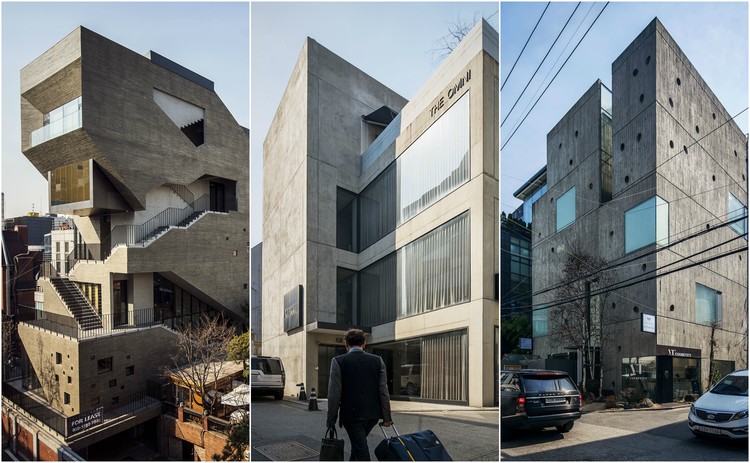
During his frequent travels to Seoul, Hong Kong- and Singapore-based photographer Raphael Olivier noticed a new trend taking the South Korean capital: a crop of geometric, concrete buildings of all genres. He calls the new style Neo-Brutalism, after the modernist movement that proliferated in the late 1950s to 1970s, in which raw concrete was meant to express a truth and honesty. Olivier's observation led him to capture the phenomenon in a personal photo series—a photographic treasure trove of these projects which, when taken as a whole, uncovers a cross-section of this trend in the city's architecture.
The average cost of a home in London has now reached over £500,000 ($640,000), a figure far beyond the reach of the large majority of individuals or families on or below the average UK income (£34,473, or just under $45,000, per year). It’s a story which has been told time and again in recent years; the “housing crisis” of affordability continues to exacerbate the lives of a generation.
For Naked House, a not-for-profit organization dedicated to “stripping affordable housing back to the bare essentials,” crisis necessitates a creative response. With support and funding from the GLA (Greater London Authority) and the incumbent Mayor of London, who has awarded a £500,000 grant to the development, they—in collaboration with OMMX—have now made an important step closer to realizing their vision.
https://www.archdaily.com/869909/uk-naked-house-proposal-ommx-aims-to-bring-affordability-to-london-housing-marketAD Editorial Team
The single most important thing that an architecture firm can do to become successful is to create good architecture. Unfortunately, there are many other considerations to business success, especially in our current world that is driven by PR and marketing. For every architecture firm’s founder, one of the first—and biggest—decisions they must make about their public profile is what to call the company.
Gone are the days when architects would simply name their firm after themselves and sell their designs to their cocktail party associates. Today, architects need to court new clients in a competitive marketplace, and to do that they need a name that stands out. To help new firm owners (and long-term dreamers) to pick out an effective name and return to the important business of architecture, here is ArchDaily’s list of things to consider when naming your firm.
How much effort are you willing to put in to attract that special someone? The humble Japanese pufferfish, just twelve centimeters long when un-puffed, almost certainly has you beat. To attract the best fish in the sea, male pufferfish spend at least seven 24-hour days completing an intricate mating ritual that involves swimming their bodies into and through the seafloor to form ridges and trenches in the sand. If they pause too early, the entire ordeal gets washed away by currents.
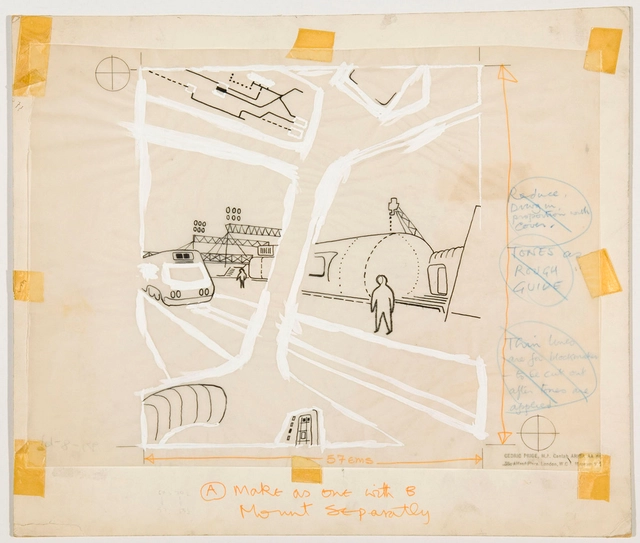
Cedric Price's "Potteries Thinkbelt" project. Image Courtesy of Canadian Centre for Architecture
Samantha Hardingham's recently-published work, A Forward-Minded Retrospective: Cedric Price Works—1953-2003, traces the architect's career through a comprehensive collection of his drawings and renders. The exhaustive two-volume work acknowledges Cedric Price not just as the entertaining novelty he is often regarded as, but as a great mind who was ahead of his time. While the vast majority of work produced during his lifetime was never built, Hardingham draws out the radical genius behind such projects as the hybrid office complex-highway "Officebar," a zoo restaurant whose column-less interior paved the way for its later conversion to a giraffe habitat, and many others—built and unbuilt.
In addition to the uncanny future forecasting expressed in many of Price's works, they are also known for serving as inspiration for the functionalist designs of Renzo Piano and Richard Rogers, making them necessary to a complete understanding of the modern architectural canon. In an article on Metropolis Magazine, Samuel Medina takes a whistle-stop tour of some of the most intriguing works presented in Hardingham's new book.
As the impacts of global climate change escalate, forward-thinking architecture firms have committed to being part of the solution. Increasingly, these firms are signing on to the 2030 Challenge and American Institute of Architects’ supporting initiative, AIA 2030 Commitment, which provide a framework to reduce fossil-fuel dependence and make all buildings, developments, and major renovations carbon neutral by 2030.
The 2030 Challenge has been adopted by 80 percent of the top 10 and 65 percent of the top 20 architecture, engineering, and planning firms in the United States, as well as many state and local government agencies. Among these are Eskew+Dumez+Ripple (EDR), a New Orleans–based architecture and planning firm; HOK, a global design, architecture, engineering, and planning firm; and CTA Architects Engineers, an integrated design, engineering, and architecture firm with offices throughout the Western United States and Canada. Here, five professionals from EDR, HOK, and CTA share seven key tactics they’ve employed to move toward the 2030 target—and a sustainable future for the planet.
https://www.archdaily.com/869056/7-ways-architects-can-work-toward-carbon-neutral-buildings-by-2030Heather Head
Massachusetts is destroying its toll plazas. By the end of this year, every single one on the Massachusetts Turnpike will have been demolished. Drivers will still pay to use the road—they will zoom through the metal arches of electronic tolling infrastructure—but the routine of slowing down, stopping to grab a ticket, and waiting for the barrier to rise will be gone.
Massachusetts is being more aggressive than most places about sweeping away its old tolling infrastructure, but all across the country, from New York to Florida, Texas to California, road authorities are switching to all-electronic tolling. While it’s too soon to declare the tollbooth dead, it’s easy to imagine a future in which roads are unencumbered by boxy plazas and simple gates.
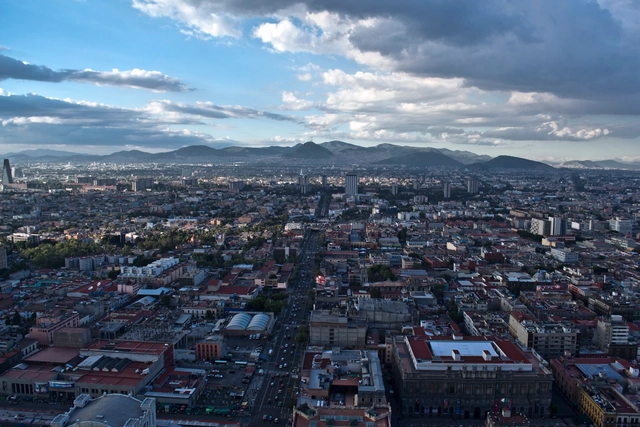
Though the idea of a vacation in Mexico usually brings to mind images of margaritas on white-sand beaches, it seems the country is slowly but surely gaining recognition in other aspects as well. Among the most populated urban cities in Latin America and the world – not to mention The New York Times' number one "Place to Go in 2016" – Mexico City offers a particular cultural diversity evident both in its traditions and in its architecture. Considering it's the main tourist, educational, cultural, economic and political center of Mexico, it makes sense that it's the perfect scenario for the social encounters of its multicultural inhabitants and tourists.
The sites of architectural interest alone are worth the visit, with prehispanic, classic, modern and contemporary examples ranging from Juan O'Gorman and Luis Barragán to Felix Candela and David Chipperfield. Add to that the fact that its gastronomic scene has garnered much praise and attention in recent years, and you've got a perfect combo. Below is a carefully curated list of 30 sites that every architect should know and visit.
The Trienal de Lisboa have today announced that a team of nine, led by Parisian architect Éric Lapierre, has been appointed as the curatorial team of the 5th edition of Lisbon Architecture Triennale which will be held from October to December 2019. Lapierre, who runs the Masters in Architecture & Experience at the École Nationale Supérieure d’Architecture in Marne-la-Vallée, Paris, will collaborate with philosopher Sébastien Marot, who is also a critic in architecture and landscape design. Other members of the curatorial team include Ambra Fabi, Giovanni Piovene, Mariabruna Fabrizi, Fosco Lucarelli, Laurent Esmilaire, Tristan Chadney, and Vasco Pinelo de Melo. A grand total of 48 proposals were submitted to the organization, comprising 155 participants from 16 countries.
https://www.archdaily.com/869546/eric-lapierre-appointed-as-chief-curator-of-2019-lisbon-architecture-triennaleAD Editorial Team
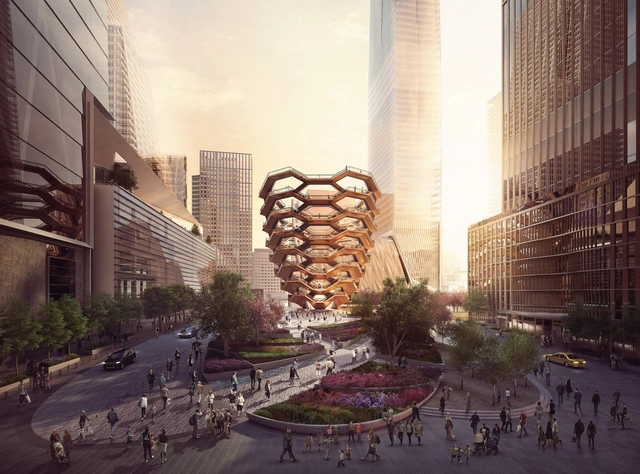
The 150-foot-tall steel structure has been compared to a bedbug, a beehive, and a döner kebab. Its base is 50 feet wide and its upper span measures 150 feet. Image Courtesy of Forbes Massie-Heatherwick Studio
When Thomas Heatherwick—the nimble London-based designer known for work that defies easy categorization—unveiled his design for a new public landmark called Vessel at Hudson Yards to a crowd of reporters and New York City power players in September, questions abounded. What is it? What will it do to the neighborhood? And what does it say that Stephen Ross, the president and CEO of Related Companies, the primary developer of Hudson Yards, is financing the entire $250 million piece by himself?
It’s natural that Ross chose Heatherwick Studio to design his centerpiece, because the office’s creations stun. For the UK Pavilion at the 2010 Shanghai Expo, it extruded 60,000 clear acrylic tubes from a center space to create a fuzzy, crystalline object whose apparent fragility is as mesmerizing as it is clever. As the studio moves toward ever-larger and ever-more-public commissions, the people who will live with its work will need to seriously consider what it will mean for their neighborhoods and cities.