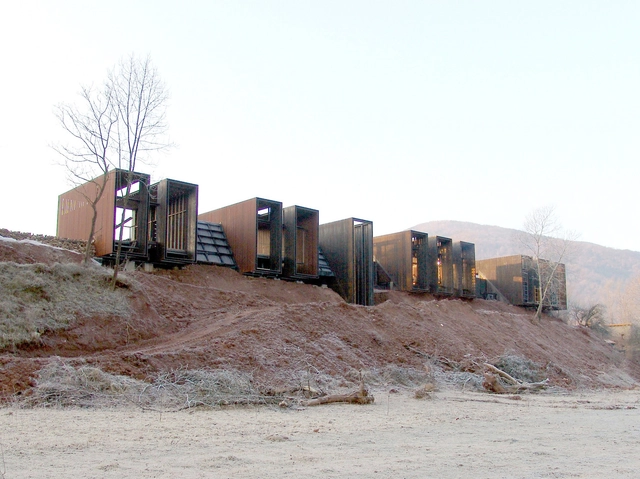
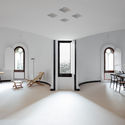
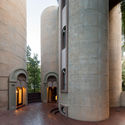
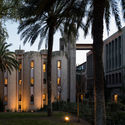
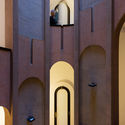
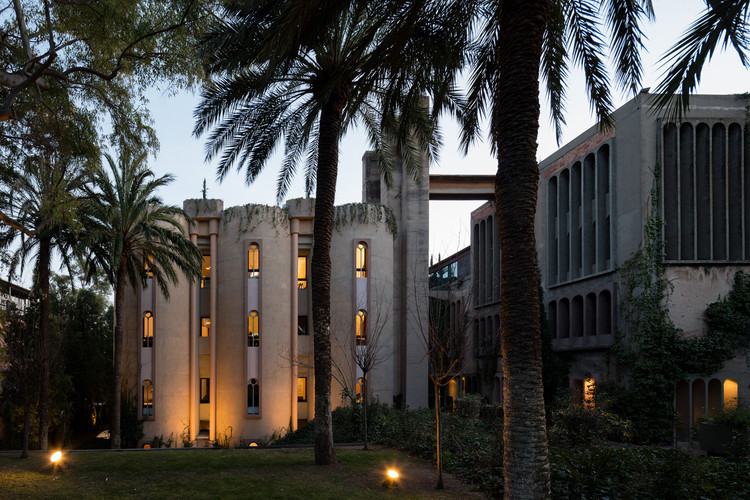
Rural House designed by RCR Arquitectes. Rafael Aranda, Carme Pigem, and Ramón Vilalta of RCR Arquitectes won the Pritzker last year. Image Courtesy of RCR Arquitectes
“The Nobel Prize in Architecture.” “The profession’s highest honor.” These are some of the terms used to describe the Pritzker Prize. One day before the 2018 Pritzker Prize winner is to be revealed, ArchDaily’s editors discuss whether the prize still lives up to its hype.
Carbon fiber's light weight and unique properties make it an exciting potential building material, say researchers at Autodesk BUILD Space. Image Courtesy of University of Stuttgart
On any weekday, Chicago’s downtown business district, the Loop, teems with harried humans crossing the street like herds of wild antelope fleeing a predator. Most scurry past the Field Building without considering its significance—or that of the historic building demolished in 1931 on the same site: the Home Insurance Building. Built in 1884, it was the first tall building erected on a frame made of structural steel—a light, affordable, and durable material that allowed structures to be built taller, stronger, and faster than those made of wood or stone.
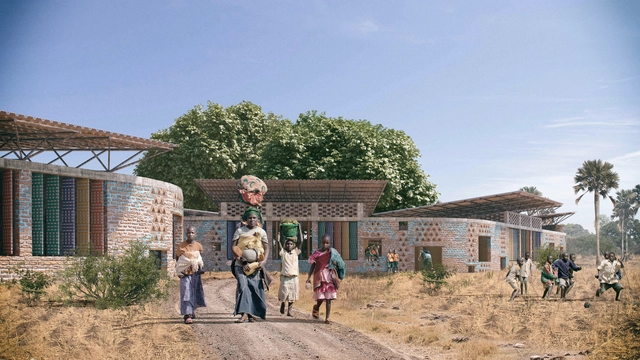
Many children in Africa are forced to bear the brunt of attending schools with poor ventilation that can easily overheat under the African sun. WAYAiR’s proposal for a new school in Ulyankulu tackles the climate issue and provide an “educational village” respecting the local heritage and identity of the town. WAYAiR is a group of like-minded educators that for the last 25 years have developed their unique school program in Poznan, Poland using an art based educational program and now wish to share their expertise worldwide.
There ought to be a word for this kind of film—halfway between a sequel and a reboot—but there isn't, so we just have to call it Blade Runner 2049. The film is perhaps more subtle in the way it refers to Ridley Scott's 1982 dystopian cult classic than some recent sci-fi restorations—Star Wars: The Force Awakens, I'm looking at you—but it isn't above a bit of blatant parallelism. For example, it's easy to see reflections of Blade Runner characters in 2049: private dick Rick Deckard is now the stoic, world-weary K; femme fatale Rachael is Joi, a hologram companion who straddles the line between mortal and machine; wacky Roy Batty is the single-minded, murderous Luv; not to mention a bevy of replicants passing for humans and cops with hidden agendas. In fact, one of the few prominent characters not recast is the city of Los Angeles, whose architecture is strikingly absent compared to the first film. The resulting movie feels curiously devoid of a civic soul, which is perhaps the point.
https://www.archdaily.com/890005/grit-vs-globalism-what-the-city-of-blade-runner-2049-reveals-about-recent-trends-in-urban-developmentColin Newton
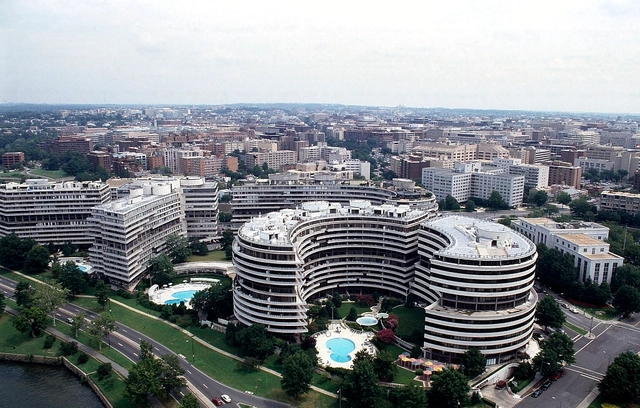
Joseph Rodota's new book The Watergate: Inside America’s Most Infamous Address(William Morrow) presents the story of a building complex whose name is recognized around the world as the address at the center of the United States' greatest political scandal—but one that has so many more tales to tell. In this excerpt from the book, the author looks into the design and construction of a building The Washington Post once called a "glittering Potomac Titanic," a description granted because the Watergate was ahead of its time, filled with boldface names—and ultimately doomed.
On the evening of October 25, 1965, the grand opening of the Watergate was held for fifteen-hundred guests. Luigi Moretti, the architect, flew in from Rome. Other executives came from Mexico, where the Watergate developer, the Italian real estate giant known as Societa Generale Immobiliare, was planning a community outside Mexico City, and from Montreal, where the company was erecting the tallest concrete-and-steel skyscraper in Canada, designed by Moretti and another Italian, Pier Luigi Nervi.
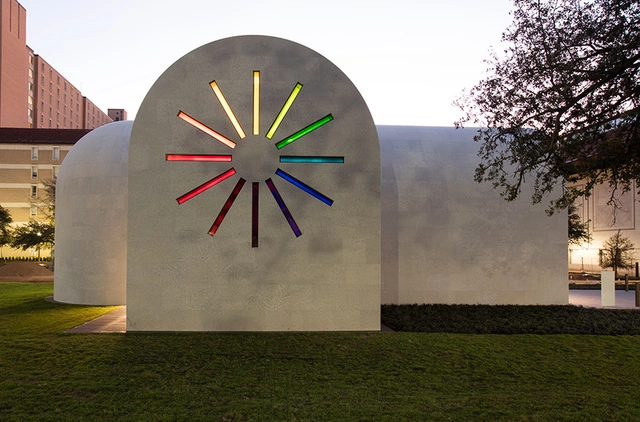
Ellsworth Kelly died in December 2015 at the age of 92, less than a year after he announced a gift of one of his most lasting creative contributions: plans for the artist’s only building, which had been sitting in his New York studio since 1986.
Titled Austin, this 2,715-square-foot work on the grounds of the Blanton Museum of Art on the University of Texas at Austin campus would be his final—and perhaps greatest—effort, an immersive space whose artistic value matches that of the marble panels and sculpture within. Unlike the Rothko Chapel in Houston, in Austin the artist and architect are one, says Carter E. Foster, the Blanton’s deputy director for curatorial affairs.
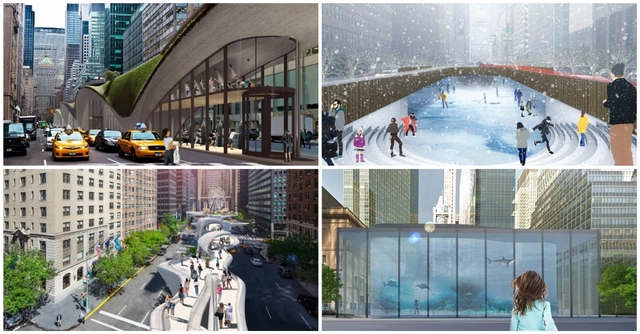
Seventeen entries have been selected as finalists in the “Beyond the Centerline” competition, which is seeking ideas for how to “re-envision and enliven the traditional traffic medians of the Park Avenue commercial district between 46th and 57th Streets."
Organized by development company Fisher Brothers, the ideas competition asked architects to submit their “most ambitious and creative visions unencumbered by zoning code, cost, weight limit, or other restrictions.”
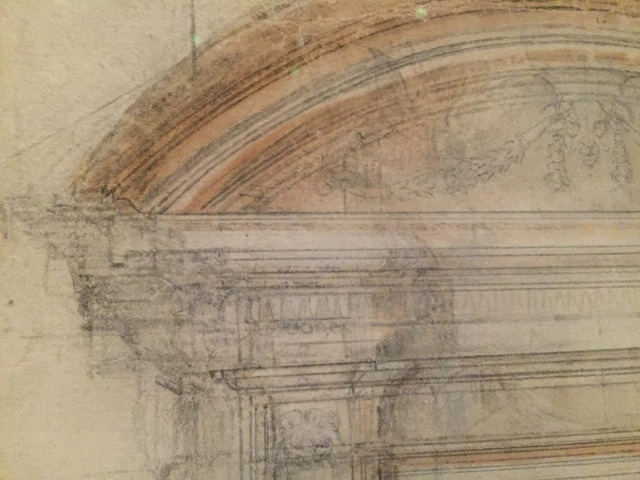
A recent exhibition at The Metropolitan Museum in New York, Michelangelo: Divine Draftsman & Designer, provided a thrilling glimpse into the mind and methods of a true polymath. The exhibit has just closed, so I offer this selection of images. Photography was encouraged, and the intimacy of the presentation allowed insights and realizations.
I’ve been studying or practicing architecture for 45 years, and the exhibit clarified how architects can think about what they do. It probably meant similar things to everyone feeling its resonant beauty, but I saw the complexities of a creative life in mid-application.
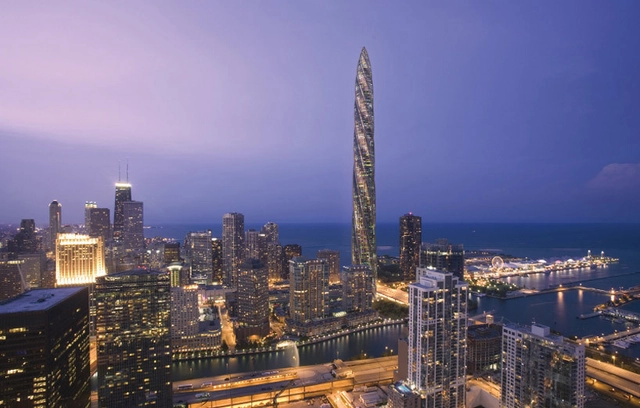
We all know a little about the world's tallest buildings—those engineering feats which define their cities and become symbols of human achievement—but what of the buildings that never took their planned place in their respective skylines? In 2014, The Council on Tall Buildings and Urban Habitat (CTBUH) released a report listing the 20 tallest buildings that were never completed (an up-to-date list is also maintained on their website here). In order to be considered "never completed," all of the buildings in the report had begun site work, but construction was completely halted with no reports indicating it will continue. Read on to find out the top 10 tallest uncompleted buildings in 2018 after the break.
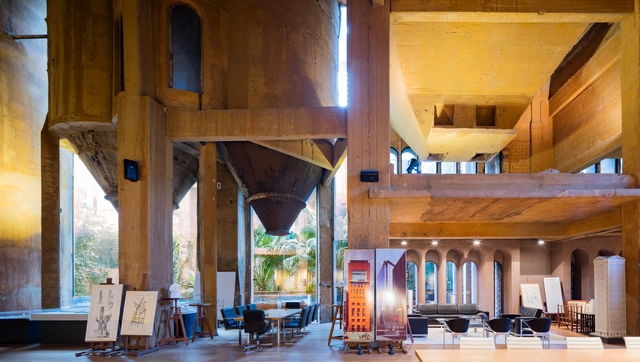
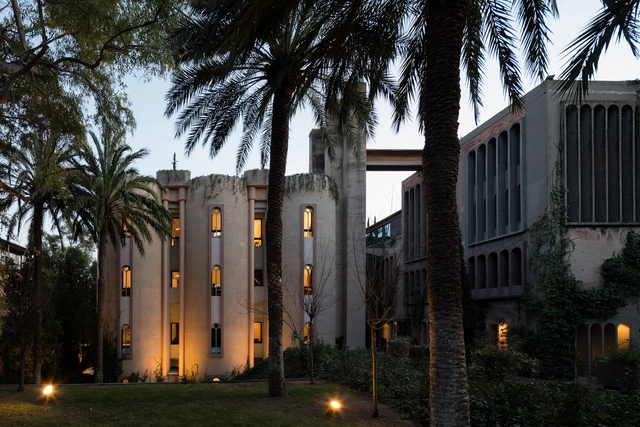
Architectural photographer Marc Goodwin captures the unique workspaces of architects around the world. So far, Goodwin’s photography has helped us imagine what office life might be like as an architect in London, Paris, Beijing, Shanghai, Seoul, the Nordic countries, and now, Barcelona. Read on to see the spaces where architects from Ricardo Bofill to Fermin Vazquez design solutions that impact our world.
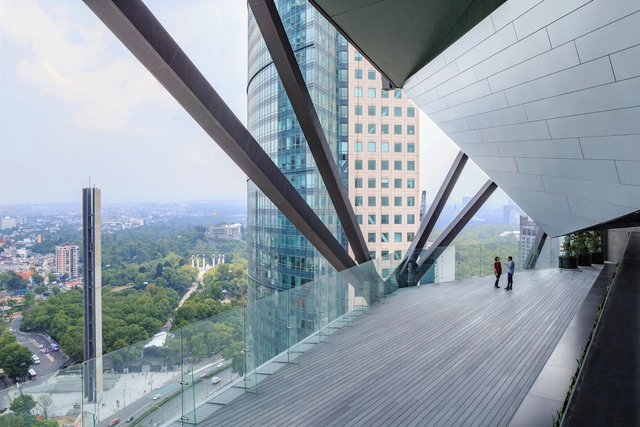
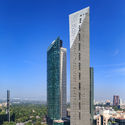
Visiting Mexico City several times in recent months enabled me to get to know a number of leading architects there. In the process, I was in turn directed to other architects that were new to me, whom I then discovered were, in fact, the leading and most revered architects in the country according to the local architectural community. I am particularly referring to Alberto Kalach and Mauricio Rocha, whose interviews were published in this column last year, and Benjamín Romano, whose name came up when I asked a number of architects to cite their favorite building from recent years in Mexico City. Along with the absolute favorite, Vasconcelos Library by Kalach, another structure stood out: Torre Reforma, a 57-story office tower, the tallest building in the city. The following conversation with Romano, its architect, took place inside this unusually powerful and inventive structure.
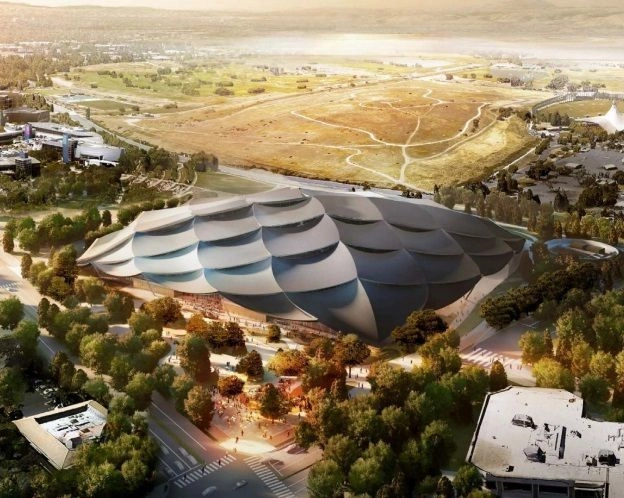
Would BIG and Thomas Heatherwick have designed a huge, adaptable tensile structure for any client other than Google?. Image Courtesy of Google
In January, we covered an interview with Bjarke Ingels where he spoke of the role that clients play in architecture. In the article, Bjarlke Ingels mentioned that "In the world of architecture there are many more things beyond an architect's control than are under his command." The post started a debate among our readers as well as our editors at ArchDaily. Many readers bemoaned the demise of architecture at the hands of clients with big pockets. Some of us talked about how IT giants not only control our digital world, they are now also encroaching upon our urban environments. Several readers blamed big clients for creating starchitects who build grand buildings and, as they allege, cause an "infantalisation" of architecture in the process.
Here at ArchDaily, our editors got to thinking: Can architecture exist without a client? Or is it just a service, a capitalistic exchange? And really, are clients such a bad thing for the field?
We talk to some of our editors to get their perspective.
Designed by Natalie de Blois and Gordon Bunshaft of SOM and completed in 1961, 270 Park Avenue (formerly known as the Union Carbide Building) is considered a key example of the International Style in New York City that extended and even improved upon the precedent set by Mies van der Rohe’s Seagram Building.
But after new zoning legislation for the neighborhood was passed last year, the building’s current owner, JPMorgan Chase, has announced plans to raze the 707-foot-tall building in favor of a new, hi-tech supertall replacement. If plans go through, it would be the world’s largest and tallest building ever to be intentionally demolished.
Johann David Steingruber was a German architect and designer with over 100 buildings to his name, including many churches, town halls, school buildings and even breweries. However, perhaps what he is best known for today are the intricate illustrations of his 1773 Architectural Alphabet, in which he converted the alphabet into plans for a series of eccentric baroque palaces.
Done more as a "labor of love" rather than for any practical reason, Steingruber's book is a compilation of playful and intricate spatial relationships, with each letter providing its own unique set of challenges. Even though the letters naturally offer more complex shapes than we would ordinarily use for plans, the spaces somehow make sense. The baroque style of oval antichambers, domes, and vaults is evident not only in the plans but also in the elevations.
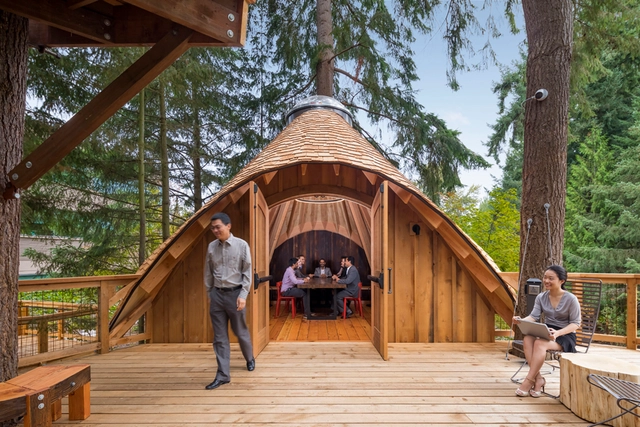
Microsoft is undertaking an ambitious overhaul of its 800 offices around the world and uncovering great insights about the intersections of technology and workplace design in the process. The technology giant’s global director of workplace strategies, Riku Pentikäinen, speaks to Metropolis’s Avinash Rajagopal about the company’s new workplaces, collaborating with designers and furniture manufacturers, and how his team takes a data-driven approach to office design.
Update 2/20/18:We've added a gallery of additional images to the post!
OMA has been selected as the winner of an international competition for the design of the new Palais de justice (courthouse) in Lille, France. Located on the outskirts of the city near the historic Vauban fortifications, the new courthouse will house the high court and district court of Lille within a colorful, expressive volume.
Last September, Nigerian Afrobeat musician Wizkid played to a sold-out house at the Royal Albert Hall in London, joining a growing list of illustrious African musicians, such as Selif Kaita, Youssou Ndour, Miriam Makeba and others, that have performed at that prestigious venue. This event affirmed the unfolding cultural renaissance across the continent, but it also signified the rising global influence of African music, movies, fashion, cuisine and the arts.
Sadly, traditional African architecture, especially in Sub-Saharan Africa, has not profited from this renaissance and has instead steadily lost its appeal across the continent. In spite of its towering influence in the pre-colonial era, it has largely failed to develop beyond the crude earthen walls and thatch roof architecture; for this reason it has remained unattractive to homeowners who often associate it with poverty. Consequently, the neglect of indigenous architecture has resulted in the dearth of skilled craftsmen knowledgeable in the art of traditional building, a reality that has further dimmed hopes for a revival of this architectural style.