1. ArchDaily
  2. Editor's Choice

Editor's Choice

What Urbanism Needs to Learn from Dubai

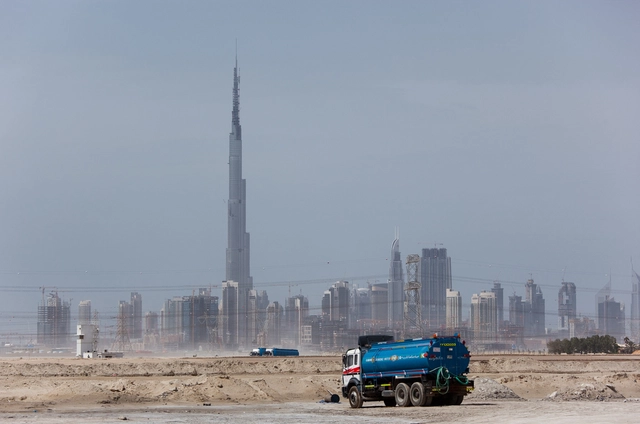
In the past three decades, Dubai has grown from a dusty desert town to a strategic hub for international business and tourism. As a result, several cities in the developing world have been competing to outdo one another in the race to replicate this development model—an urbanism largely built around the automobile, luxury villas, gleaming skyscrapers, massive shopping malls, and ambitious “smart” cities, designed and built from scratch. Across Africa, these new developments go by different names: Eko Atlantic City Nigeria, Vision City in Rwanda, Ebene Cyber City in Mauritius; Konza Technology City in Kenya; Safari City in Tanzania; Le Cite du Fleuve in DR Congo, and several others. All are mimicries of Dubai.

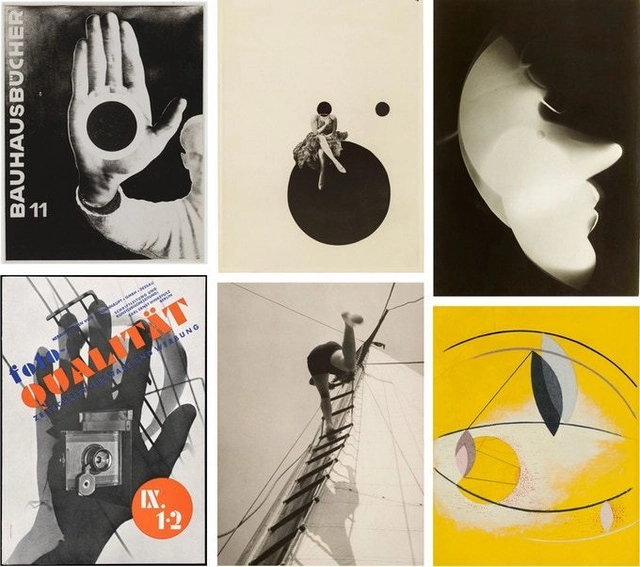
The Best Bauhaus Documentaries Available to Watch Online

Subscriber Access | 

2019 marks a century of Bauhaus, the school-turned-movement whose influence withstood forced relocations, political meddling, and eventual closure. Despite dramatic shifts in technology, taste, and style in architecture in the years since, Bauhaus remains one of the most significant subjects of architectural/design education and has even captured the interest of the wider public.

As part of our celebrations of the Bauhaus movement - and to satiate your thirst to learn more - we have selected some of the best Bauhaus documentaries available online now. Featuring largely-unseen footage, exclusive interviews, and/or unique perspectives on the Bauhaus, these films provide an excellent way to get up to speed.

“Architecture Should be About What It Can Do, Not What it Can Look Like”: In Conversation with Michel Rojkind

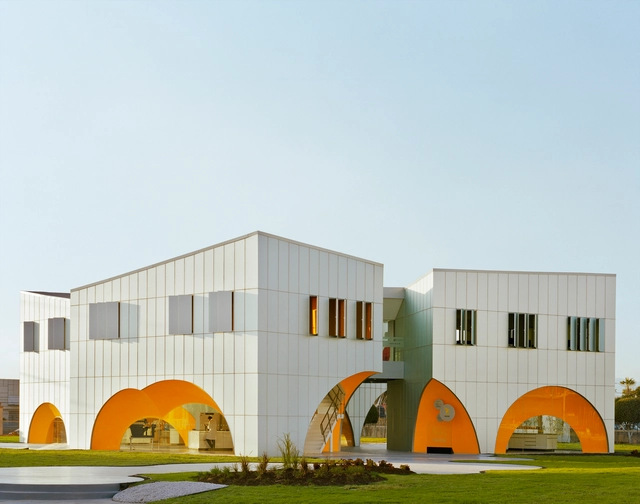
Born in 1969 in Mexico City, Michel Rojkind was educated in the 1990s at the Universidad Iberoamericana, while also performing as a drummer in Aleks Syntek’s popular rock band la Gente Normal. He opened his practice Rojkind Arquitectos in 2002. Among his most representative built works are Foro Boca for the Boca del Rio Philharmonic Orchestra in Veracruz, a newly expanded film complex Cineteca Nacional in Mexico City, a pair of factory additions for the Nestlé Company in Queretaro, and the Nestlé Chocolate Museum in Toluca, all in Mexico. We spoke about how his architecture engages with people, why architects should assume roles that extend beyond architecture, and the importance of generosity and not worrying about designing everything 100%.

The following excerpt from my interview with Rojkind completes a series of conversations that I conducted in Mexico City while preparing my exhibition “Something Other than a Narrative” from the Architects’ Voices and Visions series at Facultad de Arquitectura Universidad Nacional Autónoma de México, UNAM.

“Architecture Should be About What It Can Do, Not What it Can Look Like”: In Conversation with Michel Rojkind - Arch Daily Interviews“Architecture Should be About What It Can Do, Not What it Can Look Like”: In Conversation with Michel Rojkind - Arch Daily Interviews“Architecture Should be About What It Can Do, Not What it Can Look Like”: In Conversation with Michel Rojkind - Arch Daily Interviews“Architecture Should be About What It Can Do, Not What it Can Look Like”: In Conversation with Michel Rojkind - Arch Daily Interviews“Architecture Should be About What It Can Do, Not What it Can Look Like”: In Conversation with Michel Rojkind - More Images+ 22

Chicago Architecture Biennial Curators Announce 2019 Theme

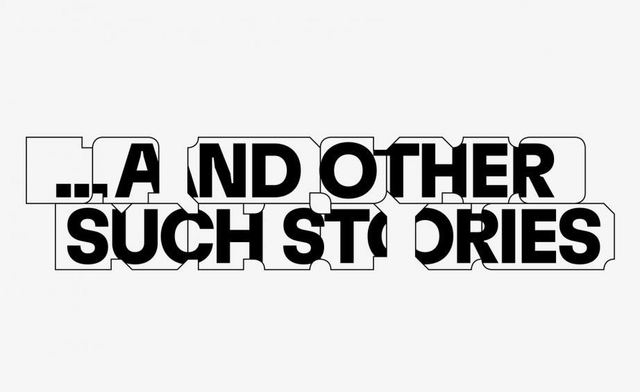
The curatorial team of the Chicago Architecture Biennial has announced the theme of the third edition of the event, to be titled "...and other such stories". The intentionally-broad theme proposes an investigation of architecture / the built environment not just as a form, but as a culmination of the conditions that shape it. ...and other such stories is a collaborative effort between Artistic Director Yesomi Umolu and co-curators Sepake Angiama (a curator focused on education) and Paulo Tavares (a Brazilian architect and academic).

Chicago Architecture Biennial Curators Announce 2019 Theme  - Image 1 of 4Chicago Architecture Biennial Curators Announce 2019 Theme  - Image 2 of 4Chicago Architecture Biennial Curators Announce 2019 Theme  - Image 3 of 4Chicago Architecture Biennial Curators Announce 2019 Theme  - Image 4 of 4Chicago Architecture Biennial Curators Announce 2019 Theme  - More Images+ 2

The Trends that Will Influence Architecture in 2019

It is, once again, the time of year where we look towards the future to define the goals and approaches that we will take for our careers throughout the upcoming year. To help the millions of architects who visit ArchDaily every day from all over the world, we compiled a list of the most popular ideas of 2018, which will continue to be developed and consolidated throughout 2019.

Over 130 million users discovered new references, materials, and tools in 2018 alone, infusing their practice of architecture with the means to improve the quality of life for our cities and built spaces. As users demonstrated certain affinities and/or demonstrated greater interest in particular topics, these emerged as trends. 

Why Norman Foster Scoops Daylight into his Buildings

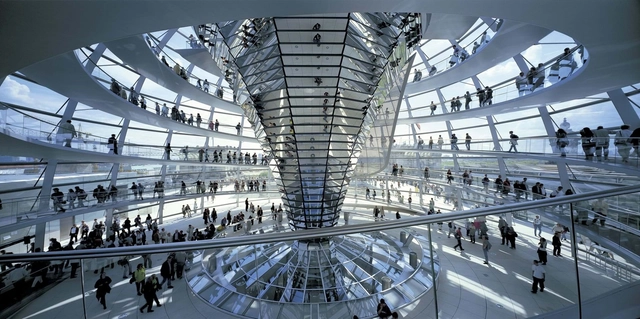
While many architects consider windows for brightening interior spaces, Norman Foster is intrigued by natural light from above. The British star architect has long held Louis Kahn and Alvar Aalto in high esteem for how they handled daylight - especially with regard to the roof. In particular large public buildings benefit from this strategy creating enjoyable spaces. Therefore, Foster regards daylight from above as indispensable when he develops megastructures for airports on the ground or tall skyscrapers for work. But daylight from above is much more than an aesthetic dimension, remarks Foster: "Quite apart from the humanistic and poetic qualities of natural light there are also energy implications."

9 Lessons For Post-Architecture-School Survival

Subscriber Access | 

We’ve already talked about this. You’re preparing your final project (or thesis project). You’ve gone over everything in your head a thousand times; the presentation to the panel, your project, your model, your memory, your words. You go ahead with it, but think you'll be lousy. Then you think just the opposite, you will be successful and it will all be worth it. Then everything repeats itself and you want to call it quits.  You don’t know when this roller coaster is going to end. 

Until the day arrives. You present your project. Explain your ideas. The committee asks you questions. You answer. You realize you know more than you thought you did and that none of the scenarios you imaged over the past year got even close to what really happened in the exam. The committee whisper amongst themselves. The presentation ends and they ask you to leave for a while. Outside you wait an eternity, the minutes crawling slowly. Come in, please. The commission recites a brief introduction and you can’t tell whether you were right or wrong. The commission gets to the point.

You passed! Congratulations, you are now their new colleague and they all congratulate you on your achievement. The joy washes over you despite the fatigue that you’ve dragging around with you. The adrenaline stops pumping. You spend weeks or months taking a much-deserved break. You begin to wonder: Now what?

The university, the institution that molded you into a professional (perhaps even more so than you would have liked), hands you the diploma and now you face the job market for the first time (that is if you haven’t worked before). Before leaving and defining your own markers for personal success (success is no longer measured with grades or academic evaluations), we share 9 lessons to face the world now that you're an architect.

Eduardo Souto de Moura: “I Look Beyond Solution; I Look For an Expression”

Eduardo Souto de Moura: “I Look Beyond Solution; I Look For an Expression” - Arch Daily InterviewsEduardo Souto de Moura: “I Look Beyond Solution; I Look For an Expression” - Arch Daily InterviewsEduardo Souto de Moura: “I Look Beyond Solution; I Look For an Expression” - Arch Daily InterviewsEduardo Souto de Moura: “I Look Beyond Solution; I Look For an Expression” - Arch Daily InterviewsEduardo Souto de Moura: “I Look Beyond Solution; I Look For an Expression” - More Images+ 16

The architectural approach of 2011 Pritzker Prize-winner Eduardo Souto de Moura can be difficult to summarize. His convictions on matters of aesthetics and design are strongly held, but also highly individual and at times even unusual. In his work, this translates to buildings that are enigmatic, yet not flashy—in the words of the 2011 Pritzker Prize jury, “His buildings have a unique ability to convey seemingly conflicting characteristics—power and modesty, bravado and subtlety, bold public authority and sense of intimacy—at the same time.” In the latest interview from his “City of Ideas” series, Vladimir Belogolovsky speaks to Souto de Moura to probe his architectural mind and understand the thinking behind these powerful yet modest works.

Zhang Ke of ZAO/standardarchitecture: "Is a New Revolution Possible Today?"

Beijing-based architect Zhang Ke was educated first at China’s leading school, Tsinghua University, going on to later graduate from Harvard’s GSD in 1998. The former equipped him with technical know-how, while the latter encouraged him to question the essential elements of the profession, such as why we build. After working for three years in Boston and New York, Ke returned to Beijing to open his practice in 2001.

Zhang Ke of ZAO/standardarchitecture: "Is a New Revolution Possible Today?" - Arch Daily InterviewsZhang Ke of ZAO/standardarchitecture: "Is a New Revolution Possible Today?" - Arch Daily InterviewsZhang Ke of ZAO/standardarchitecture: "Is a New Revolution Possible Today?" - Arch Daily InterviewsZhang Ke of ZAO/standardarchitecture: "Is a New Revolution Possible Today?" - Arch Daily InterviewsZhang Ke of ZAO/standardarchitecture: Is a New Revolution Possible Today? - More Images+ 32

As London's Housing Crisis Deepens, a Provocative Proposal Suggests the Solution Rests with the Queen

Subscriber Access | 

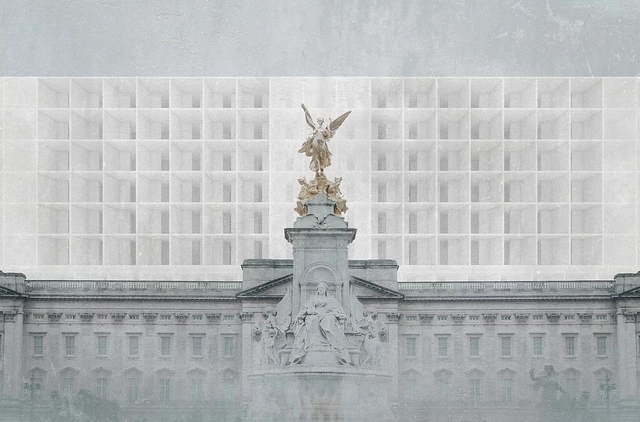
"The rooms are awash with sparkling candelabra, sumptuous carpets, marble columns, sculptures, and expensive artworks,” says Benedikt Hartl, co-founder of Opposite Office of Buckingham Palace. The 775-room, 79-bathroom, 828,821 square foot residence has been home to Britain’s royalty since the 1830s. And, if Opposite Office’s recent Affordable Palace proposal were to go through, could also be home to you.

"We Wanted a Gradient of Galleries": WORKac Explain their Design for the Beirut Museum of Art

Subscriber Access | 

What is architecture if it does not understand its context?  Architecture is shaped and curated by the area it lives in, showcasing the culture it embodies. The more of this identity it embodies, the more meaningful (and sometimes prominent) it becomes. 

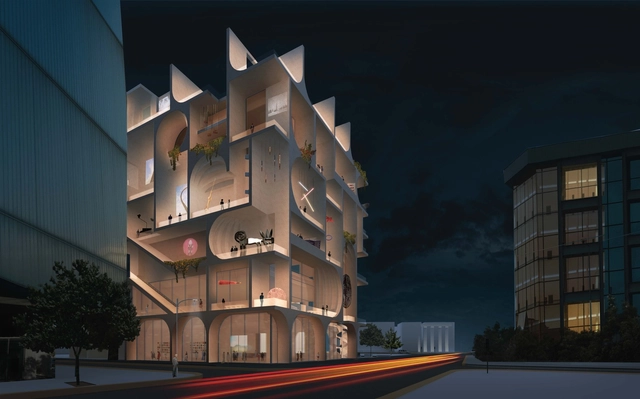
December of 2018 was a month of prosperity for Lebanese architecture: Hashim Sarkis was announced curator of the 2020 Venice Biennale and Lebanese-born Amale Andraos and partner Dan Wood of WORKac were selected to build the Beirut Museum of Art. The museum, a dynamic assembly of contoured geometries (not entirely unlike their work at Miami's Museum Garage) located in the heart of Beirut City, will house permanent and temporary exhibitions across 12,000 square meters. WORKac's winning scheme was chosen for its ability to “reveal the cultural possibilities of integrating art, architecture, and landscape within a dense urban setting and as a means to re-imagine how we can live, learn and share together.”

Reframing Climate Change as a Local Problem of Global Proportion: 4 Ways Architects can Deliver Change

Subscriber Access | 
Reframing Climate Change as a Local Problem of Global Proportion: 4 Ways Architects can Deliver Change - Imagen 8 de 4
Bankside 123 in London creates new routes, public spaces and retail, with three simple rectilinear buildings set within a permeable public realm designed to reconnect the site with its surroundings. Image Courtesy of Allies & Morrison

The latest UN special report on climate change, released in October 2018, was bleak - perhaps unsurprisingly after a year of recording breaking temperatures, wildfires, floods, and storms. The report, released by the UN Intergovernmental Panel on Climate Change (IPCC), reiterated the magnitude of climate change’s global impact, but shed new light on the problem’s depth and urgency. Climate change is a catastrophe for the world as we know it and will transform it into something that we don’t. And we have just 12 years to prevent it.

"I Identify Forms with Energy": Li Xiaodong of Li Xiaodong Atelier

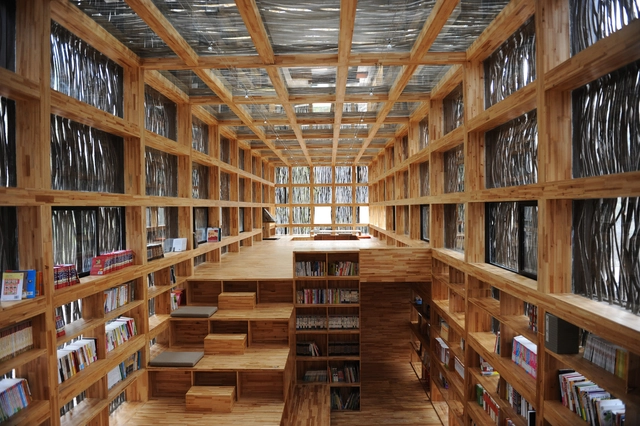
One of the immediate impressions that I formed of the Beijing-based architect and Tsinghua University Professor Li Xiaodong (b. 1963) is his reassuring self-confidence. Following our interview, Professor Li asked me a question of his own - would I like to teach at his school? “I never taught in my life,” I replied. He quickly countered, “I know. You can teach. Yes or no?” If I have learned anything about life, it is that when opportunities come you should grab them first and think later. "If he is so confident in me, why shouldn’t I trust him?” I reasoned.

"I Identify Forms with Energy": Li Xiaodong of Li Xiaodong Atelier - Arch Daily Interviews"I Identify Forms with Energy": Li Xiaodong of Li Xiaodong Atelier - Arch Daily Interviews"I Identify Forms with Energy": Li Xiaodong of Li Xiaodong Atelier - Arch Daily Interviews"I Identify Forms with Energy": Li Xiaodong of Li Xiaodong Atelier - Arch Daily InterviewsI Identify Forms with Energy: Li Xiaodong of Li Xiaodong Atelier - More Images+ 19

Why Reusing Buildings Should - and Must - be the Next Big Thing

Sustainability awards and standards touted by professional architecture organizations often stop at opening day, failing to take into account the day-to-day energy use of a building. With the current format unlikely to change, how can we rethink the way what sustainability means in architecture today? The first step might be to stop rewarding purpose-built architecture, and look instead to the buildings we already have. This article was originally published on CommonEdge as"Why Reusing Buildings Should be the Next Big Thing."

At the inaugural Rio Conference on the Global Environment in 1992, three facts became abundantly clear: the earth was indeed warming; fossil fuels were no longer a viable source of energy; the built environment would have to adapt to this new reality. That year I published an essay in the Journal of Architectural Education called “Architecture for a Contingent Environment” suggesting that architects join with both naturalists and preservationists to confront this situation.

The Eco-Friendly Floating Cities of the Future

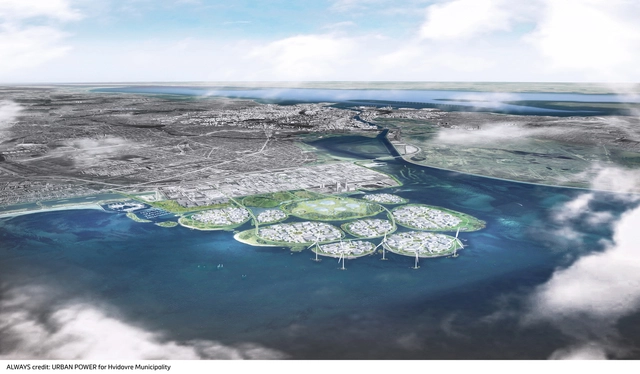
As the world population grows, designers look to develop the seas. Architecture and planning firm, URBAN POWER strategically designed nine man-made islands off the southern coast of Copenhagen to combat many of the city’s impending challenges. The islets, called Holmene, address demands for tech space, fossil-free energy production, flood barriers, and even public recreation space.

"We Dream of Instant Cities that Could Sprout like Spring Flowers": The Radical Architecture Collectives of the 60s and 70s

Subscriber Access | 

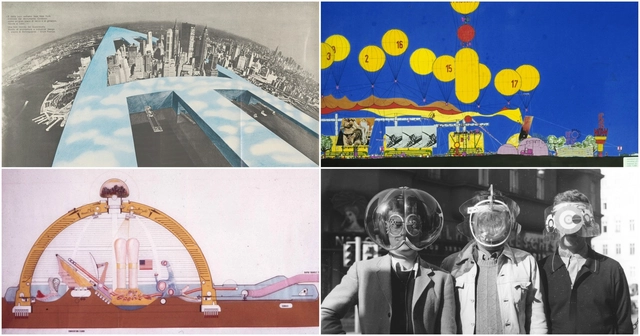
The first moon landing, widespread anti-war protests, Woodstock and the hippies, rural communes and environmentalism, the Berlin Wall, the women’s liberation movement and so much more—the tumultuous decades of the Sixties and Seventies occupy an unforgettable place in history. With injustices openly questioned and radical ideas that set out to unseat existing conventions and practices in various spheres of life, things weren’t any different in the architectural world. 

The grand visions dreamt up by the modernists were soon challenged by utopian experiments from the “anti-architecture” or “radical design” groups of the 1960–70s. Reestablishing architecture as an instrument of political, social, and cultural critique, they drafted bold manifestoes and designs, experimented with collage, music, performance art, furniture, graphic design, zines, installations, events, and exhibitions. While certain individuals from this era like Cedric Price, Hans Hollein, and Yona Friedman remain important to the realm of the radical and the unbuilt, the revolutionary spirit of these decades also saw the birth of various young collectives. For eccentricity at its very best, read on for a (by no means exhaustive) list of some groups who dared to question, poke, expand, rebel against, disrupt and redefine architecture in the 60s and 70s.

"I Believe in Questions that are Eternal": Dong Gong of Vector Architects

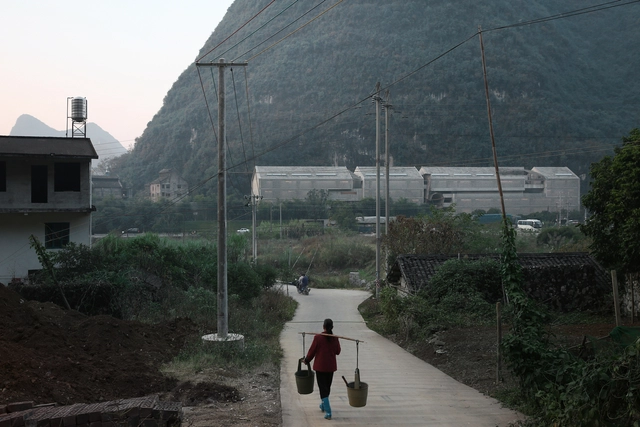
It is now expected of architects to turn away from designing iconic buildings/objects and focus instead on creating engaging built environments; from imagining idealistic, form-driven projects driven by the artistic pursuit to focusing on downright pragmatic solutions. China, of course, holds a large mirror to these tendencies, as so many Chinese architects quickly produced exactly the kind of projects that critics favor – modest in scale, straightforward in their expressions, reliant on indigenous construction techniques, and with inventive use of traditional materials. The results, however appealing, seem to lack both variety and risk-taking. There must be another way, not so formulaic.

"I Believe in Questions that are Eternal": Dong Gong of Vector Architects - Arch Daily Interviews"I Believe in Questions that are Eternal": Dong Gong of Vector Architects - Arch Daily Interviews"I Believe in Questions that are Eternal": Dong Gong of Vector Architects - Arch Daily Interviews"I Believe in Questions that are Eternal": Dong Gong of Vector Architects - Arch Daily InterviewsI Believe in Questions that are Eternal: Dong Gong of Vector Architects - More Images+ 42

121 Definitions of Architecture

Subscriber Access | 

There are at least as many definitions of architecture as there are architects or people who comment on the practice of it. While some embrace it as art, others defend architecture’s seminal social responsibility as its most definitive attribute. To begin a sentence with “Architecture is” is a bold step into treacherous territory. And yet, many of us have uttered — or at least thought— “Architecture is…” while we’ve toiled away on an important project, or reflected on why we’ve chosen this professional path.

Most days, architecture is a tough practice; on others, it is wonderfully satisfying. Perhaps, though, most importantly, architecture is accommodating and inherently open to possibility.

This collection of statements illustrates the changing breadth of architecture’s significance; we may define it differently when talking among peers, or adjust our statements for outsiders.

You've started following your first account!

Did you know?

You'll now receive updates based on what you follow! Personalize your stream and start following your favorite authors, offices and users.