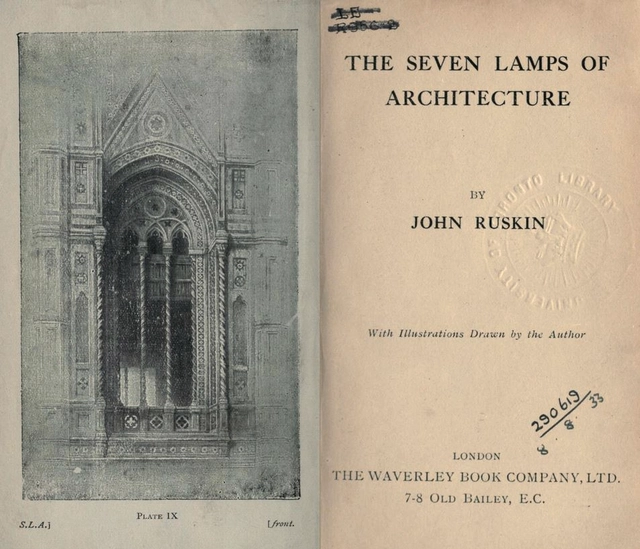
Welcome to the third installment of The Long(ish) Read: an AD feature which uncovers texts written by notable essayists that resonate with contemporary architecture, interior architecture, urbanism or landscape design. In this extract from The Seven Lamps of Architecture, published in 1849 and considered to be John Ruskin's first complete book on architecture, his studies are distilled into seven moral principles. These "Lamps" were intended to guide architectural practice of the time, advocating a profound respect for the original fabric of existing buildings. The opening chapter—The Lamp of Sacrifice—attempts to "distinguish carefully between Architecture and Building," set against the backdrop of Ruskin's (often criticised) world-view on the discipline at large.
Perhaps the most important component of any architecture job application is the portfolio. The key is to tailor the portfolio not only to the position to which you are applying but also to the correct stage in the application process.
As I covered in a previous article, The Two Page Architecture Portfolio, your first contact with an architecture firm should include a “sample portfolio” as a part of your application. This is usually two to five pages long and just like the resume it is a snapshot of your greatest work and experience. This is the approach I recommend at the outset, while at the other end of the application process - the interview - I advise a different approach.
ArchDaily is continuing our partnership with The Architectural Review, bringing you short introductions to the themes of the magazine’s monthly editions. In this introduction to the September 2015 issue, Editor Christine Murray discusses the postmodern reappraisal of ornament that has recently returned to architectural consciousness, arguing "what is disappointing is that we are still stuck discussing how a building looks."
The return to ornament is an evolution of the "icon" building. The emphasis may be on craft rather than form, but these buildings still clamour for attention, shouting "I am here." They share with the icon its selfie-friendly facade. This is architecture destined to be photographed, perhaps even nicknamed, heralding its presence as a landmark through the use of decoration, from brick mosaics to gilded towers.
Where it differs from the icon is in the emphasis on ‘making’; the craftsmanship or process by which the decorative element was created. The ornamentation may also feature on only part of the building, whereas an icon always refers to the whole.
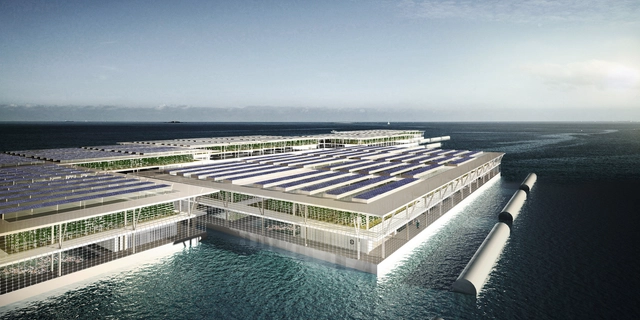
Tap a button on your phone and hop into the shower; walk downstairs 15 minutes later, and you have a fresh pot of coffee waiting for you. That’s a ritual that is no longer just a fantasy for many people. The rise of the internet of things has allowed us to control remote appliances with just a tap of the touchscreen. Until now, the scale of these processes has largely been limited to personal devices: anything from brewing a pot of coffee to warming up your car on a frosty morning. But what if we could grow food for thousands of people, with that same tap of a button? That is the goal of Forward Thinking Architecture’s “Smart Floating Farms” project.
In designing and building multiple successful public buildings in central Africa and around the world, MASS Design Group has employed and guided thousands of local craftsmen, curating the building process to inspire dignity. Now, they wish to help the African people obtain the skills necessary to guide the process themselves. At the United Nations Solutions Summit this Sunday Christian Benimana, a program director for the non-profit design studio, will present plans for what they are calling the “Bauhaus of Africa”: three “African Design Centers” to be built over the next 10 years in strategic locations throughout the continent. The design centers will house an education program tasked with training a new generation of African architects - a workforce certain to be indispensable as Africa enters a period of unprecedented urban growth.
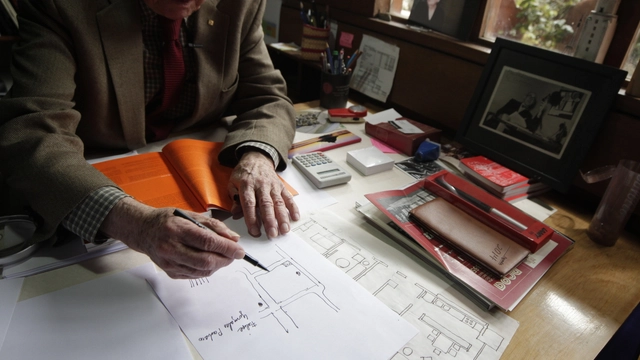
Hiding out from the gentle Bogotá rain, a cat with turquoise eyes and a black and white coat prowls along the ledge of an office hidden in the midst of lush vegetation. A large window with a wooden frame filters the light and illuminates the interior: a desk, hundreds of books, manila folders, and backlit pictures. Sitting comfortably in his chair, 91-year-old Colombian architect Germán Samper takes a pencil, presses it to the surface of a sheet of paper, and begins to explain everything he is saying by drawing for us in the most clear and simple manner possible.
Whether he's giving instructions on taking a taxi in Bogotá or explaining the recent modifications to the historic Colsubisdio citadel, Samper -- a master of Colombian architecture -- can express ideas on paper with an ease that makes us think that drawing might be very simple, but it's really just a great trick.
Perseverance is key and Samper knows this from experience. "I don't understand why architects don't draw more if it is truly a pleasure," he ponders.
After the break, a conversation with Germán Samper and a series of unedited sketches by the Colombian architect.
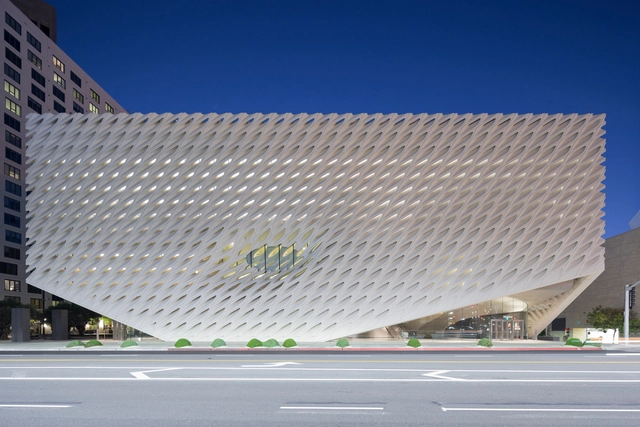
After teasing the general public by offering the press and 3,000 lucky local citizens with a preview day six months ago, the Broad Museum has finally opened its doors. Designed by Highline architects Diller, Scofidio + Renfro, the museum took four years and $140 million to build, adding its presence to LA’s architectural Broadway, Grand Avenue. With its visually striking facade given the tough task of responding to its enigmatic neighbor, Frank Gehry’s perennially polarizing Walt Disney Concert Hall, the building was sure to attract the attention of the critics, and they rose to the challenge in their droves. Read on to find out what five critics thought of the building dubbed “the veil over the vault.”
In this additional scene from our interview with Spanish architect/engineer Santiago Calatrava, the designer discusses the monumental timespan and demanding criteria of his transportation hub for the World Trade Center. Following Calatrava’s aesthetic calling card, the project’s ribbed vocabulary and “birdlike” form features a 355-foot-long operable Oculus - a "slice of the New York sky" - that casts a soft glow onto the pristine white surfaces of the interior. New areas of the building opened to the public this summer, with the project slated for a grand opening this December.
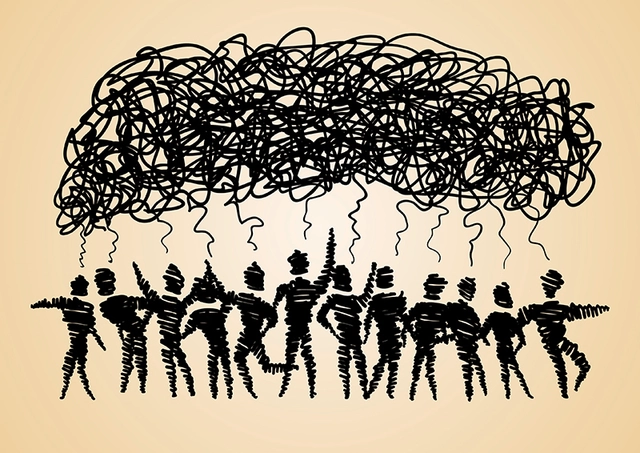
It's no secret that the unique specificities of the architectural profession can lead to a lot of jargon. In fact for many non-experts, the opaque nature of architectural language can be one of the most significant barriers to taking part in a discussion about their local environment. But why this juxtaposition between regular and professional speech? If we wish to make the architecture profession less homogenous, shouldn't we conceptualize a new way of talking about architecture? That's why we want to hear from our readers: which words do architects use too much? And what are the wider effects of this language, both inside and outside of the architecture profession?
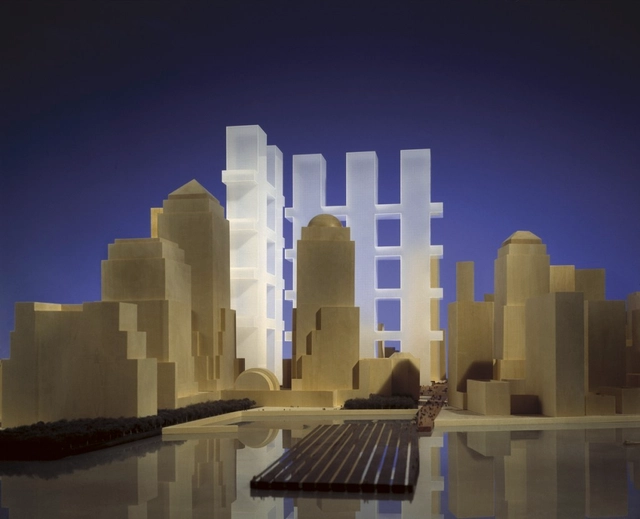
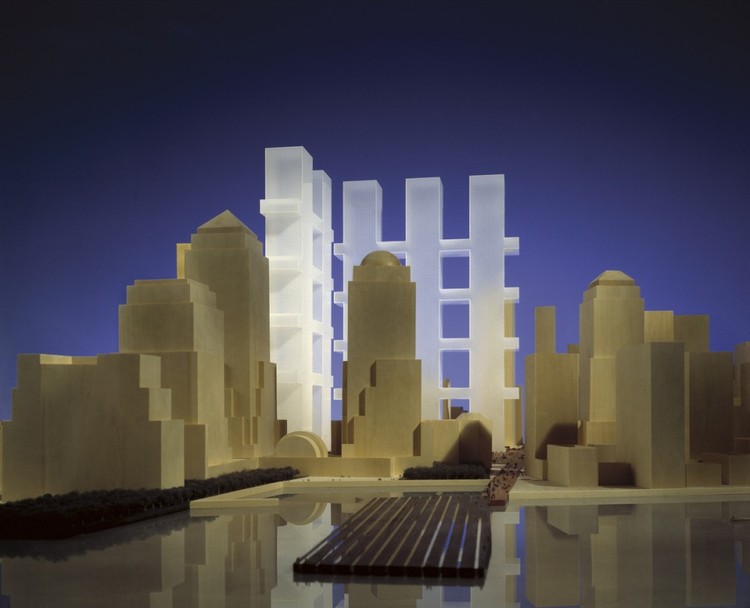
In It’s A Wonderful Life the film’s protagonist George Bailey, facing a crisis of faith, is visited by his guardian angel, and shown an alternate reality where he doesn’t exist. The experience gives meaning to George’s life, showing him his own importance to others. With the increasing scale of design competitions these days, architectural “could-have-beens” are piling up in record numbers, and just as George Bailey's sense of self was restored by seeing his alternate reality, hypothesizing about alternative outcomes in architecture is a chance to reflect on our current architectural moment.
Today marks the one-year-anniversary of the opening of Phase 3 of the High Line. While New Yorkers and urbanists the world over have lauded the success of this industrial-utility-turned-urban-oasis, the park and the slew of other urban improvements it has inspired almost happened very differently. Although we have come to know and love the High Line of Diller Scofidio + Renfro and James Corner Field Operations, in the original ideas competition four finalists were chosen and the alternatives show stark contrasts in how things might have shaped up.
On this key date for one of the most crucial designs of this generation, we decided to look back at some of the most important competitions of the last century to see how things might have been different.
This article is part of ArchDaily Essentials, a series of articles which give you an overview of architecture's most important topics by connecting together some of our best articles from the past. To find out more about ArchDaily Essentials, click here; or discover all of our articles in the series here.
https://www.archdaily.com/773836/ad-essentials-renderingAD Editorial Team
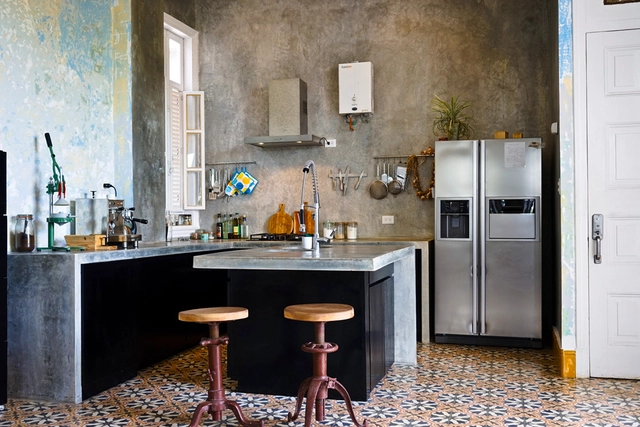
Conceptual artist Wilfredo Prieto's kitchen. He designed the kitchen himself and had it made by local craftspeople. Image Courtesy of Hannah Berkeley Cohen via Curbed
For decades, Cuba's communist economic system has essentially outlawed all forms of private architectural work. In 2011 though, wide-ranging economic reforms brought a challenge to this status quo. In this article, originally published on Curbed as "In Cuba, Architecture and Design Blossom Under New Laws," Julia Cooke explores how these laws to bring about a more flexible economic system are allowing a different kind of architecture to emerge.
This May, visitors were allowed into Havana's long-defunct Tallapiedra electric plant for the first time since it was shuttered in the 1960s. They could climb the grated stairs to the plant's nave, see how the light glinted off unchipped white and green tiles set in place in 1915, how tiny, stalky trees had grown out of clumps of dirt where machinery once sat, how the high, church-like central space and the split-level, open workspaces on one side might be adapted to any number of uses. The opening—for locals and some of the thousands of tourists in Cuba for the Twelfth Havana Biennial—was the work of Claudia Castillo and Orlando Inclán, and their eight-year-old think tank, Habana Re-Generación.
The Barcelona Pavilion was officially only used once, and that was on the 27th of May, 1929, when King Alfonso XIII of Spain participated in a ceremony for its opening. Its role, according to an official statement by President Paul von Hindenburg, was to “present the Spirit of the New Germany: simplicity and clarity of means and intentions—everything is open, nothing is concealed.” As the first official participation of Germany in an international event since the catastrophic end of the First World War, it was a day of enormous symbolic importance, attended by diplomats, aristocrats and dignitaries. Within a few years the peace would collapse, in Barcelona as much as in Berlin, but for a moment, in May, modernity was met with optimism.
The Barcelona Pavilion was intended to embody this moment. Free of external ornament, the building was made of the most luxurious materials. Walls were fashioned of thin plates of luminous semi-precious stone, from green polished marble to golden onyx. According to Philip Johnson’s influential account, they didn’t physically limit space, but rather suggested flowing movement, and didn’t divide so much as bind; bringing the inside to the outside by continuing beyond the roofline into the garden. While the columns provided a kind of cartesian grid of points tethering the roof, the walls were positioned freely. In the courtyard was a bronze nude, arms aloft in a gesture that might be dance, might be grief, reflected in a still pool. With the asymmetrical walls, the luxurious stone, the bright light, the podium on which it sat; the pavilion was at the same time both a hyper-modernist building, and a classical ruin.
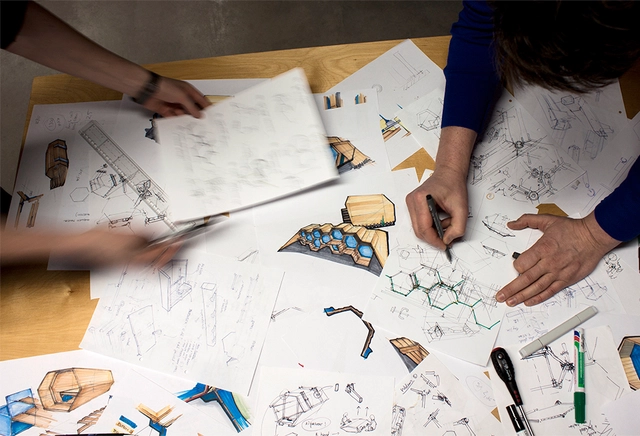
Every good design should start with a sketch. The problem, as everyone knows, is that computers are killing sketching. Or are they?
To begin with, it’s questionable whether there really has been a decline in sketching, given the conviction with which so many architects defend the importance of hand drawing. Even for the most technologically savvy architects, many simply don’t see an alternative to the humble pen and paper.
However, this doesn’t mean that all is well when it comes to sketching. Often the hardest part of the design process is to maintain a great concept - usually discovered through a sketch - when translating a design into programs such as Revit which are necessary in modern architectural practice.
Prefabrication is not a new idea for architects. It was a staple of the post-war modernist ideal, a great dream that precise modern structures would be created in clean factories and then shipped to site. However, the realities of post-war prefab were far from this ideal; buildings were often poorly designed or poorly constructed, and by the end of the century prefabrication was merely a footnote in the catalog of construction methods. In the 21st century though, prefabrication is experiencing a resurgence. In this article originally published on Autodesk’s Redshift publication as "Future of Construction: Your Next Building Won’t Be Built—It Will Be Manufactured," Autodesk's Phil Bernstein looks at the current wave of prefabrication, and answers the question: why now?
And BSB isn’t the only one with this type of ambitious plan for the future of construction. The industry is entering the age of the mass-manufactured building. Prefabrication is growing up, reaching a new level of maturity that is now going to change the industry and define new categories of building. Check the trailer-park stereotype at the door.
There is perhaps no better display of modern architecture’s historical victory than Jacque Tati’s film Playtime. In it, a futuristic Paris has left-for-dead the grand boulevards of Haussmann, in favor of endless grids of International Style offices. The old city is reduced to longing reflections of Sacré-Cœur and the Eiffel Tower in the glass of these shiny new monoliths. But the irony central to the film is that this construction is created through mere surface treatments, and as the narrative unfolds, cheap mass-production withers in a world where the veneer has triumphed over craftsmanship and polish. In short, Modernism hasn’t always been all it's cracked up to be.
In the Museum of Modern Art’s new exhibition, "Endless House: Intersections of Art and Architecture," the simplicities of mass-market modern homes are abolished by artists and architects who, in examples from the 1940s to the present, have chosen to use the dwelling as a platform for universal messages and as an arena for architectural experimentation. In the same way that photography freed painting from the terrestrial concerns of realism, the simplicity of modernism liberated artists and architects to subvert extant conventions of buildings.
Often, all that is needed for that big break in your career is getting experience at the right firm. But getting your foot in the door is daunting, especially if your ideal firm is one where thousands of other architects are applying constantly, regardless of whether a vacancy has been advertised. In this article originally posted on The Architect's Guide, Brandon Hubbard reaches out to some of the world's top architecture firms (Zaha Hadid Architects, Snøhetta, Perkins+Will, BDP and Callison) to find out how you can maximize your chances in the application process.
I recently reached out to several of the world’s top architecture firms and asked them a series of questions on what they look for in potential architecture job applicants.
After my discussions with these firms I discovered a common theme in how they acquire many new hires. As I covered in a previous article, Want a Great Architecture Job? Don't Send a Resume, many new employees are found through personal references and word of mouth. Developing these relationships within the architecture community is essential for a successful career.
The questions are structured to cover the various steps of the architecture job application process, from the first point of contact to the interview.
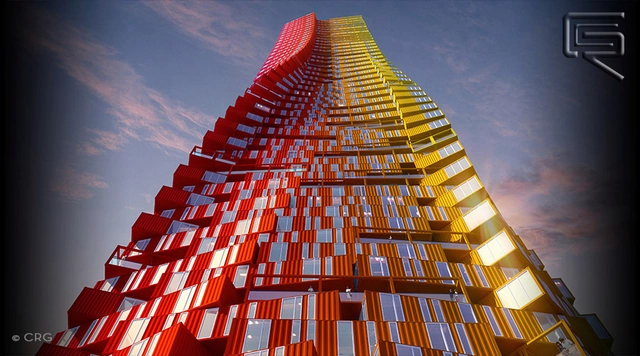
At ArchDaily, we believe it's important to keep our readers up to date on all the most interesting developments in architecture. Sometimes, we will present ideas and projects with a critical eye; however, in many cases we simply present ideas neutrally in the hope that it will spark some discussion or critical response within the profession. Recently, a series of connected news articles about proposals for high-rise shipping-container housing provoked just such a response from Mark Hogan, principle at San Francisco-based firm OpenScope. Originally posted on his blog Markasaurus here's his reasoning for why, contrary to the hype, "shipping containers are not a 'solution' for mass housing."
What’s wrong with shipping container buildings? Nothing, if they’re used for the right purpose. For a temporary facility, where an owner desires the shipping container aesthetic, they can be a good fit (look, I’ve even done a container project!). For sites where on-site construction is not feasible or desirable, fitting a container out in the factory can be a sensible option, even though you’ll still have to do things like pour foundations on site. It probably won’t save you any money over conventional construction (and very well might cost more), but it can solve some other problems.
The place where containers really don’t make any sense is housing. I know you’ve seen all the proposals, often done with an humanitarian angle (building slum housing, housing for refugees etc) that promise a factory-built "solution" to the housing "problem" but often positioned as a luxury product as well.
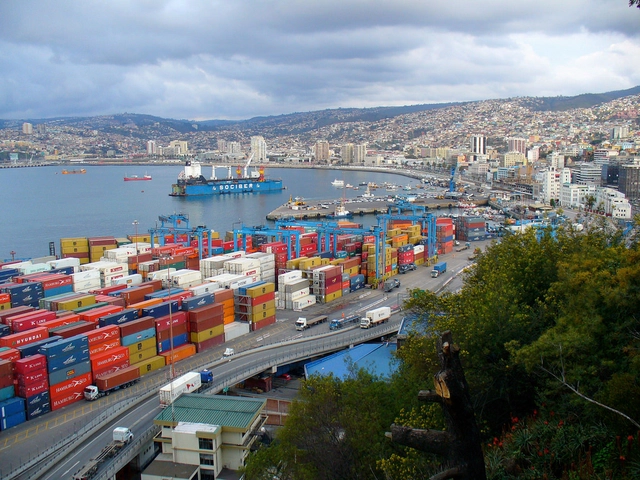
Restricted. Vast. Harsh. The image of a port calls to mind many words, but pedestrian-friendly and aesthetically-pleasing are rarely among them. With their precarious stacks of shipping containers and large pieces of machinery, ports are places that people tend to want to avoid. Yet for logistic and historical reasons, ports are often located near the heart of cities, taking away valuable urban space and desirable waterfront land from residents. This does not need to be the case.
A new report released by The Worldwide Network of Port Cities titled “Plan the City with the Port: Guide of Good Practices” offers strategies for cities to optimize the effectiveness of their harbors while reclaiming as much of the land as possible for the people. The guide uses case studies from urban designs in various stages of completeness to illustrate different techniques available to improve the environment of a port within its city. Although these approaches are designed with a specific program in mind, many architectural and urbanistic ideals can be derived from them to be used in variety of circumstances. Read on for our summary of the report’s recommendations.
ArchDaily is continuing our partnership with The Architectural Review, bringing you short introductions to the themes of the magazine’s monthly editions. In this introduction to the August 2015 issue, AR editor Christine Murray takes on the disheartening architectural scene in North American cities from New York to Toronto, arguing that "NYC is not where we found a new American architecture" and asking: "Why not give the young guns a tower or a Whitney, let them stretch their legs?"
The latest New York towers are more billboard than building. Like celebrity-endorsed perfume - fancy box, smelly water - the architecture matters less than the artist and his (yes, they are all men) pen’s effluent black-ink concept scrawl.
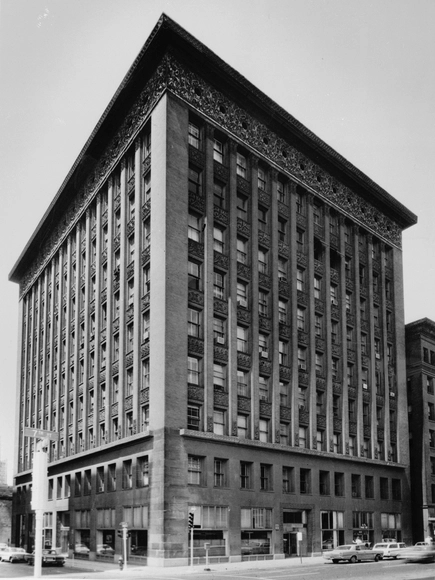
Wainwright Building / Adler & Sullivan. Image Courtesy of Historic American Buildings Survey
Welcome to the second installment ofThe Long(ish) Read: an AD feature which uncovers texts written by notable essayists that resonate with contemporary architecture, interior architecture, urbanism or landscape design. In this essay, written in March 1896, Louis H. Sullivan (1856-1924) discusses the construction of high-rise office buildings. Sullivan, often described as the 'Father of Skyscrapers' and the 'Father of Modernism', was a mentor to a number of US architects in and around Chicago — including Frank Lloyd Wright and the Prairie School. In this essay, written when he was forty years of age, Sullivan lists his solutions to the many problems associated with building tall, and doing so with a degree of artistic flair.
Architects love innovation; they are usually on the lookout for the latest innovation in materials and products which they can incorporate into their inevitably innovative designs. And yet, there's one place where they rarely innovate: their own business. This article, originally posted on Archipreneur as "Branching Out: 9 Architects Who Created Innovative Products," explores the world of architects who are innovating in other ways.
For decades the architectural business model has remained unchanged. While other industries have taken cues from the increasingly popular start-up mentality seen in the technology sector, architects have stuck to the outmoded practice of trading time for dollars. In a competitive global economy, this model is highly susceptible to changes in the real estate market and has limited opportunities for growth. These realities have propelled some architecture graduates to consider alternative career paths in which their unique skillset offers them a competitive advantage.
In contrast to the current business model of most architecture firms, we’ve gathered nine examples of architects who have created innovative products and services. These endeavors offer numerous advantages when it comes to growing a business because unlike the consulting model, product creation is highly scalable and has the potential to provide a continuous passive income stream.
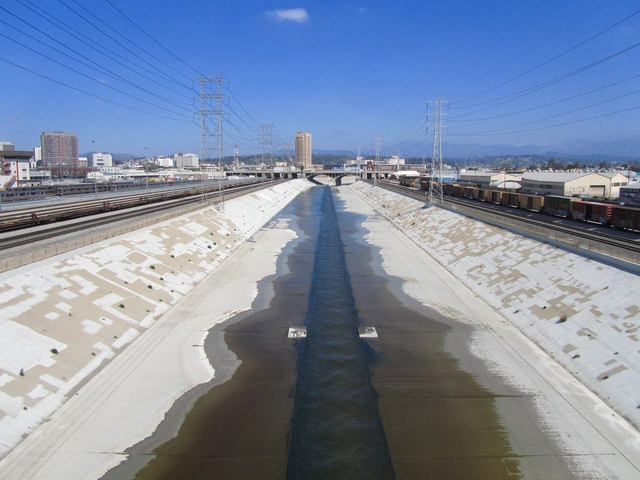
Since the Los Angeles Timesbroke the news that the LA River Revitalization Corp has enlisted Gehry Partners to lead a new master plan effort for the Los Angeles River, there have been a slew of negative responses: the Friends of the Los Angeles River have refused to endorse the Gehry effort, reactions collected by the Architects Newspaper ranged from skeptical to angry, and Alissa Walker at Gizmodo did not mince words when her headline declared “Frank Gehry is the Wrong Architect to Revitalize the Los Angeles River.” These responses raise real and legitimate concerns - progress on the LA River has been years, if not decades, in the making. There is already a master plan, prepared by Mia Lehrer and Associates, and the US Army Corps of Engineers approved a plan to restore 11 miles of the river, known as Alternative 20, just this past July. There are worries that this new effort could threaten the current approvals and funding.
Frank Gehry is an easy target for criticism. His buildings can be polarizing, and his detractors are quick to seize on any defect. Details are trickling out slowly, but a recent presentation to reporters revealed that the plan would eventually identify locations for parks and real estate developments, as well as establish a unified design theme for future improvements such as pedestrian and bicycle paths. For his part, Gehry has emphasized the water reclamation aspects of the project - an especially timely subject in drought-stricken California. And in an interview with Frances Anderton on KCRW’s “Design and Architecture,” Gehry was quick to clarify, “It’s not a building, I’m not doing a building!”
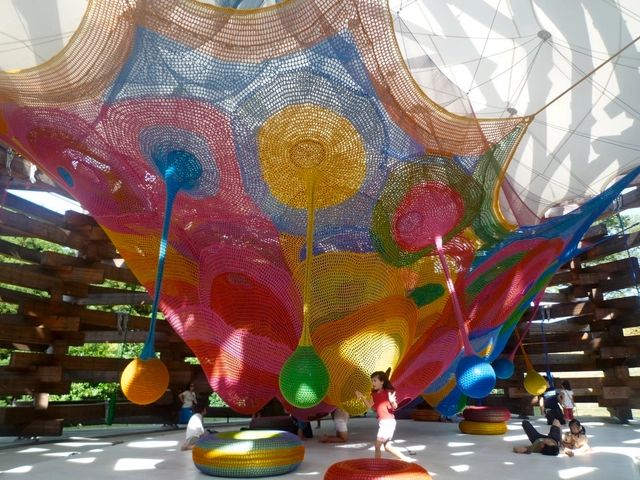
Former US President Theodore Roosevelt once said that play is a fundamental need — so much so that playgrounds should be provided for every child, just as schools are.
In countries around the world, architects are becoming increasingly innovative to create environments where children can explore their imaginations.
Today, playgrounds can float entirely on the ocean, or take the shape of an enormous, colorful crocodile.
Keep scrolling to see some of the best playground designs around the world that will make you want to be a kid again.











.jpg?1442491726)