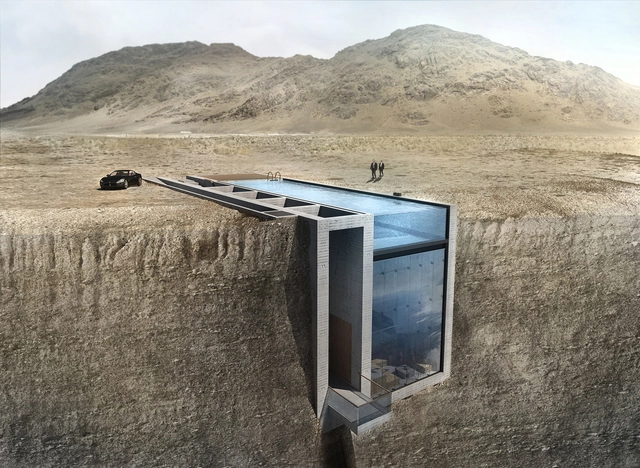
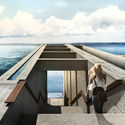
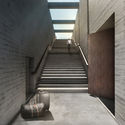
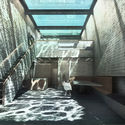
When ArchDaily published “Live on the Edge with OPA’s Casa Brutale” in July of last year, we expected it to be popular on our site, but few anticipated exactly how much attention the project would receive—enough to secure a position in the top 10 most read articles on the site in 2015. But what happened next was perhaps more astounding. By the end of the week, the project had been picked up by the gamut of non-architecture news outlets ranging from Slate to Yahoo to CNET to CNBC. For a few short days, it became difficult to traverse the wild expanses of the internet without a sighting of the project’s lead image, typically accompanied by a hyperbolic headline along the lines of “This Beautiful, Terrifying House is Literally Inside a Cliff.”
But despite the enormous traction, with seemingly impossible features like a clifftop, glass-bottomed swimming pool, the project still seemed to be destined for "paper architecture" status. Yet fast forward to today and the house has (incredibly) found a willing client, and is about to break ground on construction. How did this happen, and what takes architecture from viral sensation to real-life construction project?
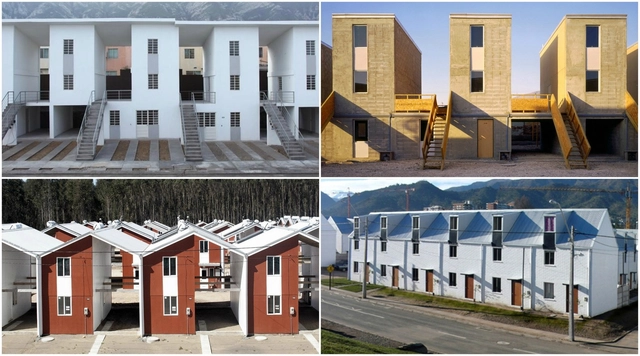
Through the work of his firm Elemental, Aravena is known for his interest in incremental, participatory housing design: a common-sense way of working within financial restraints and a cornerstone of Elemental’s studio work. The motto—focus first on what is most difficult to achieve, what cannot be done individually, and what will guarantee the common good in the future—resulted in a “half a house.” First introduced over a decade ago, the model consists of an expandable 40 square-meter (431 square-feet) container with basic infrastructure (partitions, structural and firewalls, bathroom, kitchen, stairs, a roof) built-in and added to over time. It is not only an achievement from a conceptual and project management standpoint, but also an aesthetically open and diverse project. From this one idea stemmed 100 variations.
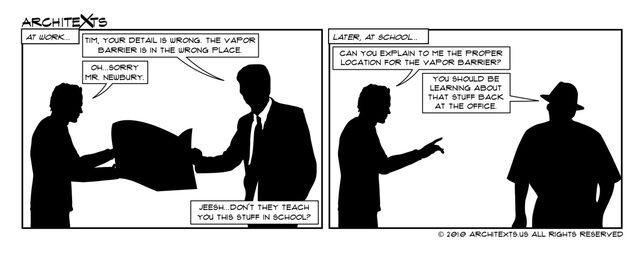
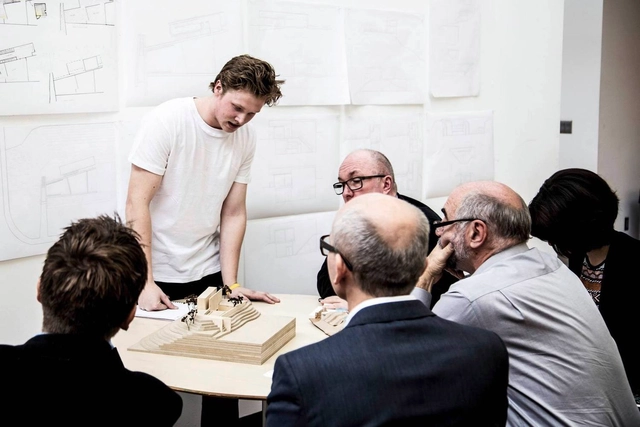
The classroom and the office are the two main settings where we learn about the practice of architecture, yet both expect the other to fill in more than a few gaps. Maybe schools shouldn’t emphasize the “technical details” and instead focus on teaching how to design; or maybe a little technical knowledge would be great preparation for that first job out of school (where you won’t get to design much more than a straight line). No matter which ideology you subscribe to, there will always be a disconnect between the classroom and the office.
On April 26th 1986, the Chernobyl Nuclear Power Plant in the city of Pripyat in northern Ukraine suffered a catastrophic failure, resulting in a nuclear meltdown and a series of explosions which scattered radioactive material across large areas of Ukraine, Belarus and Russia. More than 50,000 people were evacuated the following day, and over the next 14 years another 300,000 people were moved, leading to an exclusion zone today measuring 2,600 square kilometers that will likely remain in place for hundreds of years. To this day, the human cost of the disaster is still unknown, with estimates that in their lifetimes, anywhere between 4,000 and 200,000 people will be affected by cancers attributable to the incident. Along with the Fukushima Nuclear Disaster of 2011, the Chernobyl Disaster is one of only two level 7 nuclear events in history.
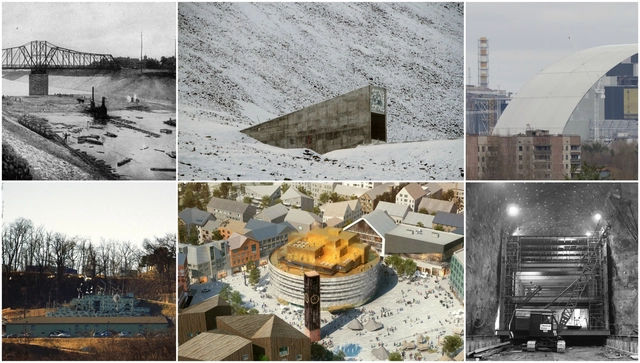
Today, exactly 30 years later, the incident at Chernobyl remains one of the most poignant demonstrations of humanity’s mastery over its environment, and also one of the most powerful demonstrations of how easily, and how catastrophically, that mastery can go awry. But humans are if nothing else resilient, and throughout history have used every means at their disposal to put right the problems they have caused for themselves - including a number of structures constructed to mitigate the effects of man-made disasters, both from humanity’s past and its possible future.
The following article was first published by Volume Magazine in their 47th issue, The System*. You can read the Editorial of this issue, How Much Does Your System Weigh?, here.
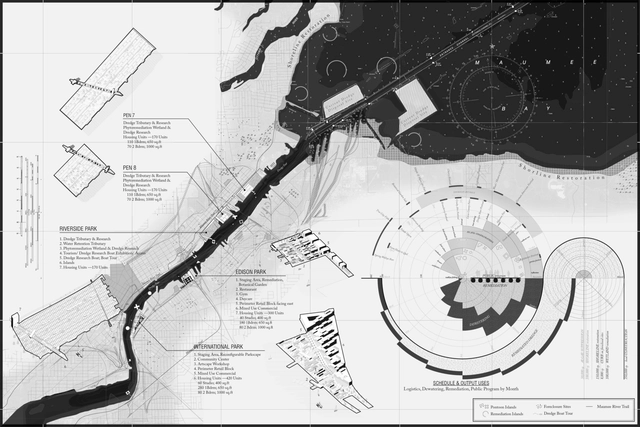
The movement and management of sediment is arguably the largest continuous project of spatial manipulation on the planet. This ongoing battle between geology and industry is most apparent through the act of dredging. Dredging is the excavation, gathering, transport, and disposal of sediment from subaquatic areas, enacted to maintain depths of shipping channels, harbors, and ports as well as to reclaim land, create sea defences, and remove toxic chemicals.[1] The primary impetus for dredging is to sustain logistical routes for the shipping industry by countering the forces of erosion, movement, and settling of sediments. Like the logistics of the global shipping industry it serves, dredging is a continual process whose magnitude and significance have fostered their own series of ‘geologics’ – the engineering of material processes that operate in temporal and spatial scales that are geological in scope.[2] Currently in the United States alone, more than four hundred ports and over 25,000 miles of navigation channels are being dredged.[3]
Plan Selva (Jungle Plan) -- a project to build modular schools in Amazonian villages -- was selected as the focal point of the Peruvian pavilion at the 2016 Venice Biennale. In light of this, we take a look at the work of two other organizations that have been carrying out major projects in the country's largest natural region: ConstruyeIdentidad, which creates innovative projects using traditional materials and techniques and an exchange of ideas between students, professionals and the community; and Semillas, an organization that designs educational spaces used as areas of communication between indigenous communities, promoting the development of these relationships and exchanges through participatory processes.
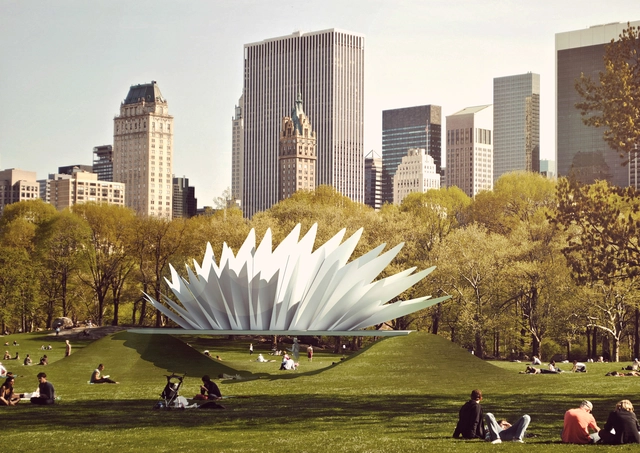
Design group prescription., in conjunction with Arup, have developed a sophisticated sundial based off of solar path data that takes the form of a flowering fan. The geometry is optimized using the specific solar data from any world location, giving the sundial a completely unique form based on where it is constructed, and is materialized in a strong, flexible plastic through a 3D printing process.
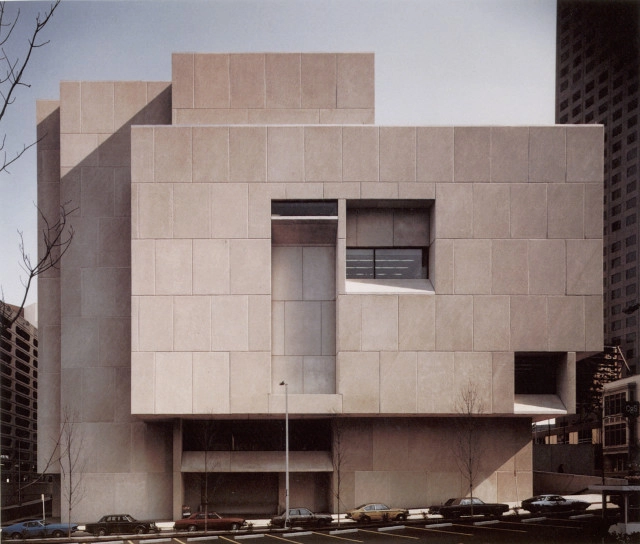
Marcel Breuer's Central Library in Atlanta. Image via Docomomo
The past two weeks have seen an interesting mixture of comments on ArchDaily. Topics of conversation have ranged from Brutalist preservation to the future of living, and from neoliberal planning systems to restrictive copyright laws, raising insightful questions, interesting ideas and impressive arguments. Read on to find out what has been occupying our readers’ minds these past two weeks.
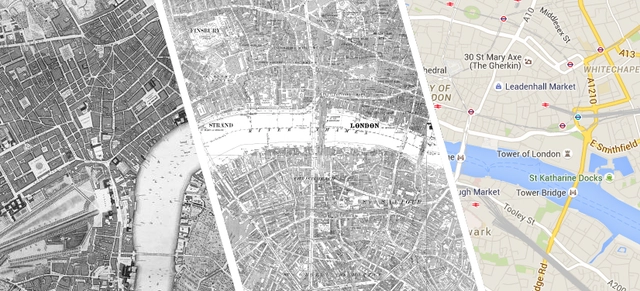
It's no secret that architects are often fascinated by maps, and in the age of Google - where access to accurate maps of almost anywhere in the world has become universal - maps have become one of the most powerful ways to understand our cities. Interestingly, Google has in a way enabled a new way to interrogate maps from the past, as historic maps can be more easily overlaid with the Google interface to make comparisons to the present day. That's just what the website Locating London's Past has done, creating a tool to compare three maps: the current version of Google Maps, the first Ordnance Survey map from 1863-80, and John Rocque's 1746 Survey of London, allowing web users to see the growth of the UK capital over the past 270 years.
Young designers, fresh out of school, often have incredible potential to contribute to their new firm: with fresh skills and capabilities that may have passed by the company's older members, they are in an excellent position to make their mark. But maximizing this potential may require expensive training courses, and asking your firm for that opportunity can be daunting. In this article originally published on ArchSmarter, Michael Kilkelly recounts a tale from his own early years as an architect to demonstrate that getting your firm to pay for training may be simpler than most young architects imagine.
When I was a young architect, only a few years out of school, I became interested in 3D rendering. This was back in the mid-nineties so the technology was primitive compared to today. 3D Studio Max had just come out and my firm had a copy.
After work, I would play around with the software. I did a few renderings of the project I was working on as a way to learn the software. The project designer saw them and got excited.
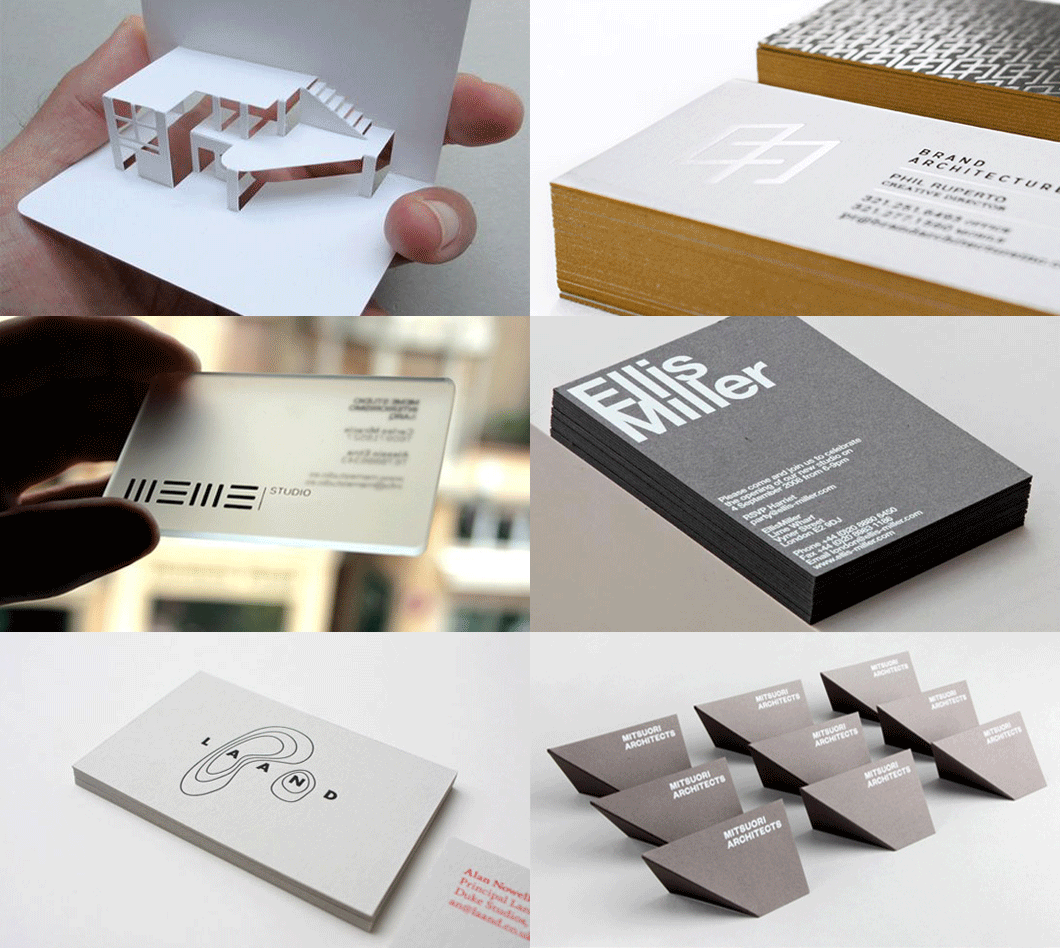
Establishing professional contacts in architecture – and well, in any field, really – has changed dramatically in the last decade, passing from the paper world to the virtual realm. However, small details can still make a big difference when it comes to captivating a potential new client or establishing a new partnership -- and these details aren’t unique to the virtual world.
Among these smaller, but powerful, details is the business card. Timeless and effective, the impact that a business card can have when meeting someone new cannot be overlooked. While simple, monochrome cards with muted prints are well liked among architects, exploring new forms, unusual materials and bold colors can result in a unique card that will leave a lasting impression on the person who receives it.
Below we’ve compiled some examples of cards that can serve as inspiration for architects, engineers, designers, landscapers and urbanists:
Learning how to design is hard. It requires students to learn an entirely new way of thinking and seeing the world. It even requires a whole new vocabulary. So architecture school is rightly hard. However, architecture school is known for being hard for the wrong reasons; studio is considered a mystical place on college campuses full of sleep-deprived students who are designing simply because professors decree that they must—so much so that when a non-architecture student meets an architecture student on the Quad they immediately offer their condolences. This perception exists because studio culture has not yet evolved from its rigid hierarchy, originating in the Beaux Arts teaching method, that thrives on competition and intensity and creates a breeding ground for unhappy students.
The following article was first published by Volume Magazine in their 47th issue, The System*. You can read the Editorial of this issue, How Much Does Your System Weigh?, here.
Neoliberal post-fordism poses a dramatic challenge to urbanism as we have come to know it since the early 20th century. The public planning process has become more and more an embarrassment and obstacle to urban and economic flourishing. It’s a relic of a bygone era. The high point of urban planning was the post-war era of socialist planning and re-construction of the built environment. With respect to this period we can speak about physical or perhaps ‘positive planning’, in the sense of governments formulating concrete plans and designs about what to build. This era has long gone as society evolved beyond the simple fordist society of mechanical mass production to our current post-fordist networked society. When a few basic standards were functionally separate, optimized and endlessly repeated, central planning could still cope with the pace of societal progress. The world we live in today is far too multi-faceted, complex and dynamic to be entrusted to a central planning agency. The old model broke apart as it could not handle the level of complexity we live with and our cities should accommodate. The decentralized information processing mechanism of the market was indeed capable of managing such levels of complexity and, for this reason, has effectively taken over all positive decision-making processes.
https://www.archdaily.com/785774/coup-de-grace-patrik-schumacherPatrik Schumacher
The movement towards gender equality in the architecture profession has been gaining attention for some time now, led in large part by surveys of the profession such as the AIA’s recent diversity study or of course the annual Women in Architecture survey by The Architectural Review and The Architects’ Journal. However, recently the debate around gender has taken on a different form; in a response to the AR's most recent survey published in RIBA Journal, for example, the curator of Turncoats and founder of the practices Interrobang and Studio Weave Maria Smith argues that it is time to move on to a more nuanced depiction of the problem. “I’d like to see a radical change in how this discussion is framed,” she says. “We must move away from generic indignation and start to properly interrogate why both men and women practice architecture the way they do.”
In light of this slow movement towards action in place of indignation, on International Women’s Day last month we asked our readers what exactly should be done to eliminate gender inequality in the field of architecture. The question provoked a broad and at times incredibly heated discussion - read on to find out what our readers had to say on the topic.
The love affair between architecture and film has been well documented. From huge breathtaking sets to small spaces for intimate conversations, the architecture in a film often plays as strong a role as any character in translating the director’s vision to his/her audience. In constructing the environments of their narratives, the great filmmakers could even be considered architects in their own right—that's the claim presented in this video from the British Film Institute, which looks at the work of celebrated director Jean-Luc Godard and how the architecture in his films transforms to suit their tone. In pictures such as À bout de souffle (1960), Le Mépris (1963) and Week End (1967), Godard uses streetscapes to convey optimism or pessimism, uses walls to emphasize the emotional distance between lovers, and even includes a cameo from the particularly photogenic Villa Malaparte. Watch the video to learn more about the techniques used to achieve these moods.
These days, nearly every architect uses a computer. Whether it’s for 3D modeling, documentation or even creating a program spreadsheet, computers are well entrenched within the profession. Architects now need to know almost as much about software as they do about structures, building codes, and design.
As our tools become more powerful and sophisticated, we need to evolve and develop our working methods in order to stay competitive. I’ve written previously about how architects should learn to code. A lot of the problems we need to solve don’t fall within the capabilities of off-the-shelf software. We need to tweak and customize our tools to work the way we work. Creating our own tools and software is one way to do this.
That said, the reality is that not everyone has the time or the inclination to learn how to code. It’s time-consuming and you’ve got projects to run, show drawings to review, and buildings to design. Fortunately there are new tools available that deliver the power of programming without the need for all that typing.
Enter computational design and visual programming.
Since Zaha Hadid’s death two weeks ago, we’ve been thinking a lot about her legacy. Hadid’s accomplishments in architecture are impressive not only because of her innovative designs, but because she succeeded in a male-dominated profession, and undoubtedly experienced sexism along the way. In our webcomic, Architexts, we use humor to cope with various aspects and stereotypes of the architectural profession, including negative ones. With our forthcoming book, Architects, LOL, we hope to share the stories--your stories--that paint a more realistic picture of the profession, rather than an idealistic one that most of us can only dream of.
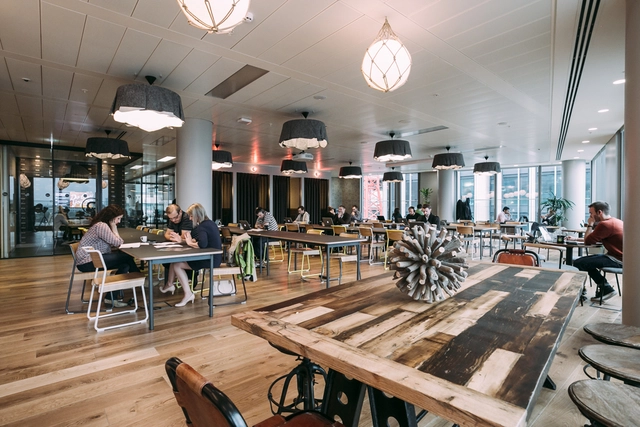
Common area in the WeWork space in London. Image Courtesy of WeWork
In this article originally published by Archipreneur as "Space as a Service: Business Models that Change How We Live and Work," Lidija Grozdanic looks into the recent proliferation of coworking services - as well as the new kid on the block, coliving - to discuss how the sharing economy is redefining physical space as a highly lucrative part of the service industry.
Some of the most innovative and profitable companies in the world base their business models on commercializing untapped resources. Facebook has relied on its users to generate content and data for years, and organizations are starting to realize the value of gathering, processing, storing and taking action on big data.
In the AEC industry, some companies are discovering the hidden potential of excess energy that is generated by buildings, while others are looking to utilize large roof surfaces of mega-malls and supermarkets for harvesting solar energy. Airbnb has turned underused living units into assets, and allows people to generate additional income by renting out their homes to travelers.
The traditional notions of "private" and "public" space are eroding under the influence of a sharing economy and technological advancement. Space is being recognized as a profitable commodity in itself.
https://www.archdaily.com/785550/how-coworking-and-coliving-are-redefining-space-as-a-serviceLidija Grozdanic for Archipreneur.com
London-based architecture firm Foster + Partners has designed a central community space for the district, due to be completed in 2018. Image Courtesy of Dubai Design Week
In recent years, it's been no secret that Dubai has been attempting to diversify its industries, as the city moves on from being an oil-based economy. In this article, originally published by Metropolis Magazine as "Dubai: Making a Creative Capital from Scratch," Ali Morris investigates how the city is building its own design district to rival London or New York - and doing so despite starting from almost nothing.
In cities where a faded industrial area exists, a creative community often follows. It’s a well-established cycle of urban regeneration that has played out in Berlin, London, and New York. Attracted by cheap rent and large, empty spaces, the creatives come, building up areas with independent cafés and stores before inevitably being priced out of the market by the very gentrification they helped to bring about.
So what happens in a city so young that it doesn’t have a dilapidated area for the creatives to occupy? When the city in question is Dubai, which was still just a desert fishing settlement until around the 1960s, you build it from scratch, of course. With the second part of a three-phase build unveiled last year, Dubai Design District (known as d3) is a sprawling 15.5-million-square-foot (1.4 million square meter) development located in a desert plot on the eastern edge of the city. Circled by multilane highways and located between downtown Dubai and a wildlife reserve, d3 has been masterminded as a framework from which to grow and sustain a new design ecosystem.
The following article was first published by Volume Magazine in their 47th issue, The System*. You can read the Editorial of this issue, How Much Does Your System Weigh?, here.
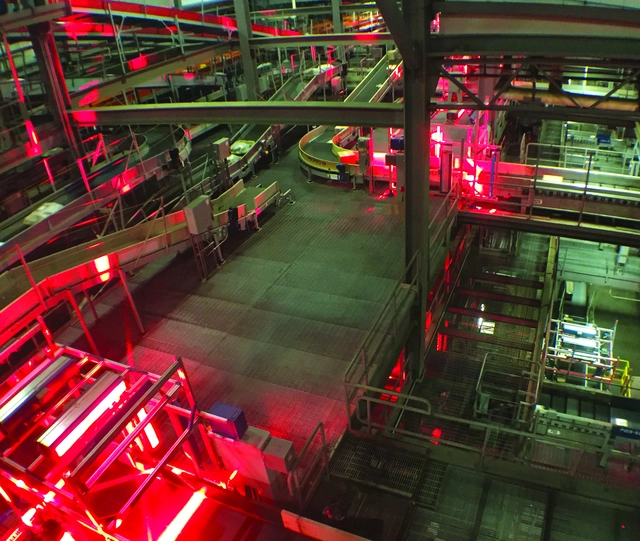
For the United Parcel Service (UPS), space is valued insofar as it grounds the socio-technical assemblages that secure the company’s economy of speed. Holding one of the largest airline fleets in the United States, UPS’s services range from delivering cargo for the US Air Force and e-commerce packages to relocating endangered animal species and partaking in disaster relief. It operationalizes logistics in the space between military and civilian domains and from the scale of cargo for large corporations to small packages for individuals. UPS runs a global logistics network that crosses more than 200 countries and territories and delivers about 17 million packages every day through its planetary ring of Shanghai-Shenzhen-Anchorage-Louisville-Cologne-Dubai.[1] It participates in the making of trans-border infrastructural systems and influences national politics towards the lifting of legal barriers to transnational trade. Yet what makes UPS significant is not its volume of shipment, infrastructural capacity, or magnitude of operational precision, but rather its resiliency and acute performance within the tides of uncertainty.
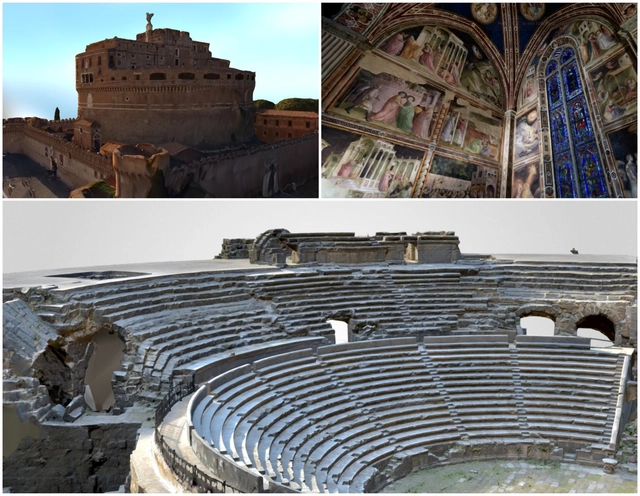
Using photogrammetry to capture and model existing buildings is a fantastic way to share cultural treasures with the world, and with VR features cropping up everywhere even enables us to give people virtual tours of a site of cultural significance from thousands of miles away. But beyond that, capturing a model of a building is also a great way to digitally preserve that structure at a given point in time - this technique is even being used by Harvard and Oxford to protect structures placed at risk by the ongoing wars in Syria and Iraq.
In that spirit, our friends over at Sketchfab have compiled a selection of cultural treasures that have been immortalized on their platform. Read on to see all seven models, and don't forget that you can view all of them in virtual reality using Google Cardboard.
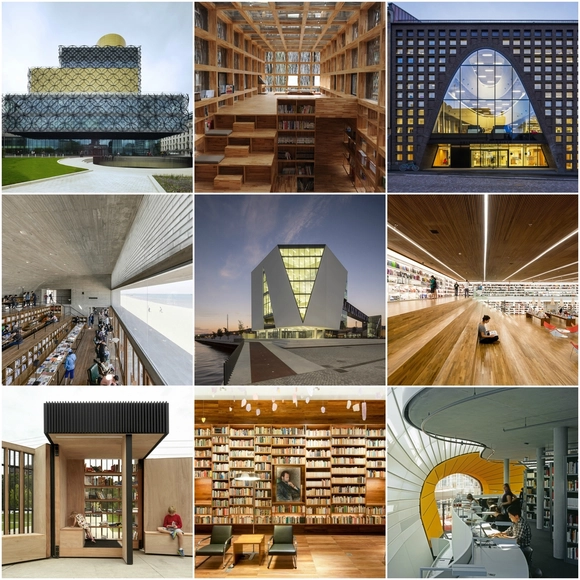
From community meeting hubs to secluded refuges, places to learn and places to study, libraries can be so much more than just a place to a check out a book. With this in mind, we’ve rounded-up 15 awe-inspiring libraries, including a Canadian church that was converted into a library, the first library in Muyinga, Burundi – built using participatory design and local materials – and the largest academic library in Finland. See what makes each of the libraries unique after the break.
The majority of our built environment is designed for people who hear, with little regard for how the hearing-impaired navigate a space. But what would a space look like if it were designed for the deaf? This video from Vox and Curbed focuses on Gallaudet University, the world’s only liberal arts institution for the deaf, and the ways the campus is tailored to the needs of its students. By analyzing what they refer to as “Deaf Space,” the university has been able to pinpoint techniques that not only make communication and wayfinding simpler for the deaf, but to produce spaces that function more effectively and comfortably for everyone. For more on the university and how its members are impacting the architecture world, read the full article over at Curbed here.
UPDATE: The videos are no longer available on YouTube. :(
Over the past 20 years, many of the most renowned European cultural institutions - including ARTE France, Les Films d’Ici, the Louvre, the Ministry of Culture and Communication Department of Architecture and Heritage, Centre Pompidou, City of Architecture and Heritage, Musée d'Orsay and the Fundació Mies van der Rohe - have come together to produce more than 50 architecture documentaries devoted to the most significant achievements of architecture, its beginnings, and the latest creations of the great architects of today. Now, these videos are accessible to the public via the YouTube Channel ACB (Art and Culture Bureau).
Each documentary is approximately 26 minutes long, and focuses on the genesis and impact of a single building that has played a role in the evolution of architecture. Narration is in English, and many of the videos of newer buildings feature interviews with the architects themselves. Check out some of the videos below, or find the entire list here.














.jpg?1460552034&format=webp&width=640&height=580)
.jpg?1460552272 "Ali Al-Sammarraie assembled his \"Detritus Wall\" installation using refuse cardboard and wood. Image Courtesy of Dubai Design Week")
.jpg?1460552021 "The Dubai Design District (d3) is planned as a creative neighborhood within reach of the city’s downtown. Image Courtesy of Dubai Design Week")
.jpg?1460552010 "One of the installations constructed by local designers for the inaugural Dubai Design Week in 2015, \"Yaroof\" by Aljoud Lootah references the traditional form of fishing in the area. Nylon ropes strung on octagonal frames also call to mind arabesque motifs. Image Courtesy of Dubai Design Week")

.jpg?1460552034)