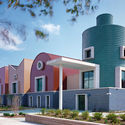
What do Kanye West and Frank Gehry have in common?
As a first impression, not much. However, they have both engaged on stages with striking design details: the use of exaggerated scale and dimensions to manipulate visual perception, bulky concrete walls and slabs to emphasize heavyweight and grandiosity, visible scaffolding to create an industrial, unfinished feel... Sounds familiar, doesn’t it?
Skyrocketing prices of London housing have become so unbearable that many have turned to less-than-ideal compromises. Large homes can be found but come with commutes of hours; places are still available in the city, but only for those with sky-high paychecks. Unable to balance their needs, people are resorting to workarounds that disrupt the existing urban fabric and dissatisfy all involved. Surely we can do better.
The idea of turning cold, raw materials into elegant shapes has always fascinated artists, architects, and designers. In the Carrara marble sculptures of Lorenzo Berdini and Michelangelo, human forms were carved from heavy blocks of stones with great detail and precision. There is no difference in architecture: from taking a light volume off the floor, to leaving a small indentation between a structure and a fence, to altering the lining of a block, there are several devices to make buildings visually lighter.
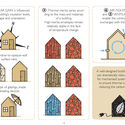
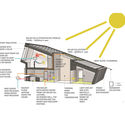
Have you ever found yourself losing a good night’s sleep due to an overly warm room? Or wearing four jackets and a scarf just to tolerate your office’s frigid air conditioning? Truth be told, you can’t please everyone when it comes to adjusting an indoor climate, and there is always that one unfortunate individual who ends up sacrificing their own comfort for the sake of others.
Evidently, there are no ‘universal standards’ or ‘recommended comfort ranges’ in designing building systems, since athletes training in a gym in Mexico will not feel comfortable in an interior with the same building systems of a nursing home in Denmark, for instance. Which is why, if we were to briefly define ‘thermal comfort’, it is the creation of building systems that are adapted to the local environment and functions of the space, cooperatively.
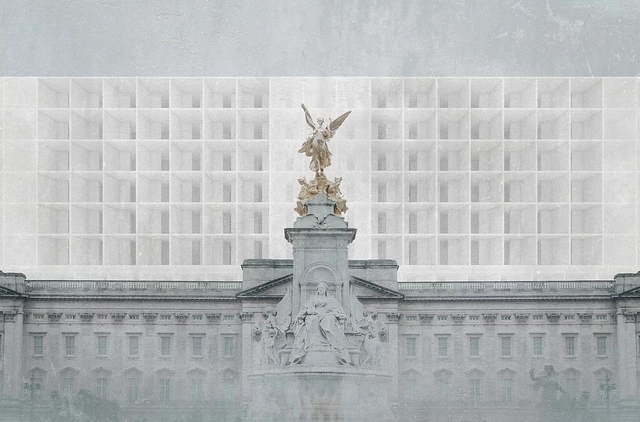
"The rooms are awash with sparkling candelabra, sumptuous carpets, marble columns, sculptures, and expensive artworks,” says Benedikt Hartl, co-founder of Opposite Office of Buckingham Palace. The 775-room, 79-bathroom, 828,821 square foot residence has been home to Britain’s royalty since the 1830s. And, if Opposite Office’s recent Affordable Palace proposal were to go through, could also be home to you.
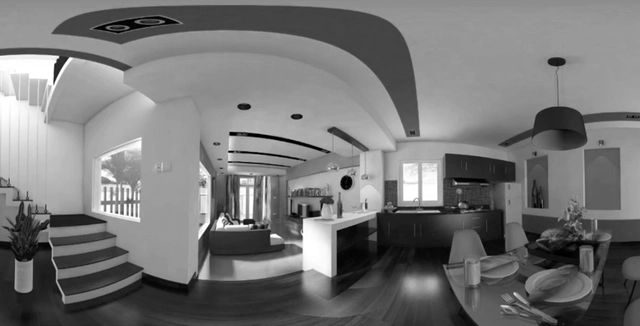
If you're looking to upgrade your standard architecture presentation, SENTIO VR's tutorials can be very useful. They allow you to accurately use Revit, SketchUp, V-ray, 3Ds Max, Lumion and Cinema4D to create 360 renders and perform virtual reality experiences, with both technical and visual advice.
Architects no longer need to drag around giant roller drawings to a job site, now they can flip through a 3D model on an iPad. This shift in technology elevates the conversation about design and simplifies presenting design ideas from the start.
Dimensions of Citizenship: Architecture and Belonging from the Body to the Cosmos, the official US entry at the recently-concluded 16th International Architecture Exhibition of the Venice Biennale, will be on view for the first time in the United States at Wrightwood 659, a new art space located at 659 W. Wrightwood Avenue in Chicago, from February 15 through April 27, 2019. Devoted to exploring the notion of citizenship today and the potential role of architecture and design in creating spaces for it, Dimensions of Citizenship comprises seven unique installations, each created by a transdisciplinary team of architects and designers.
The latest UN special report on climate change, released in October 2018, was bleak - perhaps unsurprisingly after a year of recording breaking temperatures, wildfires, floods, and storms. The report, released by the UN Intergovernmental Panel on Climate Change (IPCC), reiterated the magnitude of climate change’s global impact, but shed new light on the problem’s depth and urgency. Climate change is a catastrophe for the world as we know it and will transform it into something that we don’t. And we have just 12 years to prevent it.
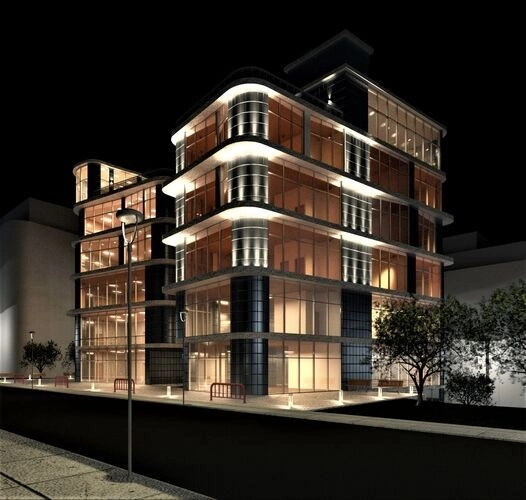
The final look of the building is determined not only by the materials, texture, colors and forms of the space, but also by lighting design. Architecture is all about vision, and lighting enhances the way we perceive architecture even more. For example, in the case of outdoor lighting design, lighting the façade will give a new opportunity for a building to showcase its nightlife “personality” by creating a completely different atmosphere in the surroundings.
Let’s see how façade lighting design can be implemented in Revit with the help of the LIGHTS add-on.
https://www.archdaily.com/910073/facade-lighting-design-in-revit-bringing-buildings-to-lifeSponsored Post
Until a few years ago, kitchens were separate rooms where food was prepared, but nowadays their role has changed. With open-plan designs, often combined with a dining or living room, they are a place for coming together. In many homes, they are even the center of everyday life. This multiple-function space challenges designers to produce coordinated room concepts with a uniform look.
Compromises when it comes to design and color? Nobody wants that when planning their perfect kitchen. There is a demand for materials with surfaces that always look the same no matter the use, for kitchen and living room designs with a uniform look and targeted accents.
https://www.archdaily.com/908272/designed-for-more-than-workSponsored Post
For those in the northern hemisphere, the last full week in January last week kicks off with Blue Monday - the day claimed to be the most depressing of the year. Weather is bleak, sunsets are early, resolutions are broken, and there’s only the vaguest glimpse of a holiday on the horizon. It’s perhaps this miserable context that is making the field seem extra productive, with a spate of new projects, toppings out and, completions announced this week.
The week of 21 January 2019 in review, after the break:
I was part of the last generation of architectural students who didn't use computers (we’re only talking the early 1990’s here; there was electricity, color TV’s, rockets, just no renderings.) In my final year at college I miscalculated how long it would take me to finish my thesis project. As the deadline approached, I realized it was too late for me to match my fellow students’ presentations. At the time Zaha Hadid, and her deconstructivist paintings, set the style for architectural illustration. That meant many student projects being rendered in oil paints on large canvases.
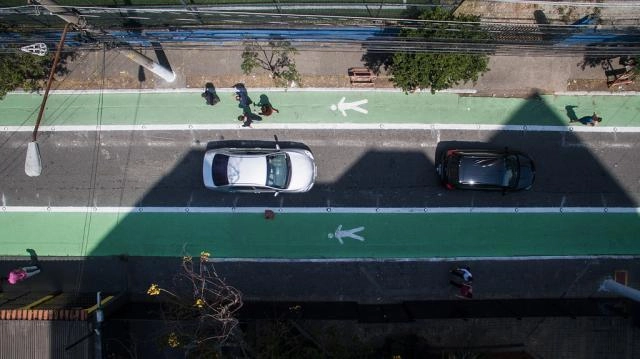
Rua Joel Carlos Borges, in Sao Paulo. Image: Pedro Mascaro/WRI Brasil
The implementation of a Complete Street is something to be celebrated. A Complete Street initiative is a clear indication that a city is striving for urban mobility and seeking a more democratic and safer use of space. Nevertheless, it is vital to measure the impact of these interventions when implementing future actions.
Joel Carlos Borges Street, the first Complete Street in São Paulo, underwent an evaluation two months after it was completed. The study revealed that 92% of its users approved of the project and believed that the changes were beneficial.
https://www.archdaily.com/909371/the-first-complete-street-in-sao-paulo-has-a-92-percent-approval-ratingWRI Brasil
This guide is not a catalog. It is an open invitation to walk around the city and learn more about the architecture in Guatemala City.
The Guide to Modern Architecture in Guatemala City was written by Raúl Monterroso, Gemma Gil, and photographed by Andrés Asturias. In partnership with The Cultural Center of Spain in Guatemala, the guide addresses a descriptive analysis of 35 buildings, structured in five different routes, with the aim of not only synthesizing a series of physical characteristics but to provoke a reflexive, analytical and critical observation of the environment.
As Raúl Monterroso points out, while he shares five sites that every architect must visit, the goal is to introduce people to Guatemala's modern movement. It is an invitation to walk through the city and identify it with a different built heritage, however one that also shapes the landscape and fits into the urban context. Learn more about modern architecture in Latin America, below.
Zinc is a natural element extracted from ores. Its symbol, which appears in the dreaded Periodic Table, is Zn. Through a metallurgical process of burning its impurities (reducing zinc oxide and refining), it assumes a much more friendly appearance, and later becomes the sheets, coils, and rollers used in construction. The main characteristic of this material is its malleability, which allows it to be worked easily, allowing to cover complex forms in facades and roofs of buildings.
Sustainability awards and standards touted by professional architecture organizations often stop at opening day, failing to take into account the day-to-day energy use of a building. With the current format unlikely to change, how can we rethink the way what sustainability means in architecture today? The first step might be to stop rewarding purpose-built architecture, and look instead to the buildings we already have. This article was originally published on CommonEdge as"Why Reusing Buildings Should be the Next Big Thing."
At the inaugural Rio Conference on the Global Environment in 1992, three facts became abundantly clear: the earth was indeed warming; fossil fuels were no longer a viable source of energy; the built environment would have to adapt to this new reality. That year I published an essay in the Journal of Architectural Education called “Architecture for a Contingent Environment” suggesting that architects join with both naturalists and preservationists to confront this situation.
https://www.archdaily.com/909863/why-reusing-buildings-should-and-must-be-the-next-big-thingMark Alan Hewitt
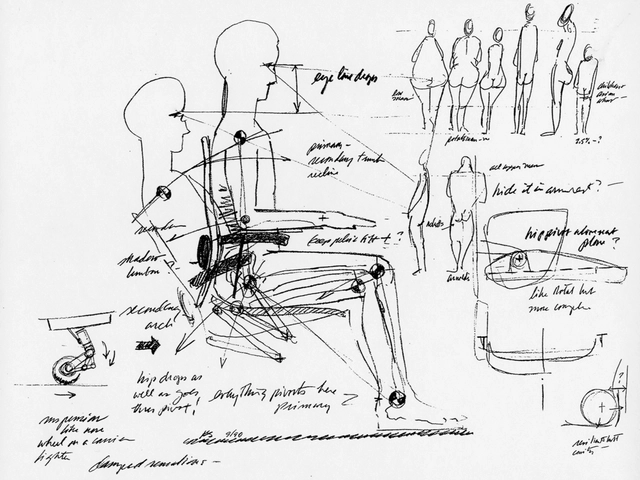
Sketches by Bill Stumpf, that show his desire to design a chair that works for all kinds of bodies. Image Courtesy of Herman Miller
It's common sense: a good design is based on people and what they really need. As architects, are we deepening enough to give the correct answers to the requirements we face in each project?
Herman Miller is a great example of this understanding. Founded in 1905 by Dirk Jan De Pree, the American company produces equipment and furnishings for offices and housing, including a high level of research to understand the human body and the way we inhabit our daily spaces. These investigations, supported by usability testing and multidisciplinary work, results in a large number of furniture pieces and spatial designs that are now used by people around the world.
We had the opportunity to visit their headquarters in Zeeland, Michigan to understand how these studies have been carried out for several decades.
One of the most important factors when designing is the specific climate of the site. This can often present challenges when dealing with extreme climates and it is necessary to use insulating materials that adapt to changing conditions. However, Mexico and its privileged climate can be in an architect's favor. Here, architects can create microclimates and spaces that blur the transition of inside and outside.
Looking for a job isn’t fun. It’s nerve-wracking for the applicant and it’s often time-consuming for the potential employer as well. It can be even worse if you’re job-seeking internationally, hoping for a position with a top firm in the United States. For an applicant from another country hoping to make the move to an architecture career in the US, the process can seem overwhelming: rules and regulations, visa issuance processes, and loads of supplementary documentation necessary for immigration.
Top Architecture Firms enrolled in the Architect-US Programs. Image courtesy of Architect-US.
Videos
Located at the old harborfront of Arhus, Denmark, DOKK1 designed by Schmidt Hammer Lassen architects houses not only Scandinavia’s largest library but also Europe’s largest public robotic parking system. Photograph by Adam Mork.
Saving space, reducing costs and a pleasant user experience – parking doesn’t get much better than this.
Cityscapes around the world are changing, architects face the constant challenge of integrating parking space into new or existing real estate in densely built-up urban environments. While there is a growing ambition to replace cars as a prime mobility tool, we’re far from realizing this goal. Most downtown revitalizations today require structured parking. Where space is tight, access ramp or radius of a conventional parking garage may be hard to fit. Because robotic parking systems require neither these nor access for pedestrians, they can place up to 60% more cars in the same space – increasing the RoI on parking spaces Alternatively, the same number of cars can be parked in 60% of the space of a conventional parking garage, creating significant cost savings in the construction phase. In either case, the user experience in robotic parking systems – brightly lit entrance areas, safe vehicle retrieval processes and reduced car fumes as the search for parking is effectively eliminated – is second to none.
https://www.archdaily.com/909192/how-robotic-parking-systems-enable-urban-architectureSponsored Post
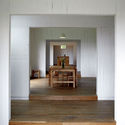
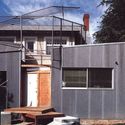
Architects are often bound by the will of their client, reluctantly sacrificing and compromising design choices in order to suit their needs. But what happens when architects become their own clients? When architects design for themselves, they have the potential to test their ideas freely, explore without creative restriction, and create spaces which wholly define who they are, how they design, and what they stand for. From iconic architect houses like the Gehry Residence in Santa Monica to private houses that double as a public-entry museum, here are 9 fascinating examples of how architects design when they only have themselves to answer to.
Online courses have gained more and more recognition in the past couple of years. In addition to the flexibility and convenience of learning wherever and whenever you want, they provide access to content from well-respected professors and colleges. In the field of architecture and construction, online courses have grown exponentially. Last year, we compiled a list that focused mainly on constructive and material techniques. This time we selected 15 online courses covering a range of subjects. We hope this selection of courses can help you with your next project.
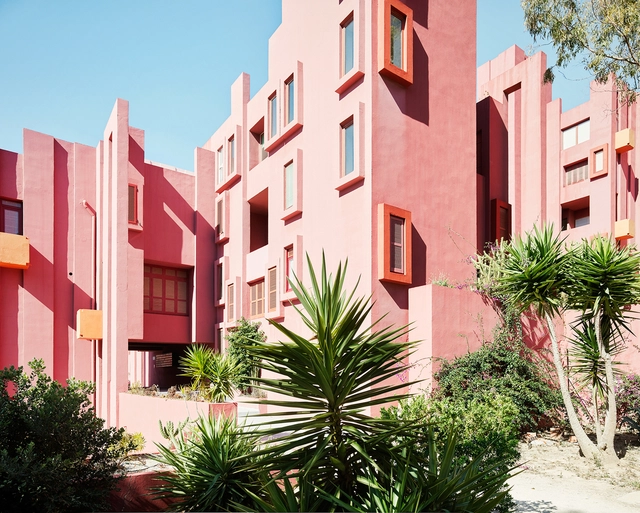
Some architects love color, some are unmoved by it, some hate it, and some love to dismiss it as too whimsical or non-serious for architecture. In an essay on the subject, Timothy Brittain-Catlin mentions the “innate puritanism among clients of architecture,” architects and their “embarrassment of confronting color,” and how “Modernism tried to ‘educate out’ bright colors.” So, while the debate on color in architecture is far from being a new one, it is not finished, and probably never will be.
In today’s world where the exhausted stereotype of the no-nonsense architect clad in black still persists, and while we quietly mull over the strange pull of the Cosmic Latte, there are some architects who haven’t been afraid of using broad swathes of color in their work at all. Read on for a list of 7 such exemplary architects both from the past and the present.
https://www.archdaily.com/881169/7-architects-who-werent-afraid-to-use-colorZoya Gul Hasan


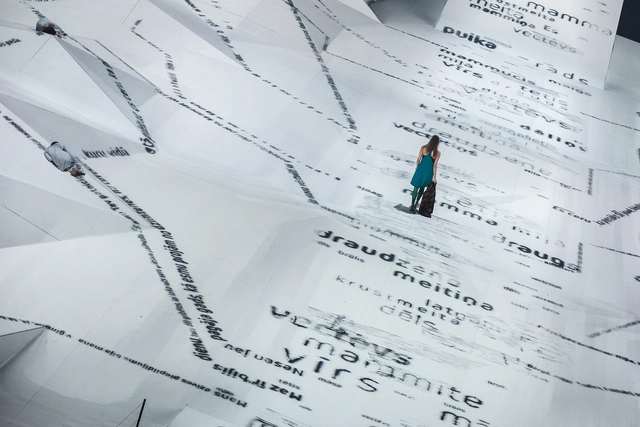



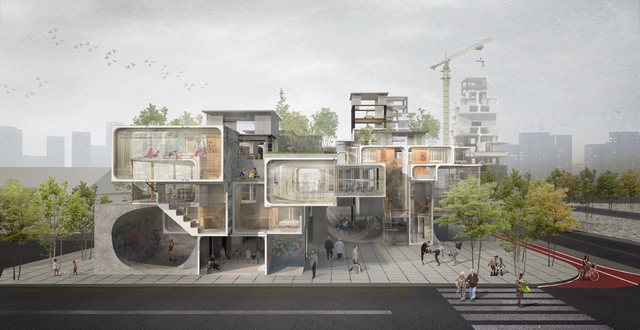






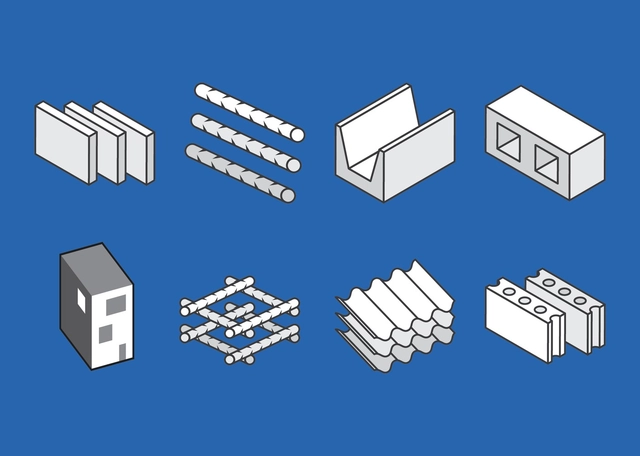
-45.jpg?1545636155 "© Saint-Gobain / illustration by Elisa Géhin")
-44.jpg?1545636138 "© Saint-Gobain / illustration by Elisa Géhin")










.jpg?1547587025)








.jpg?1507476262 "Casa Batlló. Image © <a href='https://commons.wikimedia.org/wiki/File:Barcelona_Casa_Batll%C3%B3_DachterrasseKamine.jpg'>Wikimedia user M.Stallbaum</a> licensed under <a href='https://en.wikipedia.org/wiki/Public_domain'>Public Domain</a>")