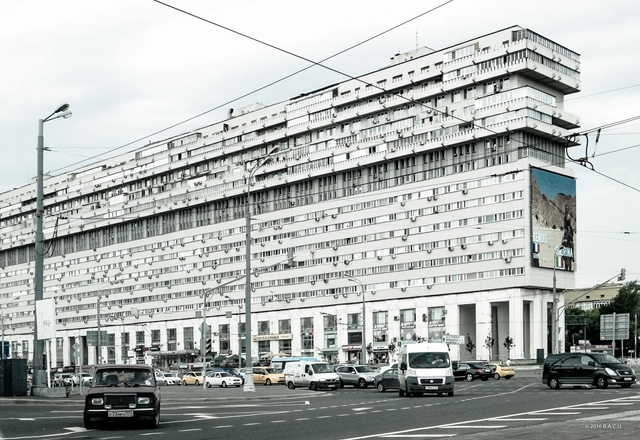
When cities grow, fuelled by an expanding population, housing becomes an essential component of the urban character of a metropolis. Across the world, housing experiments have been propagated by governments and states, with mixed results, and undoubtedly mixed opinions. The Soviet-era housing estates of Central and Eastern Europe are particularly interesting in that regard. These mass housing projects have been dismissed as eyesores and viewed as unimaginative monolithic structures. The legacy of these developments, however, is a lot more complicated than that.
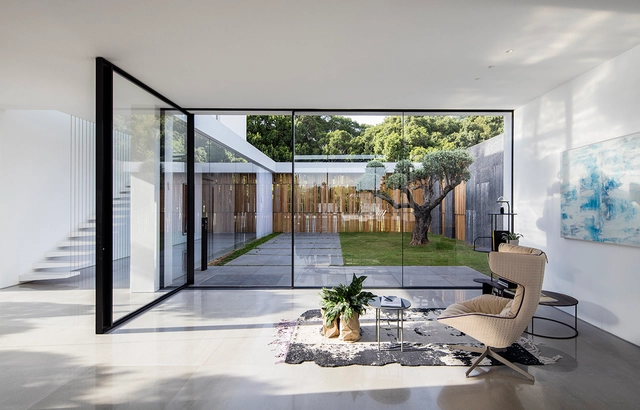
At the touch of a button, the entire window front magically sinks into the ground, merging the interior with the exterior. This is the effect of the air-lux descending window, which acts not just as a glass front, but a highlight all year round that blends the indoors with the outdoors. So much so, that the descending window was awarded the German Design Award 2020 in the category "Excellent Product Design - Building and Elements".
The concept of aesthetics goes back to the Greek civilization and refers to perception through the senses. Despite being a philosophical concept, in architecture, aesthetics is used to translate architectural ideologies and concepts from the set of constructive elements, forms and materials, being intrinsically linked to the physical shape of a building and, therefore, bound to a social, economic and political context. In addition to a discussion of tastes, architectural aesthetics is a source of historical reading and analysis.
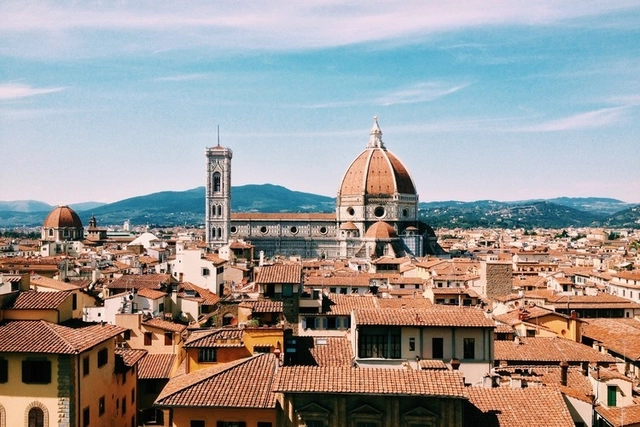
After a prolonged period known as the Middle-Ages, a growing desire to both study and mimic nature itself began to emerge, with an inclination to discover and explore the world. Between 1400-1600 A.D. Europe was to witness a significant revival of the fine arts, painting, sculpture, and Architecture. The ‘Renaissance’, meaning ‘rebirth’ in French typically refers to this period of European history, although most closely associated with Italy, countries including England and France went through many of the same cultural changes at varying timescales.
Prior to the dawn of the Renaissance, Europe was dominated by ornate and asymmetrical Gothic Architecture. Devoured by the plague, the continent lost approximately a third of its population, vastly changing society in terms of economic, social and religious effect. Contributing to Europe’s emergence into the Renaissance, the period ushered in a new era of architecture after a phase of Gothic art, with the rise of notions of ‘Humanism’. The idea of attaching much importance to the essence of individualism. The effect of Humanism included the emergence of the individual figure, greater realism and attention to detail, especially in depictions in art.
Xi'an Qujiang Art Center by Xiaoxia Wang - gad. Image Courtesy of A'Design Award and Competition
“Good design deserves great recognition”. This statement encapsulates the A'Design Award and Competition, an award for designers, innovators and companies that wish to stand out and attract the attention of the media, editors and buyers. These aspects are especially important in the world of design, where millions of products and projects are launched, and often end up being swallowed up and not receiving due recognition. To address this, every year projects are submitted to the A' Design Award with a focus on innovation, technology, design and creativity. It offers a chance for recognition, with the valuable curatorship of a renowned jury and the possibility of a successful international launch. The A'Design Award contains a series of public relations, advertising and marketing services to celebrate the success of its winners. In addition, and unlike other design awards, it is completely free of charge.
The award-winning firm based in London, England, Jan Kattein Architects, works to realize the civic and spatial opportunities that architecture presents’ with their projects establishing a social and physical legacy, achieved by embracing an open, interactive design process that responds positively to the needs and aspirations of the clients.
Allowing the process to drive each individual project, their method stimulates innovative design, seeking to add benefits through education, economic growth, cultural activity, and greater community coherence.
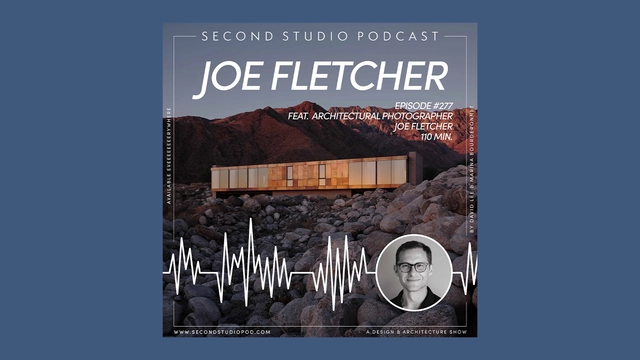
The Second Studio (formerly The Midnight Charette) is an explicit podcast about design, architecture, and the everyday. Hosted by Architects David Lee and Marina Bourderonnet, it features different creative professionals in unscripted conversations that allow for thoughtful takes and personal discussions.
A variety of subjects are covered with honesty and humor: some episodes are interviews, while others are tips for fellow designers, reviews of buildings and other projects, or casual explorations of everyday life and design. The Second Studio is also available on iTunes, Spotify, and YouTube.
This week David and Marina are joined by Joe Fletcher, Architectural Photographer to discuss his transition from painting to photography; his experience with a formalized education in photography; how an architectural photographer can influence architects and architecture; his process; the distillation of architecture through photography; why photogenic buildings are not always comfortable to be in; and more.
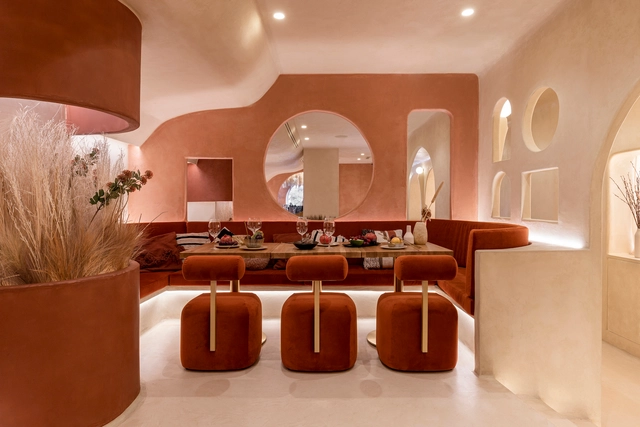
"The details are not the details. They make the design." – Charles Eames. Creating attractive spaces that anticipate the needs of users relies on several factors: scale, circulation, functionality, and comfort. However, the past few decades have proved that the visual appeal of a project is also greatly important, and can make or break the interior space. In this interior focus, we will explore the aesthetic side of interior design, looking at popular styles across the world and how architects and designers use elements such as color, furniture, accessories, and finishes to define their spatial identity.
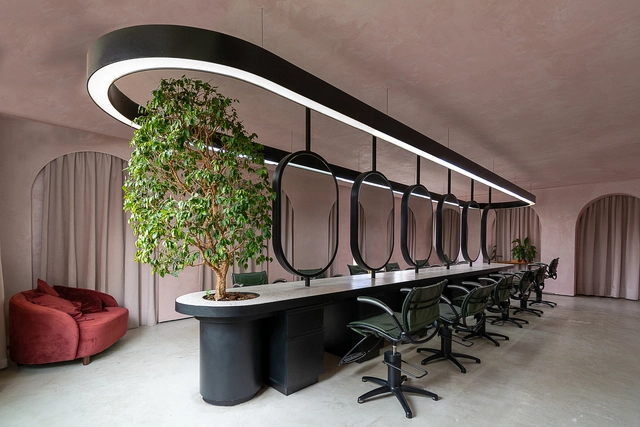
Usually, people look for a beauty salon to leave transformed. In addition to the aesthetic changes, the environment itself can trigger different sensations that change the mood of customers. That being said, some establishments hire architects and interior designers to think of ways to innovate their spaces. Relaxing, having fun, surprising, are just some of the actions that can be passed through a project that thinks about different ways to bring comfort to users.
The hands hold the weight of the entire body, feeling the rough texture of unplastered mortar on its thin membrane. Even with the whole body stretched out against the wall, it still was not possible to see what was behind it. Sweat, in a mixture of adrenaline and heat, ran down his temples, indicating the movement for a final effort, a last impulse before the imminent fall that, for a few seconds, allowed him to overcome the last row. The field of vision was then opened to a fragmented, disconnected and oddly free world. An urban power that allowed itself to be strangled by the breath of tropical vegetation while being consumed by abandonment amidst an active and dynamic city.
The new, online NYC Climate Dashboard confirms that New York City is not doing enough to meet its climate goals. What’s worse, the goals don’t measure up to the challenge citizens face. A growing consensus among scientists says the world has only until the end of this decade to avert catastrophic climate change. Here in New York, the biggest contributions to greenhouse gasses come from our buildings and our driving. As an architect and urban designer, John Massengale shares what he believes the world is missing and some significant changes that the world can make for the sake of future generations.
Cooking and architecture parallel one another. Combining ingredients to make a whole, both processes are tied to cultural context, creativity and meaning. While we can understand how cultures have changed over time by looking at how their cuisine has changed, the same can be said of architecture. In both cases, the end products are based around human interaction and are brought to life through experience.
As part of the 14-day design festival that took place in Mexico City, SPACE10 presented the exhibition "Deconstructed Home", with the intention of taking it to different places in Mexico. Five designers were convened and through six intensive weeks of design research and experimentation, they identified and explored new possibilities and uses for the biomaterial of their choice.
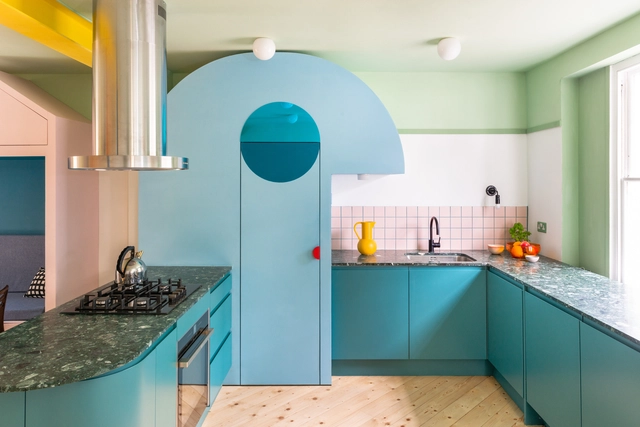
As transitory as trends may be, they always have a way of coming back. We see it all the time in fashion, with clothing pieces we thought were long gone coming back in style and reconquering the market. Interior design is no exception. Although this century has set the ideal on subtle sophistication and simplicity – with white surfaces, clean lines and slick gloss finishes –, bold retro enhancements are reviving in residential and commercial interiors. Whether in the form of vibrant colored walls, floors with intricate geometric patterns or vintage-looking furniture pieces, there seems to be a renewed appreciation for design elements inspired by trends from the second half of the 1900s, particularly from the 50s to the 80s.
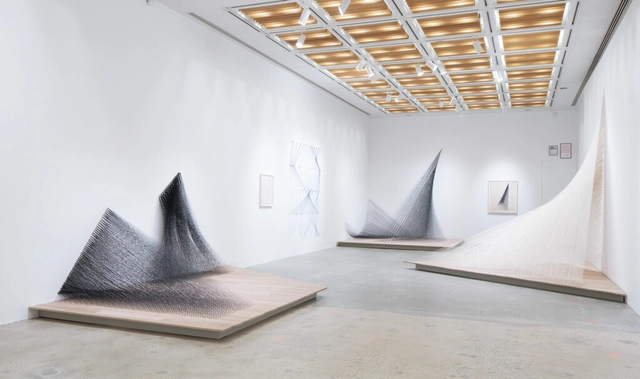
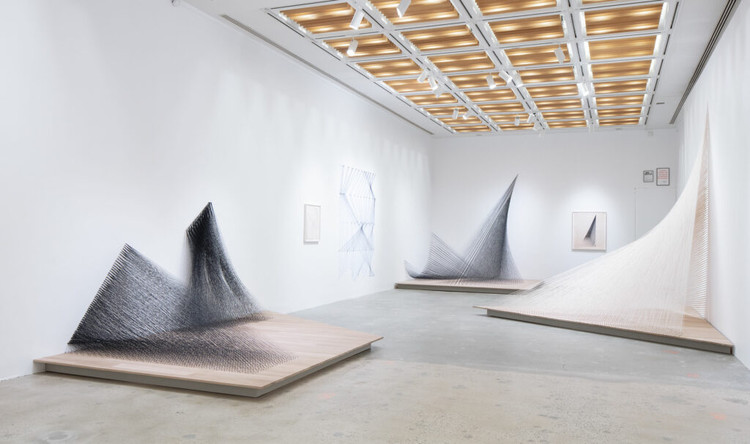
Recreating the artist studio in an exhibition has always been a challenge for curators and exhibition designers––bringing in the right amount of “mess,” intricately revealing the workings of artistry, and maintaining the visual coherence are all boxes to be checked while letting the audience behind the curtain. Kazuko Miyamoto: To perform a line, Japan Society’s survey of the artist’s five-decade career in sculpture, drawing, and performance solves this challenge in ways that are both practical and poetic.
https://www.archdaily.com/982219/manhattans-japan-society-explores-artist-kazuko-miyamotos-relationship-with-her-studio-architectureOsman Can Yerebakan
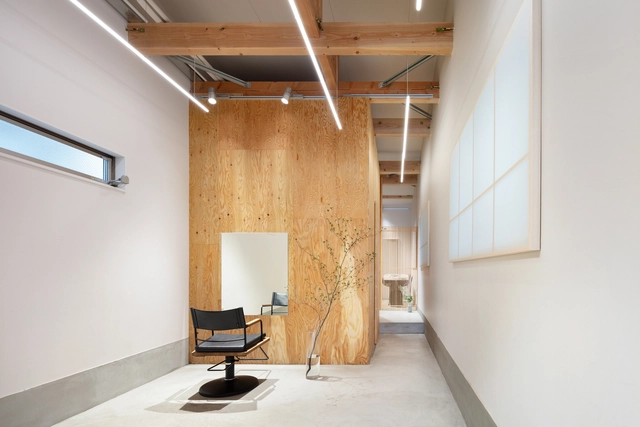
More than ever; today a trip to a hair or beauty salon has become a much-needed escape time. It promises an ultimately uplifting and relaxing experience with an aesthetically pleasing result. However, this affair, like many others, depends on a catered physical setting; a space that’s efficient design can make or break one’s leisurely time. Many spatial considerations have to be taken while setting up a successful and functional beauty shop, and there are no better examples to consider than the quaint Japanese beauty salons.
Like a beautiful painting, windows showcase interiors and frame landscapes that connect users to the outside world, directing our eyes to what really matters. But besides framing views and facilitating visual communication, windows serve multiple essential functions that make them vital components in any project. They illuminate homes with sunrays, provide natural ventilation, filter light, insulate from cold and heat, block water and ensure protection. As most design professionals would agree, glazing also plays a crucial aesthetic role; its materials, style and dimensions certainly make a significant difference in the appearance of facades and spaces.
The hammock swaying on the balcony, the sunlight passing through the pierced elements in a dance of light and shadow, the vibrant color marking the spaces and bringing life, these are some of the characteristics present in the daily life of the works of the quartet that form Lins Arquitetos Associados.
Humans try very hard to make the inexplicable understood. Our spirituality becomes religion. Fairness becomes law. And what delights us becomes aesthetics, and aesthetics are dumbed down to “style” in fine arts and architecture. The description, then definition, of aesthetics enables us to judge, and hopefully, control what thrills us: "Styles may change, details may come and go, but the broad demands of aesthetic judgement are permanent". -- Roger Scruton
But the instant delight we sometimes feel when we hear, taste, think or see parts of our experience is unreasoned in its apprehension. We try to create value in our outcomes by defining them beyond experience – that is aesthetics.
Wooden floors bring warmth, personality and style to any interior space, whether old or new. Rustic and elegant, wood also has excellent thermal properties, a pleasant temperature to the touch, and can even improve the acoustics of a space by absorbing sound waves. They are also highly durable and resistant to daily use. It is therefore no surprise that they are one of the favorite and most coveted materials for residential interiors. Wooden flooring is also very visually appealing, with a huge amount of variations possible in its design. Pieces can vary greatly depending on which part of the trunk they come from, even if they are from the same manufacturer and tree species. Colors and designs also vary according to different tree species, from light yellows to dark browns, with infinite possibilities. In addition, it is possible to create various types of patterns when laying the floor, according to the dimensions of the pieces used and the desired effect for the space. See below a selection of wooden floors in Architonic catalog.
Videos
AXOR Starck. Image Cortesia de AXOR / Hansgrohe SE
The practice of frequenting public baths was common in civilizations such as the Greeks, Persians and Byzantines, but it was the Romans who popularized their use as places of socialization and purification. These bathrooms were communal and people sat side by side in a collective latrine. The modern bathroom, more similar to what we know today, began with Sir John Harington and his invention of the first flush toilet in 1596. Another crucial advance occurred with Alexander Cummings in 1775, which included a siphon within the toilet to retain gases and odors. But it was only when houses were equipped with running water and effective drainage in the second half of the nineteenth century that the modern private bathroom emerged: a bathroom, a sink and a bath place, which can be a shower or a bathtub. The basics have remained almost unchanged since then, with a few cultural variations in different parts of the world.
These days, the bathroom is a space that goes far beyond its function. With numerous options on the market, it can be designed with the most diverse aesthetics in mind, become a space for relaxation or a design statement in an interior design project.
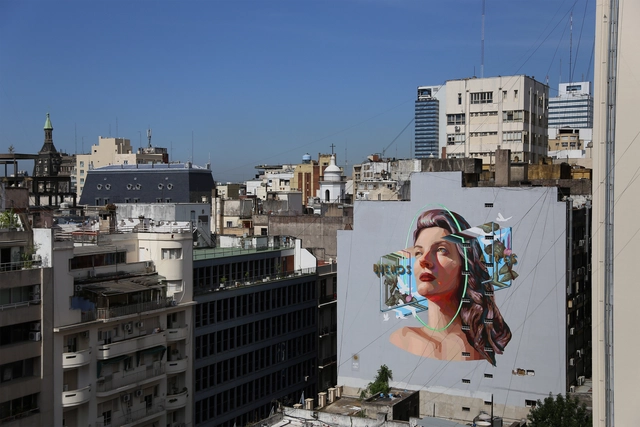
Addressing themes involving memory, oblivion and gender, the Argentinean visual artist and muralist, Mariela Ajras, displays her art on the walls of numerous cities around the world such as Barcelona, Valencia, Salamanca, Mexico City, Bogota, Montevideo, Buenos Aires, among many others. With a background in psychology, she has participated in different urban art festivals, exhibitions, fairs and public art projects, one of the largest murals in the city of Buenos Aires being the one she developed for the project "Corredor de la Memoria", commemorating the 25th anniversary of the AMIA bombing.
Cortesía de Colegio Oficial de Arquitectos de Madrid [COAM]
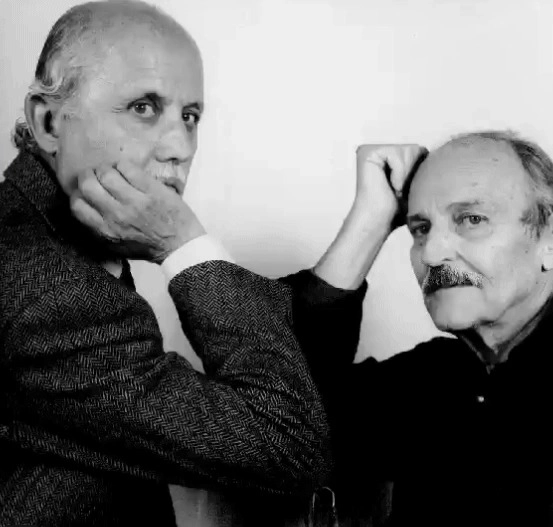
With José Antonio Corrales and Ramón Vázquez Molezún, a situation quite common in Spanish architecture post-1950 is repeated: the lack of international projection of talented architects, largely due to the absence of theory. Apart from that, an intrinsically mysterious and enigmatic character pervades their work, deeply reinforced by the attitude of these architects towards it. They never stopped to explain it. They were never interested in providing it with a theoretical foundation. All this makes it extraordinarily difficult to understand their architecture, leaving many questions unanswered, open only to the interpretation of those who pause to reflect on them.
Corrales and Molezún have collaborated together on numerous projects sine 1952. They were very different people. José Antonio used to define himself as a "more rigorous person", while Ramón was closer to the "gaie", with a lighter, almost romantic touch. Their duo could be incarnated, respectively, as the two lobes of the brain: the left hemisphere, visual, verbal, linear, controlled, dominant, quantitative, etc. in Corrales; while the right, spatial, acoustic, holistic, contemplative, emotional, intuitive ... perhaps more accurately represents Molezún. One more couple to the long history of creation: Don Quixote and Sancho Panza, Sherlock Holmes and Dr. Watson, ...
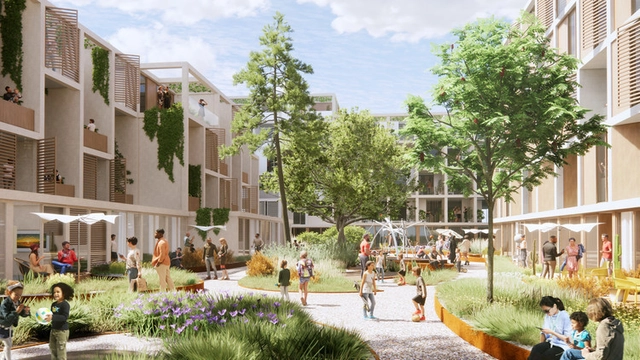
Neighborhood Next / 15 Minute City by Gehl Architects. Image Courtesy of 3XN
The planning and design of mixed-use neighborhoods and individual mixed-use developments are on the rise. Many of the places we frequent most feature a variety of programs, bringing many of life's daily conveniences to one place. But mixed-use spaces do more than just create a diverse array of experiences in cities- they might also help contribute to lower crime rates.