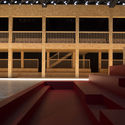
This 3D model is as close as you can get to the real thing, as Omega House is one of the few Case Study Houses that was never built. Presented early in the case study program of Arts & Architecture magazine in 1945, it presents one of the most innovative design concepts in the series, one you can now explore in your browser.
The architect, Richard Neutra, was a celebrity in his own lifetime, and among the most esteemed of the high modernists. Neutra was born in Vienna and already over 30 when he arrived in America in 1923. He worked for Erich Mendelsohn, for Frank Lloyd Wright, and briefly with Rudolph Schindler. Many of his commissions were domestic houses, structures that he managed to make wonderfully photogenic. Neutra carried himself with some of the aristocratic manner of aMies van der Rohe, but tempered by the lively west coast egalitarianism of Charles and Ray Eames (link to previous project). He made the cover of Time Magazine in the forties, and might be one of the only prominent architects ever to build a drive-in church. Perhaps most remarkably, Ayn Rand wrote the screenplay to The Fountainhead whilst living in a house designed by Neutra.
https://www.archdaily.com/780647/a-virtual-look-into-richard-neutras-unbuilt-case-study-house-number-6-the-omega-houseDavid Tran and Pascal Babey, Archilogic
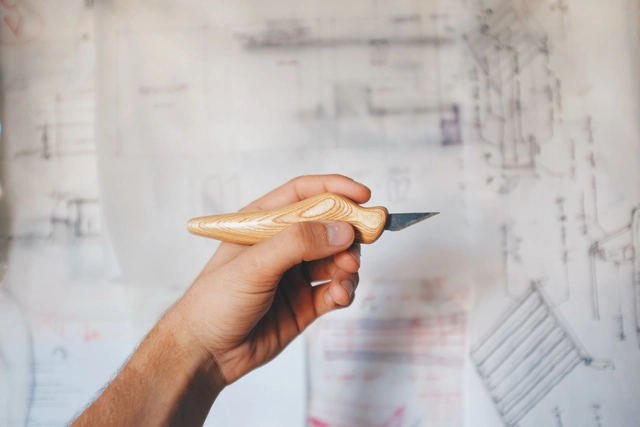
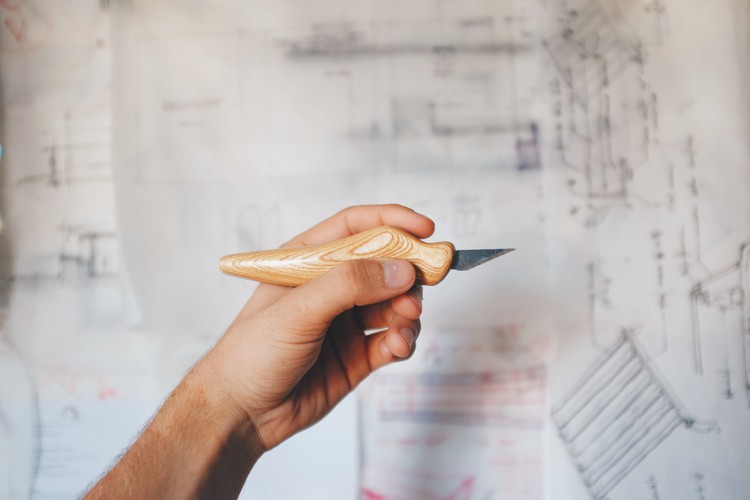
If you've been through architecture school you're probably wary of craft knives, which can puncture the skin of an non-alert, caffeinated student at a fraction of a second's notice. Even if you manage to avoid the hospital, though, these scourges of the studio still know how to hurt you: their designs are the antithesis of ergonomics, making a marathon modeling session a mighty endurance battle against hand cramps and joint pain. Aiming for a more comfortable solution, architecture graduate Sean Riley developed the Ergo Kiwi, and today is launching a Kickstarter campaign to help bring the product to market.
In addition, Riley has also meticulously cataloged his design and production process. At ArchDaily, we thought it gave a fascinating insight into not only the design of Ergo Kiwi, the but the steps involved in developing and bringing to market a convincing product. As a result, we invited him to share his story.
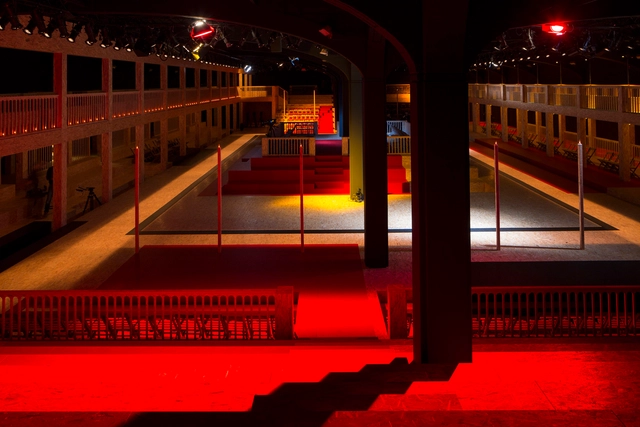
When it comes to the modern-day fashion show, the internet has fundamentally changed the way audiences interact with models and designers, say OMA/AMO, arguing: "The assemblage of recorded impressions and digital reactions inserts itself into the once autonomous narrative of the fashion show. The statement of the collective spreads. The mass of fragmented instant data is uploaded and critiqued by a multitude of voices."
With their latest fashion show design for Prada, which was used to showcase the designer's upcoming fall/winter menswear collection in Milan yesterday, the firm sought to enhance this sense of public judgement. "This consumption of images is like a public trial, a contemporary transposition of the Auto-da-fé," explains their press release, referring to the ceremonies of public penance which took place in the Portuguese and Spanish Inquisitions in the 15th-17th centuries.
Where were you when it happened? On February 27, 2010 an 8.8-magnitude earthquake and subsequent tsunami struck Chile, causing destruction across the country. Ask any Chilean what they were doing at the time, and they will have a story to tell.
Oriana Pinochet Villagra and her family were in Constitución when the ground started to shake. A town centered around the forestry industry, Constitución is surrounded by green mountains, and situated where the Maule river meets the Pacific Ocean.
It was one of the cities most affected by the earthquake in 2010. The ocean water flooded the river, wrecking everything that the earthquake hadn’t already destroyed. Those that lived along the riverbank were left in the street with mud burying their houses -- Oriana's family lost 30 years of memories.
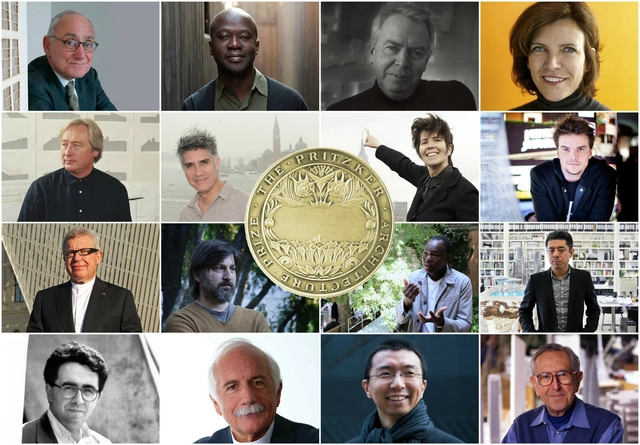
Almost six years after the natural disaster, we visited Constitución where Oriana Pinochet showed us one of the major reconstruction projects in the city: Villa Verde Housing, a residential neighborhood for 484 of the affected families. With partial financing from housing subsidies and based on the idea of incremental housing, the project is designed by ELEMENTAL, the “Do Tank” of 2016 Pritzker Prize laureate, Alejandro Aravena.
At this year’s Chicago Architecture Biennial the directors Joseph Grima and Sarah Herda asked participating architects to demonstrate the “State of the Art of Architecture" by submitting projects that they felt told a story about architecture’s importance in society. As explained in this video by Politico Magazine, native Chicagoan Jeanne Gang of Studio Gang Architects responded to this call by looking at an issue that has plagued American cities in startling ways in recent years: the troubled relationships between communities and their police forces. Often hidden behind fortress-like buildings, police stations in their current form tend to project an image closer to hostile than welcoming. But Gang believes it doesn’t have to be that way.
As an idea that was developed fairly early on in the movement for sustainability, and picked up significant traction a few years into the new millennium, "Design for Deconstruction" has been around for some years. Yet still, considered on the scale of building lifespans, the idea is still in its infancy, with few opportunities to test its principles. In this post originally published on Autodesk's Redshift publication as "Recycled Buildings or Bridges? Designing for Deconstruction Beyond Adaptive Reuse," Timothy A Schuler looks at the advances that have been made, and the challenges that still face, the design for deconstruction movement.
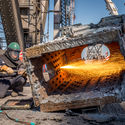
This summer, the Oakland Museum of California announced a new public arts grant program. Except instead of money, selected artists would receive steel. Tons of it.
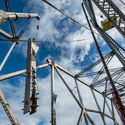
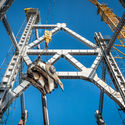
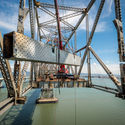
The Bay Bridge Steel Program emerged out of a desire to salvage and repurpose the metal that once made up the eastern span of San Francisco’s Bay Bridge, originally constructed in 1933 (it was replaced in 2013). The steel in question, sourced from “spans referred to as ‘504s’ and ‘288s’ (in reference to their length in feet),” according to the application material, would be available for civic and public art projects within the state of California.
The program represents a unique opportunity to adaptively reuse infrastructure, upcycling what might have been waste. And yet any instance of adaptive reuse is inherently reactive because the design process is dictated by an existing condition.
Museums, restaurants, shops, theaters. These are the types of spaces the public interact with on a regular basis in a city. But these spaces alone do not make a city - in fact, the vast majority of buildings house spaces that 99 percent of the population will never see. Yet a true city experience cannot exist without these buildings. What is the true value of private buildings to the tourist or the passer-by on the street? Is it simply a matter of aesthetic and identity? Could the same result be achieved with a streetwall made up of only facades? These are the implicit questions embedded in “Apparences,” the new video from Claire and Max of Menilmonde. The duo uses video editing and CGI to alter iconic Paris views, making the city of romance appear to be little more than the world’s largest movie set.
A city with the history and imagery of Paris cannot be mistaken for a Potemkin Village - the city functions still as one of the preeminent economic centers in the world. Yet its status as one of the world’s most visited cities and tales of its beauty and luxury often plant false visions of grandeur in visitors’ minds.
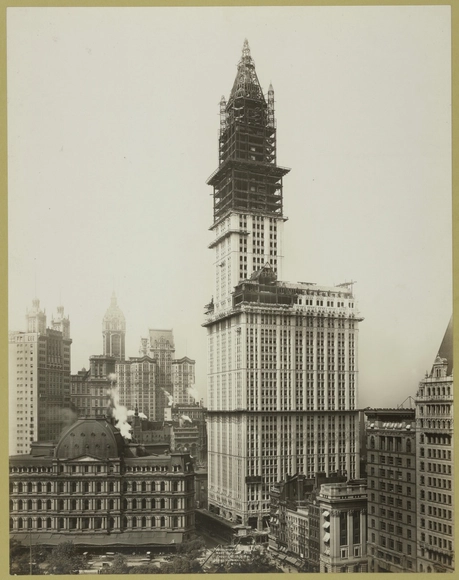
Of course, the archive also includes a significant assortment of captivating architectural images that range from everyday scenes to historic treasures. We've trawled the database to find some of the most unusual and insightful examples - read on to see a selection of the most interesting architectural images from NYPL’s digital archives.
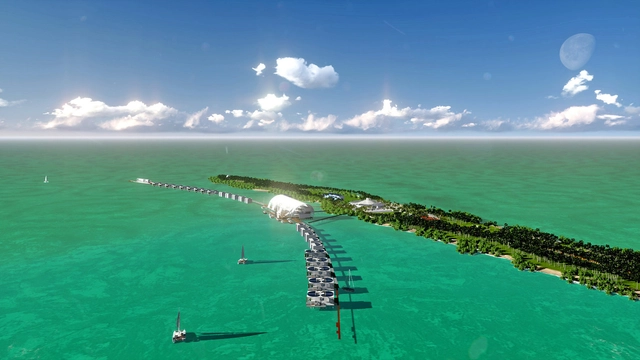
In early April 2015, the New York Times reported on Leonardo DiCaprio’s recent purchase of Blackadore Caye, a small island off the coast of Belize that has faced significant environmental degradation and erosion. A patron of several environmental projects, DiCaprio is partnering with Paul Scialla, CEO of the Delos real estate and wellness platform, to create an eco-resort intended to serve as the latest model of cutting-edge, environmentally-responsible tourism development. The development plans include a row of floating guest suites built over the water, 48 private villas (ringing in at $5-15 million), human health and anti-aging wellness programs, and a conservation area. The project is advertised as meeting the ambitious green building standards of the Living Building Challenge and the WELL Building Standard®.
Many Times readers in the comments section sardonically noted that the private jets and the shipment of building materials and daily resources for island development come with large environmental and social price tags that far outweigh the conservation efforts associated with the resort. On the other hand, a few commentators pointed out that the development will employ local labor and save the island from complete degradation. The discussion surrounding the pros and cons of “eco-tourism” development is not a new one, and not one that is easily settled.
But beyond the (important) discussion of the impacts of eco-tourism, the development raises questions about the emergence of alternative green building market standards, which ostensibly aim to transform the building industry by setting measurable targets for the environmental and social effects of the places we live and work.
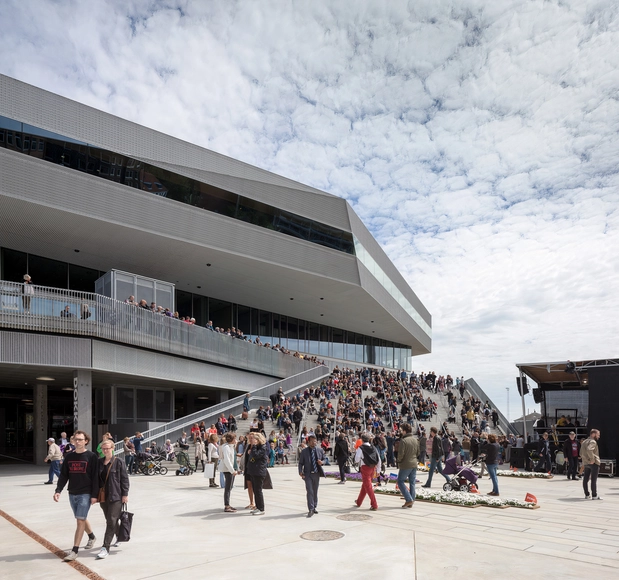
The Architecture Project recently invited us to visit the city of Aarhus, Denmark as part of a press tour related to health and architecture, with the aim of seeing the latest healing projects that are arising in the city.
Overshadowed for years by Copenhagen, Aarhus is a port city that seeks to reinvent itself and shine once again – and it is succeeding. The pleasant surprise is that it is the architects who have driven this change. Architecture has invaded all of the city's spaces, from the forgotten industrial port to the downtown areas full of historical buildings.
This visit has taught us some important lessons: 'healing architecture' isn't only about hospital projects, but rather about encouraging people, about creating friendly spaces to live and coexist, and about getting as connected as possible with users to give them what they really need.
Check out some of the strategies used to achieve these goals after the break.
The award is given to completed projects, with entries consisting of buildings, interiors, landscaping, refurbishment, urban projects, temporary installations, furniture and product design. For its 17th year, the jury was comprised of architects Odile Decq, David Adjaye and Sir Peter Cook, and together they searched for what they referred to as the most “resistant” design.
Read on to see this year’s Emerging Architecture Award winners and a video with the jury on the selection process.
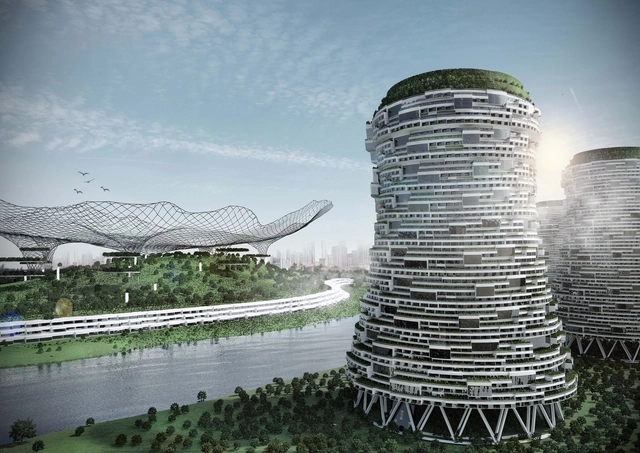
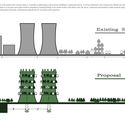
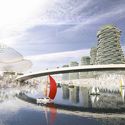
What if a power plant could also be a home, an office, or even a park? That is the question behind Cypher CO2ling Plant, a conceptual design developed by Kawan Golmohamadi, Shilan Golmohamadi, and Soad Moarefi. Power plants are a ubiquitous and inevitable byproduct of modern lifestyles, but they are typically located in remote areas, far from where the power is actually needed, due to their unsightly appearance and the emissions associated with combustion-fueled energy generation. Cypher CO2ling Plant proposes an alternative scenario that utilizes the infrastructure of the power plant’s cooling towers to support mixed-use development, while also mitigating the less desirable aspects of energy generation.
In the latest video from the youtube channel #donotsettle, architects Wahyu Pratomo and Kris Provoost explore OMA’s recently opened Timmerhuis in Rotterdam. The duo compare the conceptual design and renderings to the finished building, look at the impact the new building is having on the cityscape, and with some good fortune find their way through some locked doors.
#Donotsettle was started to reconcile the disparity between film as architectural representation and as an experiential medium. For more #donotsettle, check out their youtube page, where they walk through the Markthal, designed by Rotterdam-based practice MVRDV and the train station in Delft, designed by Delft-based practice Mecanoo, among many other sites.
Could an emergency shelter also provide its users with food? Could we make furniture you can eat? Could you merge furniture and farming into one device?
It’s questions like these that set biodesign studio Terreform ONE (Open Network Ecology) apart from other design collaboratives. Instead of looking at design as finding a solution to solve one problem, their structures and furniture pieces try to tackle many issues facing the planet all at once. Need a structure to house refugees as well as find them a reliable source for protein? Why not build them a home that also acts as a cricket farm?
ArchDaily is continuing our partnership with The Architectural Review, bringing you short introductions to the themes of the magazine’s monthly editions. In this introduction to the January 2016 issue, Editor Christine Murray recounts what we know about gentrification, and how cultural buildings can be planned to encourage - rather than destroy - a neighborhood's cultural vibrancy.
Cultural buildings are the new town halls: more socially inclusive than the pub or the church.
The best cultural projects act as public spaces, schools for continuing education, crucibles for talent, fostering innovation and social happenings, from yoga classes to children’s libraries. When free of entry charge, they are a place you can go to learn, rather than just buy – a triumph of experience over consumerism.
But what we’ve learned from the failure of the icon-building boom is that, for a cultural building to really contribute to a city, it must be part of a social ecosystem, not simply a place for tourists to visit. A cultural hub must be connected into a pre-existing cultural vibrancy, supported by decent infrastructure and a community that actually lives there.
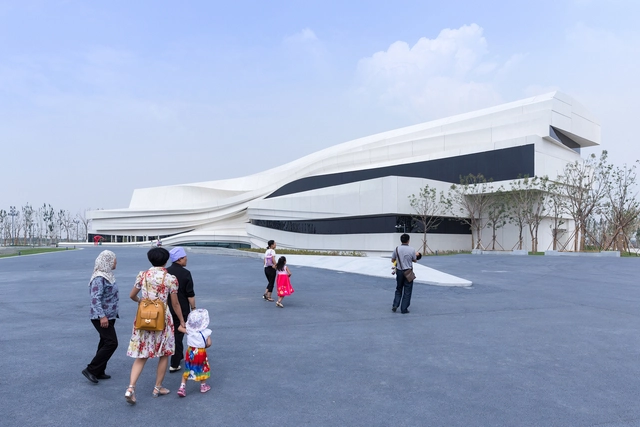
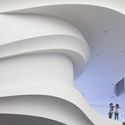
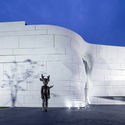
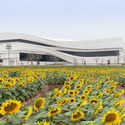
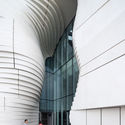
This contemporary art museum is not what it seems. It appears, at first, to be a fairly familiar manifestation of the contemporary architectural discourse, and indeed the striking fluidity of its lines and its impressive mastery of parametrically-enabled tectonics as well as GRC technology put it on a par with recent buildings by Zaha Hadid or MAD, but this first impression is somewhat deceptive: the building is, in fact, refreshingly unique and a radical point of departure from the dominant design ideology of our times, a significant rupture from the orthodoxy. And a very promising one.
Traditionally, the start of a new year is a time for making plans and optimism for the future. As a result, it's a time when many architects might start dreaming of moving their career to an unfamiliar and exciting country. But as Brandon Hubbard explains in this article, originally published on The Architect's Guide as "Is Working Abroad Bad For Your Architecture Career?" there are many reasons that you shouldn't be so hasty to cross borders and seas in an attempt to advance your career.
Architecture, perhaps more than any other profession, is filled with people who want to live and work abroad.
Some architecture students get a taste for travel while in school. Study abroad programs in the US are quite common. Often when students finish their degree they are drawn to the idea of living abroad.
A doctor can easily find a person wandering nearby. An accountant can easily find an excel spreadsheet. Architects don't have the luxury of buildings coming to us (that would be cool though). We have to go to them. This has inspired generations of architects to pack their sketchbooks and travel.







.jpg?1452893796&format=webp&width=640&height=580)

.jpg?1452893796)