This article was originally published on the blog of the Chicago Architecture Biennial, the largest platform for contemporary architecture in North America. The blog invites designers, writers and other contributors to independently express their perspectives on the Biennial across a range of formats. The 2017 Biennial, entitled Make New History, will be free and open to the public between September 16, 2017 and January 6, 2018.
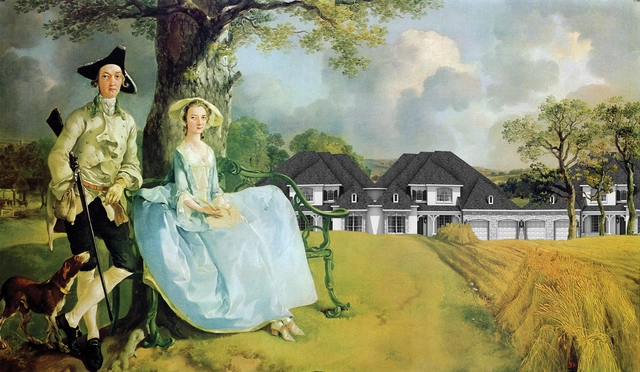
Some works of architectural writing can be taken at face value as stark manifestos for a new aesthetic. Keith Krumwiede’s Atlas of Another America is, instead, a constantly unfurling satire that offers layers upon layers of artfully imagined social commentary. Like McMansion Hell, my own long-form satirical project, Krumwiede’s “architectural fiction" sends up American ideas about economics, politics, and culture by picking apart our outrageous suburban housing types. The project will be on display at the Chicago Architecture Biennial this fall, delivering a sardonic vision of American architecture that comes out of academic theory, but has a potent message for anyone who has spent time in suburbia.
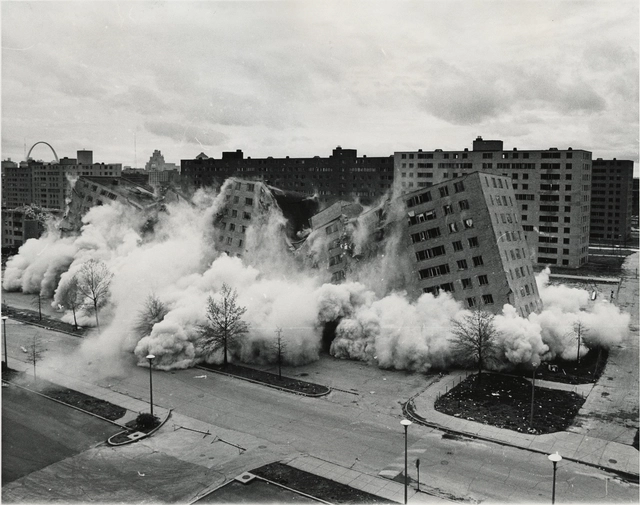
Courtesy of The United States Department of Housing and Urban Development (in public domain)
Immortalized through photographs, drawings, and stories, buildings that have been demolished or completely renovated exist in the realm known as “lost architecture.” Either for economic or aesthetic reasons, the old gets torn down for the new, often to the disdain of community members and architects. But demolished buildings tell a story about the ever-changing politics of preservation—and often, they tell it far better than buildings that were actually preserved ever could. As the architectural landscape continues to change around us, it is important to recognize our past, even if its traces have been eliminated from the physical world.
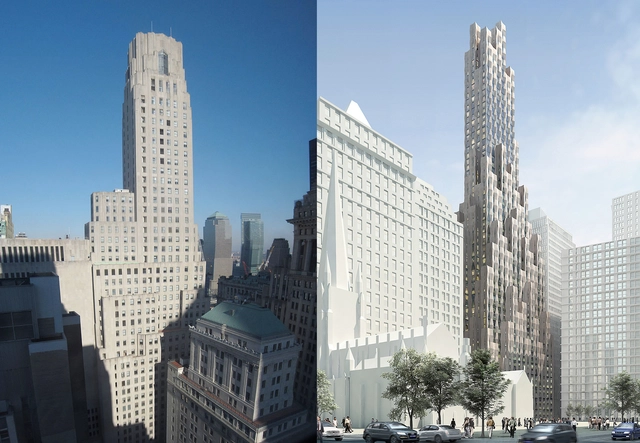
One Wall Street, before and after. Images: left, Via Wikimedia in public domain; right, Courtesy of Hollwich Kushner
The New York Timesrecently reported that over 40% of the buildings on the island of Manhattan wouldn’t be granted construction permits in 2017. Most of the culprits date back to the early 20th century when attitudes towards density, ceiling heights, column placement, and general living standards were different. This begs the question: what would modern iterations of New York’s signature structures look like today? Billed by the practice as “an obsessive-compulsive study of the city we love” HWKN’s New(er) York is a peculiar experiment that tackles this hypothetical.
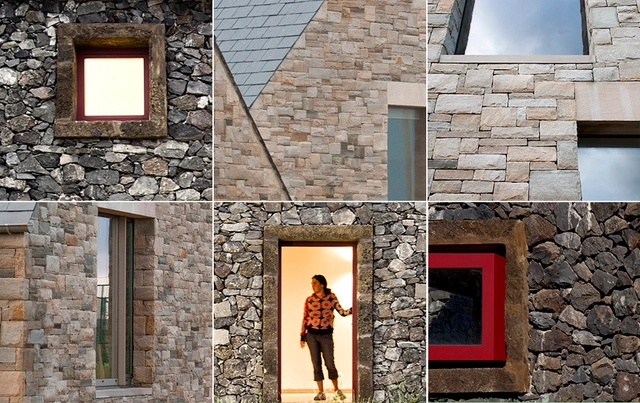
Stone is elemental to our built world. It is one of the oldest (if not the oldest) materials used in man-made habitats. The sense of timelessness in stone is attributed to its long and varied history alongside architecture. From ancient monoliths to cities to houses, the diversity of stone means that it can be used to convey a variety of expressions. Carved, polished, sedimented, stacked, preserved - the list can go on and on. The feeling stone conveys in contemporary projects usually brings with it a sense of place – a raw materiality when paired with timber or other natural materials. With that in mind, check out these 6 details of projects that stand out for their use of stone:
Had the worst jury ever? Failed your exams? Worry not! Before you fall on your bed and cry yourself to sleep—after posting a cute, frantic-looking selfie on Instagram, of course (hashtag so dead)—take a look at this list of nine celebrated architects, all of whom share a common trait. You might think that a shiny architecture degree is a requirement to be a successful architect; why else would you put yourself through so many years of architecture school? Well, while the title of "architect" may be protected in many countries, that doesn't mean you can't design amazing architecture—as demonstrated by these nine architects, who threw convention to the wind and took the road less traveled to architectural fame.
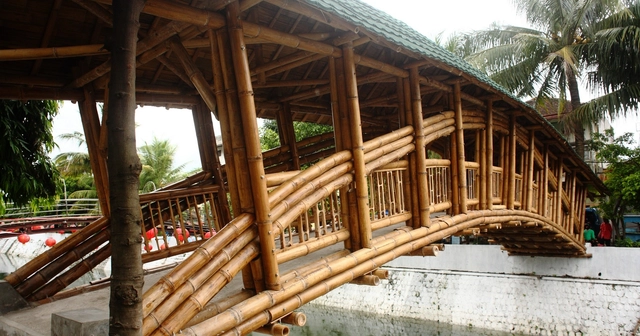
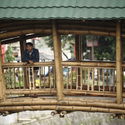
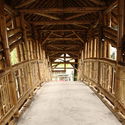
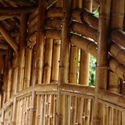
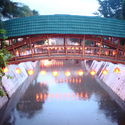
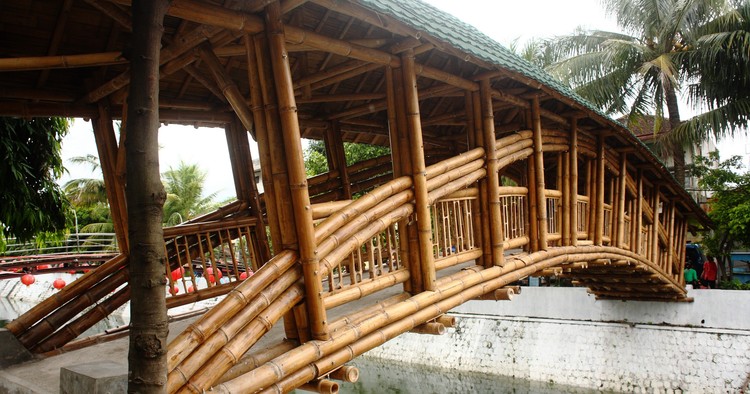
As part of the second Bamboo Biennale held in October 2016, the city of Solo in Central Java received a public Bamboo Bridge courtesy of Indonesian Architects Without Borders (ASF-ID). Connecting the Pasar Gede market and colonial Dutch Vastenburg Fort, the 18-meter bamboo structure offers a revitalization of river life in the historic Indonesian city. Spanning across the Kali Pepe river, residents of Java can traverse the pedestrian bridge on its track that varies in width from 1.8 to 2.3 meters.
Charles Thornton, one of the world’s preeminent structural engineers, once said that the greatest challenge facing the profession of structural engineering is that “I don’t think we have enough self-esteem and enough confidence in ourselves to believe that what we do is so important... Architects are trained to present, to communicate, to sell, to promote themselves, to promote their industry, and to take credit for what they do.”
As a structural engineer with over a decade of experience, I agree with Mr. Thornton—to an extent.
Despite the insistence of some, vinyl records haven’t undergone a resurgence because of their supposed superior sound quality. Instead, the impractical medium remains cherished for its quirk and ambiguity. As of late, the collage has made a has made a comeback as a representational strategy for the very same reason, sparking a recent debate around the potential emergence of "post-digital drawing."
Intentionally fantastical compilations empower architects to create clear narratives to supplement their work. In response to this growing popularity, a number of websites have popped up to bolster the trend. Image hosting hub ARTCUTOUT is a curated collection of meticulously detailed, public domain .PNGs nabbed from works of art that were “mostly created several centuries ago by European painters and cartographers.” Serving as a something akin to a “post-digital” version of famed render hub SKALGUBBAR, ARTCUTOUT has the potential to be a go-to resource for the next wave of designers.
Some unbuilt designs—the hopes they reveal and the reasons they stayed unbuilt—tell a powerful story. So it is with the home Frank Lloyd Wright designed for Marilyn Monroe and Arthur Miller. Or perhaps it’s what we think we know about Marilyn that makes it so poignant?
The union between a quiet-living intellectual and the world’s greatest sex symbol was baffling to the public, and the conflict between their aspirations and personalities seems to have played out in their plans for this Connecticut home. After moving into Miller’s country retreat, Monroe asked Wright to design a new house for them on this vast piece of land.
Cocoweb - a lighting source that combines classic design with modern, energy-efficient technology.
As environmentally-conscious design becomes more and more sought after in the fields of architecture and interior design, the use of LED lights becomes an essential part of an eco-friendly building’s creation. Southern California-based lighting company Cocoweb, inspired by this notion, offers all their products integrated with LED technology. The classic light fixtures that the company started with are all customizable, so the colors of the shades, bases, and arms, as well as the arm and shade styles, are interchangeable.
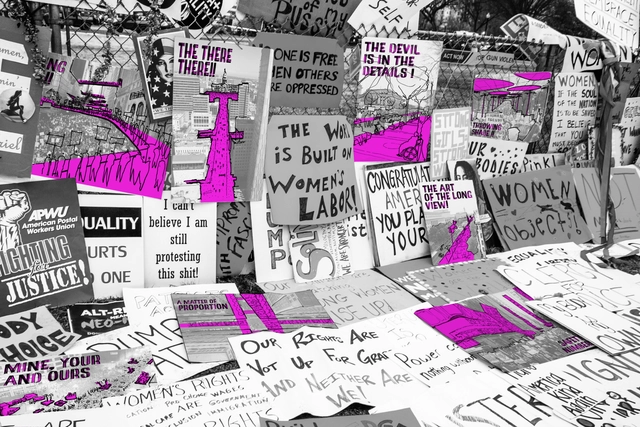
Once largely viewed as a fringe activity belonging to passionate extremists, protest is now—in the wake of a controversial new administration’s ascension to power in the US and a heightened interest in politics globally—a commonplace occurrence, with a much broader participant base in need of places to gather and move en masse. This revitalized interest in protest was perhaps most visible on one particularly historic occasion: on January 21st, 2017, a record-breaking 4.2 million people took to the streets across the US to exercise their first-amendment rights.
Women’s marches took place on the frozen tundra (we have photographic evidence from a scientist in the Arctic Circle) and even in a Los Angeles cancer ward. But for the most part, these protests happened in the streets. In the first few months of 2017, the streets of our cities suddenly took center stage on screens across the world. From Washington to Seattle, Sydney to San Antonio, Paris to Fairbanks, broad boulevards and small town main streets were transformed from spaces for movement to places of resistance. From the Women’s March on Washington to April’s People’s Climate March, protestors are looking for space to convene and advocate for the issues that matter most to them.
https://www.archdaily.com/873608/8-ways-we-can-improve-the-design-of-our-streets-for-protestGina Ford and Martin Zogran
Early in the 19th century, an invention arrived that would change the form and function of cities for generations.
Like all new technologies, it started out rudimentary, expensive, and nearly ineffectual. But it caught many imaginations and developed dramatically, eventually reaching the point of mass accessibility. Soon enough, it took aim at the public realm, with consequences that were indirect and unintended yet profound.
It reconfigured streets. It influenced the height of buildings. It altered foot traffic. It recast the relationship between buildings and streets. It changed how people felt about their cities and changed their points of reference. It turned cities into abstractions and, in some ways, turned city-dwellers against each other. Its influence nearly complete by the close of World War I, the invention has remained fundamentally unchanged, and is still universally celebrated, to this day.
Millennial Pink has broken into the design consciousness of more than its named generation. Though hugely successful in fashion and pop-culture (and Instagram), the playful color has established a presence across design products and the built environment like never before. Colour is a fundamental tool in our perception of architecture, with architects like Ricardo Bofill and Luis Barragan having baptized pink into a high-impact contributor through their works. With that in mind, check out these 13 projects showing why pink is here to stay:
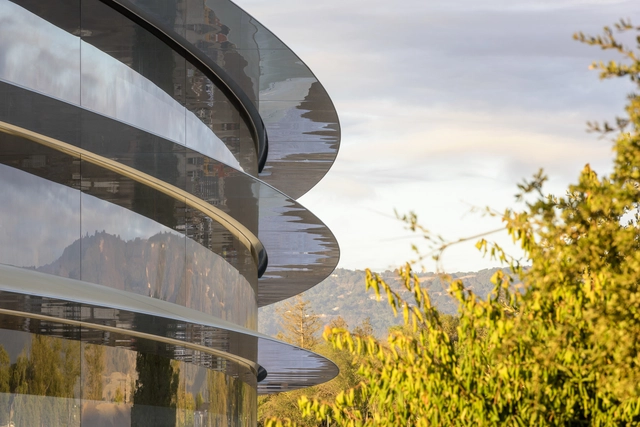
The "Spaceship" has landed and the dust, it appears, is starting to settle. In an article by Adam Rogers, which follows Wired's exclusive breakdown of the new Apple Campus in Cupertino, California, a convincing case is put forward against its design and wider masterplan. "You can’t understand a building without looking at what’s around it," Rogers argues – and most, including its architects, Foster+Partners, would surely be inclined to agree.
Whether you call it the Ring (too JRR Tolkien), the Death Star (too George Lucas), or the Spaceship (too Buckminster Fuller), something has alighted in Cupertino. And no one could possibly question the elegance of its design and architecture. This building is $5 billion and 2.8 million square feet of Steve Jobsian-Jony Ivesian-Norman Fosterian genius.
https://www.archdaily.com/873463/splendid-isolation-questions-raised-about-apple-cupertino-campus-foster-partnersAD Editorial Team
Born between the Tigris and the Euphrates, ancient Mesopotamia, "the land between two rivers," is considered the cradle of human civilization or, at least, one of its main birthplaces. Archaeological discoveries place in this fertile crescent the earliest origins of agriculture, the birth of writing and the first religions, governments and social orders.
This historical land corresponds to most of the current Iraq and Kuwait, as well as to smaller parts of Syria, Turkey and Iran. Not only these countries, but the whole Middle East in general, is home to invaluable ancient treasures. However, a great number of the cultural sites there are faced with major threats, as they have been caught up in the middle of ongoing conflicts that are ravaging the region. As a consequence, UNESCO included several sites in the List of World Heritage in Danger, in the hope that the international community could join in an effort to save these endangered properties.
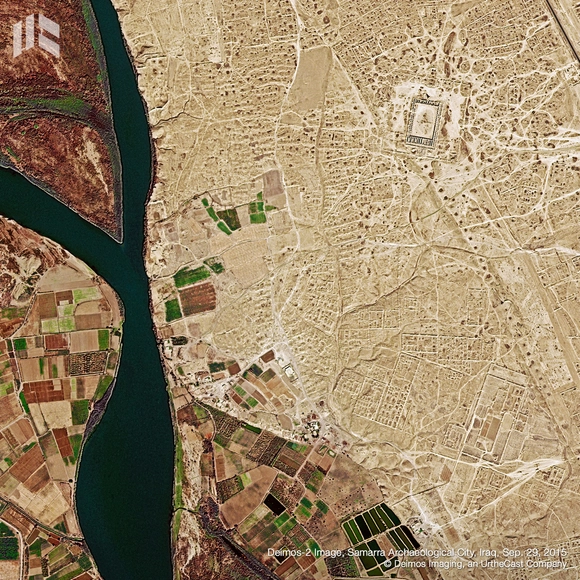
To reinforce this message, the Earth Observation company Deimos Imaging has released satellite images of six World Heritage sites in danger in Syria, Iraq and Yemen. The images were captured by the satellite Deimos-2, launched in 2014 and designed for cost-effective, dependable very-high-resolution Earth Observation applications, providing 75cm/pixel pan-sharpened images.
From wonderment to disgust, the opening of Solomon R. Guggenheim Museum by Frank Lloyd Wright in 1959 was met with a wide range of reactions from the public. This profound cultural moment was distilled in a series of witty cartoons published in the New Yorker that simultaneously lampooned both the innovative architecture and its critics, which were recently shared in a blog post by the Guggenheim Museum. Through detailed sketches, cartoonist Alan Dunn represents the experience of the building, from staring into the exterior porthole windows to walking around the grand ramp. In one drawing he depicts the perspective from the first floor looking up at the dome, giving a sweeping sense of the curvature and geometries of the building.
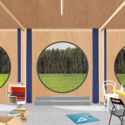
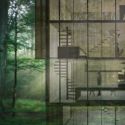
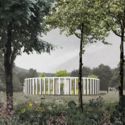
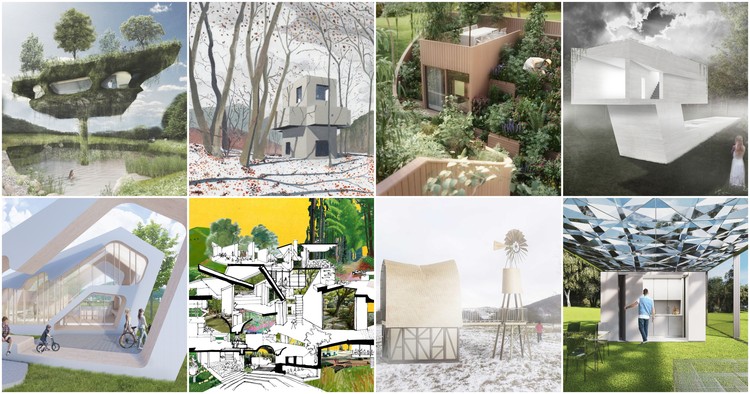
As the boundary that separates work and leisure in the 21st Century continues to be blurred by technology, architects Christoph Hesse and Neeraj Bhatia sought out to uncover a tranquil solution. The pair are co-curating an upcoming exhibition at the Kulturbahnhof Kassel in Germany as part of Experimenta Urbana in a show called “Ways of Life,” which opens July 5th.
This international initiative seeks to discover “a new nomaticism.” A gathering of 19 emerging architecture offices each presents a dwelling encompassed in nature. These buildings are often equal parts project and manifesto. The show’s overarching theme is the delicate balance of naturally induced relaxation and programmatically encouraged productivity. Each firm must additionally consider constraints that include limited square footage, integration of rapidly advancing information technology, and a strictly sustainable design.
This month marks the 150th anniversary of the birth of acclaimed American architect, visionary, and social critic Frank Lloyd Wright -considered by many to be one of the greatest architects of his time.
As a pioneer of the term 'organic architecture', one of his most iconic representative works is Fallingwater, set upon a waterfall in rural Pennsylvania. From its unveiling, the scheme has evoked enduring reflection on the relationship between man, architecture, and most prominently in Frank Lloyd Wright's mind - nature.