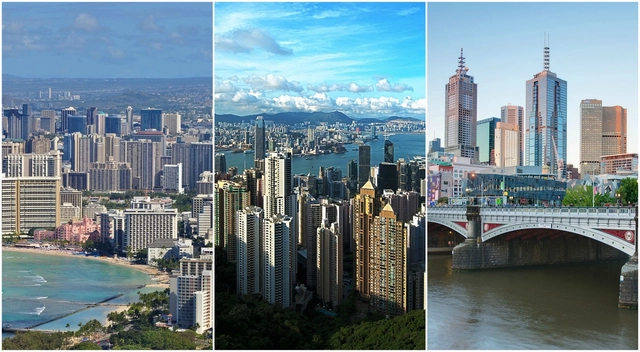
As final juries draw to a close, graduating architecture students are left with a crucial decision to make. While some might take a plunge into the scary real world looking to gain professional experience, others might choose to further reinforce their architecture education and skill set. Of the latter, most enroll in an MArch program, or take well-trodden paths into urban design and planning, landscape architecture, historic preservation, or theory and criticism. But in an increasingly complex world faced with myriad problems, what about those graduate architects looking to bolster their education in other related disciplines that will give them a more unique perspective on design problems? Here, we shortlist seven alternative, interdisciplinary graduate programs offered by architecture schools worldwide.
There are many ways to get to know a city. There are those who, when commenting on a particular city they have visited, remember the gastronomy and restaurants they frequented. Other travelers will remember the music and the parties; others will remember specific markets or events. You, a keen ArchDaily reader, probably took careful note of the architecture above anything else.
Each of these means of knowing a city keeps specificities and riches, but none of them alone can recreate a faithful mental landscape of the real city. There is no problem in this, after all, the same city can be very different for two people who live in it or who are visiting it. Among these ways of getting to know a city, we focus on architecture, more specifically, the modern architecture of São Paulo, in an attempt to offer our readers a look at one of the largest city in South America from an architectural approach
London’s annual temporary architecture pavilion spectacular has returned. Each summer the Serpentine Pavilion program selects an accomplished architect who has yet to create work in the United Kingdom, and asks them to build a temporary shelter on the gallery's lawn. The resulting structure is erected in June and dismantled in October.
This year’s offering is designed by Francis Kéré—the first pavilion designed by an African Architect to grace Kensington Gardens. Kéré’s project is composed of a series of curving blue walls shaded by an elliptical cantilevering wood and steel canopy. Thus far the design has been universally lauded by critics; read on to find out why they thought the project was so appealing.
As anyone who has recently attempted apartment-hunting in a major urban area will know, reasonably-priced housing can be difficult to come by for many and salaries don’t always seem to match the cost of living. This gap is contributing to housing crises in developed and developing countries worldwide. People are simply being priced out of cities, where housing has become a commodity instead of a basic human right. Financial speculation and states’ support of financial markets in a way that makes housing unaffordable has created an unsustainable global housing crisis.
Earlier this year the 13th Annual Demographia International Housing Affordability Survey was released for 2017, revealing that the number of “severely unaffordable” major housing markets rose from 26 to 29 this year; the problem is getting worse. The study evaluates 406 metropolitan housing markets in nine of the world's major economies and uses the “median multiple” approach to determine affordability. By dividing the median house price by the median household income of an area, this method is meant to be a summary of “middle-income housing affordability.”
Architect and author of the Architect + Entrepreneur book series Eric Reinholdt recently released a video detailing the results of his research into the best drone for architects and designers. The drone he chose is the Mavic Pro from DJI, which he says balances multiple factors like cost, portability, camera quality, stability, ease of operation, and flight time. The only major negative Reinholdt mentions is the camera’s fixed aperture; he recommends counteracting this by purchasing neutral density filters, which help adjust the camera’s exposure. But why architects? Reinholdt mentions the variety of possible uses for a drone throughout a project, but most importantly, he sees video as the future of telling the story of architecture. Through video, you can simulate a user's movement through spaces and mimic the experience of architecture.
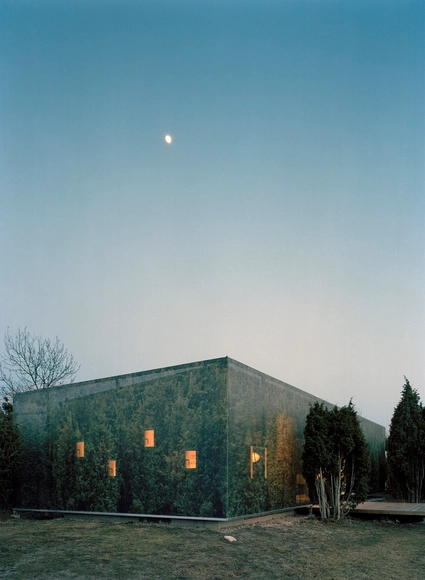
Often informed by its harsh climate and stunning landscapes, Nordic design, specifically architecture, has a unique relationship with nature. Photographers of Nordic architecture have benefitted from studying this close connection in their photos that experiment with capturing light, innovative materials, and landscape to create a compelling composition. Below is a selection of images of both public and private architecture by prominent photographers such as Pasi Aalto, Bert Leandersson, Mika Huisman and Åke E: Lindman.
In this video, British YouTuber Tom Scott explores Thyssenkrupp’s potentially disruptive new "MULTI" elevator system,” which the company revealed in detail this week. Though only in its beta stage of development, being tested within the confines of ThyssenKrupp’s 246-meter tall “innovation” tower in Rottweil, Germany, Multi aims to transform high rise building design with horizontally moving elevator cabs.
The German firm’s cable-free system utilizes vertically mounted tracks, in-cab braking systems, and pivoting elevator tracks to whisk occupants up and across buildings faster and safer than traditional shaft based systems.
The following is a manifesto, in search of a movement... In it, I am proposing a theory of architecture based around a ruffneck, antisocial, hip-hop, rudeboy ethos. [1] – Kara Walker
In her companion publication to the 2014 group exhibition “Ruffneck Constructivists,” the show’s curator, Kara Walker, lays down a radical manifesto for urban intervention. Just months before Ferguson [2] and a year before Baltimore, [3] Walker proposes her theory through which installation artists (along with architects and designers by extension) can become “defiant shapers of environments.” [4] The invocation and juxtaposition of the terms hip-hop and architecture in the intro to her manifesto is particularly remarkable given the show’s exclusive assembly of visual and installation artists.
Mumbai Skyline. Image via Pixabay by user PDPics (public domain)
The Indian Government’s Smart City Mission, launched in 2015, envisions the development of one hundred “smart cities” by 2020 to address the country’s rapid urbanization; thirty cities were added to the official list last week, taking the current total of planned initiatives to ninety. The $7.5-billion mission entails the comprehensive development of core infrastructure—water and electricity supply, urban mobility, affordable housing, sanitation, health, and safety—while infusing technology-based “smart solutions” to drive economic growth and improve the citizens’ quality of life in cities.
In a country bogged down by bureaucratic corruption, the mission has been commended for its transparent and innovative use of a nation-wide “City Challenge” to award funding to the best proposals from local municipal bodies. Its utopian manifesto and on-ground implementation, however, are a cause of serious concern among urban planners and policy-makers today, who question if the very idea of the Indian smart city is inherently flawed.
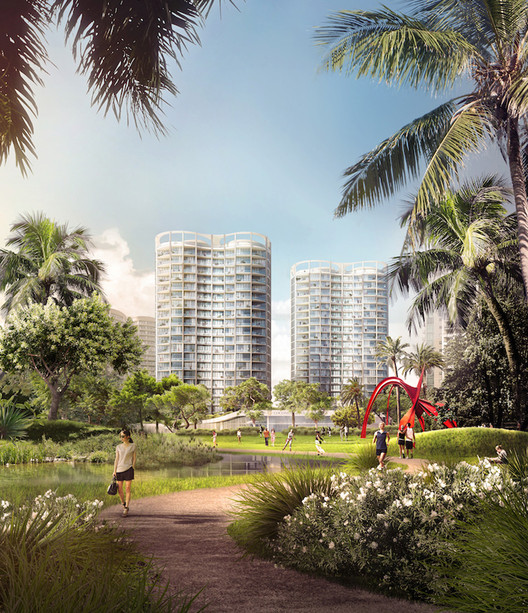
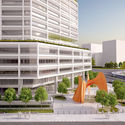
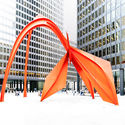
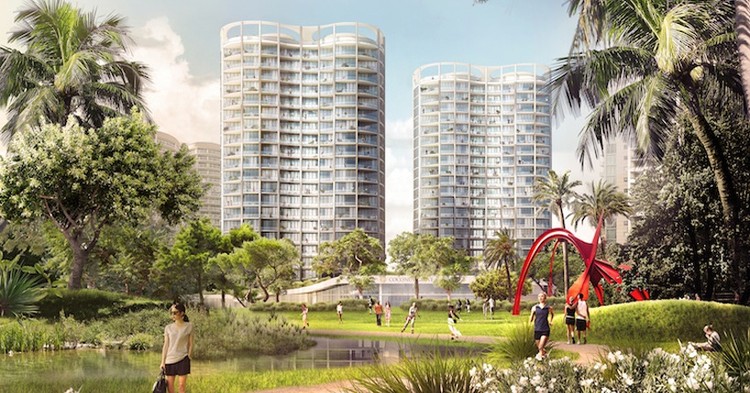
Why do so many architects use Alexander Calder sculptures in their renderings, even when the works have nothing to do with the institution or project depicted? The Calder Foundation has been tracking this phenomenon, and the results are featured in the images for this article.
A new exhibition at the Whitney Museum in New York explores mobiles—kinetic sculptures in which carefully balanced components reveal their own unique systems of movement—created by American sculptor Alexander Calder from 1930 until 1968, eight years before his death.
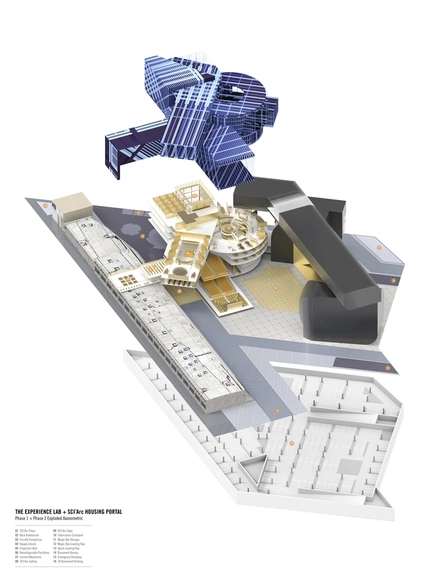
SCI-Arc< http://www.sciarc.edu/ >, the Southern California Institute of Architecture, is known for its mission to educate architects who will image and shape the future.
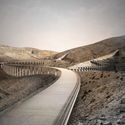
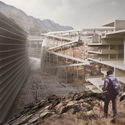
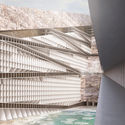
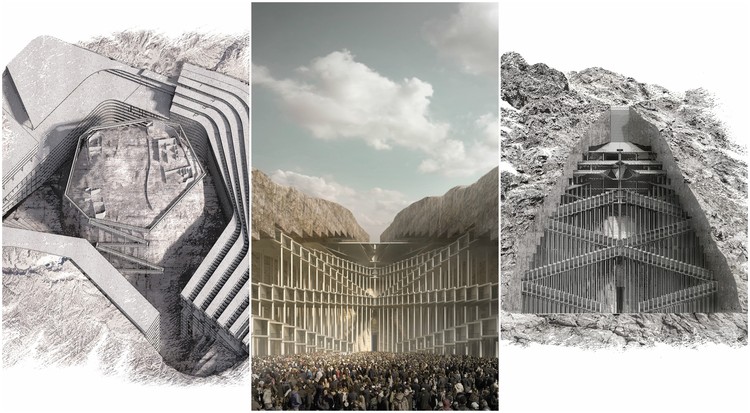
In a time of what seems to be ever-increasing religious and political conflict, Bartlett students Akarachai Padlom, Eleftherios Sergios, and Nasser Alamadi instead chose to focus on collaboration between religions in their thesis project entitled “Faith Estates,” which outlines a new method of mass religious tourism. In an area around the Dead Sea characterized by disputed boundaries and conflicting ownership claims, the group aims to reimagine the relationship between the world’s three monotheistic religions, but also to rethink the relationship between religion, tourism, and the landscape. The design consists of large-scale excavation sites which form tourist resorts along a pilgrimage route with the goal of forming a mutually beneficial relationship.
Throughout history shifting economies, disasters, regime changes, and utter incompetence have all caused the evacuation of impressive architectural structures. From the 1986 explosion at the Chernobyl Nuclear Power Plant in Ukraine that rendered a region of the then-Soviet Union uninhabitable, to the decline in public transport that saw a number of US train stations becoming superfluous, the history of architectural abandonment touches all cultures. And, without regular maintenance, structures deteriorate, leaving behind no more than awe-inspiring ghosts of the past to fuel the ever-growing internet trend for "ruin porn." Below are 8 abandoned buildings slowly being reclaimed by nature:
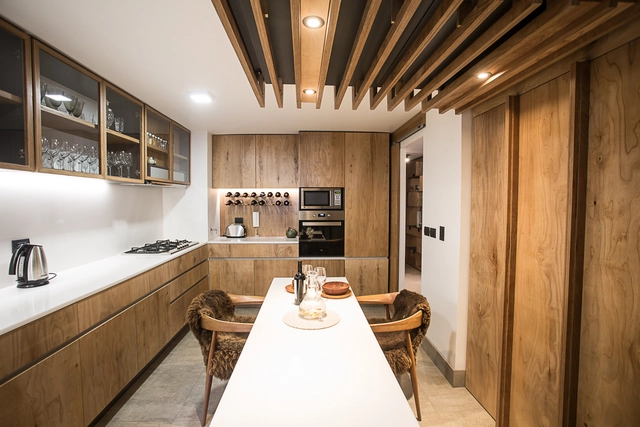
The project is a renovation of a duplex apartment located in Santiago, Chile. The clients’ requirements were to achieve spaciousness, continuity and to add light.
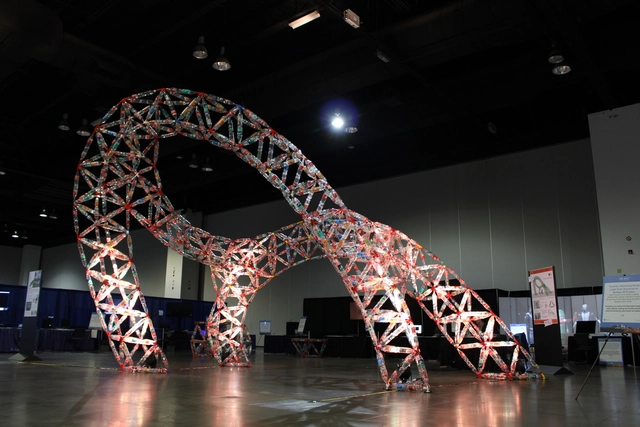
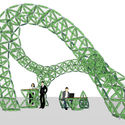
The capabilities of personal 3D printing and fabrication are only beginning to be tested, but a new system is pushing the boundaries for feasible, structurally-sound large scale structures. Unlike other structures created by 3D printing systems, Trussfab doesn’t require access to specialized equipment, nor specific engineering knowledge, to print and build large-scale structures capable of supporting human weight. Phd researcher Robert Kovacs with his team from the Human Computer Interaction Lab at the Hasso Plattner Institute in Potsdam, Germany created Trussfab as an end-to-end system allowing users to fabricate sturdy, large-scale structures using plastic bottles and 3D-printed connections, making them easy and relatively quick to construct.
On the morning of April 24th, Delhi’s architecture community reacted in shock and disgust to the news that the city's Hall of Nations and the four Halls of Industries had been demolished. Bulldozers had worked through the previous night at the Pragati Maidan exhibition grounds in central Delhi, where the Indian Trade Promotion Organisation (ITPO) razed the iconic structures to the ground, ignoring pleas from several Indian and international institutions.
The Hall of Nations, the world’s first and largest-span space-frame structure built in reinforced concrete, holds special significance in India’s post-colonial history—it was inaugurated in 1972 to commemorate twenty-five years of the young country’s independence. The demolition was met with widespread condemnation by architects and historians alike, not just because of the loss of an important piece of Delhi's heritage, but also for the clandestine manner in which the demolition was conducted.
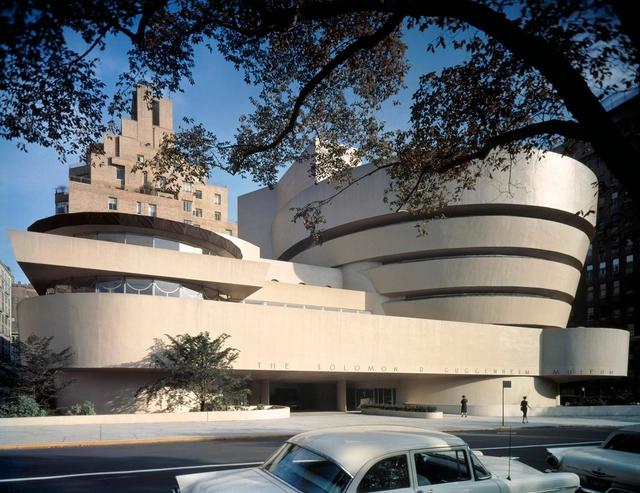
This article originally appeared on guggenheim.org/blogs under the title "Wright’s Living Organism: The Evolution of the Guggenheim Museum," and is used with permission.
Standing on the Solomon R. Guggenheim Museum construction site in 1957, architect Frank Lloyd Wright proclaimed, “It is all one thing, all an integral, not part upon part. This is the principle I’ve always worked toward.” The “principle” that Wright referred to is the design ideology that he developed over the course of his seventy-year career: organic architecture. At its core, that principle was an aspiration for spatial continuity, in which every element of a building would be conceived not as a discretely designed module, but as a constituent of the whole.
Although not Wright’s intention per se, it is fitting that the building he conceived of as a living organism has evolved over time. The overall integrity and character-defining spiral form have remained unchanged, but there have been a series of additions and renovations necessitated by the growth and modernization of the institution.
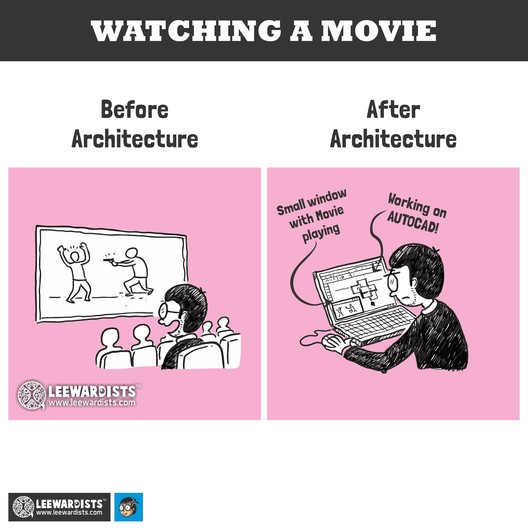
Ch-ch-ch-ch-changes. David Bowie was right when he sang it – life’s full of so much uncertainty, variables, and excitement that half the battle is riding the wave and adapting as best as one can. Some adjustments are self-directed and others are forced upon us, but regardless of this, change allows us to reminisce, regret and reflect on what once was.
Being an architect comes with its own set of significant life changes (and that’s in addition to that major wardrobe overhaul) which more often than not, can’t be helped. Gone are days of relaxation, relationships and rendezvous, now replaced by multitasking, models and meetings. But no matter how busy you are, a moment of self-reflection never hurt anyone. So switch off that second monitor, grab a coffee, and sit back, as we take a look at how your life has changed, for better or for worse, since that fateful day you stumbled upon architecture.




.jpg?1499123140&format=webp&width=640&height=580)
.jpg?1499123196 "© Laurian Ghinitoiu")
.jpg?1499123207 "© Laurian Ghinitoiu")
.jpg?1499123175 "© Laurian Ghinitoiu")
.jpg?1499123140)