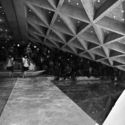
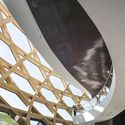
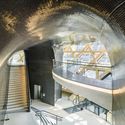
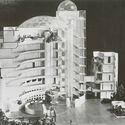
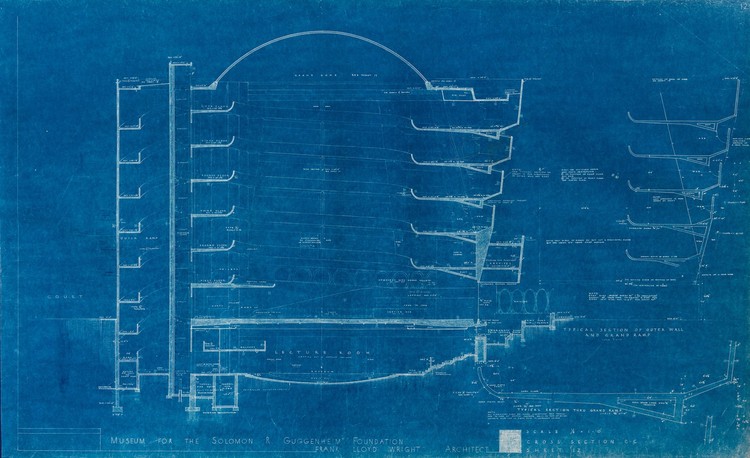
In a recent blog post from the Solomon R. Guggenheim Museum, curator Ashley Mendelsohn explores unrealized design details from Frank Lloyd Wright’s iconic design in New York City, based on blueprints and drawings from the museum’s archives. From large-scale questions of form to material choices, the 16-year period between the commission and the completion of the museum saw many design iterations. Most notable of these are the circulation paths drawn by Wright in the 1953 blueprints that include a steeper circular ramp—in addition to the "Grand Ramp"—that would allow for expedited access to the floors. Though replaced later with a triangular staircase, the "Quick Ramp" demonstrates Wright’s exploration of overlapping geometries.
James Hansen, professor of Earth and Environmental Sciences at Columbia University, former NASA scientist, and the planet’s preeminent climatologist, was among the first to sound the alarm on climate change during his 1988 testimony before Congress. Since then, he has continued to shine a light on the problem through lectures, interviews, TED talks, and his blog. He has warned that a mere 2-degree increase in temperature could result in a sea level rise of five to nine meters by the end of the century, flooding coastal cities and rendering them uninhabitable.
Inspired by Hansen, filmmakers Menilmonde have imagined Manhattan underwater. The French duo's previous videos experiment with subtle subversions of the world we experience, and their latest creation, 2°C New York City, is arguably their most powerful to date.
Australian ecologists, David Holmgren and Bill Mollison, first coined the term permaculture in 1978, encompassing holistic methods for planning, updating and maintaining environmentally sustainable, socially just and financially viable systems. For Mollison, "Permaculture is the philosophy of working with and not against nature, after a long and thoughtful observation." In this sense, herbal spirals are an excellent exercise to begin to understand some of the concepts of this culture, as it brings together various natural functions in a single element, making it more productive and healthy.
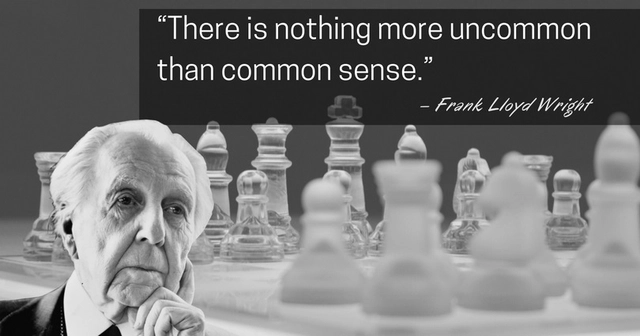
It's no secret that Frank Lloyd Wright was among the architecture profession's more colorful characters. Known as an outspoken and often unforgiving egotist, Wright's appreciation of architecture was outshone only by his appreciation for himself—which is perhaps understandable, given that he ranks among the 20th century's great geniuses. For better or worse (probably worse), Wright's reputation has clung to the profession, thanks in large part to Ayn Rand, who used Wright as inspiration for the incorrigible lead character of one of her most famous books, The Fountainhead.
But in truth, most architects have at least a little of Frank Lloyd Wright's personality contained within their own. It's difficult to have self-confidence without a shred of ego, and since design requires a lot of self-confidence, many of us can relate—if only occasionally—to the outrageous attitude of The United States' greatest architect. In honor of Frank Lloyd Wright's 150th birthday today, we've collected some of Wright's most "insightful" comments and turned them into posters that can inspire you no matter what life throws at you. Now, take your humility, lock it in a tiny box deep inside your mind, and join us on a journey through 150 years of wisdom...
The last house designed by Frank Lloyd Wright was never built, with its plans being delivered to the client just days after Wright’s funeral. But the realization of his vision is tantalizingly possible, as those plans, and the parcel of land it was designed for, are still held by the same family—and are for sale, along with the adjoining plot and an existing Wright house.
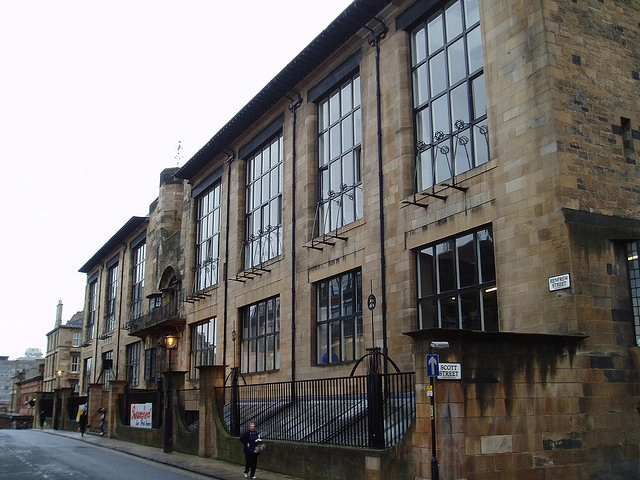
As one of the leading minds of art-nouveau in the UK, Charles Rennie Mackintosh (7 June 1868 – 10 December 1928) left a lasting impression in art and architecture. With a surprisingly brief architectural career, Mackintosh managed to stand out at the international level in art and design with his personal style known as the "Mackintosh Rose" motif. Born in Glasgow in 1868, Mackintosh is known for his play between hard angles and soft curves, heavy material and sculpted light. Though he was most well-known for the Mackintosh Building at the Glasgow School of Art, Charles Rennie Mackintosh left a legacy of architecture-as-art that transcends the Glasgow school and exemplifies trans-disciplinary architecture.
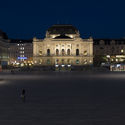
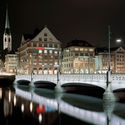
While many cities strive for a spectacular appearance at night, Zurich follows a modest strategy for nocturnal illumination. Numerous urban centers in the world are oversaturated in the evening, with individual buildings calling for attention through bright light, harsh contrasts, or colorful façade lighting. In contrast, the Zurich master plan for lighting has focused on an overall image of sensitive light levels with white light. But this nocturnal presence far from simple design, and is instead based on detailed urban studies and precise, customized projections, where technology is discretely hidden in favor of authentic culture.
Modern technology; when it works, it's brilliant. Even the cell phone, primarily a communication device, can now transform our face into a dog or let us throw angry birds at pigs. Computers really do separate us from the animals.
But it's not all fun and games, particularly for architects. Whilst the new kids on the block such as BIM and virtual reality are hurtling the profession into the 21st century, AutoCAD will always be the dear old friend we could never let go of. And that presents a problem - because AutoCAD is more than capable of letting go of us. It's never through a heartfelt letter, or an endearing text, but through a cold, abrupt, soul-destroying message. AutoCAD knows it can leave us unexpectedly, it knows we will come crawling back, but at least now, you know what it really means when it says goodbye.
Under the theme "Healthy & Climate Friendly Architecture - From Knowledge to Practice", the 7th VELUX Daylight Symposium, held in Berlin on 3-4 May 2017, was attended by 39 speakers from research and architectural practice.
Participants were able to contrast the information presented by researchers with the 'built experience' of architects from Europe, Canada and USA, generating interesting discussions about the need to go deeper in the understanding of this natural resource, and then design more effectively.
On April 22, SCI-Arc’s 2017 Undergraduate Thesis Weekend concluded with the reviews of 46 thesis projects by over 70 critics including SCI-Arc faculty and guests including Winka Dubbeldam, Graham Harman, Catherine Ingraham, Ferda Kolatan, Thom Mayne, Roland Snooks, and Neyran Turan. Students presented architectural responses to real-world technological, ecological, and social issues driving both formally and socially relevant innovation.
Clear floor space. Image Courtesy of United States Department of Justice
Only a special few architects can truly say they enjoy reading building codes. There’s no doubt that it’s daunting and it can certainly pose challenges to your design. Over time you’ll likely become familiar with the types of things you need to look out for on a project, but even the most experienced architects may still need to double-check a code question or two during the design process (or have an intern check it for them.) Unfortunately, many code documents are unwieldy to say the least, and there are few cases in which this is more true than the 279-page ADA Standards for Accessible Design. However, once you understand the layout and how to use a code book or the ADA guidelines, they become more manageable.
This guide aims to describe each chapter in the ADA 2010 guidelines to give a foundation for navigating them. Luckily for designers in United States, the documentation for the ADA Standards for Accessible Design is available online. Keep reading for a quick summary (all information and diagrams are directly from the guidelines). Check out the whole document here if you need it—or for convenience, each subheading in this article links directly to the relevant section in the PDF!
I believe one of the biggest problems recently graduated architects are encountering is their lack of professional experience. That’s totally normal. Without knowing what to do, finding employment in architecture can be very costly, both financially and time wise.
Personally, I started my professional career with some internships where I saw how an architecture project in the street worked: the paperwork that’s involved, the invoices, the budgets, the smell of the ink from the plans in the office, how the models feel under your fingers.
Honestly, you have no idea how open other architects are to sharing their knowledge and making room for the new generations that come after. It makes sense because in a way they see themselves in the new generation, as they were a few years ago.
Humanity always cherishes great works of art that stand the test of time. This June, for example, marks the 50th anniversary of The Beatles’ psychedelic Sgt. Pepper's Lonely Hearts Club Band, and the 20th anniversary of Radiohead’s dystopian Ok Computer. These psychologically satisfying birthdays have generated serious appreciation and nostalgia. Similarly, we also love to praise the longevity of innovative architecture. The AIA bestows an annual “Twenty-five Year Award” to acknowledge projects that have "stood the test of time” and “exemplify design of enduring significance.” But one project a year seems stingy. Below are 15 modern classics which, though not always given the easiest start in life, we’ve come to adore:
Photographer duo Luc Boegly & Sergio Grazia have released a new photo series capturing the Seine Musicale, which recently opened its doors. Designed as a partnership itself between architects Shigeru Ban and Jean de Gastines, the mixed-use music and cultural center is located in Paris’ western Boulogne-Billancourt suburb. The project is the latest feature in the site’s Island Master Plan designed by Jean Nouvel. Features include a multi-purpose concert hall seating 4,000, a classical music call seating 1,150, rehearsal and recording rooms and an outdoor park area for visitors and practicing musicians.
Each year, on the first Friday in June, people in the US celebrate National Donut Day. The origins of this commemoration go back 100 years: soon after the US entrance into World War I in 1917, the Protestant Christian church and international charitable organization The Salvation Army sent a fact-finding mission to France. It was during that mission that volunteering women began serving free donuts to soldiers on the front lines with the aim to boost the troops’ morale. These women, dubbed “Donut Lassies,” are often credited with making donuts widely popular in the United States when troops returned home from war.
The second house in Arts & Architecture magazine’s Case Study Houses program shows the hallmarks of the series: an emphasis on light-soaked living areas, indoor-outdoor living, strong horizontal lines dominated by a flat roof, and so on. It is distinguished, though, by particularly creative details linking the indoor and outdoor areas, and by a strong awareness of function.
#donotsettle is an online video project created by Wahyu Pratomo and Kris Provoost about architecture and the way it is perceived by its users. Having published a number of videos on ArchDaily over the past two years, Pramoto and Provoost are now launching an exclusive column, “#donotsettle extra,” which will accompany some of their #donotsettle videos with in-depth textual analysis of the buildings they visit.
“The office has an easy-going mood and relaxing atmosphere. That’s why we call it The House,” says Jacob van Rijs, one of MVRDV's founders, when he brought #donotsettle into his office.
For architecture, an industry that is famous for long workdays, the office can potentially be a stressful environment. Van Rijs explains how the office could have a significant impact upon people's psychology, as they spend a large part of their life there. The MVRDV House has broken the rigid office typology, and made it more entertaining.
LANXESS presented its third Colored Concrete Works Award in Berlin to a distinguished architect who has achieved something unique in the use of colored concrete. This year’s award goes to Rudy Ricciotti for his “Musée des Civilisations de l’Europe et de la Méditerranée” (MuCEM) project in Marseille in the south of France. The building is constructed of a total of 1,100 cubic meters of concrete – in the form of prefabricated concrete slabs – and 250 cubic meters of in-situ concrete. The dark gray color tone was provided by the LANXESS pigments Bayferrox 330 and Bayferrox 318.










.jpg?1433377510 "\"The Wassail\" by Charles Rennie Mackintosh. Image © <a href='https://www.flickr.com/photos/dalbera/3802874247/'>Flickr user dalbera</a> licensed under <a href='https://creativecommons.org/licenses/by/2.0/'>CC BY 2.0</a>")


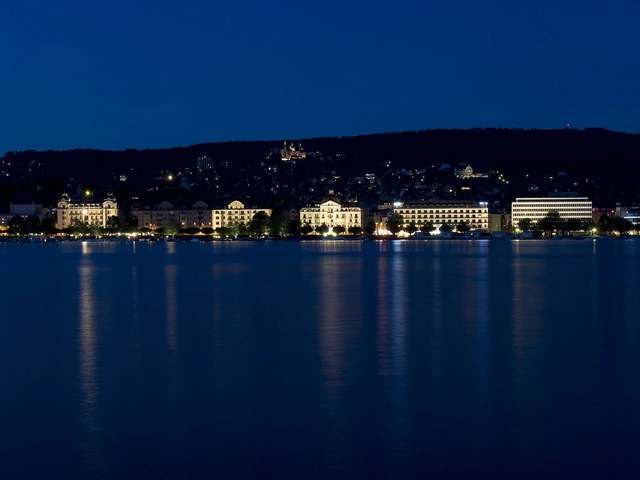
.jpg?1496789104 "Waterfront illumination of Stadthausquai with Fraumünster Church and St. Peter Church, Zürich. Photo by Benno Tobler. Image © Stadt Zürich")