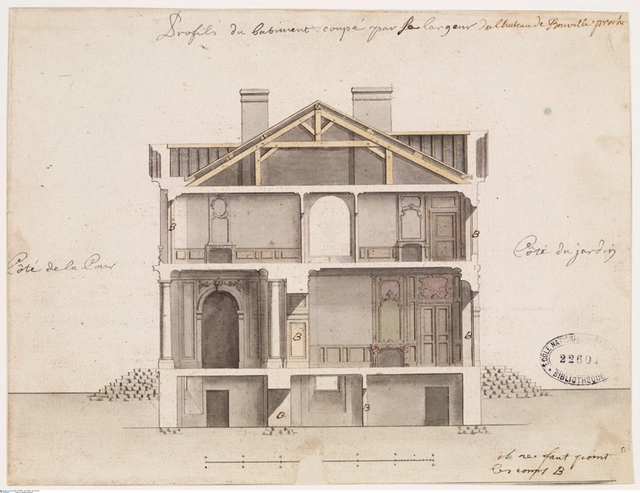
Starting October 18th, the Tchoban Foundation will be showing 65 art works of Hôtel particulier buildings – prestigious town houses, which were built in the first part of the 18th century and characterize Parisian architecture until today - in the exhibition “Lʼhôtel particulier à Paris.” After Sergei Tchoban, architect and founder of the Tchoban Foundation for Architectural Drawing, showed his collection of 24 drawings at the École des Beaux-Arts in 2011 with the exhibition “À la source de l’ Antique. La collection de Sergei Tchoban”, the two institutions now continue their collaboration, this time with a selection of works from Paris that will be displayed in Berlin.
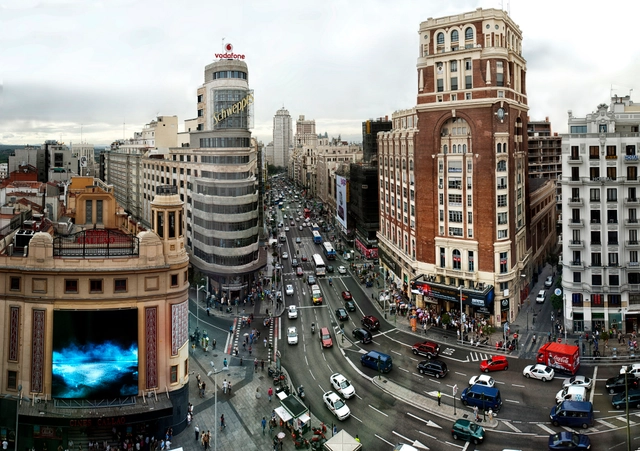
Starting January, the City of Madrid will close off 190 hectares of its central core to traffic, expanding its restricted vehicular areas to 352 hectares. Vehicles not belonging to residents within the city’s four most central barrios will be restricted to large avenues. If a vehicle enters the car-less zone, and does not have access to one of the 13 official parking lots, the owner will be automatically ticketed €90 ($115 U.S). The new legislation is part of a larger goal to completely pedestrianization central Madrid by 2020.
There’s no denying that biking is one of the biggest trends in urban development right now, with many touting cycling as the solution to reducing pollution and congestion – not to mention its health benefits. As cities are focusing on what they can do to encourage cycling and make their streets bike-friendly, architects have played a critical role in ushering bikes into the city, designing everything from protected cycle lanes to elaborate elevated cycletracks. Yet after cycling in Vienna for eight years, two architecture students decided to take a different – and simpler - approach to improving biking conditions. Focusing on the often cumbersome task of trying to run errands while on a bike, Philipp Moherndl and Matthias Lechner have designed a lightweight, recyclable cardboard pannier that can seamlessly go from store to bike.
“Due to the mass appeal of the bike, conventional cycling accessories do not fit the lifestyle of many urban cyclists,” Moherndl and Lechner told ArchDaily. “The limited transport capacity of usual bicycles makes shopping difficult and inflexible. People often do their shopping spontaneously, on their way home or whilst cycling in the city. Therefore we wanted to come up with a more flexible solution: a multi-use bag for bicycles, which is low priced and environmentally-friendly.”
Final Call! All entries for the 2015 Bauwelt Award must be submitted by September 30th. The award (consisting of 5 awards at 5000 Euros each) is applicable for all architects and landscape architects’ "First Works" projects - any work realized by independent responsibility and completed after September 30, 2011. In addition to the prize, award-winners will be published in an exhibition at the BAU 2015 on the Munich fairgrounds starting January. An Advancement Award grant is also available, prized at 5,000 Euros, to fund an interdisciplinary research, exhibition or installation project that has yet to be completed. Visit the official website to learn more about the competition and how to apply.
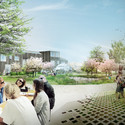
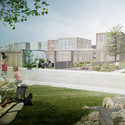
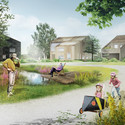
Located close to Copenhagen, Vinge is Denmark’s newest sustainable city. The first neighborhood for the city, designed by Danish landscape architects SLA for the Municipality of Frederikssund is aptly named the Delta District. The plan takes advantage of man-made landscape features to create a unique residential community closely tied to nature. Read on after the break to learn more about the proposed plan.
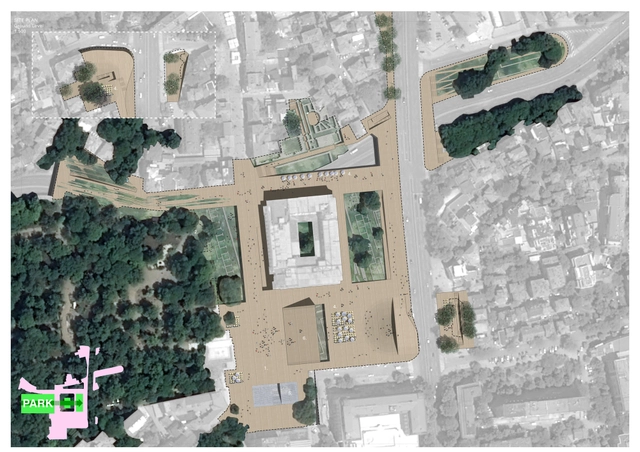
FORA has been announced as winner of a competition for revitalization and renovation of the central square in Plovdiv, Bulgaria's second largest city, built upon the remains of the ancient roman Forum of Philippopolis. The intervention spans an area of 57,000 square meters and exposes the intersection of several architectural and historical layers, from antiquity until the Socialist State.
Unbuilt Visions 2013 Grand Prize: Coastal Caretaker / Ursula Emery McClure, Michael McClure, Kristi Dykema Cheramie, Sarah Young (USA)
Unbuilt Visions promotes critical debate about architecture and design by acknowledging excellence in unbuilt projects. This annual competition provides an opportunity to engage with architecture, urbanism, interiors, and designed objects at the conceptual stage by recognizing work that offers a critical contribution to worldwide architectural discourse.
If you live in or plan to visit New York City during the month of October, we suggest you set aside some time to participate in one of Archtober’s many events. What is Archtober? Archtober is New York’s official Architecture and Design Month. Hosted by the Center for Architecture and the AIA New York Chapter, the annual festival organizes a plethora of architecture activities, programs and exhibitions to take place throughout city during the month of October. The goal is to raise awareness of the important role design plays in the city, celebrate the richness of New York’s built environment, and simply enjoy some great architecture.
Global design, architecture, engineering and planning firm HOK has recently been selected as lead designer and masterplanner for the redevelopment of Fort Regent, a former fortress turned community center in St. Helier on Jersey, the largest of the Channel Islands of the English Channel.
The redevelopment of the 22-acre (9-hectares) site will make Jersey’s largest leisure and entertainment venue a premiere destination, and includes a masterplan that aims to strengthen the economic value of the site and encourage public funding for the redevelopment.
CASMSB - View from Boulevard. Image Courtesy of adjkm
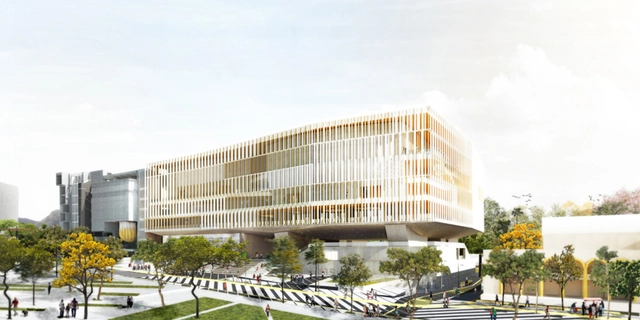
In 2011, adjkmwon an international competition to design the Simon Bolivar Complex for Social Action through Music (CASMSB - Complejo de Acción Social por la Música Simón Bolívar) in Caracas. Now, almost four years later, the Venezuelan practice has released their updated design for the “Caracas Symphony” in preparation for its groundbreaking at the end of this year.
The building is being constructed for the El Sistema project, an internationally distinguished program based on the premise that musical training can create great musicians and completely alter the expected life paths of children born into extremely impoverished circumstance.
Architects have been known to dabble in product design, but what about board game design? A team of Washington, D.C.-based architects, urban planners, and designers have come together to create a game with a comedic (yet somewhat serious) take on the nuances of city living. Cards Against Urbanity, a parody on the wildly successful Cards Against Humanity, is simultaneously a critical and satirical game designed to open a dialogue about the development of cities among those who influence them.
The walls of Oakland’s City Hall transcended their usual purpose during the city’s 2014 Art+Soul festival, becoming the stage for a beautifully choreographed dance by aerial dance company Bandaloop. Filmed with a GoPro, “Waltz on The Walls of City Hall” captures Bandaloop dancers Amelia Rudolph and Roel Seeber as they take dancing to new heights (literally).
Founded in 1991, the Bandaloop dance company is known for their vertical choreography and they have performed on skyscrapers, in atriums and in locations as diverse as Seattle’s Space Needle and the wall of the Ed Sullivan Theater in New York. Watch the video above as the dancers gracefully twirl, jump and glide on the side of the 320-foot City Hall building. Visit the Bandaloop website for more information on the dance team.
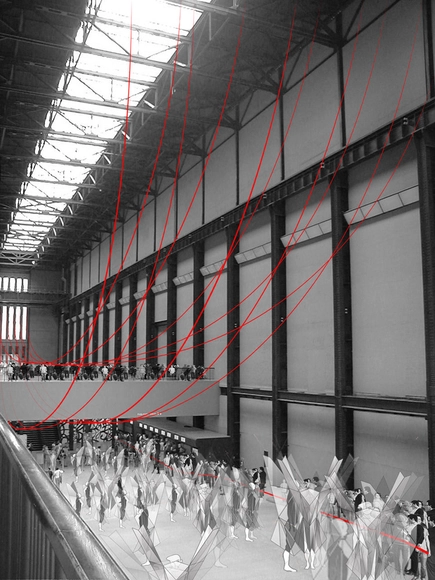
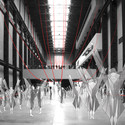
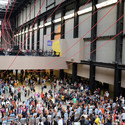
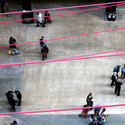
Text description provided by the architects. What happens when a designer decides to turn a classic Herzog & de Meuron masterpiece into a carnival space? That's precisely what happened when architect Gia Wolff was asked to create an installation - part of which doubled as a performance piece - for the show Up Hill Down Hall: An Indoor Carnival in the Tate Modern's Turbine Hall. How did she approach transforming such a cultural icon? Three words: red-pink rope.
Exploration of contextual, cultural, and life cycle flows offers a critical lens for visualizing new housing strategies for living in the future. The d3 Housing Tomorrow competition invites architects, designers, engineers, and students to collectively explore, document, analyze, transform, and deploy innovative approaches to residential urbanism, architecture, interiors, and designed objects.
ArchDaily is continuing our partnership with The Architectural Review, bringing you short introductions to the themes of the magazine’s monthly editions. In this post, we take a look at AR’s August 2014 issue, which examines the tension between the often idealised world of the architecture media and the messy complexity of real-world buildings. Here, AR Editor Catherine Slessor meditates on "the uneasy relationship between reductivist beauty contests and architecture’s nuanced narrativesand complexities."
The recent announcement of the RIBA Stirling Prize shortlist has stoked up the usual feverish debate about what constitutes ‘good’ architecture and what should or shouldn’t win. But an awards scheme that can pit the Shard against the Everyman Theatre, thus perilously straddling an engorged spectrum of style, scale, client, context, user and urban contribution, is a fundamentally impossible proposition when you get down to it. One former editor of The Architects’ Journal despairingly remarked that judging the Stirling was like trying to compare a cookery book with a slim volume of poetry. Apart from both being printed on paper, they have nothing else in common. So do you plump for cookery or poetry?
About one month ago, three major figures in Portuguese architecture - Pritzker Laureate Álvaro Siza, architect Carlos Castanheira and one of today’s most prominent architectural photographers, Fernando Guerra - began an uncommon adventure.
During 22 days the architects traveled through many Asian countries inaugurating buildings, visiting new projects and meeting other architects like Pritzker Laureate Whang Shu. At the end of their trip, the trio visited the "Shadow of light - a portrait of Álvaro Siza" exhibition opening and vernissage, in Macau, realized by Fernando Guerra.
We were able to follow this intimate journey through the images taken by Guerra and published every day in his Instagram – a careful, spontaneous and delicate photographic narrative that shows a little bit of what were these weeks with Siza and Castanheira were like. Back in Portugal, Fernando Guerra published an interesting report on those last weeks and generously shared with us both his writings and his beautiful pictures.
Read the text and enjoy Guerra's photographs after the break.
"To meet the biggest challenges of the 21st century, city leaders must think creatively and be unafraid to try new things – and the Mayors Challenge is designed to help them do that," said Michael Bloomberg, former mayor of New York City and founder of Bloomberg Philanthropies.
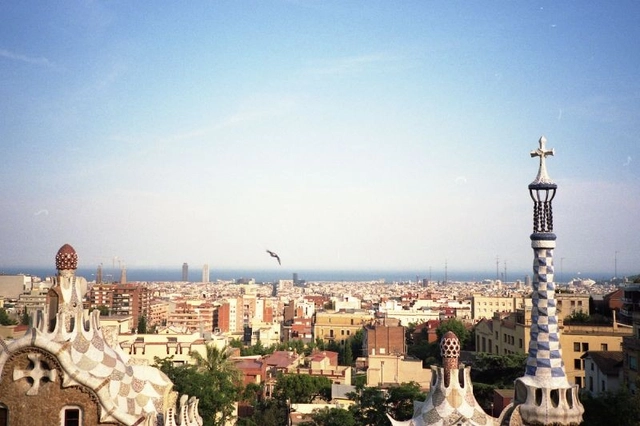
Read on after the break to learn more about the proposals of Barcelona and the four runners-up
Smithsonian Institution’s National Museum of African American History and Culture, Washington, D.C.. Image Courtesy of Adjaye Associates
On September 30, Mohsen Mostafavi will present David Adjaye with the W.E.B. Du Bois Medal, Harvard University’s highest honor in the field of African and African American studies, at the Hutchins Center Honors. Since 2000, the Du Bois Medal has been awarded to individuals from across the globe in recognition of their contributions to African and African-American history and culture. Adjaye is one of nine luminaries receiving this year’s award, including Oprah Winfrey and the late Maya Angelou. More information about the ceremony can be found here.
The architects of Emerging Objectshave devised a scheme for a 3D printed house made from locally harvested salt and concrete. Known as the “3D Printed House 1.0,” the case study residence was commissioned by the Jin Hai Lake Resort Beijing. It integrates traditional construction methods with renewable 3D printed materials, manufactured by Emerging Objects, to build a house that is sustainable, structurally sound and beautiful.
The 2014 Restaurant & Bar Design Award winners have been announced! The award, now in its sixth cycle, is one of the most prestigious in hospitality. Projects from the UK to China and Australia have all been recognized as being some of the world's best designed restaurant and bars. See who was selected from 3000 international submissions, after the break.
How will sea level rise affect Metro Vancouver and what can we do about it? Take a look at the #RISEIDEAS competition from SFU Public Square – an open ideas competition with a Grand Prize of $35,000 to find innovative ways to address sea level rise. Form a team of one to four people, submit your idea online, and you could take home the cash, rub shoulders with experts at the October 19 public exhibition day, and win free event tickets. The deadline for competition submissions is October 6, 2014. Check out the website for all the details.
As part of the Semaine Digitale, in October Bordaux will host 1024 Architecture's Tesseract, an installation inspired by the so called "four-dimensional cube." Created from no more than ordinary scaffolding, a translucent fabric skin and a series of electronically controlled lights, the installation plays with complex geometrical compositions, as the light beams rapidly create and deconstruct shapes within the outer 10 metre cubic frame.
As part of CNN's Leading Women series, Sheena McKenzie explores the work of Turkish architect Zeynep Fadillioglu - perhaps the first female architect to design a mosque, now on her third. In buildings where men and women are traditionally separated for worship, and women are often given a smaller space, Fadillioglu "purposely placed the women's section in one of the most beautiful parts of the light-flooded dome" in Istanbul'sSakirin Mosque. McKenzie concludes that although "Fadillioglu might have made a name for herself designing mosques, you don't needn't be religious to admire their beauty."
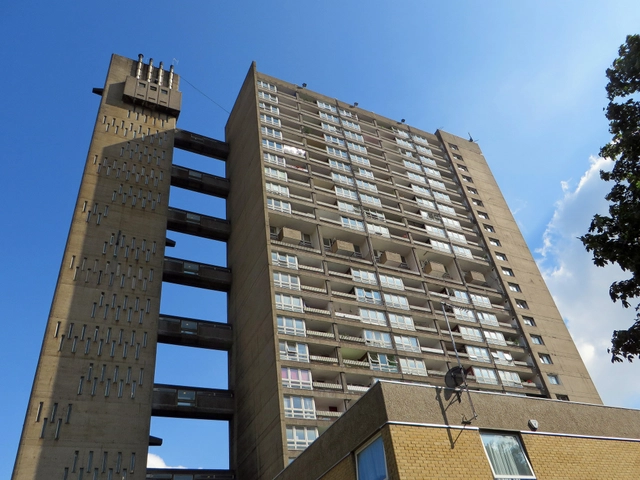
The UK's National Trust has announced the 'pop-up' opening of a property in Ernö Goldfinger's famous Balfron Tower in London, offering public access to Flat 130 of the brutalist icon from the 1st to the 12th of October. Completed in 1967, the Balfron Tower was the first of Goldfinger's two distinctive London housing blocks (the other being Trellick Tower), and in 1968 Goldfinger himself lived for two months in Flat 130, to demonstrate the desirability of high-rise living.













_-_Jouin_Manku_4.jpg?1411758616&format=webp&width=640&height=580)