

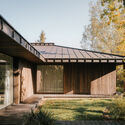


-
Architects: Kruk Architekci
- Area: 280 m²
- Year: 2023




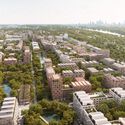
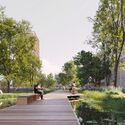
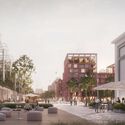
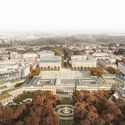
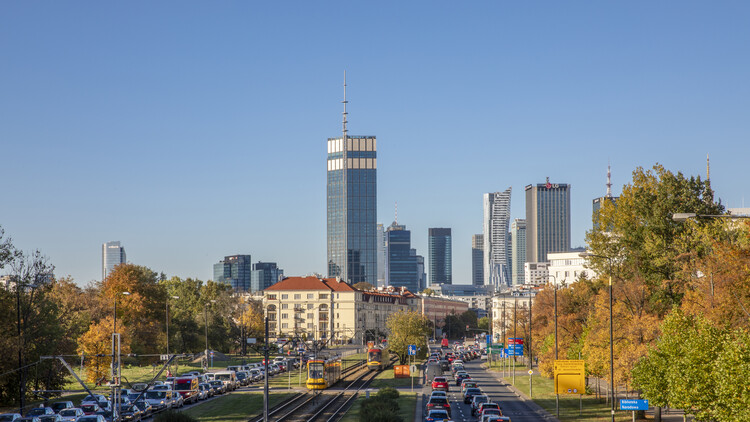
Last week, WXCA Architects unveiled the design for a new “green district of the future,” to be developed on a former FSO car factory site in Warsaw. Covering over 60 hectares, the project aims to accommodate more than 17,000 residents and provide employment for approximately 13,000 individuals by 2050. The Polish automotive FSO factory will be transformed, outlined in a master plan envisioning a multi-functional and environmentally conscious district.


This article was originally published on Common Edge.
As this bloody year draws to a close, at a moment when the message “Peace on Earth” seems altogether mute, one might well ask: What power does architecture have? How can it address violence against innocent people, whose lives have been turned upside down? How does architecture respond to staggering cruelty? What can it say? Can it raise consciousness?






Concert halls, music, and performance venues stand as iconic symbols of cultural vitality within urban landscapes. Through these structures, which often become landmarks of the city, the residents are invited to take part and experience artistic expression, fostering a sense of community and connection. For architects, this program poses the intricate challenge of balancing form and function, creating spaces that enhance the acoustic experience, allow for the flow of audience and performers, and create visual spectacles in their own right.
Featuring both emerging and internationally recognized offices, this week’s curated selection showcases music and performance venues, from mixed arts and cultural centers to opera and ballet halls. Including proposals for international competitions such as David Chipperfield Architects or SHL and PAX architects’ designs for the Polish Royal Opera in Warsaw or Hariri Pontarini Architects’ design for an integrated center for the arts in Canada, the selection explores the program of music venues across scales and programs.

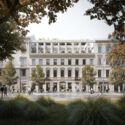
WXCA Architectural Design Studio has won the international competition for the reconstruction of the Saxon Palace, a heritage site located in the historical city center of Warsaw, Poland, that was significantly damaged during the Second World War. The competition, organized by the Polish Ministry of Culture and National Heritage in cooperation with the Association of Polish Architects, aimed to create a concept for the restoration of the monument, which is set to be rebuilt in its external Neoclassicist form of 1939.

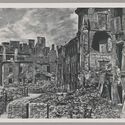
The exhibition “Warsaw 1945-1949: Rising from Rubble” took place this year at the Museum of Warsaw, exploring the postwar reconstruction and rebuilding process that took place after the war. After the Second World War, Warsaw’s entire urban fabric, architecture, and social and economic status had to be rebuilt from the ground up. Curated by Adam Przywara, the exhibition “offered a new perspective on the myth of the postwar reconstruction of the Polish capital city and one of the most interesting pages in its history.”

In the capital city of Poland, WXCA won a competition to design one of the largest museums completed in Europe today. The museum is now under construction at the Warsaw Citadel. The development is a combination of the Polish History Museum and the Polish Army Museum. Located on the site of a former fortification, the complex will become a culture hub rooted in remembrance.


A Foster + Partners and Buro Happold consortium has been announced as the winners of the competition to design the new CPK airport, situated between Warsaw and Łódź, in Poland. The project is envisioned as a 21st-century transport interchange, bringing together air, rail, and road. The design seeks to strike a balance between operational efficiency, environmental responsibility, and a symbolic expression that reflects the country’s national identity. Initially, the airport will serve up to 40 million passengers but is planned to easily expand to meet the 65 million passengers target in 2060.


Public spaces play a significant role in organizing the life of every community but defining what differentiates them from other spaces within the city is not an easy task. Once these spaces start to settle into the collective memory of the local communities, they become key elements that concentrate the mental image of a city. While this process usually happens with urban spaces, monuments and isolated architectural elements can also become markers for the urban life of an area. So, what happens when dramatic events like fires, war, or even the pandemic alter that image?


.jpg?1618821691)
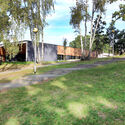
Titled "Trouble in Paradise", the Polish pavilion at the 17th International Architecture Exhibition – La Biennale di Venezia, will explore the countryside and observe how rural areas are an important element of building sustainable human environments, given the crises the world is surrounded with today. Curated by PROLOG +1 along with an international group of architects and artists, the national pavilion will be on physical display at the Giardini di Venezia, and online from May 22nd to November 21st, 2021.















._Image_by_Zupagrafika.jpg?1653259487 "Orła Białego prefab panel estate in Poznań (Brutal Poland). . Image © Zupagrafika")

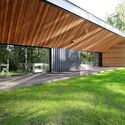
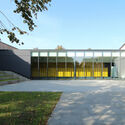
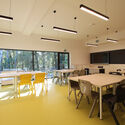



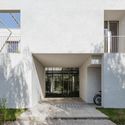


.jpg?1618821707 "© Wiktoria Wojciechowska")
.jpg?1618821715 "© Patrycja Wojtas")
.jpg?1618821737 "© Patrycja Wojtas")
.jpg?1618821691 "© Michał Sierakowski")
.jpg?1618821691)