Produce personalized presentation boards that distill complex concepts into simple visual representations with a few helpful tools and effects.


Produce personalized presentation boards that distill complex concepts into simple visual representations with a few helpful tools and effects.
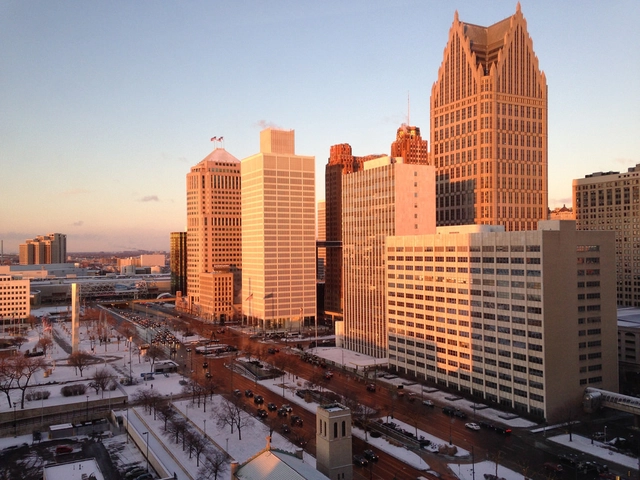
The "Rust Belt," a region of north central United States, is well known as an area where once thriving industrial cities have declined in economic health and population. As a result, many of the region's cities have been subject to grand proposals that aim to fix these city's problems--but could such schemes also provide a way to intervene in other serious global issues? In a recent article, Metropolis Magazine’s Web Editor and former ArchDaily Managing Editor Vanessa Quirk argues that refugees could reinvigorate such cities, describing how refugees are “boosting American’s legacy cities,” but simultaneously “encountering resistance from residents.”

Connie_Zhou.jpg?1478289537&format=webp&width=640&height=580)
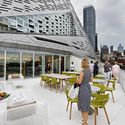
The Council on Tall Buildings and Urban Habitat (CTBUH) has named Gensler’s Shanghai Tower as the 2016 Best Tall Building Worldwide, citing its “innovative design scheme in traditional Shanghainese architectural traditions.” The building was selected from among four regional winners, which included BIG’s VIA 57 West (Americas), Jean Nouvel’s The White Walls (Europe) and Orange Architects’ The Cube (Africa).
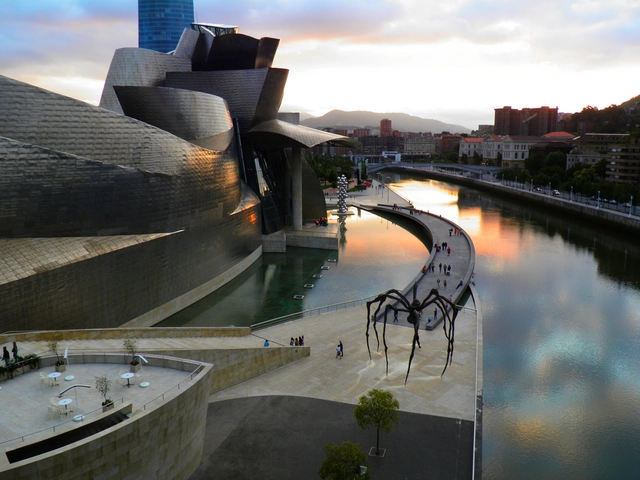
In October 1997, the unforgettable swooping metal panels of Frank Gehry’s Guggenheim Bilbao made their debut, drawing the attention of art and architecture lovers around the world. Images of the building quickly circulated through the infant world wide web, turning the museum into an instant icon that permanently elevated and transformed the international perception of the city of Bilbao.
Cities all over the world saw the potential in creating their own “Bilbao Effect,” and soon, a slew of new eye-catching, sculptural buildings had be built. This phenomenon persisted through the 2000s, manifesting itself in works by Gehry, Zaha Hadid, and many others. But recently, notable figures both inside and outside architecture have began to distance themselves from the icon, notably in the design philosophies of OMA and alumni such as Jeanne Gang and Matthias Sauerbruch.
In a new opinion piece for the Guardian, photographer Stuart Franklin extends this sentiment not just to architecture, but to all images in general. Franklin explains the history of the “iconic image” and the reasons why it may no longer exist.
Read Franklin’s full piece, here.
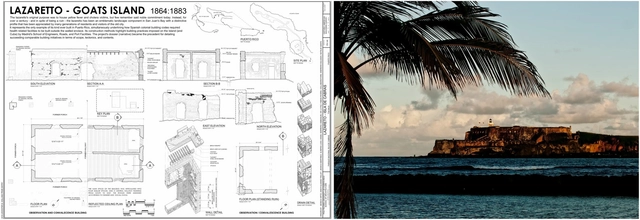
The Library of Congress has announced the winners of the 2016 Holland Prize, which recognizes the best single-sheet, measured drawing of a historic building, site, or structure, completed to the standards of the Historic American Building Survey (HABS), Historic American Engineering Record (HAER), or the Historic American Landscapes Survey (HALS).
The prize is awarded annually to “increase awareness, knowledge, and appreciation of historic resources throughout the United States while adding to the permanent HABS, HAER, and HALS collection at the LOC, and to encourage the submission of drawings among professionals and students. By requiring only a single sheet, the competition challenges the delineator to capture the essence of the site through the presentation of key features that reflect its significance.”
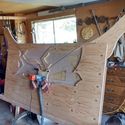
Young tech team (Bar Smith, Hannah Teagle, and Tom Beckett) has launched a Kickstarter campaign for Maslow, a four-by-eight-foot at home CNC cutting machine made to assist construction efforts by cutting user-specified shapes out of wood or any other flat material. Designed to be affordable—at under $500—easy to use, inclusive, and powerful, the project aims to share designs digitally so that you can build on the work of others or create your own from scratch.
Based on the design of the hanging plotter, Maslow “uses gear-reduced DC motors with encoders and a closed-loop feedback system to achieve high accuracy and high torque.”
For this edition of Section D, Monocle 24's weekly review of design, architecture and craft, the team turn their attention to the crossroads where design and architecture meet film. From a documentary about Pruitt-Igoe, the St. Louis housing project, to a new reading of the title sequence of Superman, this episode investigates the role of architecture in film – and visa versa.

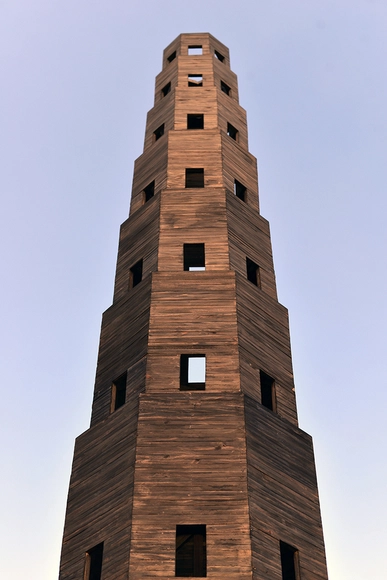
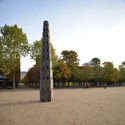
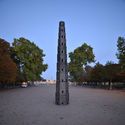
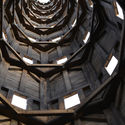
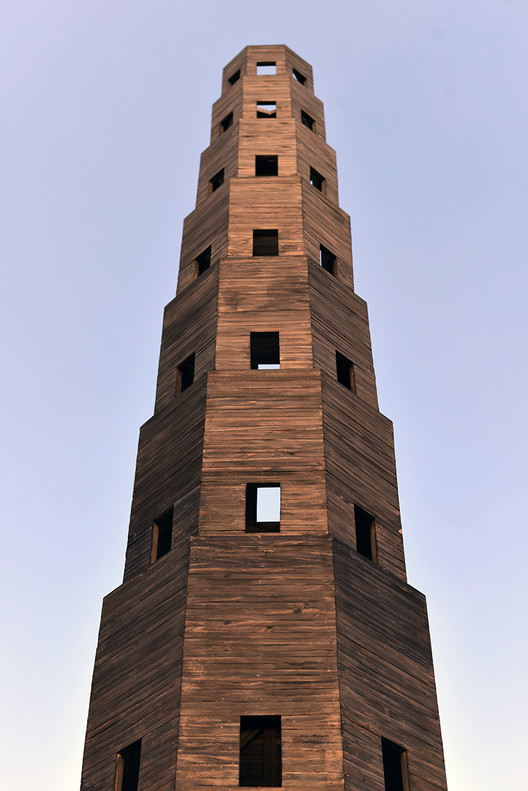
Chilean studio Pezo von Ellrichshausen has erected a temporary wooden tower of “an ambiguous” scale in the Jardin des Tuileries in Paris. Named the “Deci Pavilion,” the structure is made up of ten stacked octagonal wooden drums of decreasing size. While in reality only large enough to hold one visitor at a time, the column’s form and relationship to its surroundings give it the presence of a much larger structure.
The Wall Street Journal has named Snøhetta their “Architecture Innovator of the Year” for 2016. Founded by 55-year-old American Craig Dykers and 58-year-old Norwegian Kjetil Trædal, Snøhetta rose to prominence with their competition-winning designs for the 20th-century successor to the lost wonder of the ancient world, the Library of Alexandria, and the National Norwegian Opera House in Oslo.
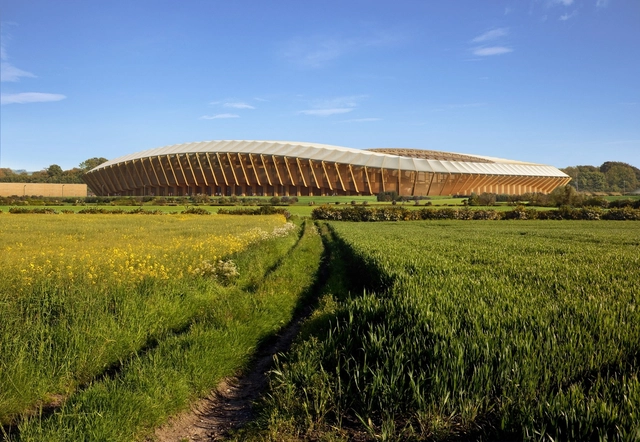
Zaha Hadid Architects has been announced as the winner of an international competition to design a new football stadium for the Forest Green Rovers in Stroud, UK. Following a seven month competition featuring over 50 entries from around the world, ZHA was selected over finalist Glenn Howells Architects for their all-wood proposal. When finished, the stadium will be the first in the world to be built entirely out of wood.
The $1.4 billion MGM National Harbor has started taking reservations. Nestled in the woodlands of Prince George's County, Maryland, HKS Hospitality Group's gaming resort is gearing up for its December 8th opening.
The hotel is slated as one of the "20 Most Anticipated Hotel Openings of 2016" (Forbes.com). In addition to suites, the hotel has a casino, two-story conservatory with horticulture and entertainment, and a dining and shopping complex.
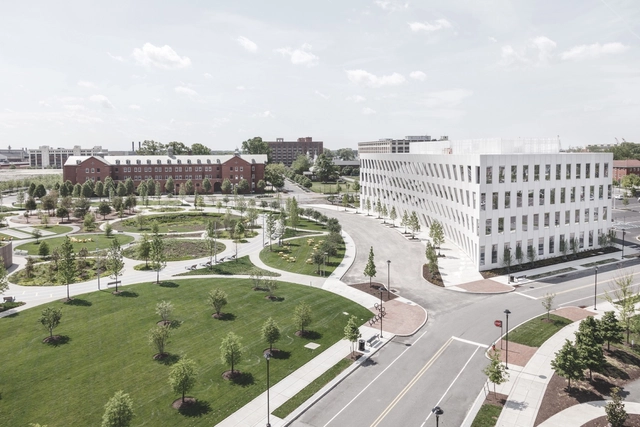
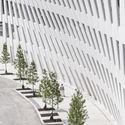
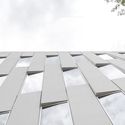
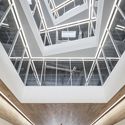
BIG has completed their second building on U.S. soil, a 92,000-square-foot office building at 1200 Intrepid Avenue in Philadelphia, Pennsylvania that also marks the firm’s first realized office building design. Located within the revitalized Philadelphia Navy Yard master plan (designed by Robert Stern), the four-story building features a bowing, double-curved facade and a supersized “periscope” inspired by the historic battleships docked a few blocks away.
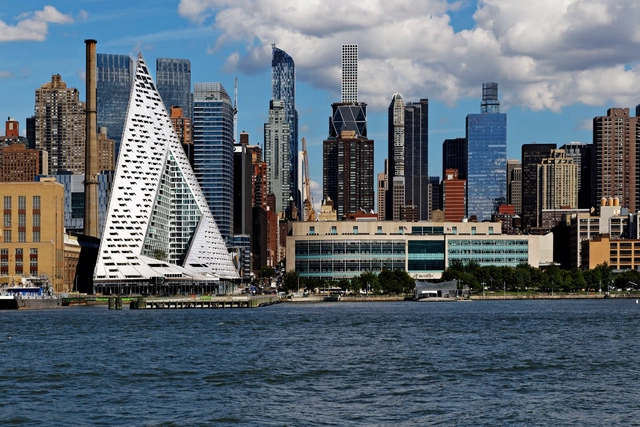
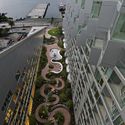
BIG’s VIA 57 West has been unanimously chosen as the winner of the 2016 International Highrise Award (IHA) for the world’s most innovative highrise.
One of the world’s most important architectural prizes for tall buildings, the award is presented by Deutsches Architekturmuseum (DAM) every two years to the project that best exemplifies the criteria of future-oriented design, functionality, innovative building technology, integration into urban development schemes, sustainability, and cost-effectiveness.

As a way to obtain a sample of participatory architecture from all over Mexico, last October, the Mexican Fine Arts Institute (INBA) published an open call for entries. Works by 31 teams—out of more than 200 registered—were selected to be part of Mexico’s Pavilion in the Venice Biennale, which was curated by Pablo Landa.
Among the teams selected are Arquitectos Artesanos and RootStudio, both based in the city of Oaxaca. Works by these offices stand out because they recover and adapt traditional building techniques for new contexts, and because they are often realized through the collaboration of architects and organized communities.
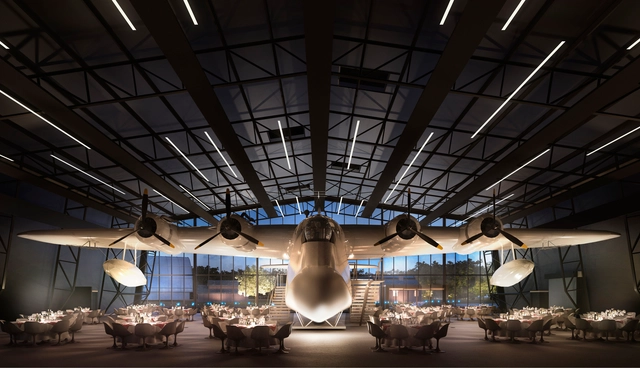
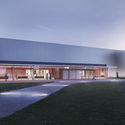
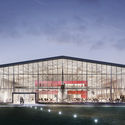
London-based firm Nex—Architecture has unveiled its plans for a new Royal Air Force (RAF) Museum as a part of the RAF’s 2018 Centenary Program. The new project will revitalize an existing RAF museum in North London that was created in 1972, transforming it into a visitor facility and promoting the airfield heritage of the museum’s location.
The new scheme will put emphasis on improving visitor experience by “establishing a clear route through the exhibition spaces.” A prominent new 40-meter-long entrance and visitor center will be placed inside the Hangar 1 building, acting as a welcome and orientation point.
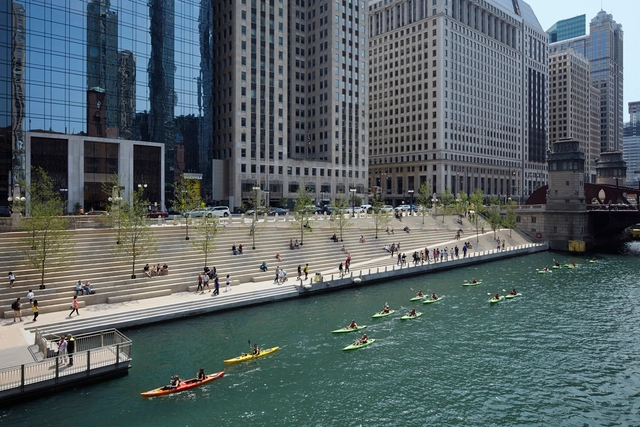
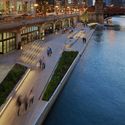
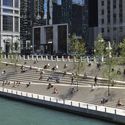
The third and final phase of the Chicago Riverwalk is officially open to the public. Designed by Sasaki and Ross Barney Architects, the 1.5 mile long promenade revitalizes an underutilized industrial area into an active public space featuring restaurants, cultural activities and amenities while reconnecting the Chicago River to the urban fabric of the city.
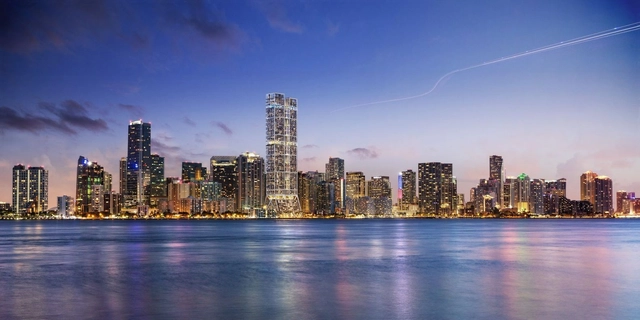
Foster + Partners has released plans for a connected pair of skyscrapers that will provide 660 new luxury condos in the Miami’s Brickell neighborhood. Taking advantage of updated height limit regulations, "The Towers" will top out at 1,049 feet (320 meters), becoming one of 5 new buildings that will share the title of Miami's tallest tower.
Historically, building heights in Miami have been restricted due to proximity to the Miami International Airport.

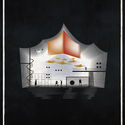
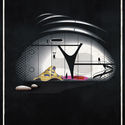
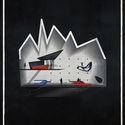
Architecture is the scenography of real world.
In this latest set of illustrations from Federico Babina, the artist envisions set designs in the styles of 27 of history's greatest architects, using signature elements from some of their most notable works to "stage [architecture] as if it were an architectural play."
See the entire set of ARCHIPLAY illustrations, including takes on Le Corbusier, Louis Kahn, Rem Koolhaas and Zaha Hadid, after the break.
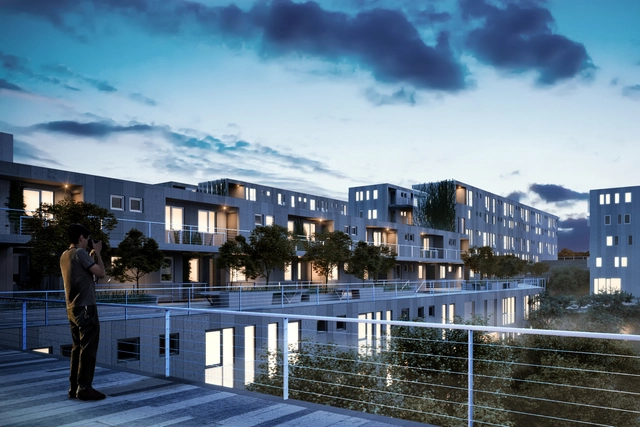
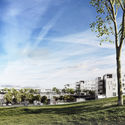
Somatic Collaborative has unveiled its design for Neapolitan Housing and Co-working Complex, a new urban block typology located in Gravatai, Brazil, that contrasts the traditional landscape of repetitive housing types that dominate the urban peripheries of Latin American cities. Like a Neapolitan ice cream, the project’s buildings will be layered, housing a variety of residential units and co-working space.
In a drastic shift from typical low-rise residential enclaves, gates, and walled compounds, the project will create high-density urban blocks “that engage the street as a source of urban life” through porous borders that encourage new city centralities. A semi-porous perimeter block with retail and commercial space will allow the project to better interact with its surroundings while designating the distinction between public, semipublic, and private space through the buildings’ masses.
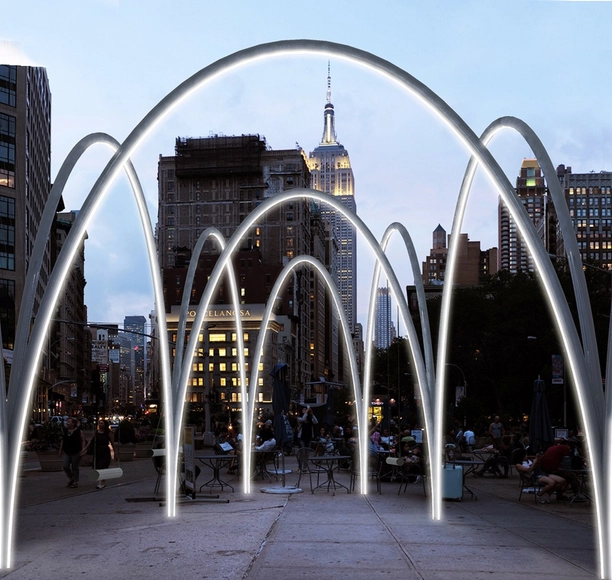
LOT has been selected as the winner of the third annual Flatiron Public Plaza design competition in New York, which called for proposals from 5 New York City firms to design a temporary installation to be located at the base of the iconic Flatiron Building.
The winning proposal, titled “Flatiron Sky-Line,” consists of a series of 10 large contiguous arches, constructed out of white powder-coated steel tubes housing LED lights, from which an array of hammocks will be suspended to allow visitors to rest and take in the surrounding landmarks such as the Met Life Tower and Empire State Building.
.jpg?1477936158&format=webp&width=640&height=580)
The BRIT Awards has announced that the statuettes that will be given during their 2017 awards ceremony have been designed by the late Zaha Hadid.
Hadid had accepted the project in January of this year and developed concepts for the design before her sudden passing in March of this year. The work has since been led by Zaha Hadid Design Director Maha Kutay and the BRIT Awards Niamh Byrne.
“Zaha was truly excited to be doing this,” recalled Kutay. “Her vision was, being an architect, to focus our efforts more on the 3D element, as the statue had previously been used as a canvas for artists to paint on for the last few years. Our design expresses Zaha’s unwavering belief in progress and optimism for the future and a break from the norm. The biggest challenge was to create something different within certain guidelines, yet achieving a result recognisable to the public. You have to respect the existing to create something new.”
Elon Musk has revealed his company Tesla’s latest world-changing innovation: a solar roof system so fully integrated into a home’s architecture as to be indistinguishable from a traditional roof.


.jpg?1477928406 "\"Textured\" Style. Image © Tesla. Via the Verge")


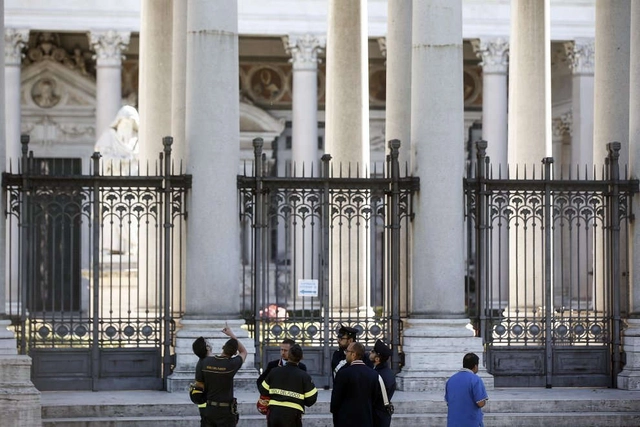
Following an earthquake measuring 6.6 on the Richter Scale that struck central Italy this morning at 7:40 a.m. local time—the fourth to hit this part of the country in three months—a number of structures have collapsed entirely or been severely damaged. While no deaths have been reported at this time, the BBC suggests that twenty people have been injured.
This latest tragedy follows an earthquake measuring 6.2 on the Richter Scale which hit a nearby region in August of this year, killing 300 and causing widespread devastation to towns and villages. It is being suggested that the evacuation of buildings that were deemed vulnerable to the ongoing seismic activity in the region last week may have saved lives.
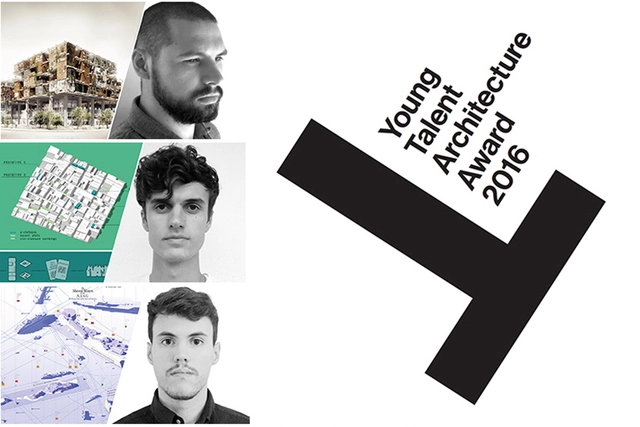
The Fundació Mies van der Rohe has announced the three winners of the inaugural Young Talent Architecture Award (YTAA) 2016. Established this year to “support the talent of recently graduated Architects, Urban Planners and Landscape Architects who will be responsible for transforming our environment in the future,” 9 finalists were selected from a shortlist of 30 projects, which was then narrowed down to 3 winners.
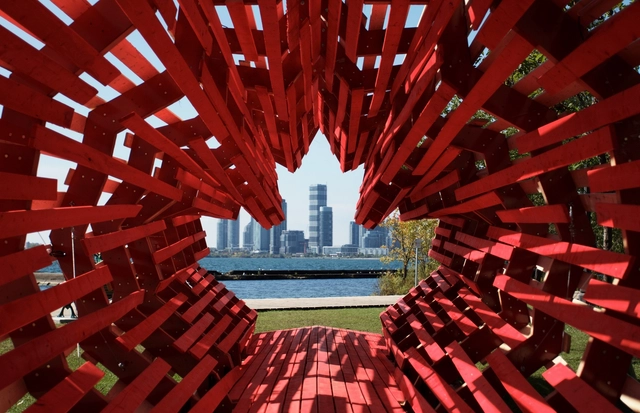
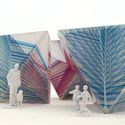
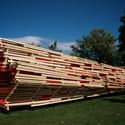
In memorial of the 1956 Hungarian Revolution, which resulted in the emigration of over 37,000 Hungarians to Canada, architectural studio Hello Wood has created Tunnel Through Time, a contemporary interpretation of the historic event that remembers the heroes of the revolution and especially honoring the Canadian people who welcomed Hungarian refugees.
Composed of 37,565 pieces—one for each Hungarian refugee accepted into Canada—the tunnel begins with a Hungarian flag with a hole in the middle, representing how protesters cut the communist coat of arms out of the Hungarian flag during the revolution. The tunnel then morphs—as a representation of the journey of the refugees—until it reaches an exit, which is shaped like the national symbol of Canada, the maple leaf.