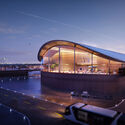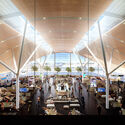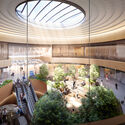
The City of Chicago and the Chicago Department of Aviation (CDA) have broken ground on Concourse D at O'Hare International Airport, designed by Skidmore, Owings & Merrill (SOM) in collaboration with Ross Barney Architects, Juan Gabriel Moreno Architects (JGMA), and Arup. The project marks the first building in ORDNext, O'Hare's most ambitious expansion to date, and introduces a new chapter in the airport's modernization. Construction management is led by AECOM Hunt Clayco Bowa, with completion expected in late 2028. Planning is also progressing on Concourse E, the second satellite concourse designed by the same team.

The City of Chicago has just unveiled the design for the first phase of the transformation of O’Hare International Airport. Designed by Skidmore, Ownings & Merrill (SOM), the terminal represents the largest concourse area expansion and revitalization in the airport’s 68-year history. Designed in collaboration with Ross Barney Architects, Juan Gabriel Moreno Architects, and Arup, “Satellite One” seeks to become a landmark in the state.
The American Institute of Architects (AIA) has named Carol Ross Barney, FAIA, as the recipient of the 2023 AIA Gold Medal, the institution’s highest annual honor. The award recognizes and applauds Carol Ross Barney’s focus on design excellence, social responsibility, and generosity. Through her transformative projects, she has endeavored to make the world a better place and, according to the jury, made “an indelible mark on the profession.”
Architecture draws together influences in art, culture and daily life. When designing for local communities and sourcing regional materials, architects often take inspiration from vernacular traditions. Utilizing traditional materials and resources from the area where a building is located, they draw from local climates and a history of building and ideas. Building sites around the world are diverse locations shaped by new construction technologies, past techniques, and changing conditions of cultural life.
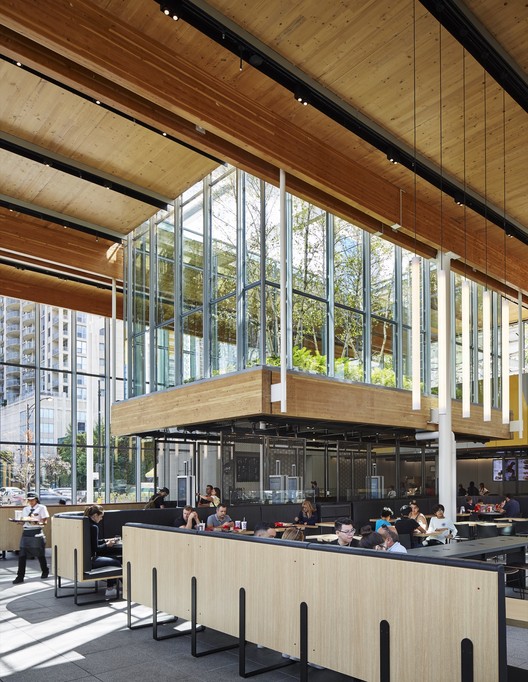
In an effort to reinvent an iconic American fast-food brand, McDonald’s U.S. has announced a new direction for the corporation, beginning with rethinking the restaurant’s current archetypal design both in its interior eating spaces and exterior urban landscape. A primary example of this commitment can be seen in the recently completed design for McDonald’s Global Flagship in Chicago by Ross Barney Architects.
The structure, which fills an entire city block in the heart of Chicago, was envisioned as a hallmark example of both the architect and the corporation's shared commitment to environmentally sustainable design. Cross Laminated Timber (CLT), an essential material for the project, replaced many of the commonly-used building materials such as steel, concrete, and plastics that have a larger environmental footprint.
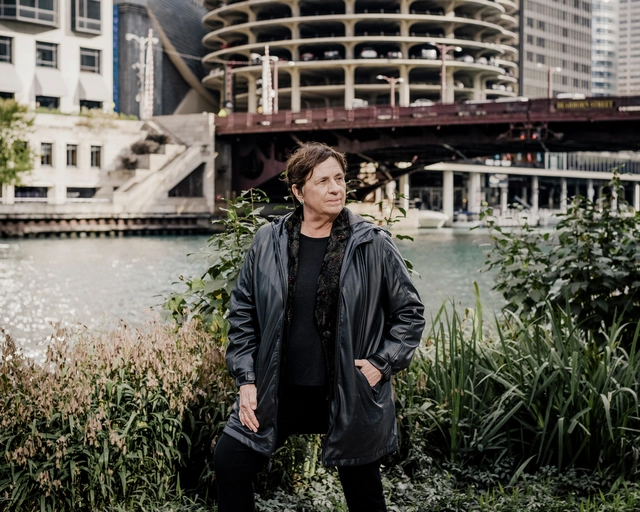
Carol Ross Barney. Image Courtesy of Ross Barney Architects
Few architects have had a greater influence on civic design and the public realm than Carol Ross Barney. Advocating that excellent design is a right, not a privilege, Carol's career is marked by her sensitivity. Born in Chicago, Illinois on April 12, 1949, her work is characterized by a desire to bring dignity to the needs of users and the public alike. With a career that spans over 40 years, Carol founded her firm Ross Barney Architects in 1981. She is known for shaping the built environment, the profession, and architectural education. As an architect, urbanist, mentor, and educator, her work upholds a deep commitment to people and place.
As August draws to a close and our holidays - be they from work or school - already start to feel like distant memories, perhaps it's a good moment to reflect on our faith in what we do. Sometimes design affords us the ability to oversee massive and exciting change. Sometimes projects don't work out, despite our best efforts. And sometimes, design isn't as capable of making change as we believe it to be. This week's stories touched on our faith in design in a range of ways, from the literal (such as the bright churches of Kerala) to the more abstract (how much good taste in fast food design actually equates to good tastes.) Read on for this week's review.
At a new corporate headquarters in Chicago’s West Loop neighborhood, there’s a double-height lobby filled with green walls and massive art installations. Travel to its top floor roof deck and you’ll find a cozy fire pit next to a fitness center and bar (happy hours are on Thursday). Elsewhere, stair-seating terraces face floor-to-ceiling windows with views of the Chicago skyline. This vertical campus settles in peaceably among its tony Randolph Street neighbors—Michelin stars, tech giants, and boutique hotels. At first glance, it’s refined and tasteful enough to be any one of these.
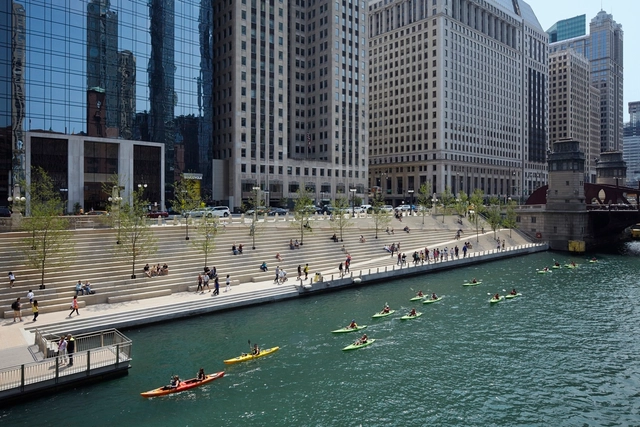
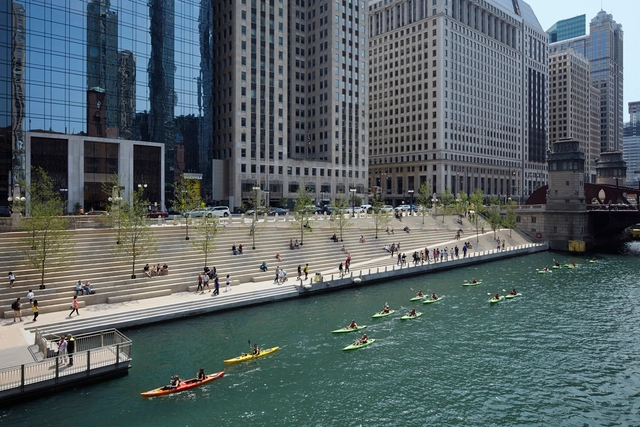
As a lifelong Chicagoan, Carol Ross Barney has seen the Chicago River transition from an effluent-filled cargo highway to a vibrant recreational spot, one where her grandsons go fishing. “They can throw their line in and pull out two- to three-inch fish immediately,” she says. It has even become a habitat for otters. As for people, the river has become an alternative commuting path: Some kayak to work. In many ways, these historically polluted stretches of Chicago now form a corridor offering a rich range of experiences and visitors. This dramatic reversal is thanks in no small part to the Chicago Riverwalk, which might be Ross Barney’s career-defining project. “The attitude of the people toward the river is really changing, and I think that’s the biggest story,” she says.
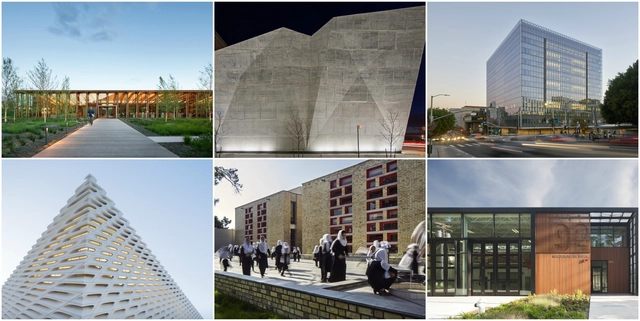
Seventeen projects chosen by the American Institute of Architects (AIA) have been selected for this year’s Institute Honor Awards for Architecture, an award known to be the profession’s highest recognition of works in America that exemplify an excellence in architecture, interior architecture and urban design.
Out of 500 submissions, the 17 recipients will be honoured with the award at the AIA Conference on Architecture in New York City in June.
The third and final phase of the ChicagoRiverwalk is officially open to the public. Designed by Sasaki and Ross Barney Architects, the 1.5 mile long promenade revitalizes an underutilized industrial area into an active public space featuring restaurants, cultural activities and amenities while reconnecting the Chicago River to the urban fabric of the city.
Update:The Chicago Tribune's architecture critic Blair Kaminhas now reported that 140 architects from 60 cities have expressed their interest in designing the Barack Obama Presidential Center in Chicago by submitting qualifications. Of these, 99 are based in the United States, although names have not been released. The below article, originally published on September 1st, lists 11 architects that Kamin was able to confirm had been invited to submit qualifications by the Barack Obama Foundation.
Last week, it was reported that the Barack Obama Foundation was searching globally for an architect to design Obama's Presidential Library and Museum (officially known as the Barack Obama Presidential Center). With the list of invited candidates for Obama's Presidential Center still a closely-guarded secret, though, the Chicago Tribune's architecture critic Blair Kamin has turned investigator, uncovering a list of 11 firms among the "fifty or more" which are believed to have been invited. Kamin states that the 11 firms he has confirmed to be in the running are "A) Of high caliber; B) Represent a broad geographic and aesthetic spectrum; and C) Include the established firms one would expect to be invited."
In today’s world “going green” has become a top priority in our society, and sustainable buildings and design are at the forefront of this green revolution. While many designers are focusing on passive and active energy systems, the reuse of recycled materials is beginning to stand out as an innovative, highly effective, and artistic expression of sustainable design. Reusing materials from existing on site and nearby site elements such as trees, structures, and paving is becoming a trend in the built environment, however more unorthodox materials such as soda cans and tires are being discovered as recyclable building materials. Materials and projects featured after the break.
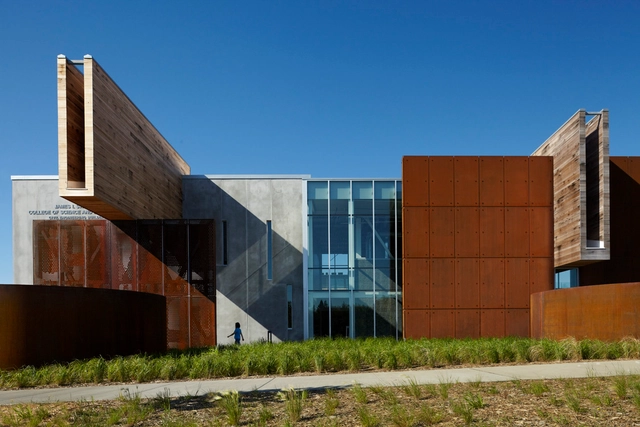
AIA recently made us aware of this year’s CAE Educational Facility Design Awards. The purpose of the design awards program is to identify trends and emerging ideas, honor excellence in planning and design, and disseminate knowledge about best practices in educational and community facilities. Check out the list of 13 after the break, including several of the firms we have previously featured.
https://www.archdaily.com/145853/2011-cae-educational-facility-design-awardsChristopher Henry