Founded in 1996 by Buenos Aires-born Martin Rein-Cano, TOPOTEK 1 has quickly developed a reputation as a multidisciplinary landscape architecture firm, focussing on the re-contextualization of objects and spaces and the interdisciplinary approaches to design, framed within contemporary cultural and societal discourse.
The award-winning Berlin-based firm has completed a range of public spaces, from sports complexes and gardens to public squares and international installations. Significant projects include the green rooftop Railway Cover in Munich, Zurich’s hybrid Heerenschürli Sports Complex and the German Embassy in Warsaw. The firm has also recently completed the Schöningen Spears Research and Recreation Centre near Hannover, working with contrasting typologies of the open meadow and the dense forest on a historic site.
https://www.archdaily.com/871052/topotek-1-s-martin-rein-cano-on-superkilens-translation-of-cultural-objectsOsman Bari
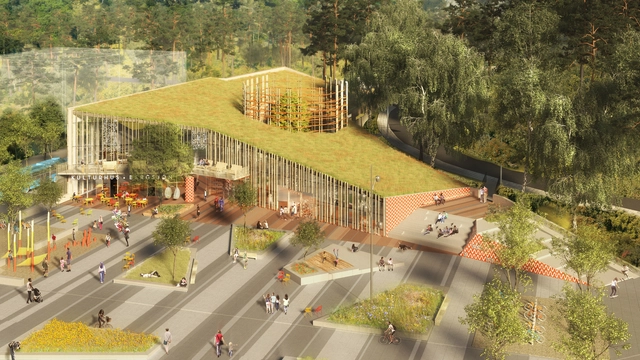
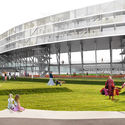
The Kulturkorgen emerges as an outcrop from the hills of Gothenburg. Image Courtesy of Sweco
Growing like an outcrop amongst the hills of Gothenburg, the Kulturkorgen by Swedish firm Sweco Architects offers the public an opportunity to watch, engage, and perform. The scheme is a result of an architectural competition for a new Culture House in the city, run in collaboration with Architects Sweden. The winning proposal, who’s name translates to ‘Basket of Culture’, acts as both a building and a square – a social arena where flexible interior spaces act in tandem with a generous public green landscape for recreation and gathering.
Placing third place out of 69 entries in an international competition for a new cultural building in Shenzhen, China, Mecanoo’s proposal for the Bao’an Public Culture and Art Center aiming to re-evaluate the “inwardly focused identity of cultural facilities in Hong Kong," through the form of an elevated cube. Situated near the Bao’an Metro Station and the Binhai School, the Dutch firm responds to the site’s challenges by reconnecting the center with its adjacent infrastructure.
The metro station and cultural center are united by the large masses of people that are channeled by the former and engaged but the latter. In order to capitalize on this condition, the design combines the metro entrance with that of the museum, thereby connecting the wider community with the arts and creating a more appealing public network.
Höweler + Yoon Architecture, in collaboration with OFIS Arhitekti, has unveiled its design for a new building for The Circus Conservatory, which will house America’s first accredited degree program in the Circus Arts. Located in Portland, Maine, as the anchor tenant of a peninsula, the project aims to transform an undeveloped part of the city into a “vibrant artistic center complete with public performance venues and recreational facilities.”
Inspired by the historic circus shape—a circle with a radial audience—the design proposal utilizes a radial viewing strategy “in order to similarly activate the educational community.” Furthermore, in the design, acrobatics, performance, and classroom spaces are treated equally, “[challenging] the viewing relationship crucial to a circus and academic settings.”
Love architectural video games like Minecraft or SimCity? Then it's worth checking out this ecological city simulator, Block'hood, which allows players to build their own arcology-style structures for humans and other species to coexist, all while managing a range of environmental and engineering conditions.
Following our review of the beta version of the game last March, the final edition has now launched on gaming platform Steam. New features include a 5-episode guided story mode, an increased maximum building size, an unlockable "unconstrained" mode, and compatibility in 8 different languages: English, Spanish, French, German, Japanese, Chinese, Portuguese and Russian.
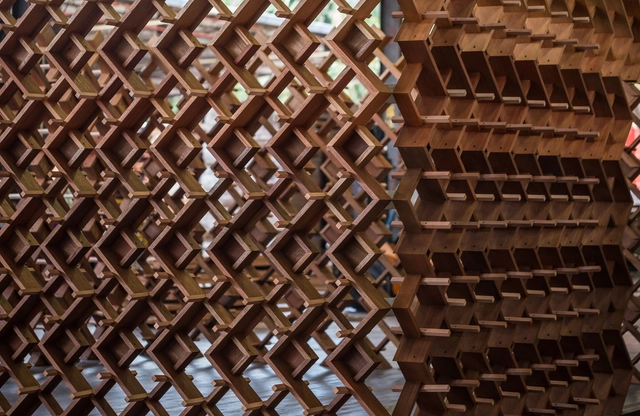
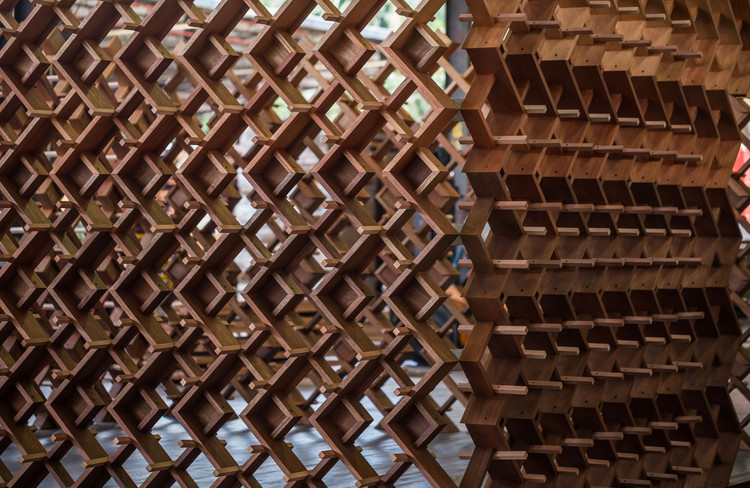
The centerpiece of the Malaysian Timber Council’s exhibition at this year’s AIA Conference on Architecture in Orlando, Florida was a completely dismantlable four-walled enclosure constructed entirely of Meranti timber. Designed by Eleena Jamil Architect, the wholly modular structure showcased the strength and adaptability of this sustainably sourced Southeast Asian hardwood.
Perspective view. Image Courtesy of Heikkinen & Kangasaho
When placed in a historic landscape, contemporary architecture requires a layered approach. It must often strike a respectful, vernacular tone, whilst embracing the innovative, functional hallmarks of a modern building. This balance has particular relevance at Suomenlinna Sea Fortress, located off the coast of Helsinki, Finland. Throughout its 300-year history, it was once occupied by the armies of Sweden, Russia and Finland – a rich history attracting UNESCO World Heritage status, and almost one million annual visitors. The site is more than a museum, however, but a living district of Helsinki with 800 inhabitants and 500 jobs.
Against the prerequisites of past and present, Heikkinen & Kangasaho Architects have combined sharp, functional modernity with respectful, restrained simplicity in a new housing scheme to sit amongst Suomenlinna’s historic fortifications.
By now, most of the architectural world is aware of Chinese architects' penchant for ripping off their favorite works from foreign countries, from the latest Zaha Hadid landmark to entire historical villages. The issue is, admittedly, more complex than many often give it credit for—but even after debating the phenomenon from the perspective of Chinese cultural norms, copyright law, and even whether copycats might actually be good for architecture, China will always have more copycats to puzzle over. Some are baffling, some are in a way impressive, some are even (dare we say it?) even kind of cute. In short, all of them are in some way entertaining. Here are 6 of the strangest.
Woodside Office, Garage, and Inspection Facility / TEN Arquitectos + W Architecture and Landscape Architecture. Image Courtesy of NYC Office of the Mayor
The New York City Public Design Commission and Mayor Bill de Blasio have announced the 11 projects selected as winners of their 2017 Awards for Excellence in Design. Established in 1983, the award has been bestowed annually to projects from the city’s five boroughs that “exemplify how innovative and thoughtful design can provide New Yorkers with the best possible public spaces and services and engender a sense of civic pride.”
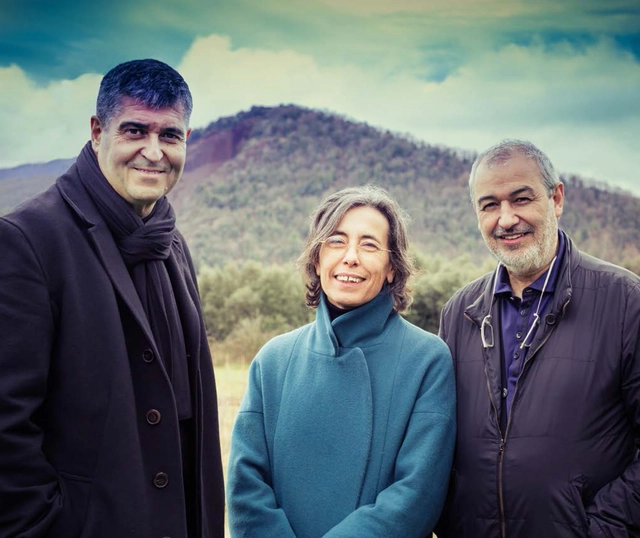
The winners of the 2017 Pritzker Prize, RCR Arquitectes, has been selected to lead the proposal and design of the Catalan pavilion at the 2018 Venice Biennale. The news was announced yesterday by Santi Vila, Minister of Culture of the Generalitat of Catalonia, during the opening of this year’s Venice Biennale of Art.
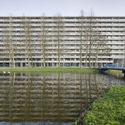
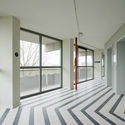
One of the largest residential buildings in the Netherlands, the complex was saved from the wrecking ball through its transformation into a rejuvenated framework called a “Klusflat," within which inhabitants could renovate their apartments by themselves. This is the first time the award has been given to a renovation of an existing building.
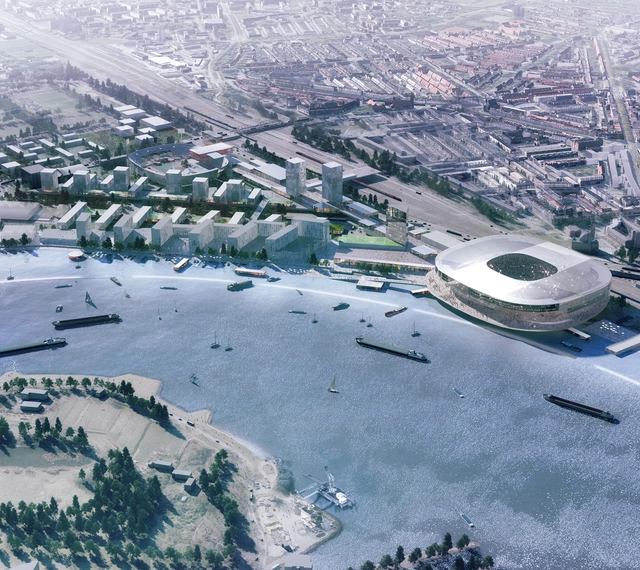
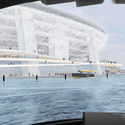
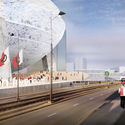
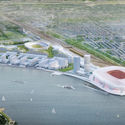
A large-scale masterplan for Feyenoord (or Feijenoord), a suburb-city of the Dutch city of Rotterdam, has been approved by Rotterdam City Council. The successful concept design from OMA, led by Partner David Gianotten, incorporates a historically-important football stadium—for the nationally significant Feyenoord football club—which "no longer fulfills modern demands." Aligned with the football club's "expanding ambitions" both in the Dutch and European football leagues, this proposal is the latest in a string of plans to expand, but the only one to have been accepted.
The winners of the 2017 Land Art Competition have been announced, with submissions responding to the challenge of creating site-specific installations in rural Ghana, as part of a larger initiative to enrich the Abetenim Arts Village. The aim was to complement the village’s learning center with other creative spaces for communal living and working, thus “creating a truly unique experience that becomes emblematic of what an art village is and how it needs to function as a place.”
Selected entries will also have the opportunity to be fully realized onsite, through various land art workshops held by the Nka Foundation over the course of the next two years. Here are the winning entries:
https://www.archdaily.com/870462/winners-of-2017-land-art-competition-create-installations-for-art-village-in-ghanaOsman Bari
Three exemplary housing projects have been awarded 2017 AIA/HUD Secretary Awards. Organized by The American Institute of Architects’ (AIA) Housing Knowledge Community, in conjunction with the Office of the Secretary of the U.S. Department of Housing and Urban Development (HUD), the award is given to projects that “demonstrate that design matters… and offer examples of important developments in the housing industry.”
The prize is given to projects in four categories: Excellence in Affordable Housing Design; Creating Community Connection Award; Community-Informed Design Award; and Housing Accessibility - Alan J. Rothman Award (no projects were selected within this category this year). Read on for a brief description of each of the winners.
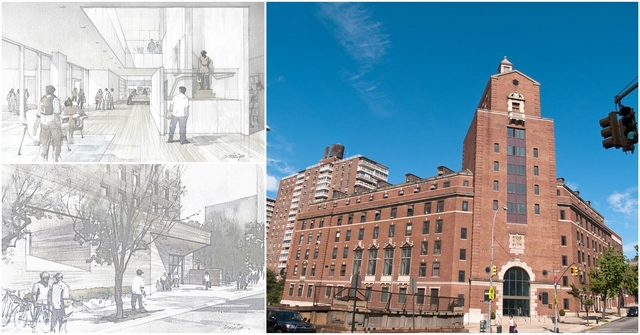
The full project will comprise a new resident hall, conference facilities, an auditorium/performing arts space, and a state-of-art library containing the world’s largest collection of Judaic and Hebraic books, manuscripts and scrolls. Advanced educational technology will be featured throughout.
https://www.archdaily.com/871107/tod-williams-billie-tsien-architects-break-ground-on-jewish-theological-seminary-renovation-in-new-yorkAD Editorial Team
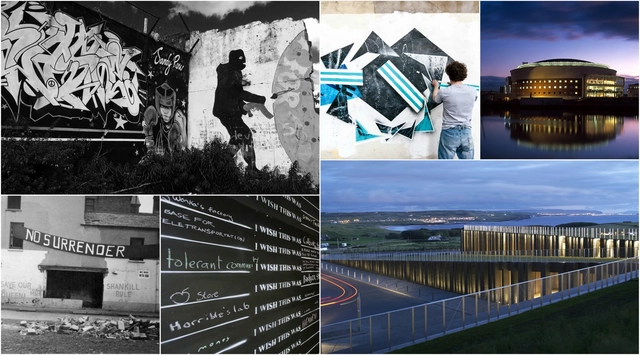
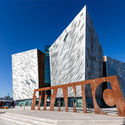
Architecture is often intertwined with political context. This deep connection is especially evident in Northern Ireland, a place of infamously complex politics. The state came into existence as a consequence of war in 1921, when Ireland was partitioned into an independent Irish Free State (now the Republic of Ireland) and Northern Ireland, an industrious region still controlled by Britain. Conflict has since ensued in Northern Ireland between a majority pro-British Unionist population, and a minority, though significant, Irish Nationalist community. The latter half of the twentieth century witnessed a brutal struggle, with over three thousand people killed, thousands more injured, and harrowing images spread across the world.
The turbulence of Northern Ireland’s conflict is played out in the architectural development of Belfast, its capital city. With thirty years of war from the 1960s to 1990s, the architecture of Belfast embodied a city under siege. When the prospect of peace dawned in the 1990s, an architecture of hope, confidence, and defiance emerged. In the present day, with Northern Ireland firmly on a peaceful path, Belfast has played host to a series of bold architectural ideas and landmark public buildings by award-winning architects. With the rich, bitter, emotive history of Northern Ireland viewed through multiple, often conflicting prisms, the architectural development of Belfast offers a tangible narrative of a city which burned, smoldered, and rose from the ashes.
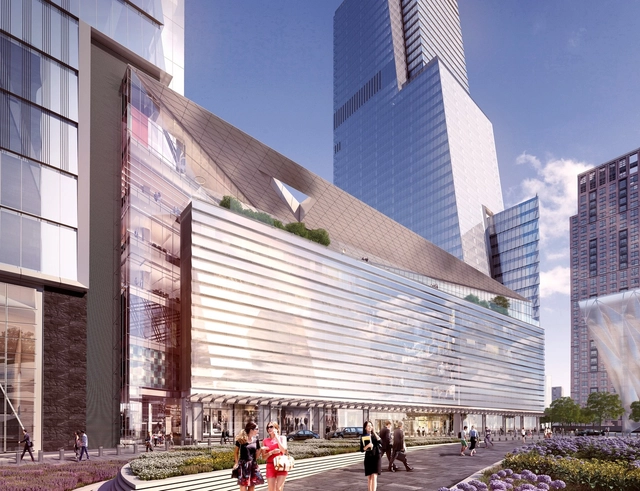
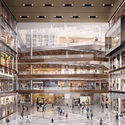
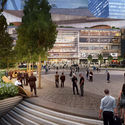
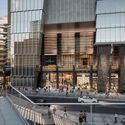
With construction on New York's Hudson Yards development racing forward, developers Related Companies and Oxford Properties Group have revealed plans for the latest addition to the complex: a 35,000-square-foot food hall featuring dining by celebrity chef José Andrés located within KPF’s already-open 10 Hudson Yards.
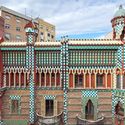
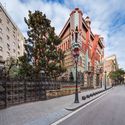
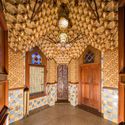
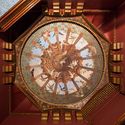
Antoni Gaudí’s first ever house, Casa Vicens, is set to open to the public this autumn following a major restoration effort. Located in the Barcelona neighborhood of Gràcia, the house was originally built for broker Manuel Vicens from 1883 to 1885 – helping to define Gaudí’s signature style and helping to usher in the era of Art Nouveau architecture in Catalonia.
Videos
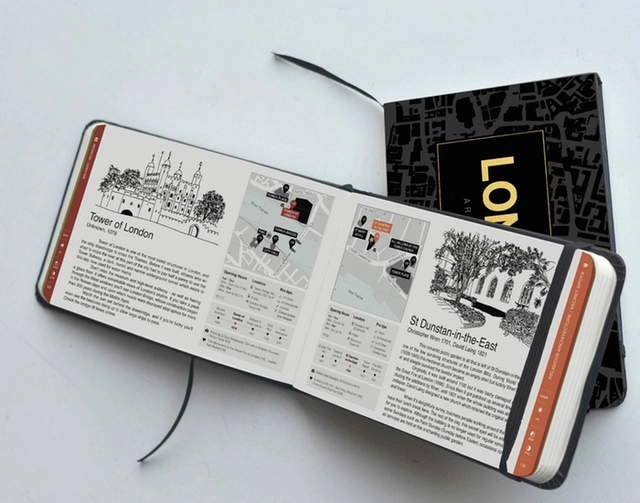
via Kickstarter. Courtesy of Virginia Duran.
Cities have a wealth of experiences, landmarks and sights to offer the eager traveller, who despite their ambitions, may begin to feel overwhelmed under the weight of culture and geography that saturates their travels. It is easy to get lost not only during pilgrimages to iconic locations, but also in the number of places to go and things to see, guided on overpriced tours and by consumerist maps. But worry not, for a new Kickstarter campaign has been launched for the Architectour Guide – a hardcover curated compendium of key spots that’s got you covered during your next urban crawl.
“The guide is made for the urban explorer, an individual who loves discovering cities in a different way,” explains Virginia Duran, the London-based architect and urban planner responsible for the campaign. “Architectour Guide collects the best spaces of a city inspiring travelers to craft their trips in a unique way, making it easier for us to visit, understand and photograph each of these places. As a consequence, we travelers will be helping to keep buildings alive.”
Los Angeles may soon be receiving a new attraction: a gondola-style cable car system that would transport visitors up to the iconic Hollywood Sign in the Santa Monica Mountains.
According to a recent interview with LA mayor Eric Garcetti, the city is considering several new options to open up access to the 45-foot-tall structure, one of which is a sky gondola that would pick up visitors at or near Universal Studios (located on the north side of the mountains in Studio City).
Jeanne Gang has been selected as the recipient of the 2017 Louis Kahn Memorial Award, an annual prize established by the Philadelphia Center for Architecture and Design in 1983 to recognize “an individual who has made significant contributions to the field of architecture,” while honoring one of the city’s most influential architects.
Previous winners of the award include Bjarke Ingels, Norman Foster, Peter Bohlin, Daniel Libeskind, Robert A.M. Stern, Rafael Viñoly and César Pelli.
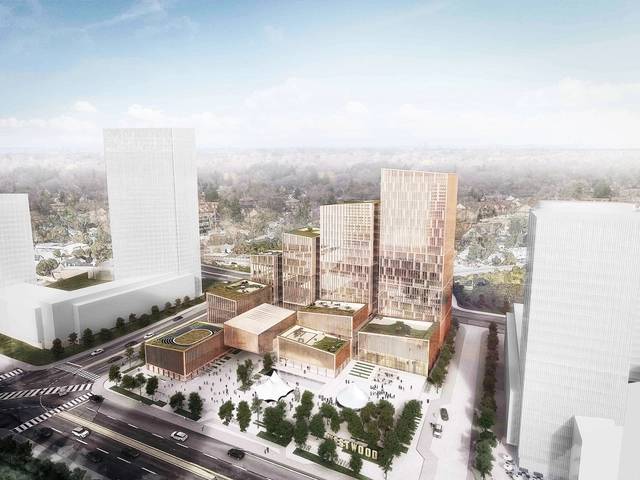
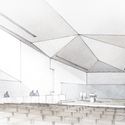
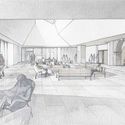
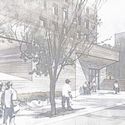
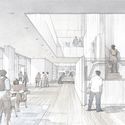
Located in Etobicoke Centre, one of four mixed-use districts marked by the City’s Official Plan as a “vital” community, the new Civic Centre will feature municipal offices, civic function and gathering space, a community recreation center, a branch of the Toronto Public Library, a child care center and an expansive outdoor plaza.
It's a well-known fact that everything is better with puppies. Your renders are no different. Fortunately, the website Viz-people is here to help, offering a free set of 6 cut-out cat and dog .PNGs. Pets aren't the only cut-outs on offer (just the cutest—sorry, cut-out kids); in addition, Viz-people has a whole raft of free stuff for 3D modeling and rendering, including 2D cutouts of people, textures, and skies, and 3D models of cars, trees, chairs and more.
https://www.archdaily.com/870902/an-off-fur-you-cant-refuse-free-cut-out-dogs-and-catsAD Editorial Team







.jpg?1494620356 "Courtesy of Block'hood")
.jpg?1494620342 "Courtesy of Block'hood")
.jpg?1494620366 "Courtesy of Block'hood")







.jpg?1494609826)
.jpg?1494609774 "Bomb Squad Building / Rice + Lipka Architects, Liz Farrell Landscape Architecture. Image Courtesy of NYC Office of the Mayor")


.jpg?1494609826)














_Hedrich_Blessing_012.jpg?1494276345)