

This guide explains how to structure multi-image prompts in the RunDifussion platform. Explore RunDifussion's product catalog.
Architecture News
How to Prompt and Annotate Multiple Images with AI
| Sponsored Content
https://www.archdaily.comhttps://www.archdaily.com/catalog/us/products/38860/how-to-prompt-and-annotate-multiple-images-with-ai-rundiffusion
Explore a Reimagined Barcelona Through Actual Forms and Illusions
Barcelona is a thriving city with world-class architecture and a rich history that makes it one of Europe’s most popular destinations. When you first think of this Spanish metropolis, what comes to mind? For many of us, it is the image of Antoni Gaudi’s unique style and gravity-defying Sagrada Familia. But what would Barcelona look like without this cathedral or some of its other buildings the city is known for? In Menilmonde’s new video titled “Barcelona Archi’llusion”, the buildings flicker between total erasure, a pseudo-sketch, and views of their actual forms, allowing you explore to what the city would be like without some it’s most famous icons.
https://www.archdaily.com/892254/explore-a-reimagined-barcelona-through-actual-forms-and-illusionsKaley Overstreet
SMA to Design New Complex at Expo Guadalajara
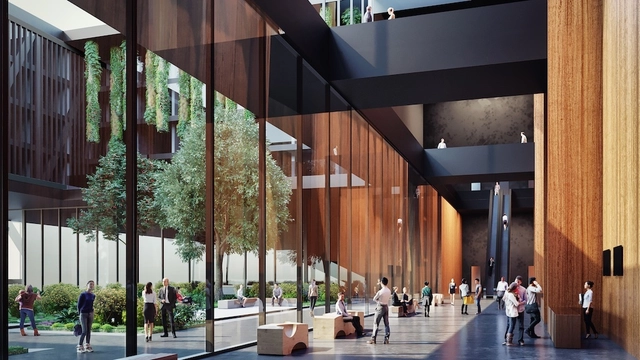


The Expo Guadalajara Technical Committee invited five different Mexican architecture studios to participate in the design competition for the conceptual proposal for the extension of this trade fair venue in the capital of Jalisco state. Following a lengthy competition period, Sordo Madaleno Arquitectos has been selected as the winner with a conceptual project that takes as its main objective: the creation of a multifunctional space with an important urban interaction.
https://www.archdaily.com/892426/sma-to-design-new-complex-at-expo-guadalajaraMónica Arellano
Proposed "Permeable" Mixed-Use Tower in Dubai Challenges Urban Density
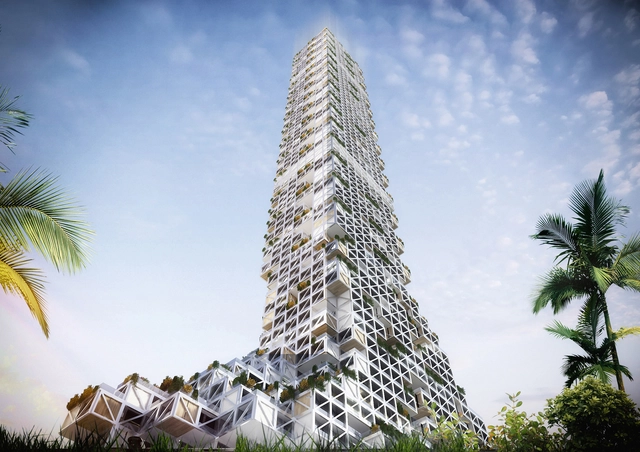
Dubai Nhabitat, a mixed-use tower proposed by Ankara-based firm rgg Architects, utilizes its own unique formal system to create "permeability through different materials and building tectonics." The tower is an aggregate of individual modules that can be enlarged or shrunk by an "8mx8m grid" based on programmatic needs, creating views and outdoor spaces unique to each spatial arrangement.
https://www.archdaily.com/892465/proposed-permeable-mixed-use-tower-in-dubai-challenges-urban-densityCollin Abdallah
Adjaye Associates Transform Electrical Switching Station Into Empowering Art Wall
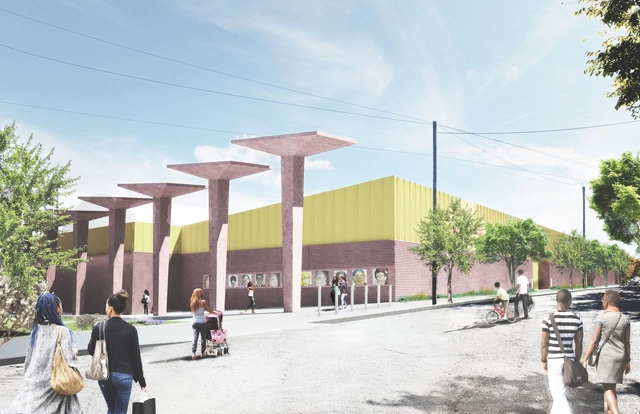
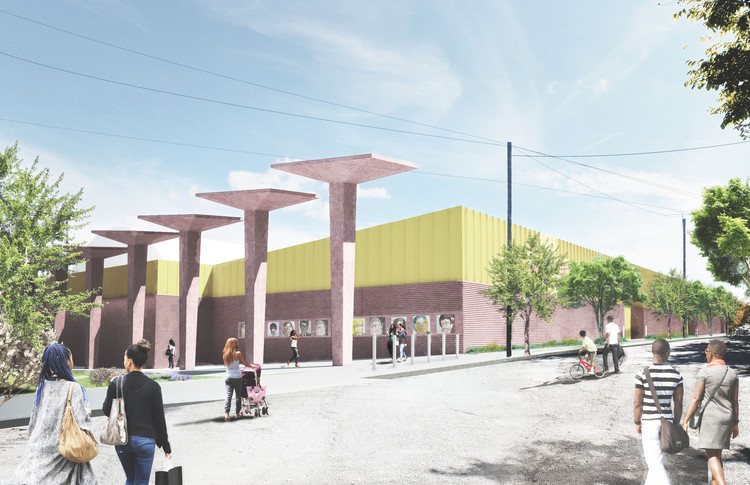
Adjaye Associates has unveiled images of its proposed reconceptualization of the protective façade of an electrical switching station into an engaging “Art Wall” in Newark, New Jersey. The 30-foot-high walls of the Fairmount Heights switching station will be transformed into a canvas for original works of 14 local and international artists, exploring themes of youth, education, and community, while a canopied passageway will house a market, art installations, and gathering space.
https://www.archdaily.com/892526/adjaye-associates-transform-electrical-switching-station-into-empowering-art-galleryNiall Patrick Walsh
World's Largest Single-Roof Performing Arts Center by Mecanoo Nears Completion in Taiwan

Taiwan has announced the scheduled October 2018 opening of the Mecanoo-designed National Kaohsiung Center for the Arts, also named “Weiwuying.” The Mecanoo scheme incorporates five state-of-the-art performance spaces under a single roof which, at 35 acres (141,000 square meters), stands as the world’s largest performing arts center under one roof.
Set across a 116-acre (470,000-square-meter) subtropical park in the southern Taiwanese city of Kaohsiung, the scheme will occupy a former military training base, symbolizing the city’s transition from a major international harbor into a rich, diverse, cultural hub, connecting local and international artistic talent.
https://www.archdaily.com/892518/worlds-largest-single-roof-performing-arts-center-by-mecanoo-nears-completion-in-taiwanNiall Patrick Walsh
MX3D Completes Structural Span of World's First 3D Printed Metal Bridge

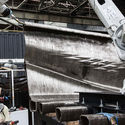
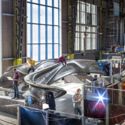
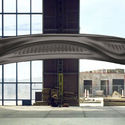
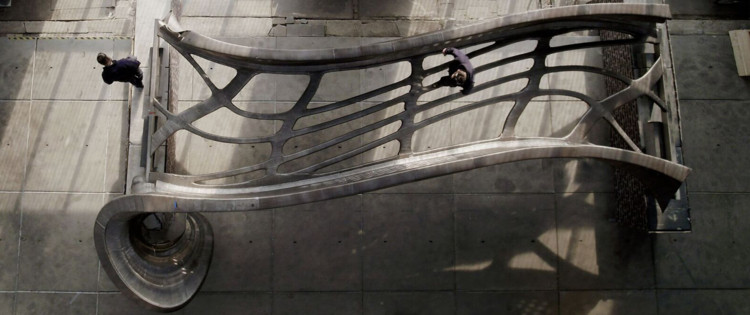
Late last year, we reported on the progress of world’s first 3D printed steel bridge designed by Netherlands-based MX3D. With the design now finalized, the start-up company has announced that the span of the bridge is now complete.
The final round of structural tests is expected to take place this summer, just three years after the project was first announced. After the structural integrity has been tested, the final design will be modified and the completion of the bridge will follow only a few months after. MX3D hopes to showcase the potential of their multi-axis 3D printer during the Dutch Design Week, and the first of its kind bridge is planned to be installed into its final location in a canal in Amsterdam sometime next year.

https://www.archdaily.com/892229/mx3d-completes-structural-span-of-worlds-first-3d-printed-metal-bridgeKaley Overstreet
Gensler to Renovate Cleveland Cavalier's Quicken Loans Arena
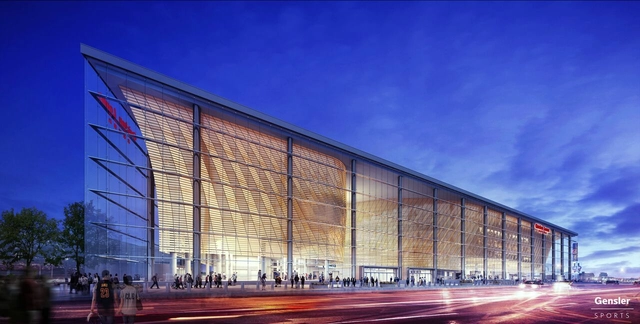
The rust-belt city of Cleveland, Ohio is home to a number of famous architectural icons including Farshid Moussavi's Museum of Contemporary Art, Rafael Vinoly’s Cleveland Museum of Art, and Frank Gehry’s Peter B. Lewis Building at Case Western Reserve. Cleveland is also the site of the oldest publicly-owned NBA arena in the country that has yet to receive a major renovation. However, Quicken Loans Arena, home court to LeBron James and the Cavaliers, will be undergoing a large transformation to be spearheaded by Gensler.
This new design, which will greatly improve the visitor experience and serve as a catalyst of the growth in Cleveland, will have all Cavalier fans excited to “Defend The Land” once the renovations are complete in 2019.
https://www.archdaily.com/892331/gensler-to-renovate-cleveland-cavaliers-quicken-loans-arenaKaley Overstreet
Reclamation of Public Space in a Mexican Housing Complex Wins 2018 MCHAP Prize for Emerging Architecture
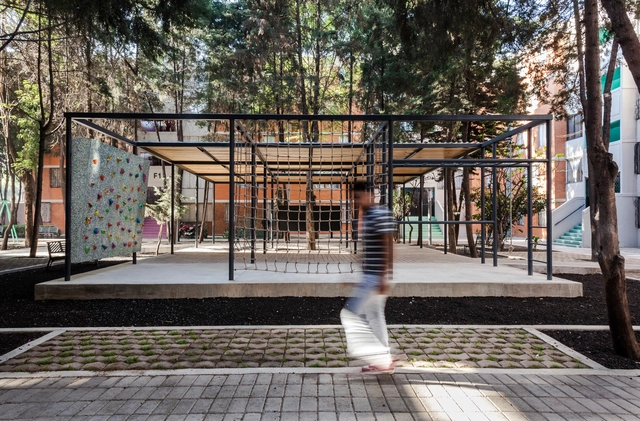
Last month, the Mies Crown Hall Americas Prize (MCHAP) announced four finalists in their MCHAP award for emerging architecture: The María Montessori School by EPArquitectos and Estudio Macías Peredo, Children Village by Rosenbaum and Aleph Zero, the Embodied Computation LAB by David Benjamin, and Common Unity by Rozana Montiel Estudio de Arquitectura.
Now, the jury of Ricky Burdett, Jose Castillo, Ron Henderson, Rodrigo Pérez de Arce and Claire Weisz has declared Common Unity as the winner of the 2018 MCHAP.emerge award.
https://www.archdaily.com/892385/reclamation-of-public-space-in-a-mexican-housing-complex-wins-2018-mchap-prize-for-emerging-architectureMónica Arellano
David Adjaye Honored with 2018 Louis Kahn Memorial Award

British architect Sir David Adjaye, Founding Principal of Adjaye Associates, will be honored as this year’s recipient of the Louis I. Kahn Memorial Award by the Center for Architecture and Design in Philadelphia. The annual award celebrates the achievements of an individual who has made a significant contribution to the field of architecture, while also celebrating the achievements of influential Philadelphia-based architect Louis Kahn.
Past recipients of the award have included Bjarke Ingels, Norman Foster, Peter Bohlin, Daniel Libeskind, Robert A.M. Stern, Rafael Viñoly and César Pelli.
https://www.archdaily.com/892460/david-adjaye-honored-with-2018-louis-kahn-memorial-awardNiall Patrick Walsh
MVRDV's Dutch SeaSaw Rocks Back and Forth in Response to the Changing Tide
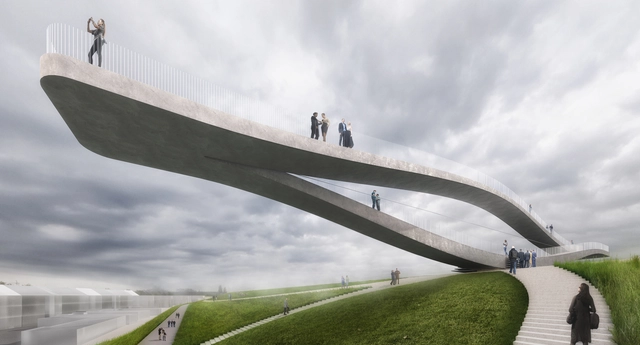
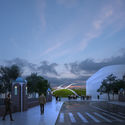
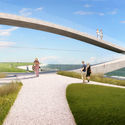
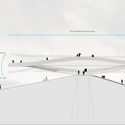
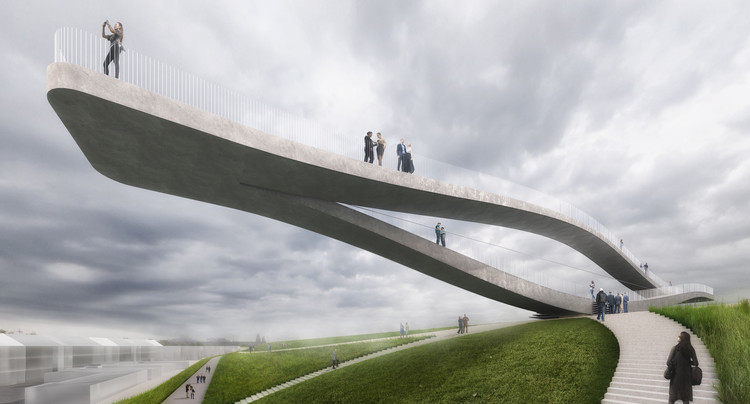
MVRDV has won a competition for the design of an art installation in the Dutch coastal city of Den Helder, seeking to strengthen the connection between land and sea through a new public landmark. The “SeaSaw” consists of a viewing platform balanced in equilibrium atop the city’s flood defenses, a distinguishable structure praised by the jury for capturing “the energetic spirit of the city represented as an infinite form.”
https://www.archdaily.com/892453/mvrdvs-dutch-seasaw-rocks-back-and-forth-in-response-to-the-changing-tideNiall Patrick Walsh
Italian Cistercian Architecture Through The Lens of Federico Scarchilli
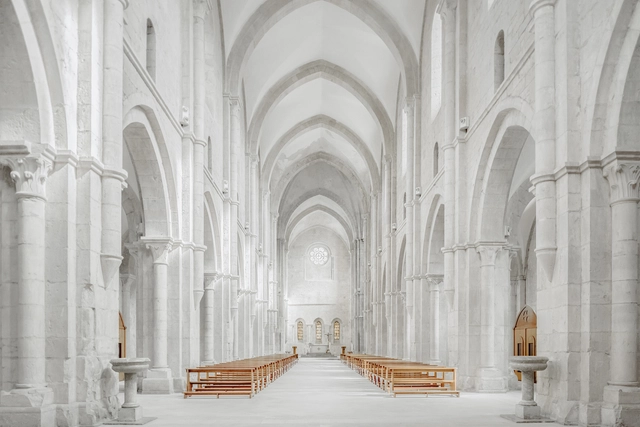
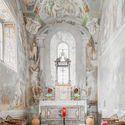
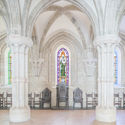
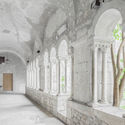
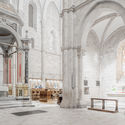
In his latest photographic collection, Federico Scarchilli captures Cistercian order in the form of Abbazia di Fossanova, Casamari, and Valvisciolo. Simple and utilitarian, Cistercian architecture reflects the transition between the Romanesque and Gothic periods. During this time, many religious authorities felt excessive ornamentation was a distraction to spiritual studies.

https://www.archdaily.com/892097/italian-cistercian-architecture-through-the-lens-of-federico-scarchilliLindsey Leardi
BIG Unveils Images of Zig-Zag Ski Hotel in Switzerland
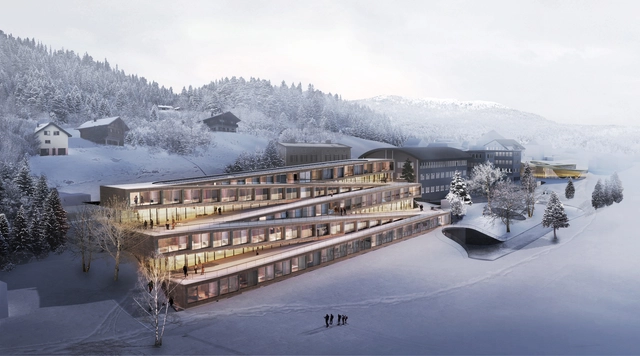
BIG-Bjarke Ingels Group has unveiled images of their proposed Audemars Piguet Hotel des Horlogers, a ski hotel set in the scenic Vallée de Joux, Switzerland. The compact scheme, designed in collaboration with Cche Architecture, is defined by a zig-zag form seamlessly integrated into the smooth topography of the surrounding valley, forming a connection with the nearly Musée Atelier.



https://www.archdaily.com/892377/big-unveils-images-of-zig-zag-ski-hotel-in-switzerlandNiall Patrick Walsh
Heatherwick Reportedly Prevails in Competition for Airport Super-Terminal in Singapore
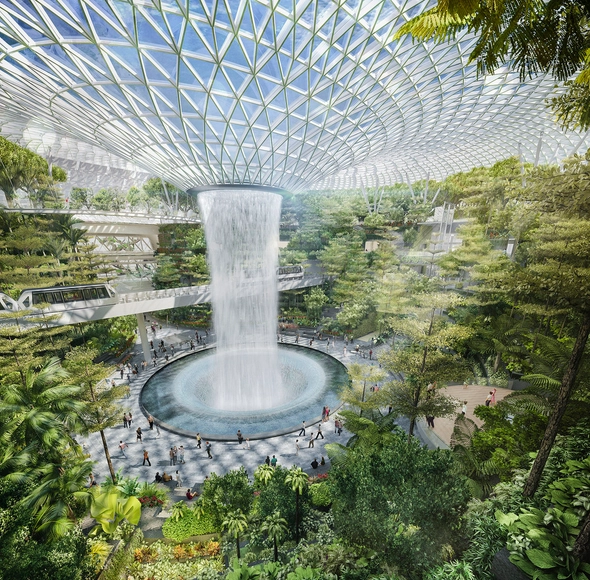
Heatherwick Studio is believed to have won an international competition for the design of the new Terminal 5 at Changi Airport, Singapore. Although no formal announcement has been made, The Architects' Journal and BD Online are reporting that a collaboration between Heatherwick and KPF has prevailed against a shortlist containing Grimshaw and SOM. If confirmed, the successful team will be tasked with the design of one of the world’s largest airport terminals.
The Terminal 5 building will accommodate 50 million passengers per year, giving Changi Airport a total capacity of 135 million by the late 2020s. The scheme is being developed within the context of a $1.2 billion expansion programme, which has seen the completion of a Terminal 4 building by Benoy, and a mixed-use “Jewel” biodome by Safdie Architects, pictured above, set to contain the world’s largest indoor waterfall.
https://www.archdaily.com/892371/heatherwick-reportedly-prevails-in-competition-for-airport-super-terminal-in-singaporeNiall Patrick Walsh
SMAR Architecture Studio Selected as Winners of Science Island Design Competition
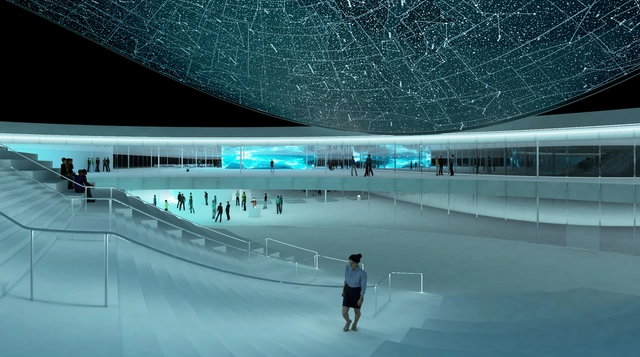
Kaunas City Municipality has announced SMAR Architecture Studio as the winners of the Science Island International Design Contest for Lithuania's new National Science and Innovation Center. SMAR's design was the highest ranked of three winners in the Design Contest, which was the most popular in Lithuania's history attracting 144 teams from 44 countries.
https://www.archdaily.com/892095/smar-architecture-studio-selected-as-winners-of-science-island-design-competitionCollin Abdallah
Zaha Hadid’s Only Private Residential Project Rises Above A Russian Forest
.jpg?1523378770&format=webp&width=640&height=580)
On a hillside forest outside of Moscow, amongst 65-foot-high (20-meter-high) pine and birch trees, sits the only private house to be designed and built by Zaha Hadid in her lifetime. With a form defined by its natural surroundings, the Capital Hill Residence is divided into two components, one merging with the sloping hillside, and another “floating” 72 feet (22 meters) above ground to unlock spectacular views across the Russian forested landscape.
.jpg?1523378338 "Courtesy of OKO Group")

.jpg?1523379487 "Courtesy of OKO Group")
.jpg?1523379556 "Courtesy of OKO Group")
.jpg?1523378770)
https://www.archdaily.com/892294/zaha-hadids-only-private-residential-project-rises-above-a-russian-forestNiall Patrick Walsh
Florence Experiment To Show How Watching Movies Impacts Plant Growth

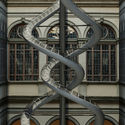
Throughout the spring and summer of 2018, the Palazzo Strozzi in Florence, Italy will host a new site-specific project seeking to further our understanding of ecology, and the relationship between humans and the natural world. “The Florence Experiment” will connect internal and external spaces of the famed Renaissance palace through two separate experiences: an intertwined set of 65-foot-high (20-meter-high) slides, and a “live analysis” of the impact of human emotion on plant growth.
The Florence Experiment has been devised by German artist Carsten Höller and plant neurobiologist Stefano Mancuso, with the vision of turning the Palazzo Strozzi’s façade and courtyard into engaging areas of scientific and artistic experiment. Inspired by the Renaissance alliance between art and science, the project aims to create a new awareness of the way we see, understand, and interact with plant life.

https://www.archdaily.com/892290/florence-experiment-to-show-how-watching-movies-impacts-plant-growthNiall Patrick Walsh
Explore This 1:250 Model of Ancient Rome Which Took 38 Years to Construct
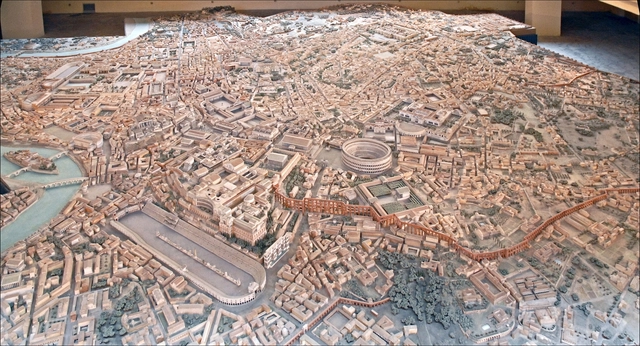
The city of Rome attracts millions of visitors each year to explore its ancient ruins and to learn about how the culture and architecture has transformed over thousands of years. Now, after many years of tedious construction, visitors will be able to see the city as it has never been seen before, through a 1:250 model of imperial Rome, known as the Plastico di Roma Imperiale. The plaster model, which was commissioned by Mussolini in 1933 and completed in 1971, depicts Rome as it stood in the 4th century under the reign of Constantine I.
https://www.archdaily.com/892031/explore-this-1-250-model-of-ancient-rome-which-took-38-years-to-constructKaley Overstreet
This Stackable Emergency Shelter Can Be Assembled in Under 15 Minutes

MADWORKSHOP Fellows Jeremy Carman and Jayson Champlain have designed a unique approach to emergency post-disaster shelters. The 2017 Fellows of the MADWORKSHOP Foundation created "Shelter Squared" as a response to "the current scarcity of design-oriented solutions to emergencies."
Overall, the design utilizes cost-effective, recyclable materials to provide a meaningful alternative to the current standard of post-disaster shelters, described the architects.
https://www.archdaily.com/892026/this-stackable-emergency-shelter-can-be-assembled-in-under-15-minutesCollin Abdallah
SOM Unveils Images of Striking Mixed-Use Tower in Hangzhou, China

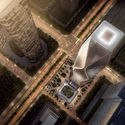
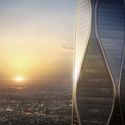
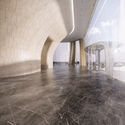
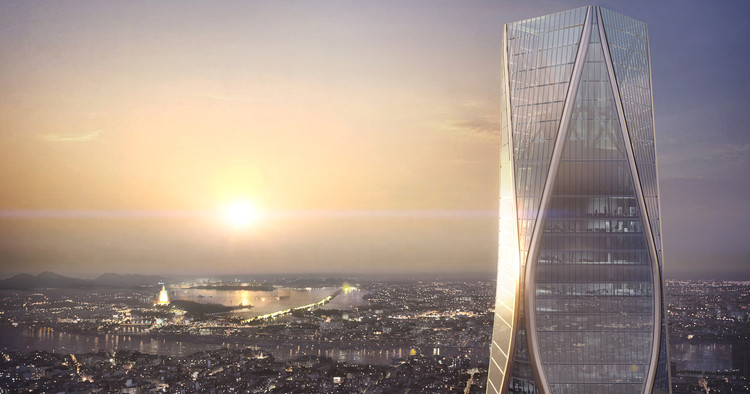
Skidmore, Owings & Merrill (SOM) has unveiled images of its proposed 54-story mixed-use tower in Hangzhou, China. Standing at a height of 945 feet (288 meters), the "Hangzhou Wangchao Center" seeks to act as a gateway to the eastern Chinese city’s newly-planned Qianjang Century Town district. With 1.3 million square feet (125,000 square meters) of office, hotel, and retail space, the scheme represents the ambitions of Hangzhou to become a global destination, spurred by its hosting of the Asian Games in 2022.

https://www.archdaily.com/892188/som-unveils-images-of-striking-mixed-use-tower-in-hangzhou-chinaNiall Patrick Walsh
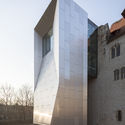
A New Roof by Nieto Sobejano Arquitectos Turned This Ancient German Castle Into an Enlarged Exhibition Space
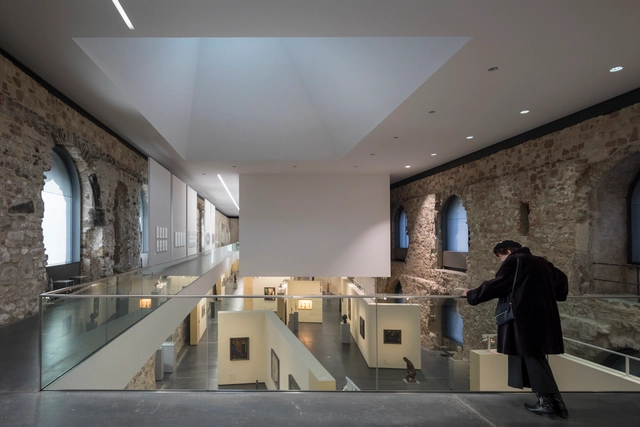
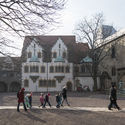
The Moritzburg castle in the city of Halle is exemplary of the Gothic military architecture in 15th century Germany. Despite the partial destruction of the north and west wings during the Thirty Years War, the site has managed to retain most of its original features: a surrounding wall, three of the four round towers at the corners, and a central courtyard.
But more importantly, the castle has been home to an art museum since 1904. The challenge arose when this exhibition space needed to be expanded, without modifying or adding onto the original columns. With some genius and creativity, Nieto Sobejano Arquitectos created a new exhibition space based on a single, clear architectural idea: a new roof.



https://www.archdaily.com/892010/a-new-roof-by-nieto-sobejano-arquitectos-turned-this-ancient-german-castle-into-an-enlarged-exhibition-spaceKeshia Badalge
Woods Bagot Masterplan "The Next Generation of Mixed-Use Development" in Perth
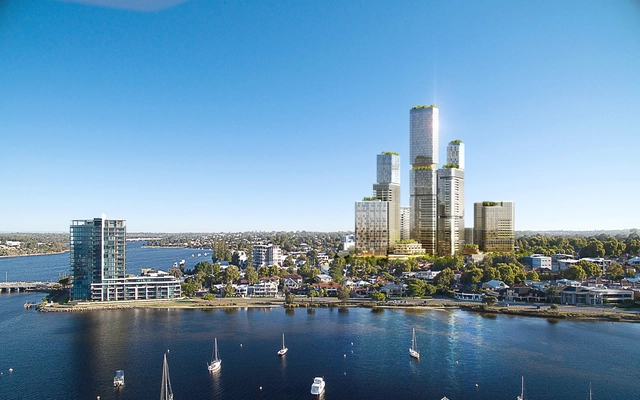
International design studio Woods Bagot has generated a masterplan for what they are calling, “the next generation of mixed-use developments for Perth.” The 17,469-square-meter island development, named Applecross Central, boasts three sides of storefront in the heart of the Canning Bridge Precinct, overlooking the Swan and Canning Rivers.
https://www.archdaily.com/892021/woods-bagot-masterplan-the-next-generation-of-mixed-use-development-in-perthLindsey Leardi
AIM STUDIO Proposes Airplane-Wing-Inspired Design for Krakow's New Science Center

London-based AIM STUDIO’s entry for the Małopolska Science Center in Krakow, Poland, was recently awarded second place. Responding to the competition's call for an iconic design for the center, the team proposed a structure that creates a new landmark which blurs the boundaries between landscape and building, while also taking into consideration the important historical context of the site.
Read about more their proposal after the break.
https://www.archdaily.com/891498/aim-studio-proposes-airplane-wing-inspired-design-for-krakows-new-science-centerKaley Overstreet
Foster + Partners' Roman Antiquities Museum in Narbonne Nears Completion
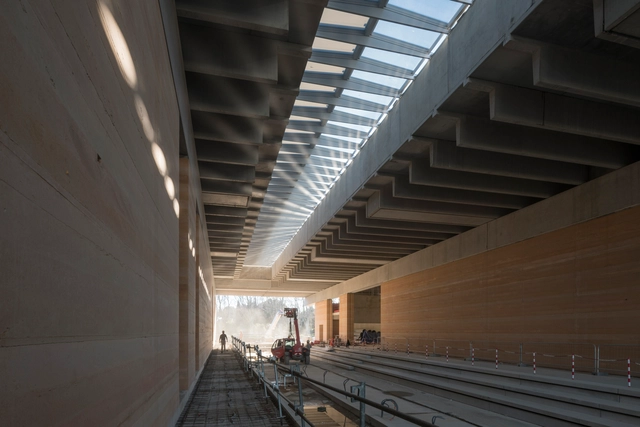
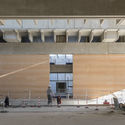
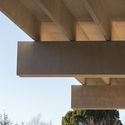
Foster + Partner’s Musée de la Romanité Narbonne (Roman Museum of Narbonne) has moved closer to completion, with the scheme's building envelope now fully constructed. The museum seeks to become one of the most significant cultural attractions in the Southern French region, hosting more than 1000 Roman artifacts. The scheme’s progress was celebrated at a topping out ceremony on 30th January 2018, with the installation of VELUX Modular Skylights marking the completion of the building envelope.
Once a major Roman port, the city of Narbonne has amassed an abundance of ancient buildings, relics, and archaeological sites. The Foster + Partners scheme, designed in collaboration with museum specialist Studio Adrien Gardere, centers on the prime exhibit for the museum: a collection of over 1000 Roman funerary stones recovered from the city’s medieval walls in the 19th century. The stones are to be placed at the heart of a simple rectilinear structure, separating the public galleries from private research spaces.


https://www.archdaily.com/891935/foster-plus-partners-roman-antiquities-museum-in-narbonne-nears-completionNiall Patrick Walsh