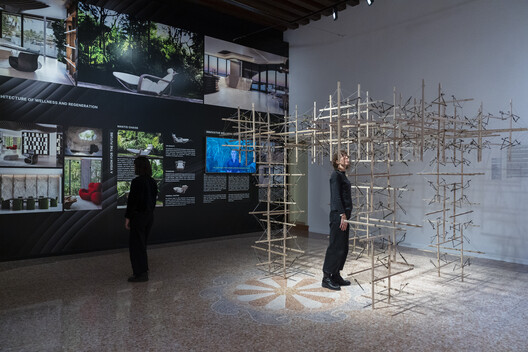
The European Cultural Centre (ECC) has announced the winners of the ECC Awards 2025, selected from participants of the seventh edition of Time Space Existence and unveiled during the exhibition's Closing Day on 23 November 2025 in Venice. Bringing together 207 practices from more than 52 countries, this year's edition highlighted a broad spectrum of architectural and design approaches responding to the themes of Repair, Regenerate, and Reuse. The awards recognise four projects that stood out for their originality, execution, narrative clarity, and forward-looking engagement with questions of sustainability, community, and the future of the built environment.
The 2025 jury brought together professionals from across the architectural and design fields, including Ivan Blasi, Director of the EUmies Awards; Amit Gupta, Founder and Editor-in-Chief of STIRworld; Christele Harrouk, Editor-in-Chief of ArchDaily; Ursula Schwitalla, BDA ao and Honorary Senator at the University of Tübingen; and Martha Thorne, writer, curator, consultant, and urbanist. The selected works were drawn from a shortlist of 21 projects identified by the ECC's organising team and presented throughout Time Space Existence 2025. Together, they offer diverse approaches to rethinking spatial experience, material use, and social relevance, illustrating how design can contribute to more resilient and responsible futures.
Read on to explore the winning projects in each category, along with brief descriptions and jury remarks.
Related Article
Architectural Acts of Repair: Critical Themes from the 2025 ECC "Time Space Existence" ExhibitionArchitecture Project Category Winner
Plantation Futures / Celina Abba + Enrique Cavelier
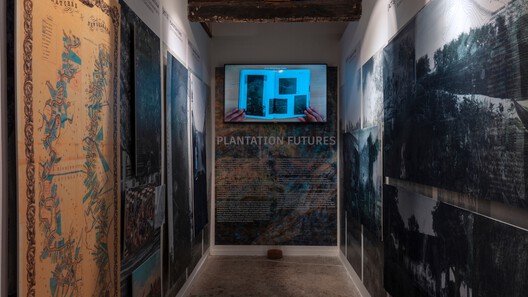
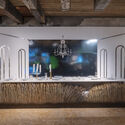
The project examines overlooked plantation histories by bringing attention to Black landscapes shaped through refuge, resistance, and everyday life, focusing in particular on the swamp, the ditch, and the plot. Through a critical reading of heritage practices informed by colonial legacies, it draws on archival research to surface narratives that have been historically marginalised or omitted. Plantation Futures proposes decolonial approaches to conservation, emphasising the interconnected relationships between human and non-human environments and outlining possible pathways toward restorative futures grounded in repair and regeneration.
Celina Abba and Enrique Cavelier's project safeguards memory while reconciling with the past through research on cultural sites and a multidisciplinary series of interventions. By addressing the enduring legacies of plantation landscapes, it transforms a problematic challenge into a call for action, pushing the boundaries of conventional conservation practices. - Christele Harrouk, Editor-in-Chief of ArchDaily
University Project Category Winner
Manor and small noble houses in Slovakia / Slovak University of Technology, VA Gregor Varga Smatanova
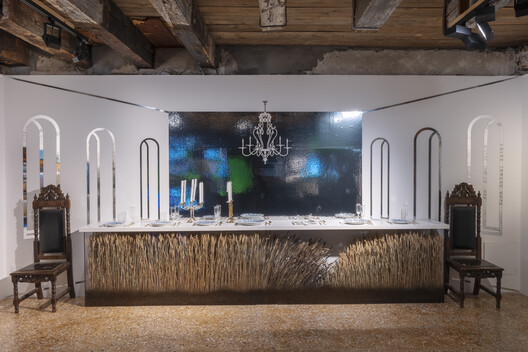
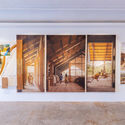
The Manor and Small Noble Houses project investigates the layered histories of overlooked estates and considers how they may be adaptively reused within contemporary contexts. Working in collaboration with local communities, NGOs, and the Monuments Board of Slovakia, the team examines the architectural narratives of these sites, their influence on cultural identity, and their potential to support social and ecological renewal. Through research, photography, and spatial documentation, the project connects past and present, presenting these estates as enduring records of time, resilience, and transformation.
An artistic expression that reflects the lateral thinking of students and faculty, while talking about a simple concept of adaptive reuse, heritage and preservation. - Amit Gupta, Founder and Editor-in-Chief of STIRworld
Design Project Category Winner
Diamanti / Polyhedral Structures Laboratory, Weitzman School of Design, University of Pennsylvania, Masoud Akbarzadeh with Sika
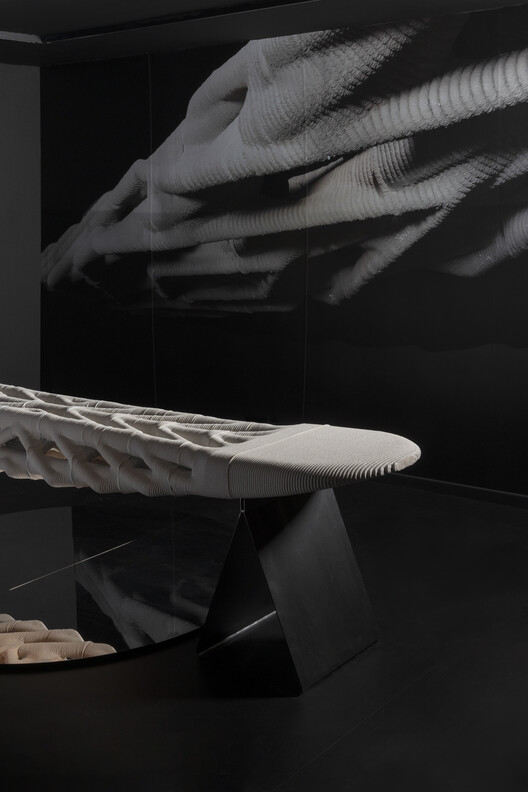
Diamanti Structure is an industry–academic research initiative that investigates a sustainable, high-performance modular funicular system developed through an integrated design process that incorporates both established and emerging fabrication and construction technologies. The project defines its structural geometry and internal load paths using Polyhedral Graphic Statics, enabling a configuration governed entirely by compression and tension forces. Through this approach, the research explores how funicular principles can support efficient material use, adaptable construction strategies, and the broader development of modular structural systems for contemporary applications.
Using funicular geometries optimised through polyhedral graphic statics, the project reduces concrete usage by nearly 60% and steel reinforcement by 80% compared to conventional methods, while achieving exceptional load-bearing capacity. Through robotic 3D-printing, post-tensioning, and modular construction, Diamanti minimises waste, enables full disassembly, and ensures complete recyclability, demonstrating how advanced design can reshape the future of resilient, resource-conscious structures. - Ivan Blasi, Director of the EUmies Awards
Art Installation Category Winner
Tender Soul of Ocean: A Marine Climate Preservation Initiative / WHYIXD
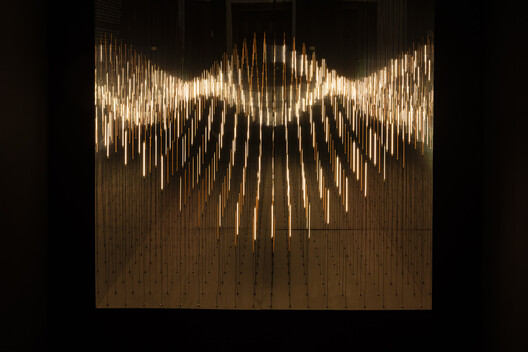
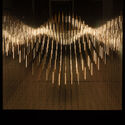
For its Venice edition, Tender Soul of Ocean: A Marine Climate Preservation Initiative recorded wind data using an anemometer, translating the measurements into responsive light patterns generated through custom programming. LED filaments produced a soft, 360-degree glow reminiscent of moving water, creating an immersive environment shaped by the rhythm of natural forces. While offering a contemplative spatial experience, the installation also archived the collected wind data, functioning as a climate recorder and encouraging reflection on the vulnerability of marine and atmospheric ecosystems.
An immersive art installation that translates local wind data into moving light patterns, touching viewers emotionally and making them part of the artwork. At the same time, it vividly conveys the connection between the outside and the inside, between nature and humans, between technology and art. Beyond its artistic appeal, the installation archived climate data during the Biennale months. - Ursula Schwitalla, BDA ao and Honorary Senator at the University of Tübingen
Special Mention Winner
El Museo Itinerante del Bosque (The Wandering Forest Manifesto) / Semillas
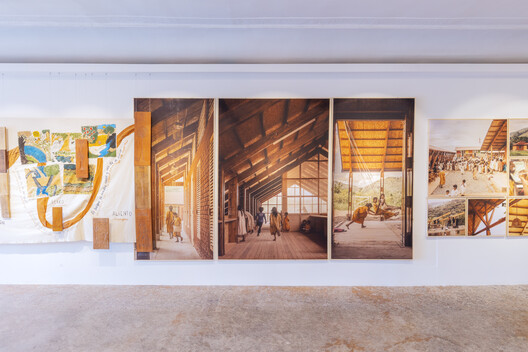
The Museo Itinerante del Bosque was developed by the Mencoriari community as a way to reconnect with the forest and strengthen collective memory, encouraging neighbouring communities to recognise their own environmental knowledge. Conceived as a mobile platform, the project supports intergenerational learning and the transmission of cultural narratives tied to the landscape. Its core component, the Wandering Forest Manifesto, features paintings by native students that recount the forest's history, spanning myth, colonisation, loss, and the gradual revival of traditional ecological understanding and community resilience.