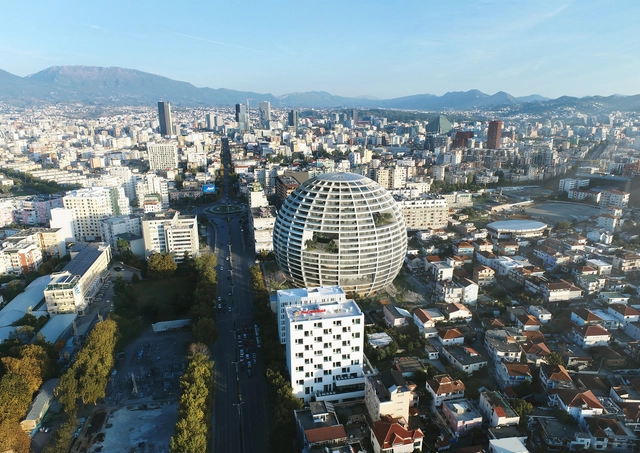
Marina Abramovic Institute + OMA

Southwest Facade ©

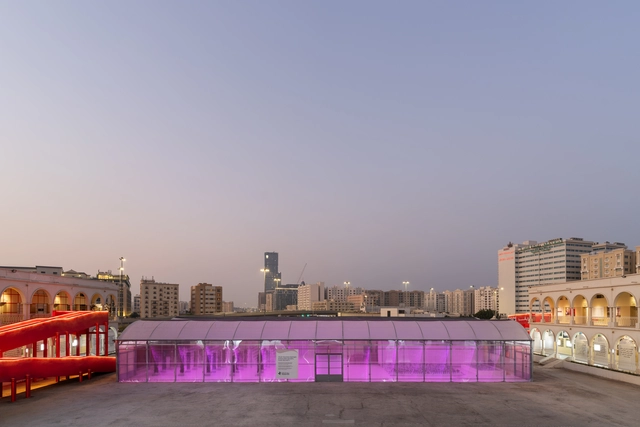
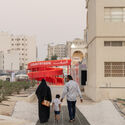
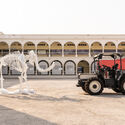
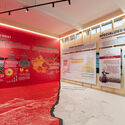
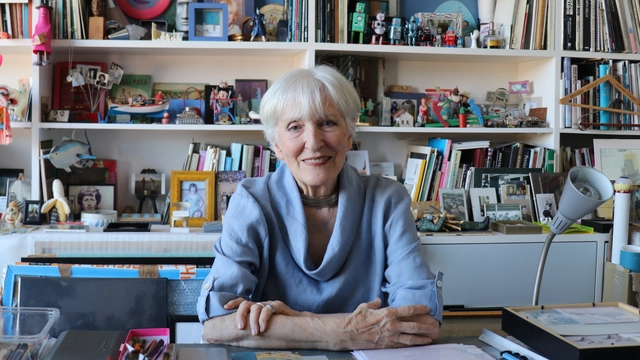
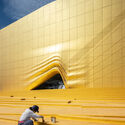
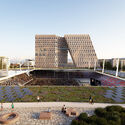
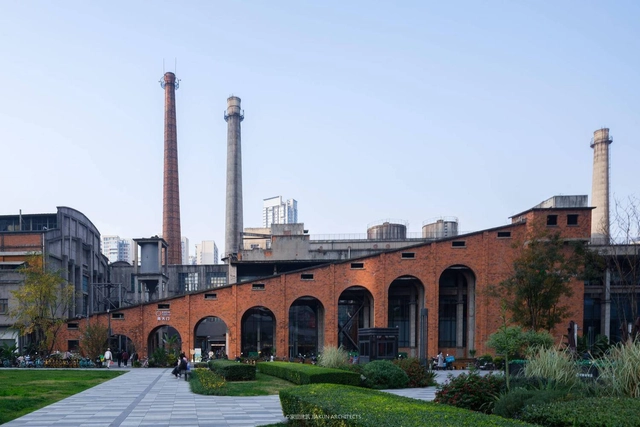
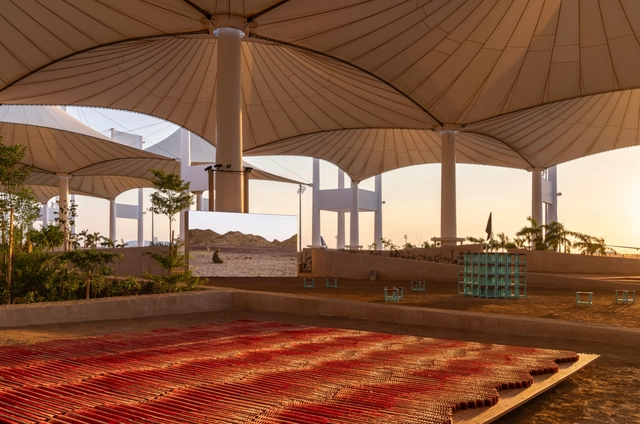
Yesterday, Marina Abramović and OMA announced the creation of the Marina Abramović Institute for the Preservation of Performance Art under the performance dome at MoMA’s PS 1 in Long Island City.   Abramović will team with the architects to create a part-art, part-educational and part-performance venue that will not only focus on Abramović’s performance methods, but, interestingly, on educating the public with regards to viewing and appreciating long duration performances.

Perhaps, Abramović’s name sounds familiar, and rightly so.  She has wildly been hailed as one of the most progressive and devoted long-duration performers; one of her most recent performances took place at the MoMA where she sat completely silent, just starring at visitors for the museum’s entire opening hours.   And, now, with this Institute, Abramović will be able to teach her ways to aspiring performers, and more viewers will be able to experience and appreciate her performance methods.  Abramović commented, “The Institute’s aim is to protect and preserve the intellectual and spiritual legacy of performance art from the 1970′s into the future, and will serve as an homage to time-based and immaterial art.”

More about the Institute after the break.

OMA to design new home for Garage in Moscow

Garage Gorky Park - Image Courtesy of

The Garage Center for Contemporary Culture – a non-profit international arts space based in Moscow founded by Daria Zhukova – has unveiled plans for a new building in Gorky Park. Designed by OMA, Garage Gorky Park will renovate the famous 1960s Vremena Goda (Seasons of the Year) restaurant, a prefabricated concrete structure that has been derelict for more than two decades. Garage is expected to complete and occupy this 5,400-square-meter building sometime next year, with plans to later expand to the nearby Hexagon pavilion (or Machine Pavilion).

: “We were able, with our client and her team, to explore the qualities of generosity, dimension, openness, and transparency of the Soviet wreckage and find new uses and interpretations for them; it also enabled us to avoid the exaggeration of standards and scale that is becoming an aspect of contemporary art spaces.”

Continue after the break for more.

OMA wins first round of the Moscow City Agglomeration Development Concept Competition

Phase 1 Submission - Courtesy of OMA

In 2011, the Russian Federation Council confirmed that the city of will annex 150,000 hectares to the southwest in order to overcome its chronic space problems, making 2.4 times larger than its current size. The expansion is designed to relieve pressure on the over-populated, historic city center by redistributing the working places to the annexed part of the Oblast, thus addressing transport, ecological and social issues that result from high levels of commuting.

Before Moscow’s new administrative borders come into force this July, the Council invited 10 teams to develop the concept of the Moscow Agglomeration. OMA has been announced as winner of the competition’s first round that focused on a plan for the Moscow Agglomeration as a whole.

Continue reading for more on OMA’s Moscow City Agglomeration Development Concept.

Cornell Reveals the Architects Competing to Design the First NYC Tech Campus Building

©

After Mayor Bloomberg, Cornell President Skorton and Technion President Lavie announced Cornell’s victory over Stanford to build an eleven acre state-of-the-art tech campus on Roosevelt Island in New York City, the team has now tackled their next step in choosing six high-profile architecture firms competing to design the schools first academic facility.

Selected from over more than 40 firms from the U.S. and abroad, the finalists include Skidmore, Owings & Merrill, Diller Scofidio + Renfro, the Office for Metropolitan Architecture (OMA), Morphosis Architects, Steven Holl Architects and Bohlin Cywinski Jackson. Continue reading for more information.

OMA’s Taipei Performing Arts Center breaks ground

Nearly two years after OMA was announced winner of a two-stage international competition, the construction of the new Taipei Performing Arts Center has commenced. This ambitious project, led by OMA partners Rem Koolhaas and David Gianotten, generated a lot of debate among architects when it was announced back in 2009 due to its particular form. Morphed by a series of programatic operations, the form intersects three types of theater in order to accommodate a variety of performances.

TPAC Approach from north © OMA

The main theater, which seats 1,500, is expressed on the exterior as a large sphere while the two smaller theaters, each capable of seating 800, are represented as peripheric cubes. All the stage accommodations are brought together within the central cube, allowing for more flexibility as theaters can be used independently or combined, thus expanding the possibilities for experimental performances – an art which is very strong inTaiwan. At the same time, and in a similar way as OMA’s CCTV building in Beijing, , a “public loop” channels circulation through the building, exposing the spaces that make the TPAC work, areas typically hidden from the public but are as revealing as the performances themselves.

In this aspect, the building is like a machine at work with its engine exposed, somehow reminding me of OMA’s Prada Transformer – a machine-like building (the anti-blob) that changed its configuration to host different types of events.

The 180 million dollar project is set to be completed in 2015. More details, including sections and updated renders, after the break:

The New Design Museum / John Pawson, OMA, West 8, Arup

© Alex Morris Visualisation

John Pawson, OMA, West 8 and Arup were all asked to come together to design The New Design Museum in London. Their design will accommodate up to 500,000 visitors per year. Notable for its superb complex hyperbolic paraboloid copper roof intended by the architects to symbolize a tent in the park, it is regarded by English Heritage as the second most important modern building in London, after the Royal Festival Hall. Plans to bring the new design to fruition is scheduled to be completed by 2014. More images and architects’ description after the break.

Rothschild Bank Headquarters / OMA

Forecourt and St Stephen Walbrook at night © by Philippe Ruault

OMA recently completed their first building in London. The new 21,000sqm building is located in the narrow medieval alley of St Swithin’s Lane, in the heart of the City, a dense context where OMA’s precise intervention is able to blend and become an active urban piece.

The building, thanks to its structural steel design, is lifted from the ground exposing new situations, connections and views, detonator of a new  streetscape where the public realm is as important as the office space above.

You can see Rem Koolhaas and Ellen van Loon discussing this project on a video posted earlier at ArchDaily.

More information courtesy of OMA after the break:

Project: Rothschild Bank Headquarters
Year: 2011
Client: NM Rothschild & Sons
Location: St Swithin’s Lane, City of London
Site: New Court, enclosed in cluster of buildings, adjacent to the 17th century St. Stephen Walbrook church; with main entrance on the narrow St. Swithin’s Lane
Program: Office headquarters: 13,000m2
Partners in charge: , Ellen van Loon


Video: Rothschild Bank headquarters / OMA

Rem Koolhaas and Ellen van Loon discuss their design of the Rothschild Bank headquarters in . Viewing the bank as a “dynamic system”, the main task was to create an “always efficient and always pleasant” machine that will accommodate all of the Bank’s staff and reunite its connections with the city, including the St. Stephen’s Walbrook. OMA’s design for the New Court is the fourth iteration of NM Rothschild & Sons’ headquarters, all of which have been built on the dense and narrow medieval alley of St. Swithin’s Lane.

The film was created by Miguel Santa Clara.
Reference: BD, OMA

Rem Koolhaas on Charlie Rose

On October 19th Charlie Rose interviewed OMA founding partner (his fifth appearance on the show).  The discussion ranges from Koolhaas’ current interest in the countryside, rather than the city, his firm’s newly completed Milestein Hall project at Cornell University, and the launch of the book Project Japan: Metabolism Talks written with Hans Ulrich Obrist and edited by Kayoko Ota.  Watch the interview here.

Milstein Hall at Cornell University / OMA

©

Milstein Hall, the new 25,000 sqf flexible studio space at Cornell’s College of Architecture, Art and Planning (AAP) in upstate New York, was opened last month for students.  The first new building in over 100 years for the AAP, the design by OMA was led by partners Shohei Shigematsu and in collaboration with associate Ziad Shehab.

“Not only is this going to be our new home, but everyone has a new attitude,” AAP student Ben Waters told the Cornell Sun. “Everyone has this new-found sense of pride for the program.”  The excitement from students and the AAP surrounding the new hall comes with no surprise considering the danger that the program faced in early 2009 – threatening both their accreditation and the hopes of a new OMA designed building eliminated from the campus.

© Matthew Carbone

Featuring a unique hybrid truss system of 1,200 tons of steel to support two dramatic cantilevers Milstein Hall provides a must needed connection between the existing Sibley and Rand Hall.  Professor Mark Cruvellier shared, “We have a couple of buildings here on campus that were always divided, and we’d always have to run back and forth in the middle of winter.  Here, we have a building that not only connects Rand Hall and Sibley Hall together, but one that also embodies architecture and design ideas.”

Enclosed by floor-to-ceiling glass and a green roof with 41 skylights, this “upper plate” cantilevers almost 50 feet over University Avenue to establish a relationship with the Foundry, a third existing AAP facility.  The truss system allows for a wide-open upper plate that will house sixteen design studios.

“The upper plate of the box was a direct response to the need for interaction that the art field entails, though we realize this cannot be perfectly achieved or designed by architecture,” Shigematsu commented. “Our ambition for the upper plate was for it to serve as a pedagogical platform for the architecture, art and planning departments – an open condition that could trigger interaction and discussion. I am sure the students and faculty will generate unexpected uses and conditions that go beyond what we have planned for it.”

Thanks to architectural photographer Matthew Carbone for the amazing photos of this project!

Architects: OMA
Location: Ithaca, New York, USA
Client: Cornell University, College of Architecture, Art and Planning (AAP)
Project Area: 47,000 sqf addition to the College of Architecture, Art and Planning – Studios, Crit spaces, Auditorium, Exhibition, Exterior Workspace and Plaza.
Project Year: 2009-2011
Photographs: Matthew Carbone

Video: OMA/Progress Exhibition

This video features an exclusive interview with Rem Koolhaas by BD online discussing the launch on October 6th of /Progress Exhibition’ at the Barbican Art Gallery. Curated and designed by Rotor, a Belguim-based collective, member Maarten Gielen and OMA founding partner Rem Koolhaas discuss the importance of this major retrospective, the stories being told, and the discoveries Rotor made after having a unique and unheard of ‘behind the scenes access’ to OMA – asking candid questions and reviewing materials from the archives of OMA offices.

The launch of the exhibit coincides with last weeks opening of Maggie’s Centre in Gartnavel, Glasgow and the Rothschild Bank Headquarters in later this year. The OMA/Progress Exhibition will run through February 19, 2012.

Video: Maggie Gartnaval by OMA

This exclusive video of OMA’s Maggie’s Centre by BD online features partner discussing the design for the cancer care center. Led by Partners Rem Koolhaas and Ellen van Loon with Associate-in-charge Richard Hollington the Maggie Gartnaval center located in Glasgow opened today.

Ellen van Loon shared, “I enjoyed designing such an exceptional environment with this very dedicated and inspired team of designers and contractors. The sequence of spaces is an interplay of openness, retreat and support to underpin the Maggie’s programme.”

OMA designed Maggie Gartnaval Opens Today

Image courtesy of ; photography by Philippe Ruault

Today marks the opening of Maggie’s Gartnaval, a new center for the charity located on the ground of Gartnaval Royal Infirmary in Glasgow, . Designed by OMA, the center aims to provide emotional and psychological support to those affected by cancer in the greater Glasgow area.

Rem Koolhaas commented, “We were touched to be asked to design a Maggie’s Centre, and invigorated by the opportunity to work on a completely different scale, with different ambitions, and in a different environment. Maggie’s is so unique and urgent among the projects we are working on.”

China as Architectural Testing Ground

Photo by low.lighting - http://www.flickr.com/photos/low-lighting/

The emergence of on the global economic stage has been discussed at nauseum in myriad publications. But this emergence has had an impact on the world of architecture, providing a testing ground where architects can experiment with new ideas about sustainability and urban growth. These new ideas have been realized in recently completed structures, and more are just beginning construction or have been proposed for the future. More on these new buildings after the break.

Video: Rem Koolhaas and Peter Eisenman on today’s critical architectural discourse issues

Rem Koolhaas and Peter Eisenman, two of the most influential architects these days, discussing the current the issues which, for them, represent the most critical in architectural discourse today.

Both figures present ideas partly against the backdrop of their architecture, and conclude with a shared conversation chaired by CCA Founding Director Phyllis Lambert.

This event took place in June 2007 at the Center for Canadian Architecture, but as you will see the subjects in discussion are more present than ever.

OMA warmly thanks the CCA for sharing this film.

Architecture City Guide: Beijing

Courtesy of Flickr CC License / Sarmu

This week, with the help of our readers, our Architecture City Guide is headed to . has a range of architectural styles, but the three most prevalent are the traditional imperial style (the Forbidden City), the “Sino-Sov” style (boxy structures built between the 1950s and 70s), and lastly the explosion of a modern corporate style that is punctuated with Starchitect buildings like ’s CCTV TV Station HQ. We put together a list of 12 modern/contemporary buildings that we feel provides a good starting point. It is far from complete. There are dozens of other great buildings that are not our list, and we are looking to add to the list in the near future. Please add your favorites in the comment section below so we can add them on the second go around. Again thank you to all our readers who sent in their suggestions and photographs. The city guides would not be possible without your help.

To check out other cities visit our world map or our Architecture City Guide page.
The Architecture City Guide: Beijing list and corresponding map after the break.

Update: Shenzhen Stock Exchange by OMA

© OMA

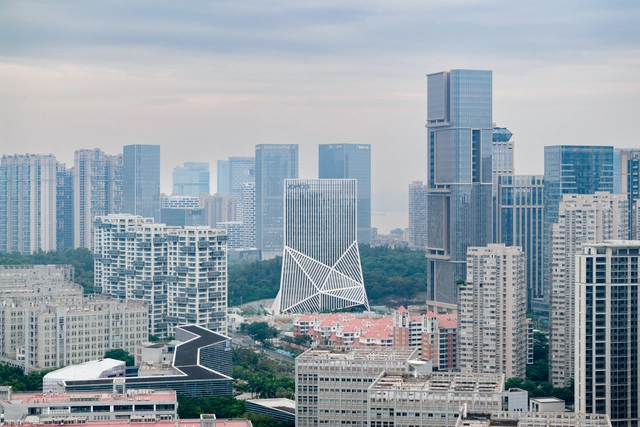
The NASDAQ equivalent Shenzhen Stock Exchange by OMA, continues to progress forward nearing completion. The latest photographs of the new building, which poses a strong representation of capitalism in , highlight the robust exoskeletal grid and the and complexity of construction.

“For millennia, the solid building stands on a solid base; it is an image that has survived modernity. Typically, the base anchors a structure and connects it emphatically to the ground. The essence of the stock market is speculation: it is based on capital, not gravity. In the case of ’s almost virtual stock market, the role of symbolism exceeds that of the program – it is a building that has to represent the stock market, more than physically accommodate it. It is not a trading arena with offices, but an office with virtual organs that suggest and illustrate the process of the market.”

- OMA

More construction photographs of the Shenzhen Stock Exchange after the break.

U.S. Invests in Brazil’s Infrastructure Upgrades

Photo by Diego Torres Silvestre - http://www.flickr.com/photos/3336/

Although has been growing quickly as a nation, its economic growth has been stinted by the country’s lack of investment in infrastructure. In preparation for the 2014 World Cup and the 2016 Olympics, Brazil is expected to spend over one trillion dollars from the Brazilian government and as much as $34 billion from private investors. The money will go toward numerous construction projects designed to increase and improve upon Brazil’s roads, railways, stadiums, hotels and airports. More information after the break.

Architecture City Guide: Berlin

This week, with the help of our readers, our Architecture City Guide is headed to . The twentieth century changed nearly all cities, but perhaps none more so than . From its destruction in World War II that left few historic buildings intact to its division until 1989 that brought together the architecture of two competing ideologies into one city, ’s modern and contemporary architecture speaks to a past that seldom accompanies such recent additions. The city is filled with new and wonderful architecture that might not have found space in other cities in Europe. With that in mind, we were unable feature all our readers’ suggestions on the first go around. We will be adding to the list in the near future, so please add more of your favorites in the comment section below. Once again, thanks to all our readers for your help.

The Architecture City Guide: Berlin list and corresponding map after the break.

PEX Toulouse / OMA

©

Providing the winning design for the Parc des Expositions (PEX) in the innovation zone of Toulouse, in southern France, OMA conceived PEX to be a new gateway to the city hosting exhibitions, conferences, and concerts. The 338,000 sqm project is designed to be a compact mini-city – an antidote to the sprawl of a standard exposition park, and a means to preserve the surrounding French countryside.

Surpassing three submissions by internationally-renowned competitors, the project, led by OMA’s director of French projects Clément Blanchet, will be completed by 2016. Blanchet commented: “This project is not only about architecture, but rather infrastructure. It’s a condenser for diversity, a machine that can promote an infinite amount of possibilities.”

Architects: OMA
Location: Toulouse, France
Designers: and Clément Blanchet
Client: Société Publique Locale d’Améngement (SPLA)
Project Area: 338,000 sqm
Project Year: 2016
Renderings: Courtesy of OMA

Video: AMO’s Ideas on Energy

The Office for Non Fiction Storytelling recently shared with us the first of an exclusive film series for Wallpaper* Visionaries. Beginning with none other than AMO, OMA’s research counterpart, Reinier de Graaf director of AMO and architect Laura Baird share their ideas of creating a world driven by a 100% renewable energy by 2050. The ambitious WWF project experiments with scale ranging from the North Sea and an energy grid for Europe to a much larger scale presenting the world as one utilizing a united energy grid. Throughout the process the AMO team has learned to represent things that don’t yet exist, traveling the world sharing their ideas.