The quintessential symbol of Manhattan, Waldorf Astoria New York officially reopened for the public this year after an extensive renovation. Over its long history, the property has undergone numerous transformations, from its 19th-century beginnings to the modern landmark that stands between Park Avenue and Lexington Avenue.
Reimagining a building that pioneered modern hospitality—a jewel in New York's skyline—posed a challenge that required close collaboration between preservationists, 3D visualizers, architects, and designers. Together, they worked to preserve its protected architectural heritage while meeting contemporary expectations for craftsmanship and comfort.
Generative AI (Gemini / Google DeepMind). Concept: Eduardo Souza / ArchDaily
Once synonymous with monotony, “prefabricated” buildings often bring to mind the gray, repetitive housing blocks of the postwar era. But that image no longer fits today’s reality. Powered by digital design, robotics, and advanced materials, prefabrication has evolved into a language of innovation and precision. Far from uniform, it now enables flexible, efficient, and sustainable spaces that reflect the individuality of contemporary architecture.
Modern residential construction in the UAE demonstrates the need for advanced thermal envelope solutions in hot, arid climates where cooling can account for up to 70% of peak electricity consumption. Image Courtesy of Terraco
Terraco, a global leader in Exterior Insulation Finishing Systems, has demonstrated through independent studies that when planning building renovations, it is essential to adopt a deep retrofit strategy that includes energy-efficient measures, such as thermal insulation of external walls and roofs.
The studies show that cooling energy use in buildings can be reduced by up to 47% annually in Middle Eastern and South Asian climates, directly as a result of installing the combined Terraco EIFS and Roof Insulation Finishing Systems, compared to leaving external walls and roofs uninsulated.
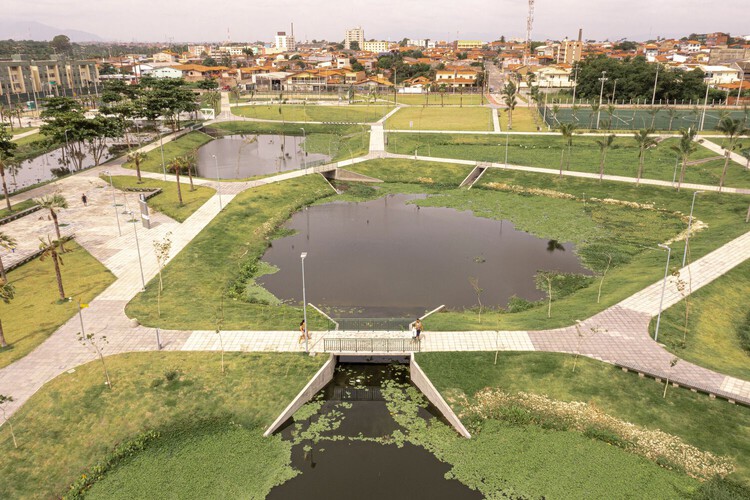
Greece's built environment is shaped by the coexistence of multiple architectural layers, where historic structures, modern interventions, and evolving urban systems intersect. Classical landmarks and their surrounding urban fabrics continue to inform the spatial character of cities, while postwar developments, infrastructural upgrades, and contemporary projects add new dimensions to the country's architectural landscape. This continuity between past and present provides the foundation for current design approaches, which increasingly focus on balancing heritage, environmental considerations, and contemporaryurban needs.
UNS has revealed images of SeoulOne, a master plan designed for Hyundai Development Company (HDC) in Seoul, South Korea, intended as a new model for multigenerational living. The project, already under construction on a brownfield site in the northeast of the city, reimagines an existing industrial site and railway area as a 405,000 m² car-free neighborhood for a multigenerational community. A never-sleeping, green master plan for Seoul, SeoulOne is envisioned as a mixed-use mini-city where all essential services for people of all ages are available within a 10-minute walk. The design includes 24/7 residential towers, retail spaces, offices, a hotel, sports facilities, daycare centers, senior living facilities, and a medical center, offering permanent services within walking distance. More than 30% of the site is dedicated to vegetation, including pocket parks, roof gardens, water gardens, and a forest walk, creating a year-round green village.
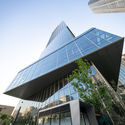
From the pavilions of Osaka and Venice, to the roundtables of Belém, another year comes to a close. December invites us to pause and look back at the moments that defined architecture and cities in 2025. Reflection is not only an act of memory, but of foresight — a way to understand where we've been in order to imagine where we might go next. From shifting cultural narratives to material and technological breakthroughs, this past year underscored the importance of experimentation and adaptation across the built environment.
This month, ArchDaily explores the Year in Review, gathering the year's most compelling stories, ideas, and voices. The coverage revisits the projects, interviews, and essays that shaped the conversation, while recognizing the architects and thinkers who left a lasting impact on the discipline. It also looks ahead, identifying the most anticipated projects and issues of 2026, and the emerging directions they suggest.
Collective housing remains one of the most active areas for unbuilt architectural exploration, revealing how architects are rethinking domestic life, density, and shared living across different cultural and environmental contexts. In this curated Unbuilt edition, submitted by the ArchDaily community, the selected proposals investigate new forms of dwelling that span mobile units, vertical developments, adaptive reuse, and landscape-driven residential clusters. Rather than treating housing as a purely functional container, these projects position it as a social and spatial framework that shapes everyday life, community ties, and long-term urban resilience.
Across varied geographies, from Tirana and Athens to Monterrey, Chaloos, Roatán, Bhola, and the DRC, these proposals explore multiple approaches to collective living: transforming industrial shells into residential structures, extending existing masterplans through landscape integration, reimagining verticality in dense urban centers, and developing modular prototypes that can adapt to changing climates or patterns of mobility. Some projects prioritize ecological strategies and local materials, while others test new models for accessibility, community well-being, or incremental urban growth. Together, they reflect a broad spectrum of architectural responses to contemporary housing pressures.