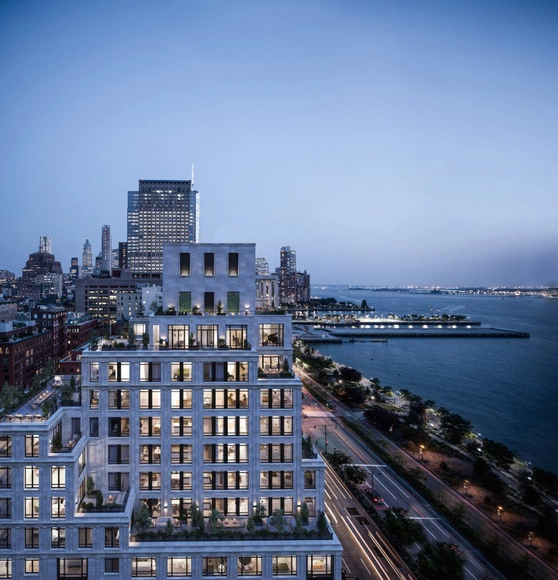
Several new renderings have been released of Robert A.M. Stern Architects’ TriBeCa condos at 70 Vestry Street, according to New York YIMBY. Located next to the West Side Highway in TriBeCa in New York, the 14-story building will contain 46 condos and over 153,000 square feet of residential space, with each apartment ranging from 1,700 to 7,000 square feet.
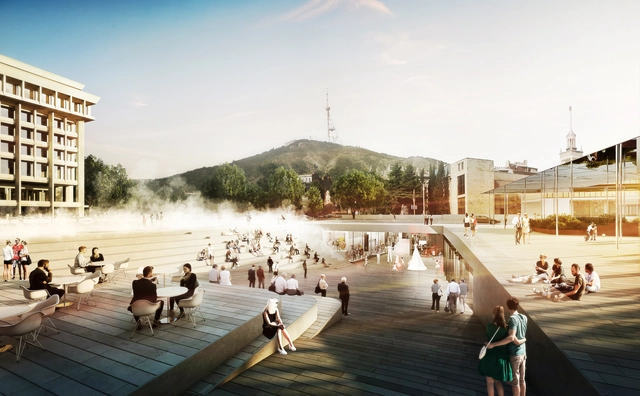
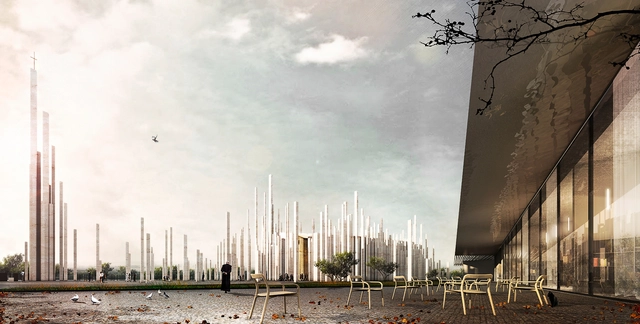
Architecture firm GRAFT has won first place in the competition to design the new Rose Square in Tbisili, Georgia.
Located in front of the Radisson Blu Hotel, which GRAFT renovated in 2009, the site will be transformed into a leisure area with various seating options, and a parking lot underneath.
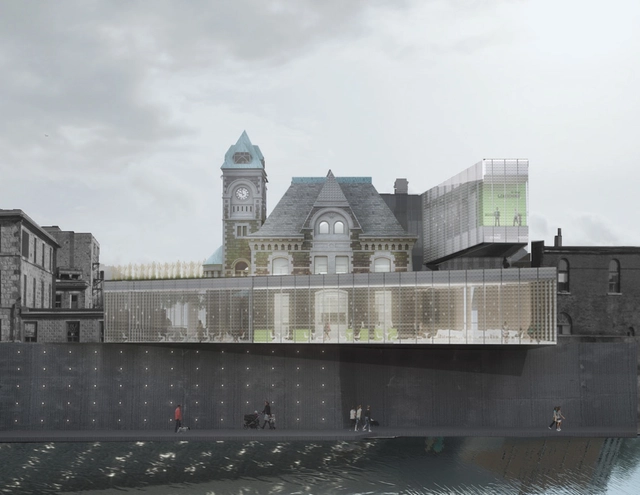
RDH Architects has unveiled the plans for its Old Post Office Idea Exchange, a restoration project in Cambridge, Canada. The post office project will completely restore the existing historic building and transform it into a new space through the use of new glass additions that will increase usable space and improve accessibility.
Carlo Ratti Associati has teamed up with German engineer Schlaich Bergermann Partner and British design studio Atmos to design the world's tallest man-made structure. Nearly twice the height of the Burj Khalifa, the 1609-meter-tall tower was envisioned as a vertical "Central Park" clothed in vegetation and supported by a lightweight matrix of pre-stressed cables.
"Imagine you take New York's Central Park, turn it vertical, roll it and twirl it," said Carlo Ratti.
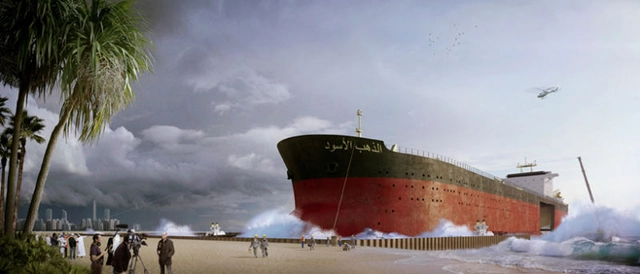
Four Dutch designers—Chris Collaris, Ruben Esser, Sander Bakker and Patrick van der Gronde—have envisioned a sustainable design of re-use for a discarded oil tanker in the Southern Gulf Region, which they have entitled The Black Gold. They believe that the oil tanker is the "perfect icon" for representing "the geographic, economic and cultural history of the Arabic oil states" – an icon which they predict will become more and more obsolete as the supply of crude oil is moved away from shipping and into pipe infrastructure.
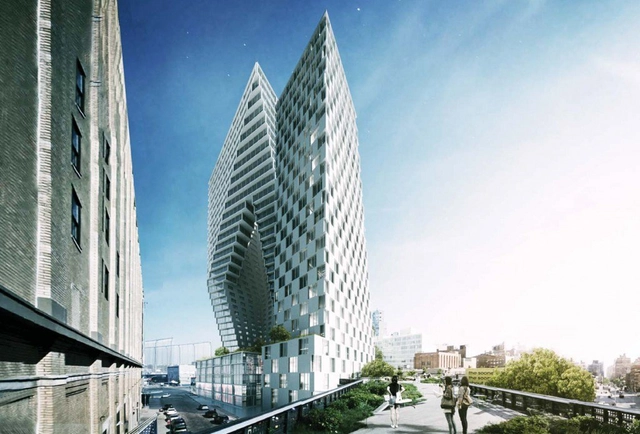
New York Yimby has unveiled BIG's latest New York skyscraper: 76 11th Avenue. Planned for one of the largest plots along the High Line, the nearly 800,000-square-foot proposed project is comprised of two towers perched on a podium of retail, gallery and hotel space in the city's Meatpacking district. Rising 302-feet to the east and 402-feet to the west, the towers are divided by a "diagonal cut" through the site that opens up more views for residents to the High Line.
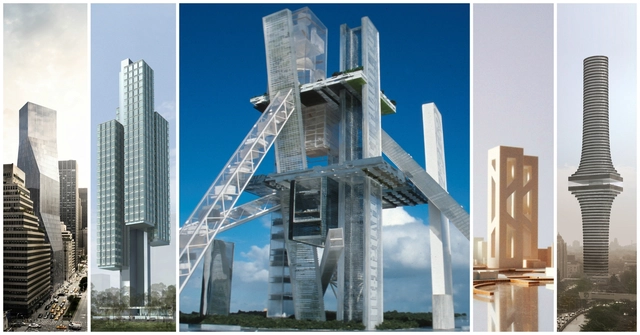
Among the firm's several hundred realized projects, however, many lesser known proposals were drafted but never constructed. Arguably a fundamental component of the OMA's practice, the unbuilt projects contain some of the firm's most outlandish and important ideas with incredible potential to influence architectural design worldwide. As a tribute to Koolhaas and OMA's continued pursuit of the unconventional, we've rounded up fifteen of OMA's most unusual unbuilt skyscrapers. Read on to find out which ones made the list.
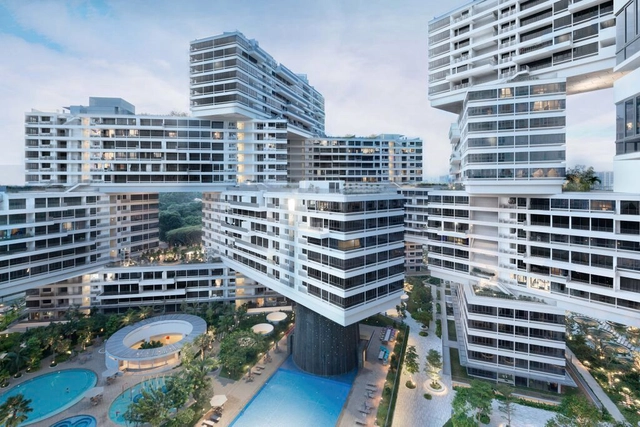
OMA and Buro Ole Scheeren's vertical village in Singapore, The Interlace has been named the World Building of the Year 2015 at culmination of the World Architecture Festival (WAF). Celebrated for being "an example of bold, contemporary architectural thinking," as WAF Director Paul Finch described, the project is eighth building to ever win the illustrious award. It is considered to be a "radical new approach to contemporary living in a tropical environment."
Winners of the year's Future Project, Landscape, Small Project and Color Prize awards were also announced. Read on to see the who won with comments from the jury.
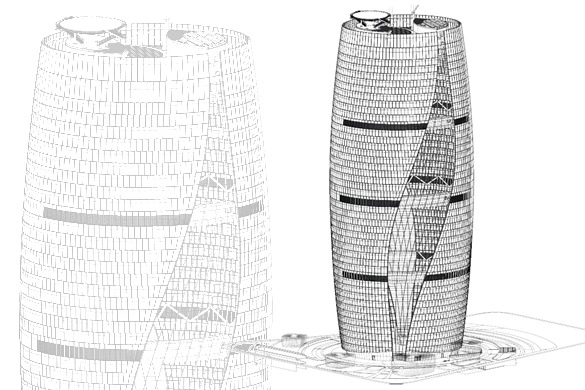
Zaha Hadid Architects has proposed an office tower in Beijing that is said to have the "world's tallest atrium." As the Architects' Journal reports, the Leeza SOHO project features a 200-meter-high atrium that extends the building's full height, visually splitting the cylindrical structure in two. If built, it will be anchored by an underground promenade that connects to a subway station below and public park to the west.
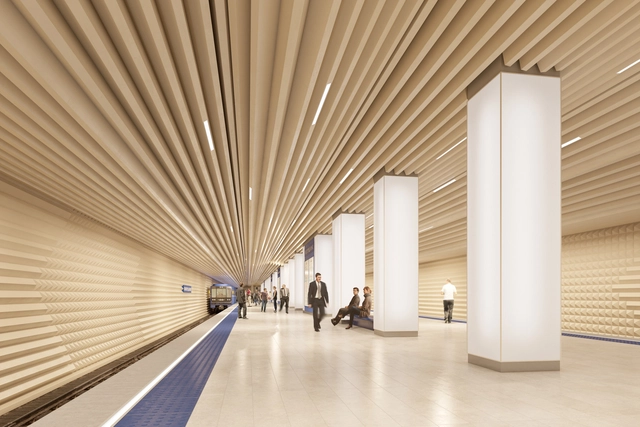
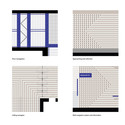
When thinking of metro stations, the word quiet generally doesn’t come to mind—with all of the train and pedestrian traffic, not only is noise produced in high quantities, but it is also echoed. With this issue in mind, London-based Variant Studio created their proposal for the competition to design the new Novoperedelkino station in Moscow, Russia. Although not selected as the winning design, Variant was one of five shortlisted teams. Learn more about their silent proposal after the break.
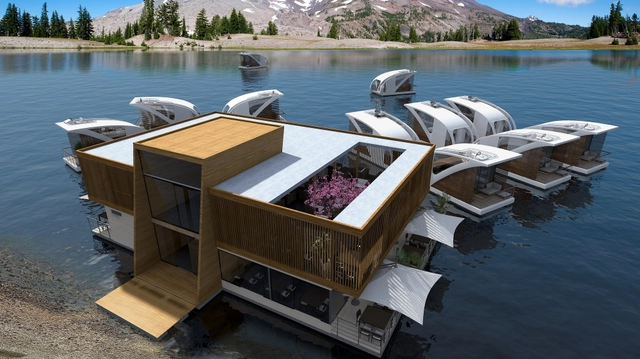
Floating Hotel with Catamaran Apartments. Image Courtesy of Salt & Water Design Studio
A winner of the Millennium Yacht Design Awards, Salt & Water's concept for a Floating Hotel aims to introduce tourism onto inland waters without disrupting the natural harmony of its surroundings. Their design consists of two parts: a central floating body and separate catamaran apartment units.
Learn more about the Floating Hotel after the break.
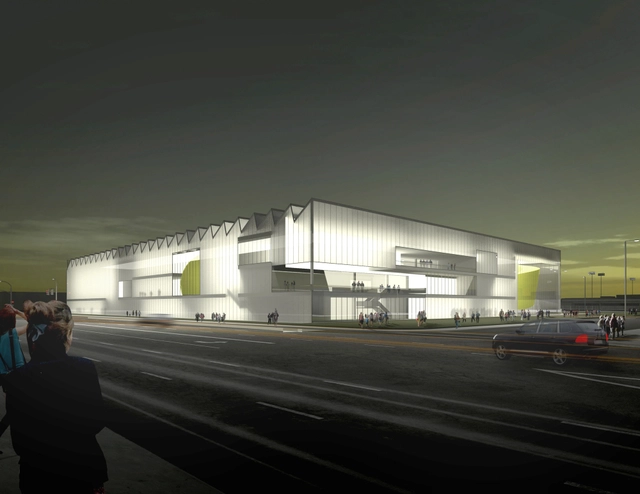
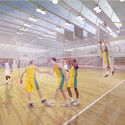
AECOM has designed a $42,000,000 campus and training facility for a professional basketball organization in West Los Angeles. The building contains a basketball arena, corporate headquarters, a hall of fame, and gardens, among other programs. Despite the building’s varied uses, AECOM was determined to make it “basketball centric.”
The school, named for Cambodian Children’s Fund founder Scott Neeson and former Velcro Companies Chairman Robert Cripps, will employ multiple sustainable building practices, including water and energy efficiency via natural lighting, integrated solar shading, low energy lighting, and low flow water fixtures. An energy recovery system will further work to improve air quality inside classrooms by filtering outdoor air into the interior of the building, and on-site photovoltaic cells will provide a portion of the school’s energy needs.
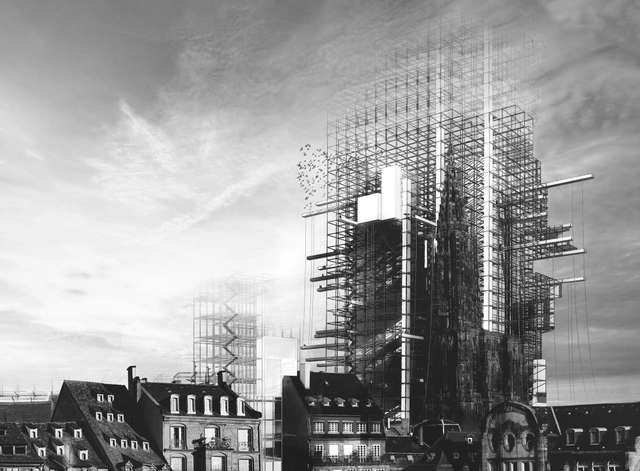
Grand Prize: ‘Radical Conservation: A Hyper-Cathedral in Strasbourg’ / Simon Oudiette. Image Courtesy of d3
Three grand prize winners and seven special mention recipients of d3'sUnbuilt Visions 2014 (UV2014) competition have been revealed. Open to professionals and students alike, the annual competition challenges participants to use stellar unbuilt concepts as vessels for conversation. Spanning the realm of architecture, urbanism, interiors, and designed objects, Unbuilt Visions recognizes projects that spark interdisciplinary debate and exploit the innovative spirit of the 21st Century.
Learn more about UV2014 and check out the winning projects, after the break.
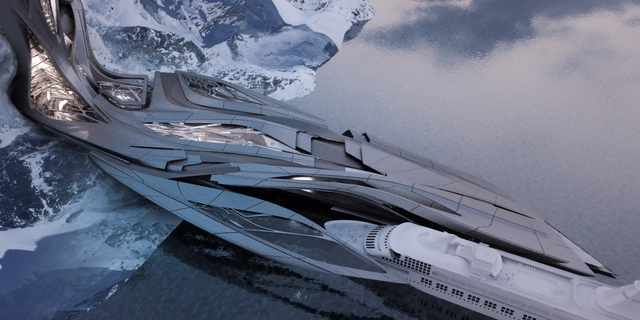
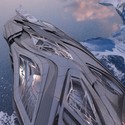
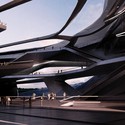
Antarctic icebergs morph into a sprawling multi-functional hub for research, transport and accommodation in one of the latest projects to come out of Zaha Hadid's Studio at the University of Applied Arts in Vienna. Designed by architecture student Sergiu-Radu Pop, the project hypothesizes a point of arrival for the world's final frontier of development. The project employs biomimicry as a primary design tool, replicating the jagged asymmetrical edges of ice formations along the coast of the southern ocean.
Enter the Transformable Antarctic Research Facility with more photos and info after the break
This year at the 2014 Venice Architecture Biennale, KAAN Architecten will present a Collateral Event featuring PLANTA - a partially subterranean space that will be dedicated to multidisciplinary artistic production and built within the confines of the “La Plana del Corb” quarry in Balaguer (Lleida, Spain) by 2016. Designed for Grupo and Fundació Sorigué, PLANTA is not only a building, but a concept; a concept in which is the “culmination of the desire to give back, to return through a balanced tension between art, institution, knowledge, ecology and manufacturing.”
ArchiPlanhas won first prize in an international competition for a contemporary art museum designed solely for the work of Korean painter Kim Tschang-Yeul. Planned for the volcanic Jeju Island, a province in South Korea, the single-story museum is designed to be the physical manifestation of Kim’s philosophy regarding the water drop.
“We spent a long time understanding [Kim] - understanding his life, intention and his philosophy,” described the architects. “It is necessary to transform his philosophy into a constructed architectural space.”











_COOKFOX_Architects.jpg?1434039459&format=webp&width=640&height=580)






_%C2%A9_Armin_Linke_2012_(1).jpg?1401833201&format=webp&width=640&height=580)
