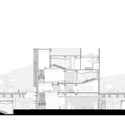
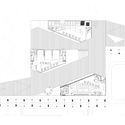
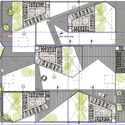
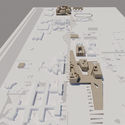
Ziya Imren Architects has released its plans for Re-Naturing the Kizilirmak in Turkey, a new eight-kilometer-long urban design project around the Kizilirmak River. As the longest inland river in Turkey, the Kizilirmak, also known as the Red River, “has been regarded as a hard edge to the city due to access and safety concerns.” After recent municipal advancements, many areas around the river have been opened to a design competition with the goal of integrating the riverfront into the existing city fabric.
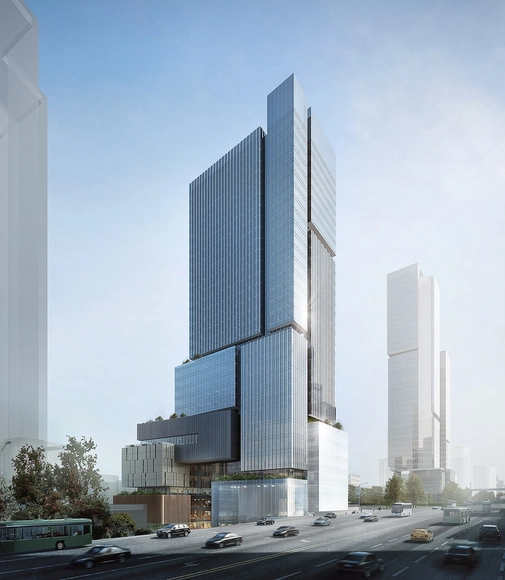
China-based firm EID Architecture has been selected as the winner of a design competition for a mixed-use development, entitled Longfor Phase IV, in Chongqing, China. Designed as an exploration of vertical urbanism on a high-density scope, the project is composed of a “single tower and associated podium integrated as an assembled massing of stacked box-like volumes.”
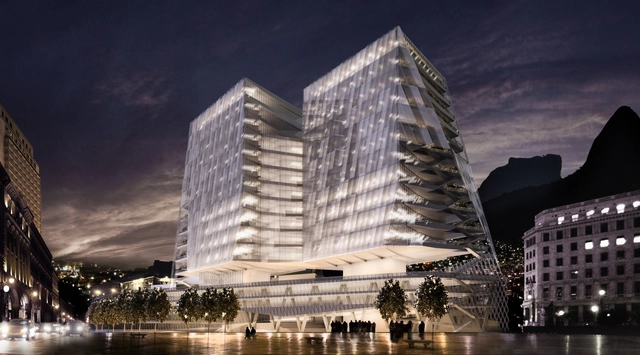
Cannon Design has unveiled its proposal for a mixed-use Cancer Hospital in Rio de Janeiro, Brazil. Originally envisioned as a “private hospital serving patients that can afford a high quality of health care,” the project transformed into a partnership between the public and private sector after preliminary feasibility studies determined the price of the site to be prohibitively high.
Thus, the project expanded to become a mixed-use complex with ownership shared between socially minded city government and private investors.
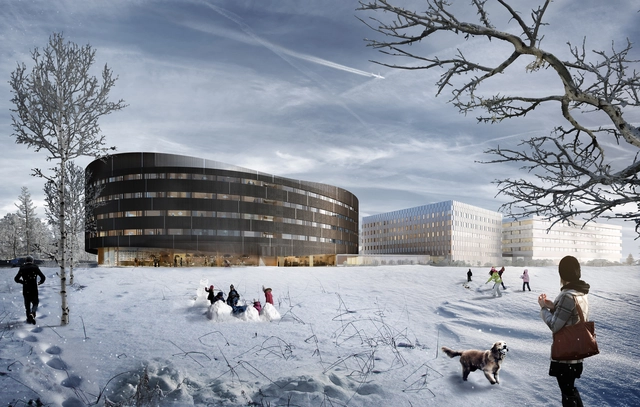
SPOL Architects’First Hotel OSL, a hotel near the newly extended Oslo Airport, has received planning approval after a unanimous vote in the Jessheim City Council. Designed to be a destination in itself, the hotel will be an environmentally friendly oval shape, featuring 300 rooms and a large atrium for sports activities.
Acting as a “meeting place for globe trotters,” the hotel aims to become a shared space for shared experiences for travelers.
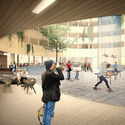
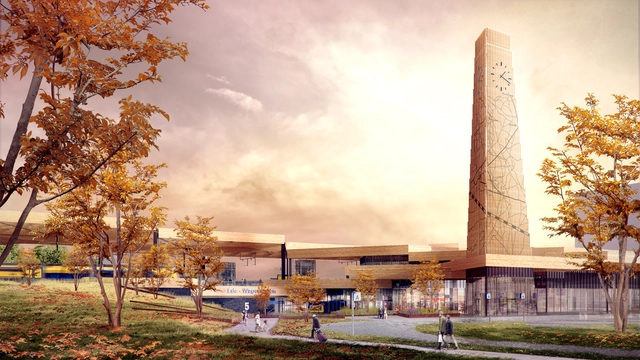
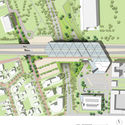
Mecanoo has unveiled the designs for the new Ede Wageningen Train Station in the city of Ede in the Netherlands, after winning the competition for the design of the project in 2014. As a gateway to the Veluwe National Park, the transport hub is designed to support future expansion in response to growth in passenger numbers.
Inspired by the local Veluwe landscape—its topography, typologies, and existing buildings and monuments—the Station building is nestled in the slopes of the moraine between the Veluwe Massif and the Gelderse Valley.
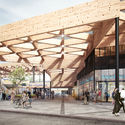
The wooden clock tower and roof of the project serve as the station’s hallmark. Consisting of a series of wooden triangles, the roof cascades over the bicycle parking, retail space, and other station facilities, ending as the overhang of the main entrance and connecting all quadrants of the hub in a uniform manner.
It’s the year 2036 in Generic City, a gloomy place where once mighty skyscrapers are lucky to be in decrepit condition, if they haven’t already been swallowed by the ever-increasing number of sinkholes appearing throughout the city. But the city is not lifeless: a constant hum echoes about the city, a well-choreographed churning motion in pursuit of one central activity. In this city, the world’s most precious commodity—not gold, not diamonds, not even black gold but just simple, fresh water is under the total control of a mega-corporation named Turquoise. The people are ruled by an oppressive autocracy and life is divided between the haves and have-nots. Life revolves around access to water.
Is this the opening paragraph of the latest dystopian novel? No, but it might be Joshua Dawson’s interpretation of our troubling future. With CÁUSTICO, an ode to the growing tradition of “speculative design fiction” pioneered by countercultural avant-gardists of the 1960s (think Archigram, Superstudio and Archizoom) Dawson exaggerates the implications of current social phenomena for the purposes of rhetoric. While the truthfulness of his vision is a little on the improbable side, the work is an eye-opening narrative on the increasing scarcity of fresh water. At the same time, Dawson’s dystopic vision opens a conversation about the relationship of the architect with utopianism, while his representational techniques brings up the question of what exactly the work of the architect entails.
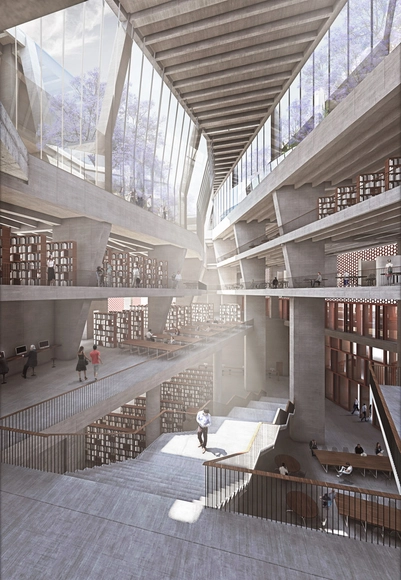
Aedas has unveiled the plans for its Chongqing Xinhua Bookstore Group Jiefangbei Book City mixed-use project, a complex of retail, residential, office, and hotel space with a Xinhua Bookstore at its core. Based on an ancient Chinese prose that states “knowledge brings wealth,” the project aims to integrate the concept of a book with the cultural elements of Chongqing to create an interactive commercial space.
International firm Benoy has unveiled Kavanagh Street, its competition proposal for a mixed-use tower development in Melbourne, Australia.
Set back on the banks of the Yarra River in the Southbank precinct, Benoy’s design is a five-building set or a “family of towers” on a shared nine-story mixed-use podium, all of which would host 315,000 square meters of residential, hospitality, commercial and retail space.
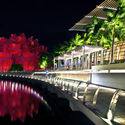
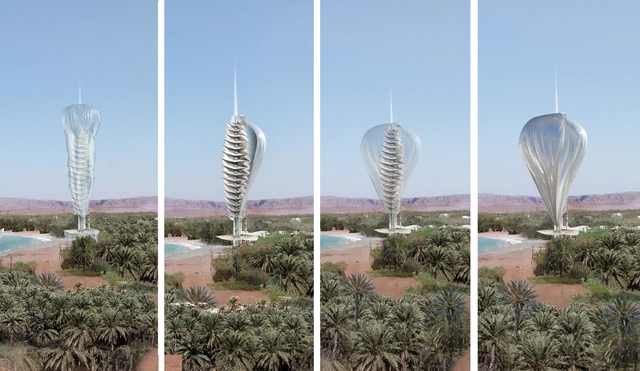
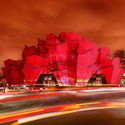
As a token of his love, Russian architect, designer, and writer Vasily Klyukin is presenting the field of architecture with roses, specifically, with his new design, Roses Pavilion.
Inspired by the beauty and presence of the flowers, Klyukin has conceptualized a pavilion made of glass and metal shaped like a bouquet of roses. Here, variations in interior lighting will change the color of the bouquet—whether red, yellow, or a variety of shades—according to desire and mood.
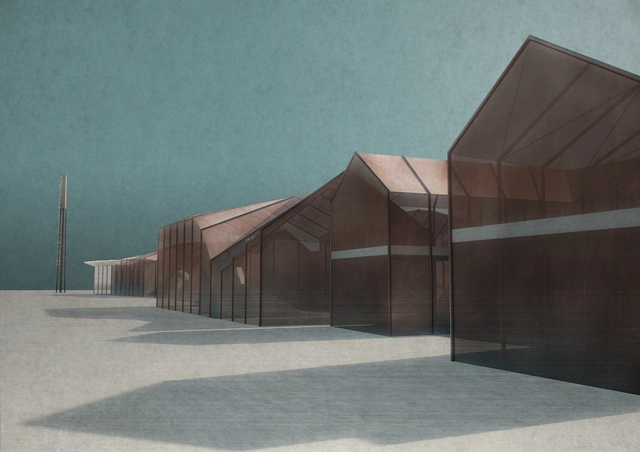
Paris-based firm RE: has recently completed the design for an extension and refurbishment of the Cyprus College of Art in Paphos. With the idea of continuation, rather than radical reimagination, the project extends the existing sculptural wall of the college, creating new carvings and sculptures from a series of hung perforated copper-clad sheds.
Through this design, the cast concrete wall becomes a horizontal core for the building. Furthermore, this space will contain a series of building services, and can become a place of participation, as it may be carved or painted.
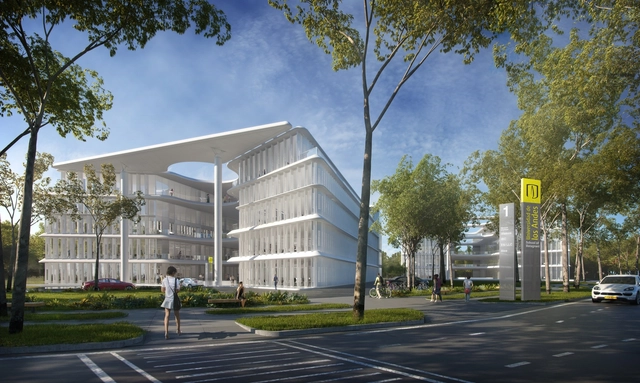
Brandon Haw Architecture (BHA) has unveiled the plans for Serena del Mar, one of two “twin” buildings that will host the Universidad de Los Andes International School of Management in Cartagena, Colombia. As the first office and institutional building to be constructed as a part of a long term, two-phase master plan, the four-story building will additionally house offices for corporations and businesses to support the upcoming master plan, specifically a new hospital building for Johns Hopkins University.
Serena del Mar is designed to respond to the “local climatic conditions in the most naturally passive yet contemporary way,” explained the architect . It will feature precast concrete vertical fins to shade from the intense Caribbean sun, but will also allow for views of the surrounding landscape.
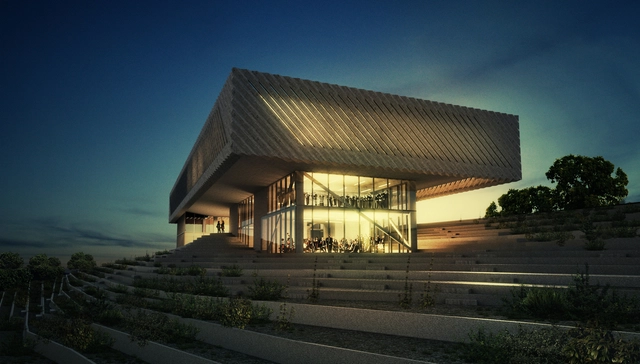
Pliskin Architecture has been awarded as a finalist in the competition for the Mevaseret Music School, in Mevaseret Zion, Israel. The firm’s proposal centers on the site’s existing topography, as well as the idea of public space through the elevation of the classroom programs to the upper level, and the creation of a continuous open space at street level.
The new public space at the street level leads visitors to a partially covered plaza, which will act as the main access point for the various functions of the conservatory. A café will be located adjacent to the plaza, where visitors can be partially exposed to the school’s activity via the building’s massing.
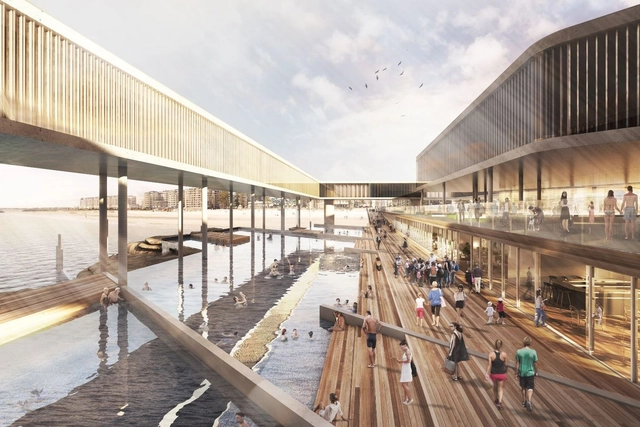
Woods Bagot has released the plans for Glenelg Jetty, a redeveloped gateway and new tourist destination in South Australia. The 15-meter-wide by 400-meter-long public jetty project was born out of a study to help revitalize Glenelg and the City of Holdfast and is hoped to attract new visitors, including visiting cruise ship passengers.
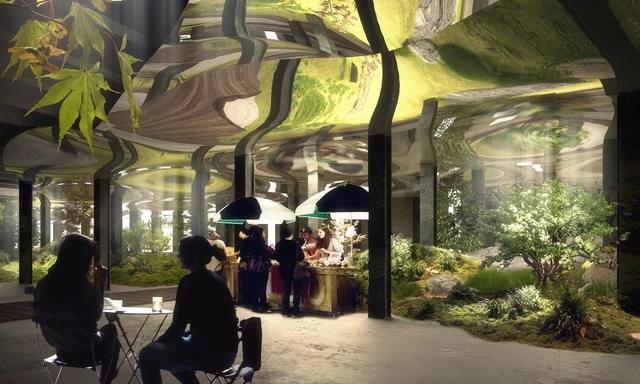
Deputy Mayor for Housing and Economic Development Alicia Glen and NYCEDC President Maria Torres-Springer have announced New York City’s first official approval of the Lowline project in Manhattan’s Lower East Side. As the first major step in making the project a reality, the approval will help to create the world’s first underground park, a community-oriented public and cultural space that will become both a local resource and an attraction for worldwide visitors.
Although the Metropolitan Transit Authority (MTA) did express interest in the space last fall, the Lowline team was awarded conditional use due its high community potential.
Philippe Barriere Collective (PB+Co) has released the plans for a Bio Climatic Health Care Facility at an eco-resort in Al Ain, United Arab Emirates. The facility includes a Chelation Clinic, Integrated Dental Domes, Healing Clinic, and individual bungalows for private patient residences.
Overall, the alternative medical center intends to combine wildlife discovery, nature conservancy, and outdoor activities as part of the patients’ healing processes.
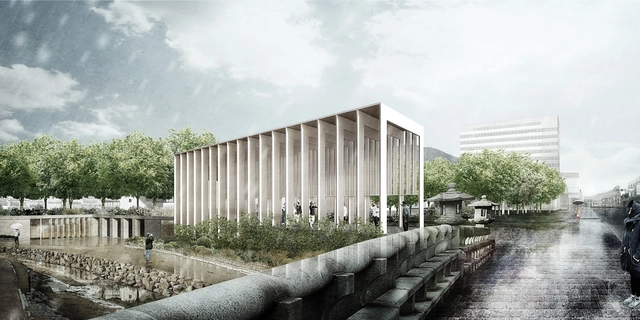
India-based Studio MADe has won the Suncheon Art Platform competition with its proposal, The Hidden Cloister. The competition, hosted by the City of Suncheon, South Korea, sought to revitalize the Old City area with an art square featuring an art center.
Through The Hidden Cloister, Studio MADe aims to create a “psychological ‘void’ in the midst of a high-density area by creating an open-to-sky quadrangle as a pure subtraction of ground.” Thus, the proposal creates a new link in the heart of the Old City by connecting the riverbank and public space.
Dublin-based McCullough Mulvin Architects has released the plans for their first project outside of Ireland, a large-scale extension and modernization of Thapar University in Patiala, Punjab, India. Located in a fertile area, the project seeks to consider the University as a holistic landscape, "evoking and extending nature to form rocky heights and shaded valleys."
The project consists of the construction of two main building groups: The Learning Center, which is approximately 60,000 square meters; and the Student Accommodation, which is approximately 30,000 square meters. These new facilities will be connected with existing ones by a covered and planted walkway, which allows students and staff to walk through campus in contact with nature, while screened from the weather.
Knitknot Architecture, in collaboration with nonprofit group Seeds of Learning, has designed -- and is raising funds to build -- the El Jicarito School. Located in El Jicarito, a tiny village in Nicaragua, the school will serve 27 children who currently do not have a school to attend.
The low-cost school design aims to bring the community together through collaborative construction methods, the use of local materials, and the creation of a new educational landscape that will enhance creativity.


.jpg?1480654086&format=webp&width=640&height=580)
.jpg?1480654159 "Courtesy of Ziya Imren Architects")
.jpg?1480654024 "Courtesy of Ziya Imren Architects")
.jpg?1480654143 "Courtesy of Ziya Imren Architects")
.jpg?1480654189 "Courtesy of Ziya Imren Architects")
.jpg?1480654086)





















.jpg?1470118551&format=webp&width=640&height=580)

.jpg?1469779437 "Courtesy of Vasily Klyukin")