As we reflect on the tumultuous events of 2023, it becomes evident that the challenges posed by changing environmental conditions have left an indelible mark on communities worldwide. In response, architects and urban planners have set out, searching for the ways in which their actions can help create safer environments for communities worldwide, responding with both fast-to-deploy emergency architectures and long-term strategies to build resilience and mitigate risks.
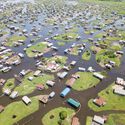
Beyond merely responding to events like the devastating earthquakes in Turkey, Syria, and Morocco, or the widespread flooding in Libya or Pakistan, professionals are attempting to take proactive approaches, developing strategies that extend from predictive modeling to the application of re-naturalizing techniques or the ongoing research into the physics of safer and resilient structures.
The terms resiliency and sustainability, although similar in meaning, refer to different design approaches in the context of architecture and cities. Sustainability involves the preservation of natural resources to uphold ecological equilibrium, while resiliency entails the ability to rebound, adapt, and persist in moments of adversity. These concepts greatly influence and complement each other, especially in cases of designing disaster-resilient buildings. Conventional design processes relating to resilient infrastructure have been based on principles of structural robustness and integrity as a measure against anticipated natural disasters. However, sustainable resiliency points at the opportunity of reinforcing buildings by embedding them in biological and ecological systems.
In an age where humanity's detrimental impact on the environment has become increasingly evident, the concept of rewilding is emerging as a powerful approach to conservation and ecologicalrestoration. In line with growing attention on landscape architecture in recent years, the idea of removing human intervention from our natural surroundings in order to restore a stable equilibrium seems to offer a low-effort, ethereal way to right fundamental climate wrongs. But is a lack of meddling in nature really all there is to rewilding, and how does this relate to architecture and design? We look at key concepts, applications, and examples to find out.
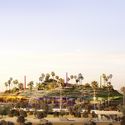
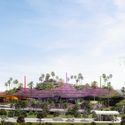
Jean Nouvel + OXO Architectes design Mountainous Mixed-Use Campus in Antibes. Image via Compagnie de Phalsbourg
Nowadays, much is said about the importance of collaborative design processes that involve joint creation, affirming a context in which there is less and less room for individual work and much more for the logic of collective and co-creation. Therefore, the idea that the work is created exclusively by the architect is already understood as a distortion of the complex reality of designing a project, going beyond the technical staff and also adding the community and its users.
Nature has continually played muse to architects. Colors and forms from the natural world find themselves embedded in artificial edifices. Buildings are also shaped by patterns of the wind and sun, topography, and vegetation. While architecture is informed by the effects of nature, buildings have been proposed as inert objects that remain static in a biologically evolving world. Anthropocentric concrete “jungles” are devoid of life, separating humans from natural environments and causing imbalances that have manifested as pandemics. What would cities look like if there were no boundaries between humans and ecosystems?
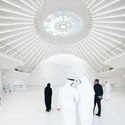
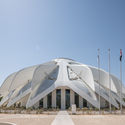
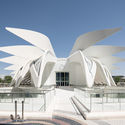
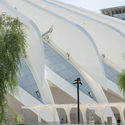
A "symbolic interpretation of the flow of movement", Calatrava’s design for the UAE Pavilion at the 2020 Expo Dubai is a 15,000 square meters immersive and multisensory experience. Images recently shot by Stephane Aboudaram highlight a structure of 28 automated cantilevered wings, that open and rotate at a range of 110 and 125 degrees. Moreover, these photos also show a central skylight, that mimics the logo of this year’s expo.
In 1941, Swiss engineer George de Mestral was coming back from a hunting trip with his dog when he noticed that some seeds kept sticking to his clothes and his dog's fur. He observed that they contained several "hooks" that caught on anything with a loop, and from studying this plant, seven years later, he invented the hook and loop fastener, which he named Velcro.
Corals are fundamental to marine life. Sometimes called tropical sea forests, they form some of the most diverse ecosystems on Earth. They serve as a refuge, breeding, and feeding area for dozens of species in the sea, and their absence can negatively affect local biodiversity to a tremendous degree. Yet just as humanity pollutes and destroys, it can also remedy and encourage the creation of more life. This is why shipwrecks of old vessels or the sinking of concrete structures for the creation of artificial reefs are frequently reported as providing immense potential. In Hong Kong, researchers have been developing 3D printed structures using organic materials that can lead to the creation of new opportunities under the sea.
Hashim Sarkis, the curator of the 17th International Architecture Exhibition organized by La Biennale di Venezia, launched a striking visionary theme at the beginning of this year: “How will we live together?”. This fundamental question finally transcends all disciplines and opens an existential portal for humanity. It does not refer only to humans but all species, the nonhuman organisms as well.
The Biomimicry Institute and Biomimicry South Africa have launched a new course covering the fundamentals of biomimicry. Called ‘Learn Biomimicry’, the online course kicks off in support of the Earth Day Network’s call for creative, innovative, and brave solutions needed to regenerate and repair the damage done to the planet.
In order to further explore how we think about the future of cities, ArchDaily's topic of the month for July is resilience. To prepare for disasters or disruptions in the system, we spoke with biologist Alessandra Araújo, founder of bio-inspirations and professor of Biomimicry at the Architectural Association Amazon Visiting School and the Master Ecological Design Thinking at Schumacher College, who discussed her thoughts on resilience in the field of architecture and urbanism through a different point of view: nature.
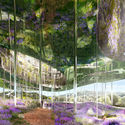
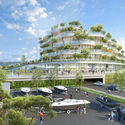
Ateliers Jean Nouvel has collaborated with French practice OXO Architectes on a competition-winning design for a mountainous campus in the Sophia Antipolis technology park in Antibes, France. The “Ecotone Antibes” will serve as the main entrance to the technology park, which is home to over 2,000 companies.
Described as a 21st-century campus for France, the 40,000-square-meter mountainous structure is covered in lush vegetation, containing offices, a hotel, amenities, and co-working spaces. The campus, a rare exercise in biomimicry for the South of France, sought to capture the site’s rich landscaped surroundings, translating a natural ethos to the hard, technological campus.
In a design proposal for Soprema’s new company headquarters in Strasbourg, France, Vincent Callebaut Architectures envisions an 8,225 square-meter ecological utopia. The building, called Semaphore, is described in the program as a “green flex office for nomad co-workers” and is dedicated to urban agriculture and employee well-being.
An eco-futuristic building, Semaphore is inspired by biomimicry and intended as a poetic landmark, as well as aiming to serve as a showcase for Soprema’s entire range of insulation, waterproofing, and greening products. The design is an ecological prototype of the green city of the future, working to achieve a symbiosis between humans and nature.
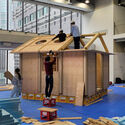
The Architectural Association Visiting School Amazon is organising for the fourth consecutive year a workshop in the Brazilian Amazon rainforest open to design and architecture students and professionals in which an experimental floating structure will be designed and constructed in collaboration with Atelier Marko Brajovic and Ecofloat.
For the "Imagine Angers"international design competition, Vincent Callebaut Architectures worked in collaboration with Bouygues Immobilier group to submit a proposal for the French city at the intersection of social and technological innovation, with a focus on ecology and hospitality. Named Arboricole, meaning “tree” and “cultivation,” this live-work-play environment gives back as much to the environment as it does its users. Although WY-TO prevailed in the competition, the Callebaut scheme succeeded in winning the public vote.
It’s the holy grail for any biomimicry design futurist: buildings and structures that use generative geometry to assemble and repair themselves, grow, and evolve all on their own. Buildings that grow like trees, assembling their matter through something like genomic instructions encoded in the material itself.
To get there, architecture alone won’t cut it. And as such, one designer, Haresh Lalvani, is among the most successful at researching this fundamental revision of architecture and fabrication. (Or is it “creation and evolution”?) He employs a wildly interdisciplinary range of tools to further this inquiry: biology; mathematics; computer science; and, most notably, art.
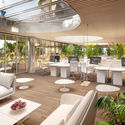
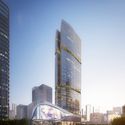
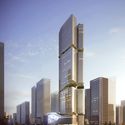
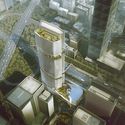
Aedas has released its design for Gmond International Building, a representative regeneration project located in the old town area of Shenzhen, China. The 200-meter super high-rise building is inspired by the traditional form of Chinese totem bamboo, which symbolizes prosperity and moral integrity.
With nearly 60,000 square meters of gross floor area, the building will house the headquarters for Tellus-Gmond, Grade 5A lettable office spaces, and a jewelry-trading center.













_NAARO_-_Copia.jpg?1606329213)


_NAARO_-_Copia.jpg?1606329213)