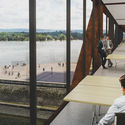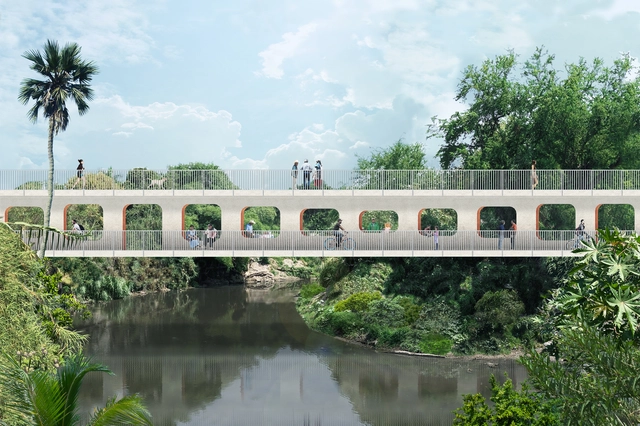


OMA New York has designed a new 145-meter pedestrian bridge over the Apatlaco River in Jojutla de Juárez, Mexico, as part of a larger reconstruction effort by Infonavit (National Workers’ Housing Fund Institute) following the 2017 earthquakes.


OMA New York has designed a new 145-meter pedestrian bridge over the Apatlaco River in Jojutla de Juárez, Mexico, as part of a larger reconstruction effort by Infonavit (National Workers’ Housing Fund Institute) following the 2017 earthquakes.
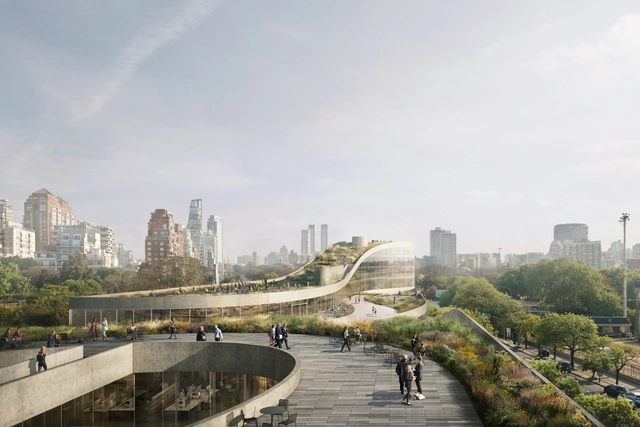
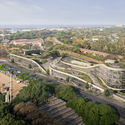
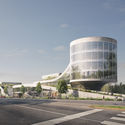
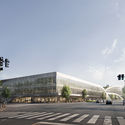
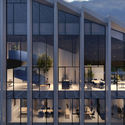
The old structure called Playa Gigena, in honor of the equestrian of the same name, located between the hippodrome and the Rosedal de Palermo in Buenos Aires, will now be converted by ODA into a Class A office building and a public park including cafes, restaurants, shops, and a covered parking lot. The partial demolition of the old parking lot has begun on June 28th.
Designed by the American architecture office ODA, the next Paseo Gigena will be the firm's first mixed-use project in the city of Buenos Aires city. The team involved in the process also includes the participation of Aisenson studio, Inscape Landscape, Coinsa, and the developer BSD Investments, to which the government has granted the concession of the property known as Ámbito Gigena, for a period of 15 years.
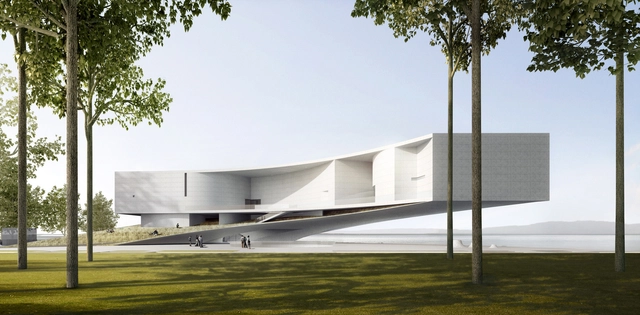
This week’s curated selection of Best Unbuilt Architecture highlights commercial projects submitted by established firms. From art museums to offices, this article explores cultural functions and commercial spaces, and presents projects submitted to us from all over the world.
Featuring a reception center that merges the cultures of China and Italy by aoe architects, and a post-pandemic office building by NBBJ, this roundup explores how established architecture firms have designed buildings that optimize the functions of projects and ensure the comfort of their users. This round up also includes a collection of proposals from KPF Architects, Nordic Office of Architecture, AFF Architekten, along with many other firms, each responding to different spatial needs, facilities, and environments.
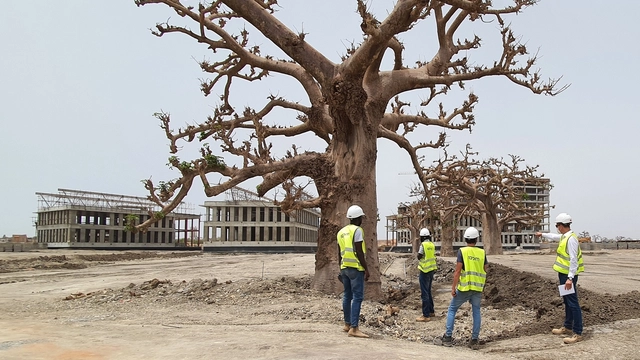
As Africa's cities grow, architects and urban planners in charge of development must face the challenges brought on by a lack of infrastructure.
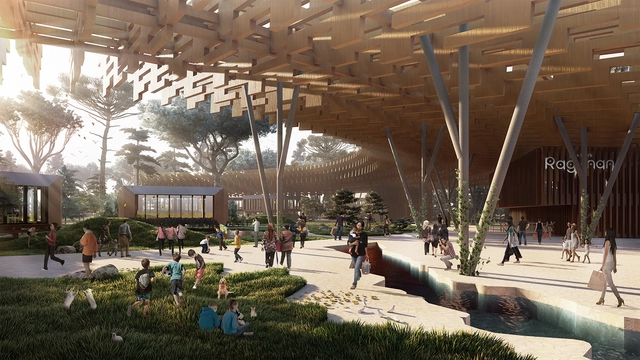
Focusing on competition entries, this week’s curated selection of the best-unbuilt architecture draws from proposals submitted by the ArchDaily Community to highlight award-winning design across the globe. Made for diverse programming, the entries each explore how to build upon the identity of local sites to win their respective competition. Together, they showcase contemporary formal, spatial and conceptual approaches.
The award-winning entries include a range of different projects: a mixed-use redevelopment proposal for a post war suburb of Antwerp, a high-rise on the site of a historic former Police HQ building in downtown Frankfurt, a leafy urban heat island proposal in Abu Dhabi, and a ‘Ireland House’ in Tokyo, which will bring diplomats and state agency personnel together under one roof. These are but a few of the best unbuilt architecture this week.
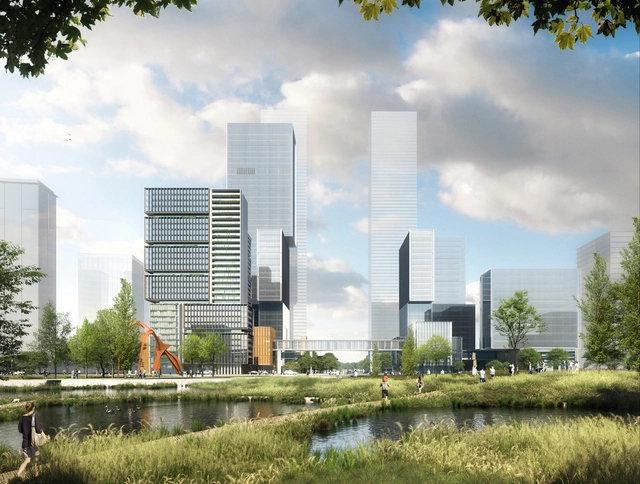
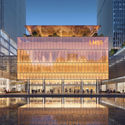
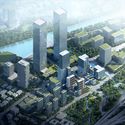
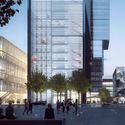
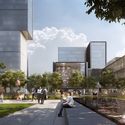
Ennead Architects has unveiled details of the Zhangjiang Science City, representing a conscious shift in the planning and design of large-scale urban blocks in Shanghai towards a human-scaled design that integrates a wide range of programs. Responding to a masterplan mandate, the scheme creates an open campus designed to foster a holistic built environment with a focus on providing a balance of living, work, and play spaces.
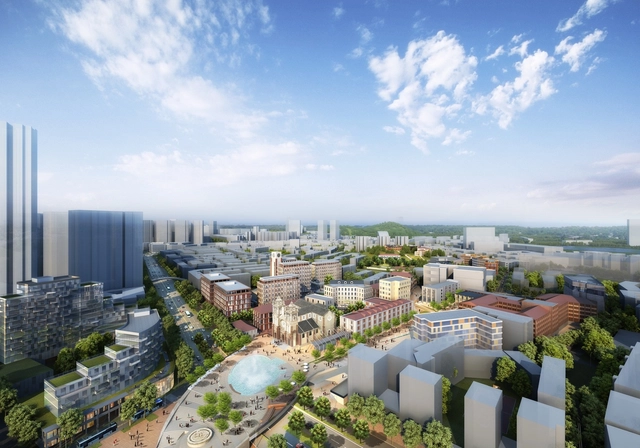
Sasaki has released details of their Wuhu Urban Renewal project in China, spanning 67 hectares on the banks of the Yangtze River. The scheme centers on distinctive colonial buildings scattered throughout the city’s urban fabric, such as the Customs House, British Consulate, and St. Joseph’s Cathedral.
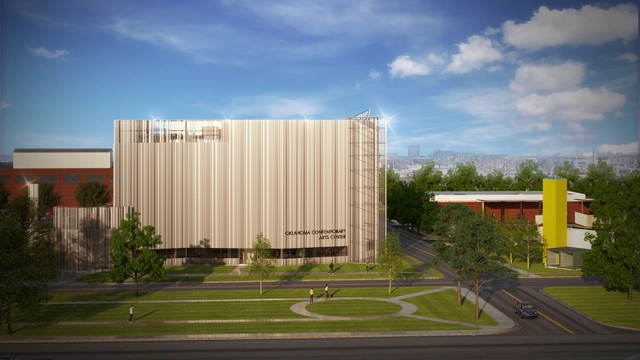
Oklahoma Contemporary Arts Center is relocating to a new building in the downtown area, designed by Rand Elliott Architects, a native firm of the city. This exhibition and educational center, originally a community-oriented arts center founded in 1989, will be open to everyone and free of charge, in order to facilitate the public access for art and education.

Herzog & De Meuron presented this week to the public their new vision for the cityscape and the urban life of Munich. The plan revolves around a former postal railway hub, the Paketposthalle, an impressive concrete structure built in the 60’s, used lately as a sorting office for general mail. The 87,000 square meters site was recently acquired by Büschl, a private group of developers, who commissioned Herzog & de Meuron to create a new urban study for the area.
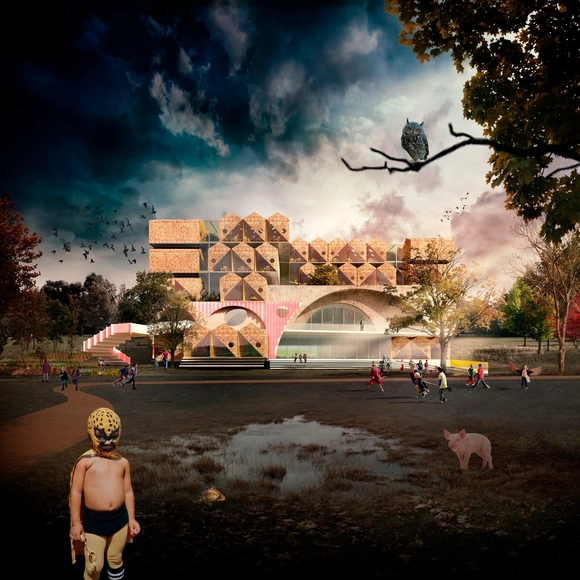
Andres Jacque / Office for Political Innovation has released their design for the Reggio School in Encinar de los Reyes, Madrid. Promoted by the Reggio Center for Pedagogical Research and Innovation, the project is based on the idea that architectural environments can evoke in children the desire for exploration and inquiry.
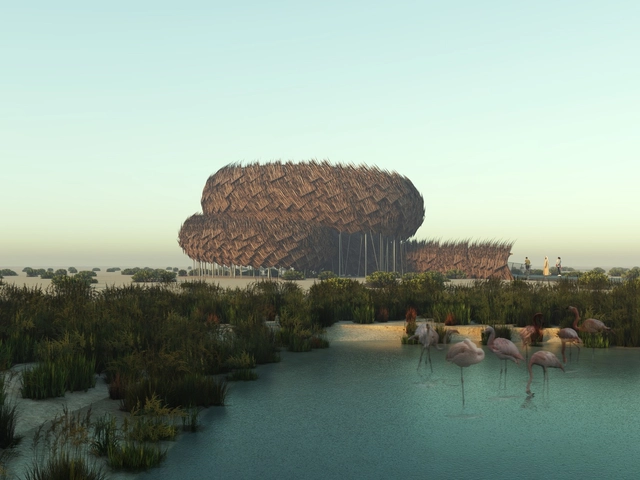
Bee Breeders has announced the winners of the Abu Dhabi Flamingo Observation Tower competition. Situated in the Al Wathba Reserve, 40 kilometers southeast of Abu Dhabi, the competition site oversees five square kilometers of wetlands, salt flats, and fossilized sands and dunes.
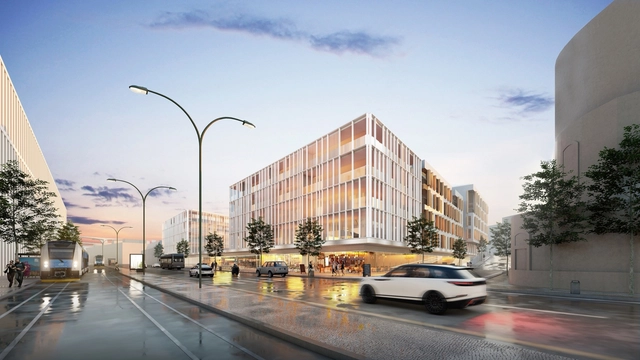
EAA-Emre Arolat Architecture has revealed their design for Alcantara Gardens in Lisbon, Portugal. The 23,000-square-meter scheme contains residential, apartments, office spaces, and public amenities behind facades inspired by vernacular design.
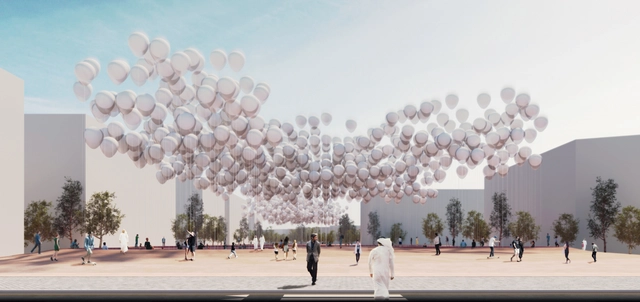
Superspace has designed a system of energy-harvesting balloons for Abu Dhabi. The project, titled “solarCLOUD” formed part of the LandArt generator competition and is intended as the city portal of Masdar City. The system consists of a group of solar balloons woven with solar fabric, creating a shaded park during the day while tracking and harvesting solar energy. At night, the system settles down to become a kinetic light art show.

WilkinsonEyre has gained planning permission for a major biodome complex in the Reykjavik region of Iceland, designed in collaboration with a local design team. The Aldin Biodomes consist of a Main Nature Dome and Tropical Dome, showcasing exotic plants from environments around the world, and the Farm Lab; an educational environment for local food production.
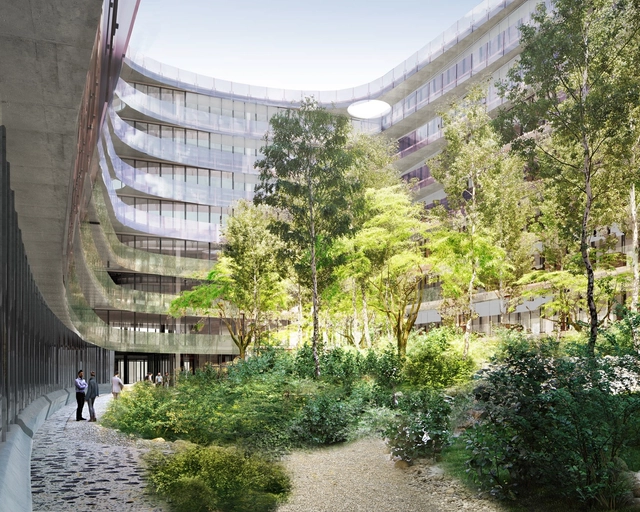
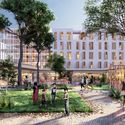
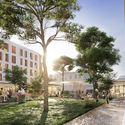
Herzog & de Meuron have released images of their proposed mixed-use office scheme in Munich, Germany. Reusing an old building south of Munich rail station, the project features a large courtyard garden accessible to the neighborhood at the center of the site.
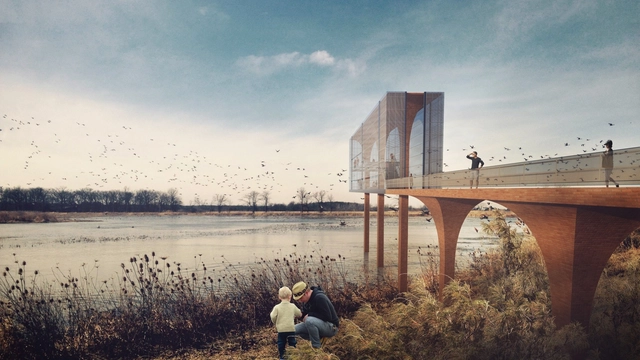
GVL Gossamer has released images of their design for a 19 kilometer stretch of waterfront along the Jing River in Xi’an, China. The proposal, a finalist in an international design competition, celebrates the site’s history at the origin of the Silk Road through strategies that tap into ancient and enduring histories of traditional architecture, merchant trade, and agricultural innovation. These enduring histories are woven with contemporary influences such as responses to major climatic and environmental challenges.
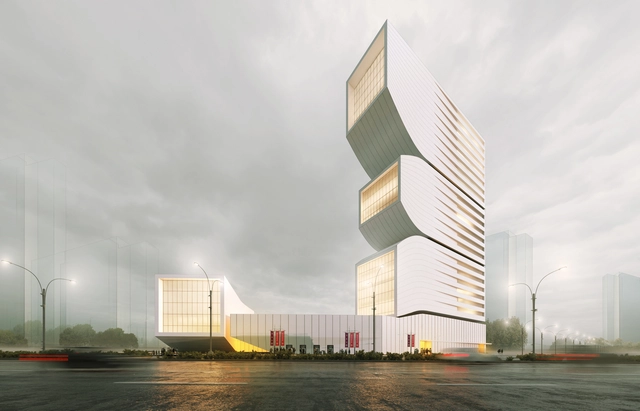
NextOffice and Alireza Taghaboni have released images of their proposed Afarinesh Tower in Shiraz, Iran. The tower is formed as a regular, uniform core housing administrative spaces, which lose their rigid order as the floor levels change, and the program becomes recreational.
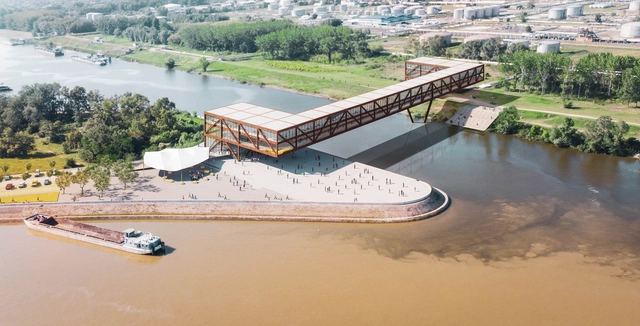
ARCVS has released details of their first place entry for a competition to design a multifunctional bridge in Novi Sad, Serbia. Spanning the River Danube, the “Elbow Shadow” bridge contains a hotel and office building alongside the pedestrian walkway. The scheme combines European influences such as the Ponte Vecchio and Rialto Bridge with vernacular responses to the river channels.