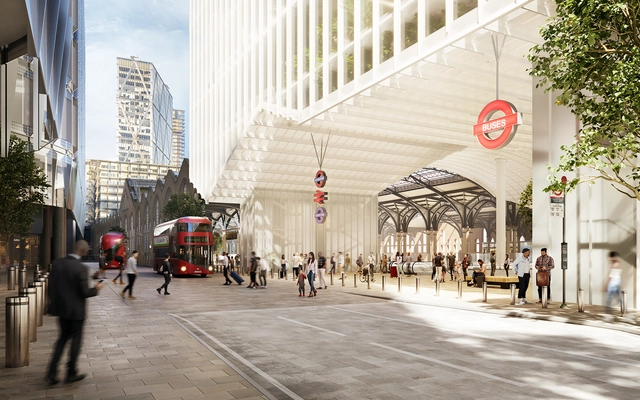
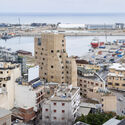
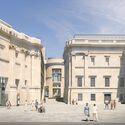
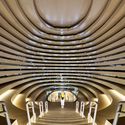
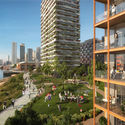
Architecture office Herzog & de Meuron has unveiled plans to revamp the Liverpool Street station in London. The scheme includes “vital upgrades” aimed at transforming the Victorian-era station into a fully accessible transportation hub fit to accommodate the 135 million people using the station annually. It also includes the addition of 840,000 square feet of offices and a 190,000 square feet hotel in two new structures, 10 and 6 stories high, respectively. These new interventions have attracted criticism from conservation groups. The proposal is currently undergoing its first round of public consultation. The development is overseen by Stellar, working with MTR, the operator of rail transport services and Network Rail.
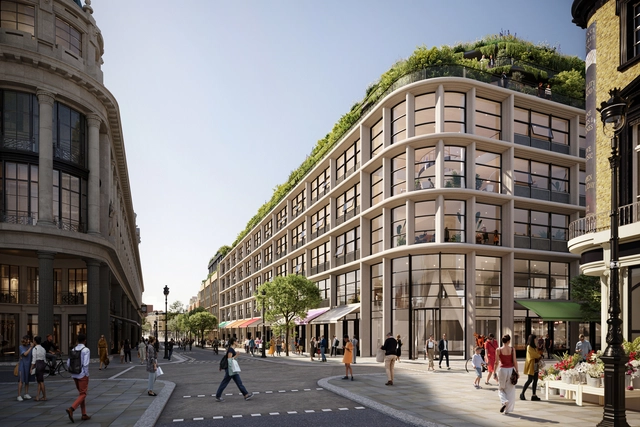
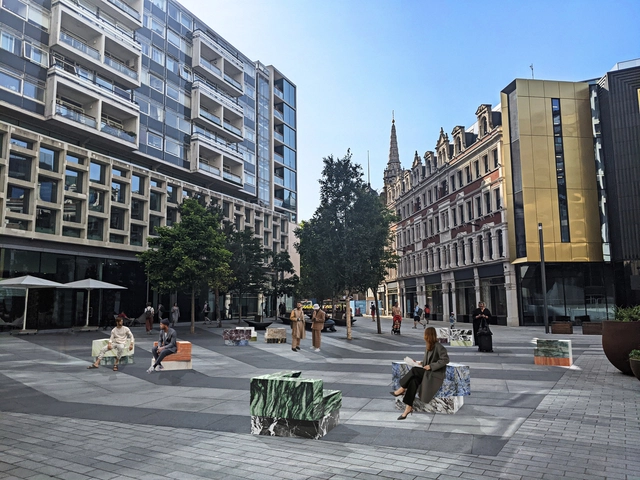
Foster + Partners has revealed the design for a new mixed-use development in the northern end of the central London high street. The building is located on Queensway, opposite the Whitley, the famous department store, which is also being transformed by Foster + Partners as part of a larger redevelopment scheme. Named The William, after William Whiteley, the eponymous founder of the famous Whiteleys, the project includes six floors of office space, shops, and 32 new homes, 11 of which will be affordable.
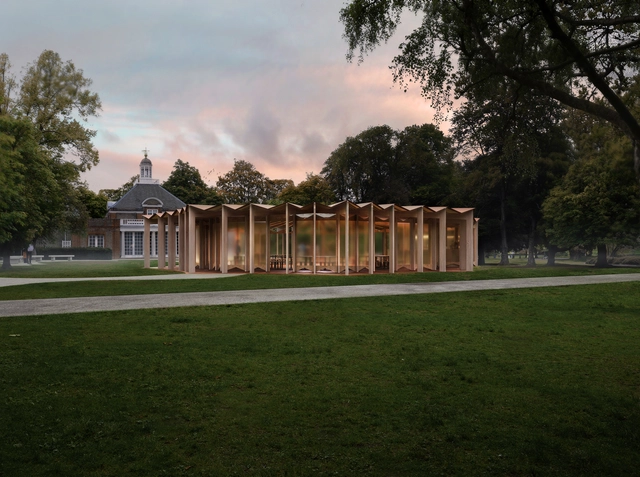
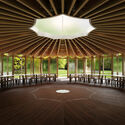
Beirut-born, Paris-based architect Lina Ghotmeh has been announced as the designer of the 22nd annual Serpentine GalleryPavilion. Titled “À Table,” the French expression for sitting together to eat, her proposal introduces a slender wooden structure with nine pleated petals supported by radial ribs. Inside the pavilion, a ring of tables and benches invites visitors to enter, sit down and relax, eat or work together. According to the architect, the modest space and low-slung canopy is meant to make people feel close to the earth. The Serpentine Pavilion will be open from June to October 2023.
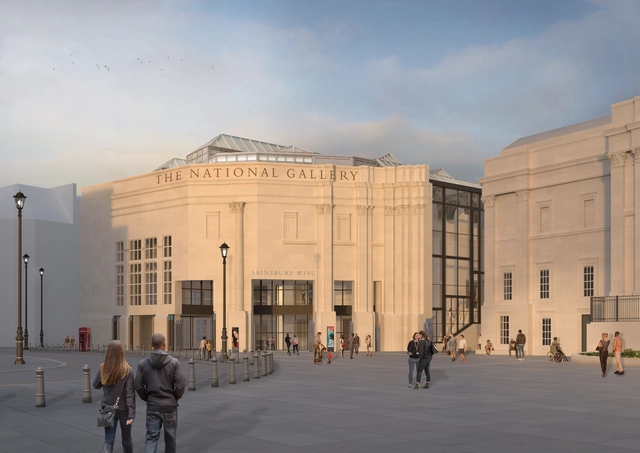
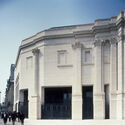
Updated exterior view. Image Courtesy of Selldorf Architects
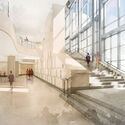
Selldorf Architects have released a revised version of the plans to remodel the National Gallery and the Sainsbury Wing, both classified as Grade-I-listed monuments. Sainsbury Wing is also the recipient of the 2019 AIA Twenty-five Year Award. The plans for the Sainsbury Wing, designed by Robert Venturi and Denise Scott Brown and opened in 1991, have faced intense criticism, with former RIBA Journal editor Hugh Pearman calling the remodeling plans “unnecessarily destructive”. The plans to remodel were first revealed earlier this year as part of the NG200 Project to celebrate the National Gallery’s bicentennial in 2024. The project proposes the remodeling of the Sainsbury Wing’s front gates, ground-floor entrance sequence, lobby, and first-floor spaces.
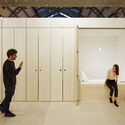
Landmark Project 'Swivel' by Sabine Marcelis. Image Courtesy of Sony Design
The London Design Festival is an annual event that brings together designers, practitioners, retailers, and educators from across the globe. This year’s program of events, exhibitions, and installations invites creative leaders to exchange ideas and solutions for some of the most pressing issues of our time, like climate change, pollution, and resource depletion. The festival includes the Landmarks Projects. As part of this initiative, Rotterdam-based designer Sabine Marcelis has created “Swivel”, an outdoor installation in central London. Other installations like Sony Design’s “Into Sight” pavilion or Sou Fujimoto’s “Medusa” exhibition explore visual and sensorial effects through physical and virtual mediums.
Muyiwa Oki has been elected as the next President of the Royal Institute of British Architects (RIBA), one of the highest positions in UK architecture. As RIBA's first Black President, Muyiwa Oki will take over the two-year presidential term from Simon Alfred starting on 1 September 2023.
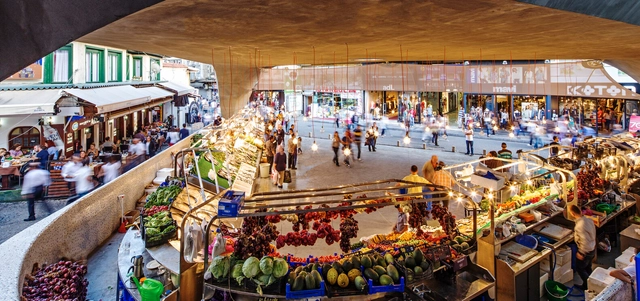
Every city is a complex environment, bringing together people, cultures, architecture, commerce, and even nature. While experiencing a city, a lot of attention is given to its appearance, but appearance is not everything. The theory of sensory design aims to go beyond vision and explore the richness of the built environment through textures, smells, and sounds. For city officials and planners, a lot of attention generally goes towards how a city looks and sounds, but in terms of smell, the focus is mainly on managing waste or cleaning unsanitary areas. Yet the sense of smell, so often overlooked, is strongly linked to the creation of emotional memories. It contributes to our understanding of the world; it reveals otherwise hidden cultural practices, and it rounds up the experience of an environment.
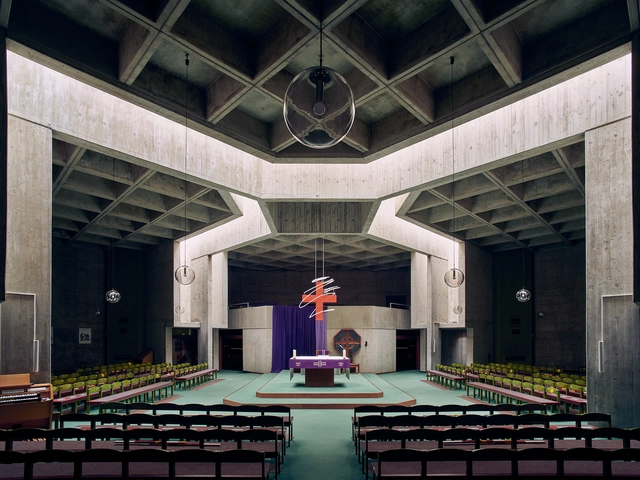
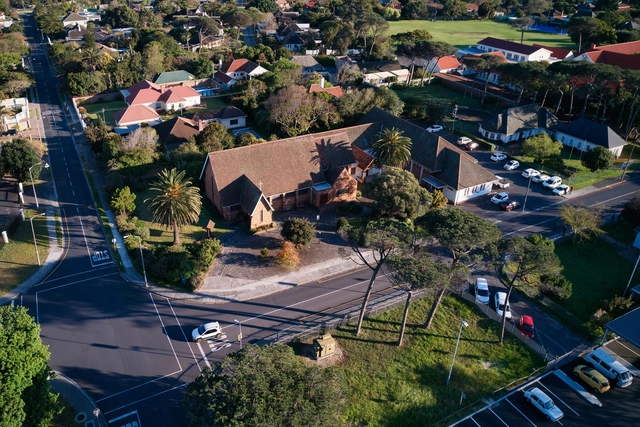
If one were asked to picture a Catholic Church, the first image to come to mind would probably resemble a medieval gothic cathedral with buttresses, pointed arches, and a spire pointing toward the sky. On second thought, many more styles could easily be identified as catholic architecture: the simple yet grandiose structures of the Romanesque or maybe the ornate styles of Baroque and Rococo. An image more difficult to associate with sacred architecture is that of Modernism. The Roman Catholic Church is a particularly conservative establishment. Modernism, on the other hand, is revolutionary; it is rational, functional, and technical; it rejects ornaments and embraces innovation. Surprisingly, in the years after the end of the Second World War, places of worship defied expectations. Blocks of concrete, raw materials, angular shapes, and exposed structures have all been employed to break from tradition and create churches that barely resemble a church. This article will explore Modernist mid-century Church architecture with the support of images from Jamie McGregor Smith.
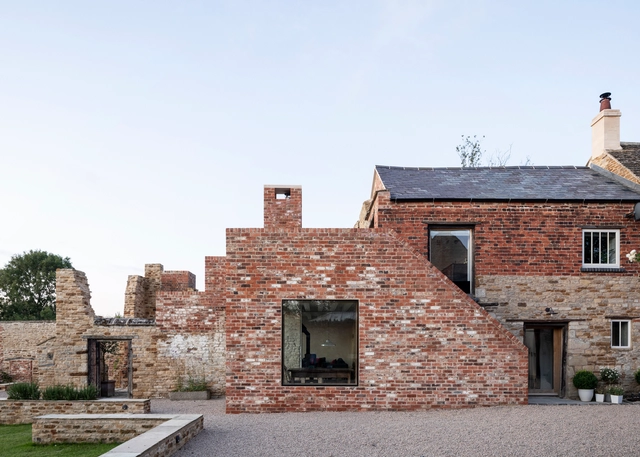
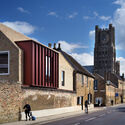
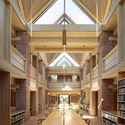
The Royal Institute of British Architects (RIBA) has announced the 29 winners of the 2022 RIBA National Awards for architecture. Ranging from net-zero carbon office buildings to family homes, schools and education facilities, urban developments and cultural buildings, this year’s projects provide an insight into the key trends that shape UK’s architectural and economic environment. Many projects focused on uniting communities, by creating spaces as a result of a collaboration between the local residents and the architects, or by offering unique venues for musical or cultural events. The future of housing was also addressed, with projects illustrating a vision for modern rural living or creating new city blocks centered around community gardens. Another area of interest was the restoration and adaptation of existing buildings, be it a 900-year-old former dining hall of the Cathedral or an iconic 1950s Modernist house.
At the turn of the 19th century, a British publishing house would release a book written by an English urban planner – a book with an optimistic title. The title of this book was To-morrow: A Peaceful Path to Real Reform, later reprinted as Garden Cities of To-morrow. The English urban planner in question was Ebenezer Howard – and this book would lay the foundations for what would later become known as the Garden City Movement. This movement would go on to produce green suburbs praised for their lofty aims, but it would also produce satellite communities that only catered to a privileged few.
This week’s curated selection of Best Unbuilt Architecture highlights competition-winning projects submitted by the ArchDaily Community. From large scale urban developments to interventions in the landscape, from housing projects to educational spaces and commercial buildings, this article showcases a variety of design approaches, programs and scales. The proposals featured are the results of local and international competitions, either creative concepts or projects currently in progress.
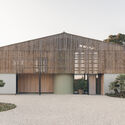
The competition-winning entries include a range of different projects, designed by both new practices and established firms. are a few of this week's highlights. A "city within a city" urban development in Ukraine, an EV station design in Canada that reinterprets the traditional typology of highway rest areas, a sustainable housing block in Finland and a clubhouse in the landscape of New Zealand are some of this week's highlights.
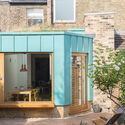
The Royal Institute of British Architects (RIBA) has announced the shortlisted projects for the 2022 RIBA East architecture awards. The list of 22 buildings includes projects ranging from a small copper-clad home extension in Cambridge to a new youth and participation space at the Wolsey Theatre. All designs will be assessed by a regional jury, and the winning projects will be announced later this spring. Subsequently, Regional Award winners will be considered for the RIBA National Award.
Biodiversity has become ubiquitous in project descriptions as yet another mark of the design's environmental accomplishments. The increasing focus on sustainability, the standard inspired by the UN Sustainable Development Goals, prompts a deeper understanding of what biodiversity in urban environments means and how can architecture and urban design actively contribute to it. With species extinction rates soaring and urbanization over natural land continuing, cities become an essential factor in sustaining biodiversity, and the following explores how the built environment can foster multi-species habitats.
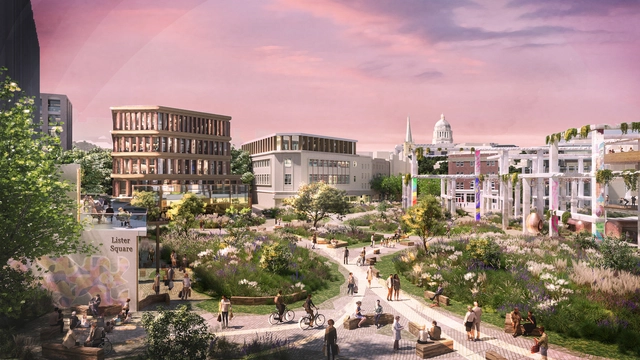
Heatherick Studio has revealed the redevelopment plan for Nottingham city centre, a vision that establishes a new green core, reshapes the former shopping centre at the heart of the site, and highlights the area’s touristic potential. Centred around an ample new green area enabling citizens to connect with nature, the project proposes new social spaces, commercial, mixed-use and residential buildings while establishing street connections around the city centre. The initiative represents an expansive vision for redefining the city centre and its programming amidst the evolution of retail towards online shopping and in response to the impact of the pandemic.
The UK government announced yesterday that planning approval will not be granted for Foster+Partners' Tulip tower. The decision letter published on behalf of the UK's housing secretary cites concerns over the design's embodied carbon and the possible negative impact on the surrounding architectural heritage. First revealed in 2018, the 305-metre tower would have become the tallest building in London's financial district.
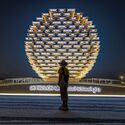
UK’s contribution to Expo 2020 Dubai is a wooden sculptural structure that celebrates cultural diversity and collaboration, highlighting Britain as a meeting place of cultures and ideas. Created by artist and designer Es Devlin, the Poem Pavilion uses advanced machine learning algorithms to transform the input of visitors into collective poems. The latter can be read in illuminating displays on the façade, transforming the pavilion into the exhibit itself.
Five emerging architecture studio profiles from Switzerland, France, the Netherlands, Austria, the UK, and Slovakia have been chosen by New Generations, a European platform that analyses the most innovative emerging practices at the European level, providing a new space for the exchange of knowledge and confrontation, theory, and production. Since 2013, New Generations has involved more than 300 practices in a diverse program of cultural activities, such as festivals, exhibitions, open calls, video interviews, workshops, and experimental formats.
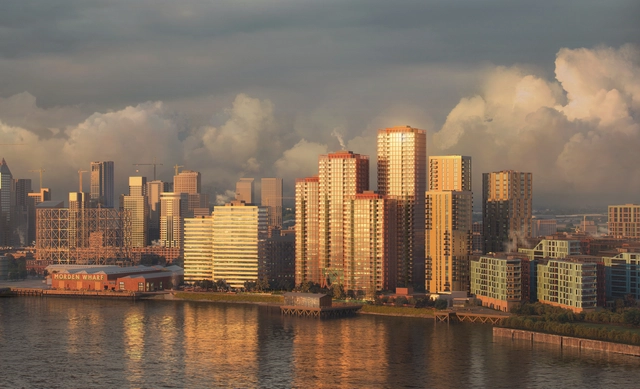
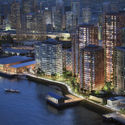
OMA’s mixed-use development for Morden Wharf has just been granted planning consent from the Royal Borough of Greenwich’s Planning Committee. The scheme created for developer U+I is located on a 2.4-hectare brownfield site, with an industrial past, on London’s Greenwich Peninsula facing the historic Greenwich and the millennial O2 Arena.