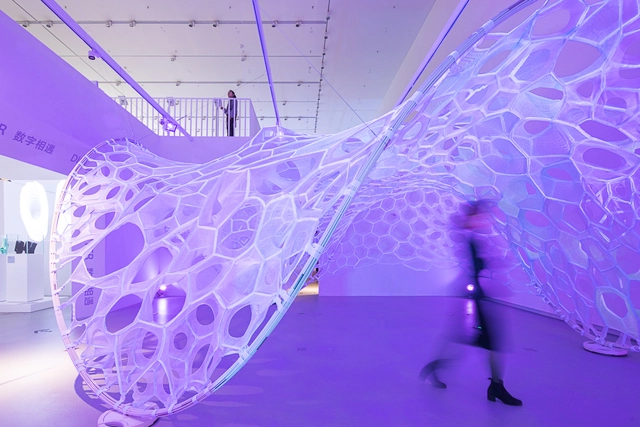
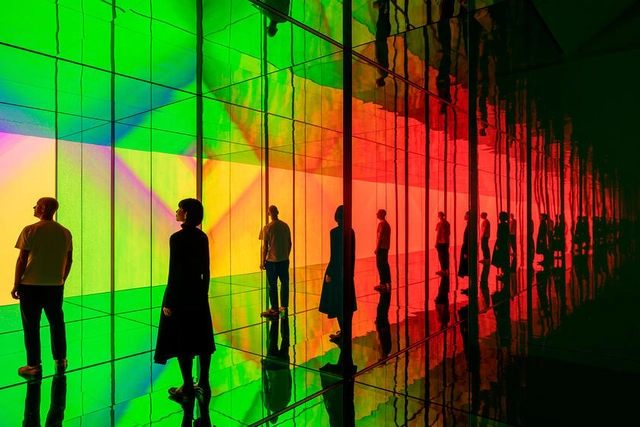
Health Through Water / GROHE SPA. Image Courtesy of GROHE SPA
Milan Design Week represents one of the biggest annual design events in the world, bringing together Salone del Mobile.Milan, the largest furniture and design trade fair worldwide, and Furiosalone, along with many other exhibitions, product launches, conferences, and design-related events. This year’s edition, held between April 17th, 2023 and April 21st, 2023, brought together architects, designers, manufacturers and enthusiasts, both Italian and international. Many architectural offices contributed by collaborating with various brands to develop architect-designed products and to create architectural installations to highlight not only furniture and object design but also the larger context of Milanese architecture and culture.
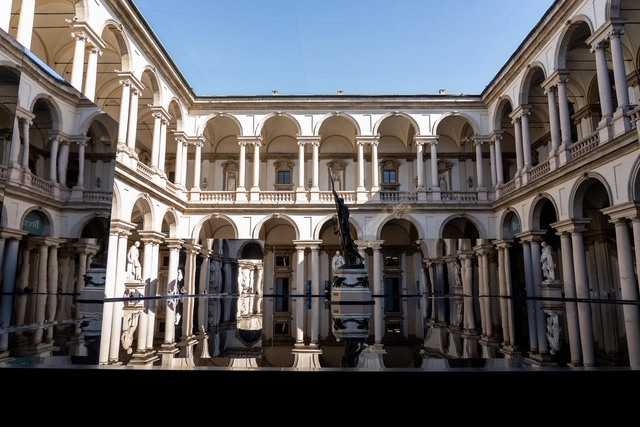
Featuring designs from internationally recognized architecture offices such as OMA, MAD Architects, Stefano Boeri Interiors and CRA-Carlo Ratti Associati, the following selection showcases temporary interventions in both historical and contemporary contexts. The designs present several recurring themes, such as the interest and fascination with the properties of water, be it contained within man-made structures or in its natural state. Many of the participating companies chose to showcase not only their products but also the historical architecture of Milan, by using buildings such as Pinacoteca di Brera, Casa Maveri, or the deconsecrated church of San Vittore e 40 Martiri as a backdrop for their installations.
Architecture design firm Buchan was selected to lead the design for the Australian Pavilion at Expo 2025 in Osaka, Japan. Under the theme "Chasing the Sun," the installation will encapsulate Australia's connection to the land and the Cosmos, displaying its rich culture and diverse arts scene. From 13 April 2025 to 13 October 2025, more than 150 countries will participate in a single location, anticipating 28 million visitors from across the globe.
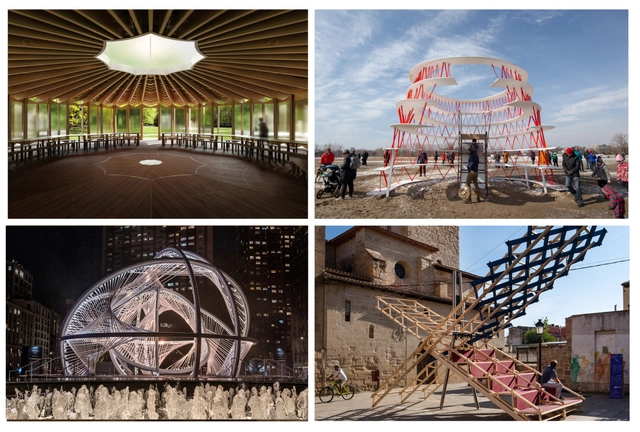
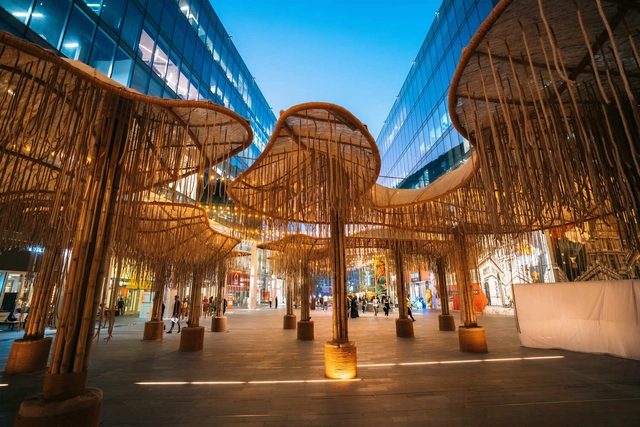
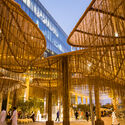
Staged stories on community and identity, ephemeral architecture showed that in 2022 it doesn't have to be permanent to be powerful. A direct and popped-up public installation can shift from preparation to action, reclaiming and defining what makes a community unique. Highlighting installations to acknowledge linguistic diversity in NYC, a giant table to celebrate culinary in Barcelona, and a large-scale net in Dubai to represent the local culture, among others, these initiatives seek to understand ways in which local and regional expressions can help cities to be more equal and diverse.
Globalization has connected the world boundaryless. While it has also made information more accessible, it has led to homogeneity and identity crisis at melding unique societies and cultural expressions. Cultural differences are undeniable as globalization grows. Hence, as architecture produces common living standards, it can also highlight singularities. Festivals, installations, and pavilions, 2022 was the year to express local memories to be recognized and celebrated, setting Community and identity as central topics in ephemeral architecture throughout the year.
Once Upon a Forest / OBMI. Image Courtesy of Dubai Design Week
One of the most significant cultural events in the Middle East, Dubai Design Week represents a platform that offers individuals and companies the opportunity to showcase their design experience and to open conversations about the most pressing issues of our times. Developed in a strategic partnership with Dubai Design District (d3), the event presents a series of immersive, large-scale installations that highlight the festival’s theme: Design with Impact.
This year’s program is focused on designing a sustainable future. To promote this, Dubai Design Week has invited international and regional architects and designers to create installations that demonstrate creative design thinking, to introduce innovative materials, and spark conversations about the ways in which design can have a positive impact on the environment.
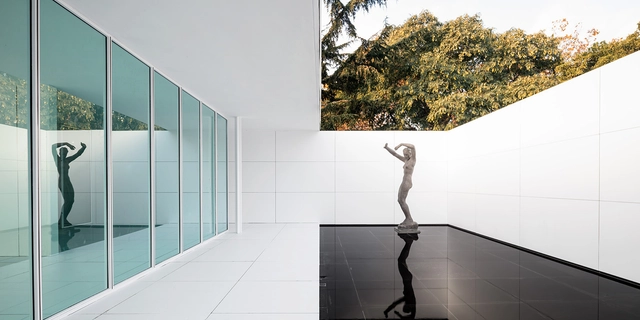
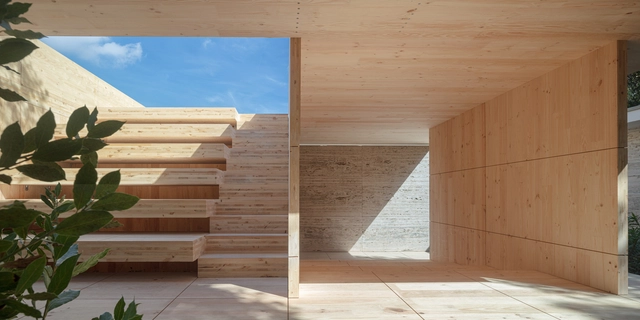
On the 4th of October, the temporary installation "Mass is More", a project designed by Daniel Ibáñez and Vicente Guallart, from the Institute for Advanced Architecture of Catalonia (IAAC), together with Alan Organschi from Bauhaus Earth (BE), was presented at the Barcelona Pavilion. It was open to the general public from the 1st to the 9th of October.
The first full-size London Design Festival (LDF) for three years, and the event’s 20th anniversary year, this was meant to be a celebration. But life, as the saying goes, had other plans. Rocked by the news of HRH Queen Elizabeth II’s passing, the country, and indeed the world started the London Design Festival in a period of mourning. Having reigned over the densest period of design innovation in human history, however, her majesty was no stranger to change.
With long-running themes like sustainability, materials, economic crises, and digital futures never higher in the public’s consciousness, LDF ’22 wasn’t just a professional meet and greet, but a chance to share some much-needed positivity with design enthusiasts, as well as locals, just passing by. Here are the most interesting and talked-about installations and talks from nine days of reflection on the past and hope for the future.
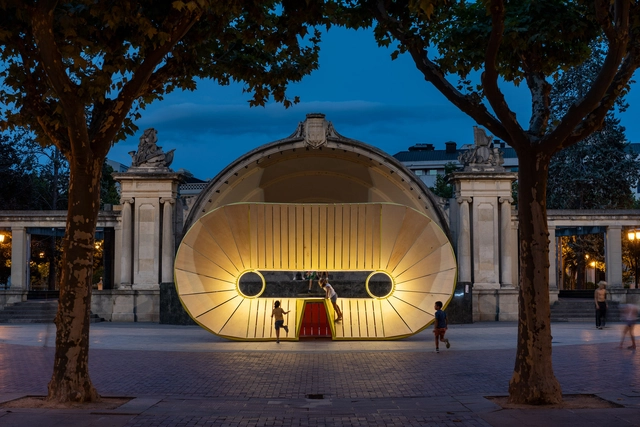
Every year, the Concéntrico festival in Logroño, Spain, brings together architects and designers from all over the world with the hope of employing creativity to create a better city. During this year's event, a few overarching themes could be observed as critical points of interest for the participating architects and designers. Many urban installations hoped to help citizens rediscover places of interest in their city and beyond, while others challenged the often-fixed ideas of what a home can and should look and function. Many designers saw opportunities in the concept of unstructured play, as the exploratory activity can activate unused public spaces and engage people of all ages.
Since 2015, the Concéntrico festival has presented 91 installations and pavilions during its seven editions. The festival is primarily known for bringing together emerging architects and designers who are given the freedom to experiment with new fields of environmental design. The festival is organized by the Cultural Foundation of the Architects of La Rioja together with Javier Peña Ibáñez, promoter of the initiative, in collaboration with the Logroño City Council, the Government of La Rioja, Garnica and Bodegas LAN, and 30 other supporting institutions.
"Concéntrico wants to achieve a better city", says Javier Peña as he inaugurates the International Festival of Architecture and Design of Logroño in Spain. An event that since its first edition in 2015 has proposed rediscovering the spaces of interest in the historic center, reflecting on the urban environment through different proposals for installations and ephemeral exhibitions. This year, it celebrates its eighth meeting from the 1st to the 6th of September.
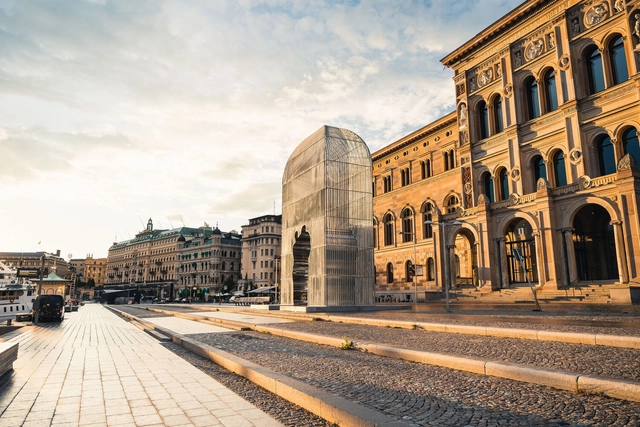
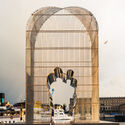
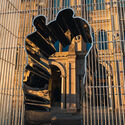
Chinese artist and activist Ai Weiwei unveiled the Arch, a cage-like sculpture in front of the National Museum of Stockholm. The 12-meter-tall stainless steel structure features at its center silhouettes of two people holding one another, appearing to break through the steel bars of the cage. The artwork was created to symbolize refugee stories and is seen as an ode to freedom. The sculpture is installed outside Nationalmuseum national gallery on the Blasienholmen peninsula in Stockholm’s archipelago. It will remain there for one year, after which, it will be moved to a yet undisclosed location in the city.
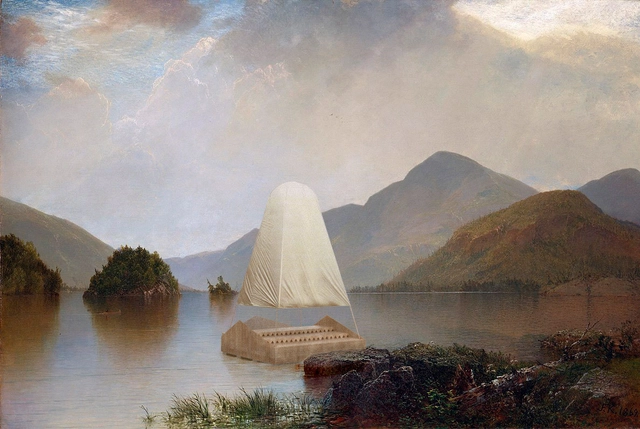
First Place - Federico Fiorino. Image Courtesy of The Outsider magazine and the City Municipality of Maribor
The Outsider magazine and the City Municipality of Maribor have announced the winners of the international competition “Floating Pavilion on the Drava River.” The purpose of the competition was to obtain an innovative design for a floating pavilion that would have two main functions: a space for smaller events during the Lent Festival and a space for contemplation by the river. The City Municipality of Maribor will invite the winning candidate to participate in the implementation of the project.
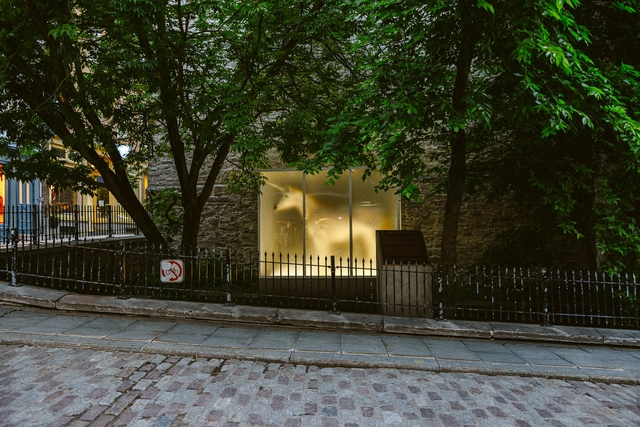
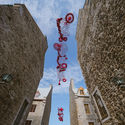
Initiated by EXMURO arts publics and the Ville de Québec, the 9th edition of Passages Insolites, or Unusual Passages, is open from June 25 to October 10, 2022, in the city of Québec. During this time, 17 works by 18 local, Canadian, and international artists will be placed along a 2.5 km circuit in the historic sectors of Place Royale, Petit Champlain, and the Old Port. This year’s edition creates spaces for artistic encounters and reflection on the environment, decolonization, and geopolitics. In the words of Vincent Roy, EXMURO’s executive and artistic director, this year’s programming will “help put Quebec City on the global art map as a venue for exhibiting art and promoting artists, both locally and internationally.”
Only a few days left until the annual inauguration of Milan Design Week 2022, one of the biggest international design events which features the Fuorisalone and Salone del Mobile. From the 7th till the 12th of June 2022, the streets of Milan will be hosting an array of architectural interventions and exhibitions curated by local and international designers as part of the Fuorisalone. And at the Fiera Milano | Rho, Salone del Mobile 2022, the awaited furniture and interior design event of the year, will be celebrating its 60th anniversary with themes and projects that reflect on “inclusive” design, fostering "autonomy, comfort, movement, usability, interaction and safety for all".
Syrian architects Marwa Al-Sabouni and Ghassan Jansiz bring an Arabic-inspired architectural element to the seafront of Hove as part of this year’s Brighton Festival. The temporary pavilion is built in the shape of the traditional arcade called The Riwaq. Conceived as a place that brings people together, the installation will host free cultural and community events, all organized as part of England’s largest annual multi-arts festival. Established in 1967, the Brighton Festival celebrates music, theatre, dance, art, film, literature, debate, and outdoor events in various locations across Brighton, Hove, and East Sussex.
Architecture in its broadest sense concerns itself with the uprooting of structures that are permanent, cementing themselves within the greater cultural context and history of its humanity, however, where do we place the creation of structures that are designed with the intention to be disassembled. How much meaning and value can these structures hold, knowing they were never designed to last, but to simply take up space for a moment?
Babyn Yar Synagogue by Manuel Herz, image by Iwan Baan. Image Courtesy of BYHMC
Babyn Yar, a ravine in the Ukrainian capital Kyiv, witnessed the killing of more than 33,000 Jewish men, women, and children, on September 29 and 30, 1941. The site of one of the largest single massacres perpetrated by occupying German troops against Jews during World War II, Babyn Yar became a symbol of the Holocaust by Bullets.
While the main tragic event took place in 1941, throughout the occupation, the site was used as a killing location by the German forces. In fact, it is reported that 70 to 100 000 people lost their lives in Babyn Yar. With no architecture to the tragedy and only a remaining “broken” landscape, people struggled with achieving memorialization and public recognition.
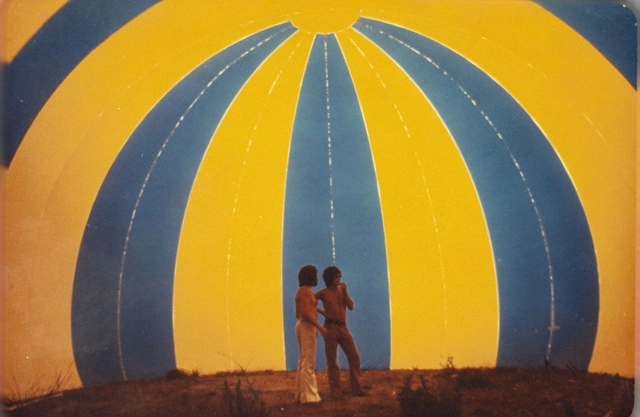
Instant City - ICSID 1971. Image Cortesía de OAB Office of Architecture in Barcelona
André Ricard and Daniel Giralt-Miracle, the member responsible for ADI/FAD, proposed the island of Ibiza as the venue for the ICSID Biennial Congress in 1971. That's how the story began. At that time, the so-called "Urquinaona Open Design Group" already existed in Barcelona. From the group, and with Carlos Ferrater at the head, they offered their help to the organization of the congress. They refused, as everything seemed to have already been organised. Together with Fernando Bendito, Ferrater asks about accommodation for the students. They still had nothing. They get the opportunity they were waiting for. Thousands of invitations are sent out to students all over the world. The number of replies was greater than the number of registered students.
In 1929, Ludwig Mies van der Rohe and Lilly Reich design the German National Pavilion for the 1929 Barcelona International Exhibition. The official reception for the exhibition was held there, presided over by King Alfonso XIII and the German authorities. From then on, the story is well known to everyone. A symbolic work of the Modern Movement, the Pavilion has been extensively studied and interpreted, and has inspired the work of several generations of architects.
Chilean architect Smiljan Radic has designed and installed a perfectly transparent dome for Alexander McQueen's Spring / Summer 2022 fashion show earlier this week in London.





















_2.jpg?1653224708&format=webp&width=640&height=580)
.jpg?1653224549 "© Jim Stephenson")
.jpg?1653224741 "© Jim Stephenson")
.jpg?1653224579 "© Jim Stephenson")
.jpg?1653224564 "© Jim Stephenson")
_2.jpg?1653224708)