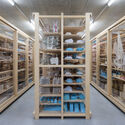
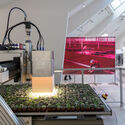
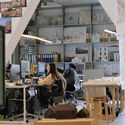
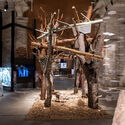
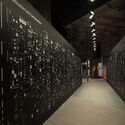
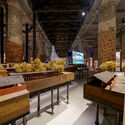
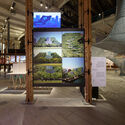
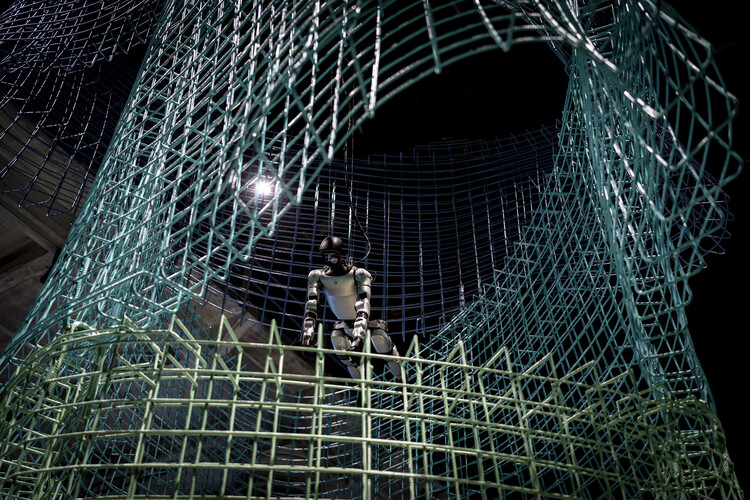
MVRDV and Delft University of Technology Release _Le Grand Puzzle_, an Urban Study of Marseille in the South of France. Image Courtesy of HÇläne Bossy, Manifesta
In architecture, most practices revolve around delivering projects to clients. Offices are shaped by deadlines, budgets, and clear briefs. While this structure produces buildings, it rarely leaves space for architects to question broader issues — about how we live, how cities are changing, or what the future demands of design. But alongside this production-focused system, a quieter movement has emerged: studios, collectives, and foundations that prioritize research, experimentation, and reflection. These are the architecture think tanks — spaces designed not to build immediately, but to think first.
The idea of a think tank is not new. Traditionally found in politics, economics, or science, think tanks bring together experts to study complex problems and propose solutions. In architecture, their rise reveals a tension at the heart of the discipline. If architecture is to remain socially and environmentally relevant, can it continue to rely only on client-driven practice? Or must it carve out space for slower, deeper inquiry?
Health has become a central concern in architecture, planning, and design, driven by a growing awareness of how the built environment influences physical, mental, social, and environmental well-being. In 2025, this awareness moved beyond specialized building types or performance metrics and became central to architectural decision-making, informing how spaces are conceived, built, and inhabited across diverse contexts. Architects are no longer treating health as an external requirement but as an integral condition of everyday life.
Videos
Second Prize Winner: Branch. Image Courtesy of Buildner
Buildner has announced the results of the Howard Waterfall Retreat architecture competition, an international design challenge developed in close collaboration with the Howard Family Trust. The competition invited architects and designers to propose a multi-generational family retreat set within a privately owned, forested landscape in Northwestern Pennsylvania, centered on the dramatic presence of Howard Falls and the surrounding gorge.
Rather than prescribing a singular architectural solution, the brief emphasized a careful dialogue between architecture and nature. Participants were asked to consider how a retreat could balance shared and private living, respond to steep topography and water systems, and integrate sustainably within a sensitive ecological setting. The project also called for an interpretation of family legacy, encouraging designers to acknowledge the history of the site and the original summer cottage while imagining a retreat capable of evolving across generations.
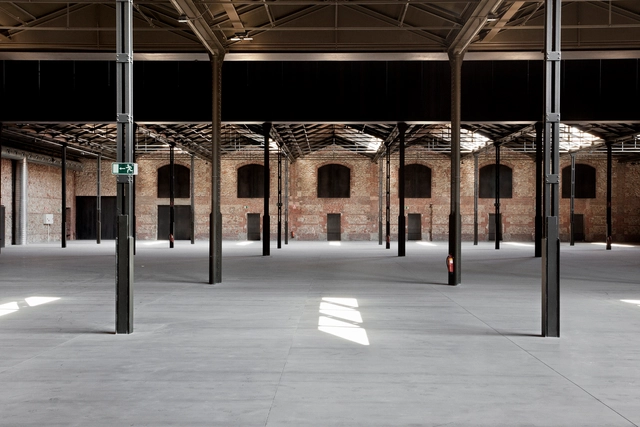
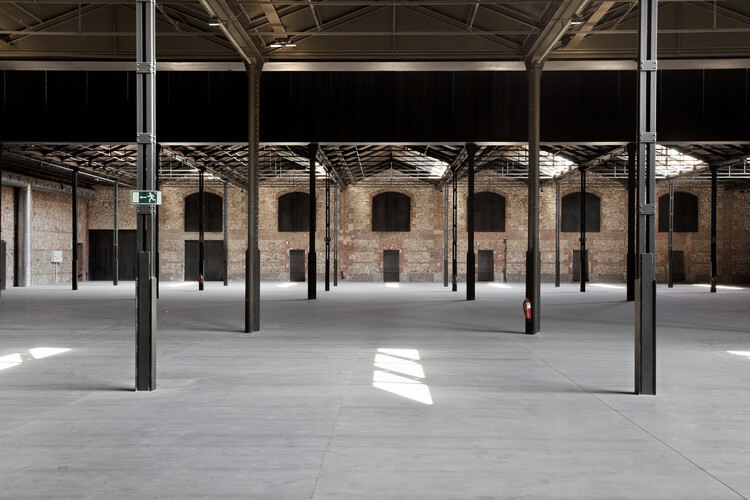
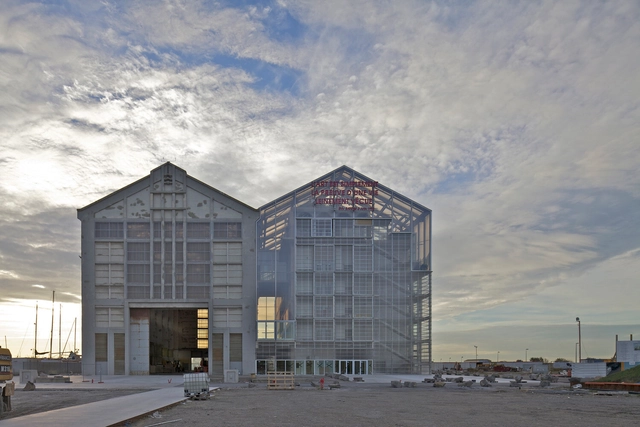
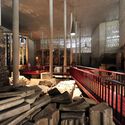
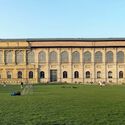
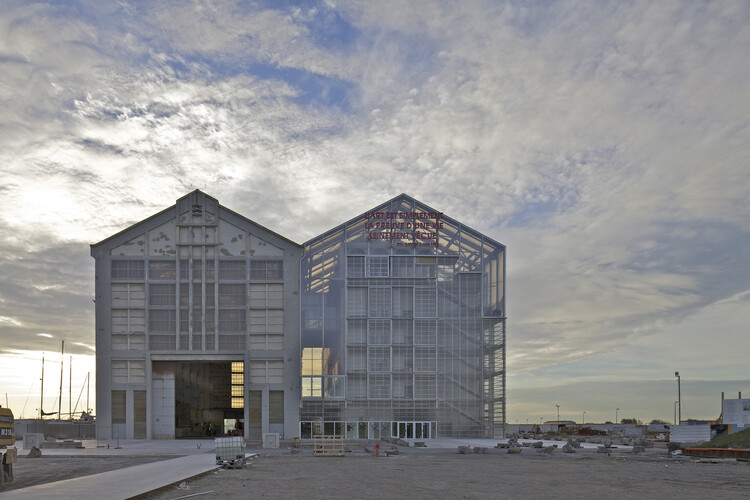
In cities across the world, the relics of industrial production have become the laboratories of a new urban condition. Warehouses, power plants, and shipyards, once symbols of labor and progress, now stand as vast empty shells, waiting to be reimagined. Rather than erasing these structures, architects are finding creative ways to adapt them to contemporary needs, transforming spaces of manufacture into spaces of culture, education, and community life.
This shift reflects a broader change in architectural priorities: building less and reusing more. The practice of adaptive reuse responds simultaneously to environmental urgency and to the need for cultural continuity in urban environments.
Across Europe and beyond, architects are confronting a turning point. As rising emissions targets collide with shrinking material supplies and the growing urgency of climate commitments, the built environment is being forced into a deeper reckoning with how it consumes, circulates, and discards resources. What was once considered waste is now revealing itself as a dormant architectural archive, an urban ecosystem of materials waiting to be reclaimed, revalued, or reimagined. Within this shift, architects are beginning to play a radically different role. Not only as designers of buildings, but also as orchestrators of the flows that sustain them.
This emerging mindset is reshaping the foundations of practice. Instead of depending on long, extractive supply chains, designers are beginning to build their own closed-loop networks, establishing material banks, negotiating deconstruction protocols, and participating in new forms of urban mining.
In a world facing ecological exhaustion and spatial saturation, the act of building has come to represent both creation and consumption. For decades, architectural progress was measured by the new: new materials, new technologies, new monuments of ambition. Yet today, the discipline is increasingly shaped by another form of intelligence, one that values what already exists. Architects are learning that doing less can mean designing more, and this shift marks the emergence of what might be called an architecture of restraint: a practice defined by care, maintenance, and the deliberate choice not to build.
The principle recognizes that the most sustainable building is often the one that already stands, and that transformation can occur through preservation, repair, or even absence. Choosing not to build becomes a political and creative act, a response to the material limits of the planet and to the ethical limits of endless growth. That Architecture moves beyond the production of new forms to embrace continuity, extending the life of structures, materials, and memories that already inhabit the world.
Cities bring together the best and worst of the human condition. They concentrate opportunities for work, social networks, and cultural production, but they also expose deep social inequalities. Among the many forms of urban exclusion are limited access to transportation, housing, leisure, or safety issues. One form that is rarely discussed is thermal inequality. In lower-income neighborhoods, where there are fewer trees, parks, and permeable surfaces, heat accumulates and thermal discomfort dominates, resulting in higher energy consumption and health risks. As concern about the climate crisis grows, this discussion becomes more urgent: extreme heat is no longer just a climatic phenomenon but also a spatial expression of inequality.
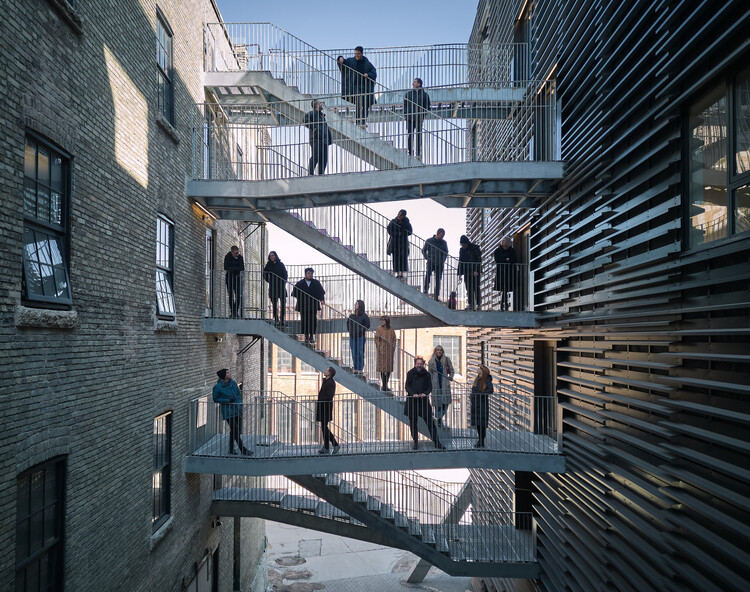
Founded in Winnipeg, Manitoba, in 2007 by Johanna Hurme and Sasa Radulovic, and shortly afterward joined by its third partner, Colin Neufeld, 5468796 Architecture was established as an architecture firm whose early work explored the current state of housing in North America. The Canadian studio operates as a collaborative group of approximately 20 designers, where they prioritize the collective value of ideas over individual authorship.
Jurong Lake Gardens is one of Singapore's newest national gardens, a 90-hectare urban oasis for the community. Elevate’s PondGard EPDM membrane was used to waterproof the pond. Image Courtesy of Holcim
The future of urban planning and architecture is promising if the world, collectively, looks beyond the concept of mere sustainability and instead embraces a nature-positive approach. As global population growth drives rapid urbanization—requiring humanity to build the equivalent of a city the size of Madrid every week for decades to come—the construction sector faces a defining challenge: how to build durable, energy-efficient, and resilient urban environments in harmony with natural ecosystems.
As architecture moves beyond human-centered design, new practices are rethinking coexistence as an ethical and ecological framework. From political infrastructures to habitats, these approaches invite us to imagine architecture as a shared living system.
Modern architecture has long been written through an anthropocentric lens, placing the human at its center and rendering other species invisible. Yet this paradigm continues to shift, as architects and researchers redefine the role of design in more-than-human worlds. Studios such as Office for Political Innovation, Studio Ossidiana, and Husos Architects are questioning human-centered narratives and reframing design as a shared practice between species. In this context, architecture is no longer a tool of control but a medium for coexistence, a discipline that mediates between species, environments, and cultures.
The history of the Olympic Games, while marked by athletic achievement, is consistently contrasted by infrastructure challenges. Across host cities, from Athens to Rio and Beijing, similar issues arise: significant cost overruns and the complex issue of legacy. The big question is: What is the best viable long-term use for purpose-built sport venues? Montreal's 1976 Games shared this fate after building an Olympic Park that faced heavy criticism for cost overruns and debt from specialized construction. Post-Games, venues like the Montreal Velodrome risked becoming a financial burden. However, the city demonstrated a proactive response by proposing the transformation of the building into a thriving civic asset that now stands as an internationally recognized example of successful Olympic venue repurposing.
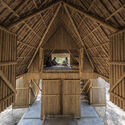
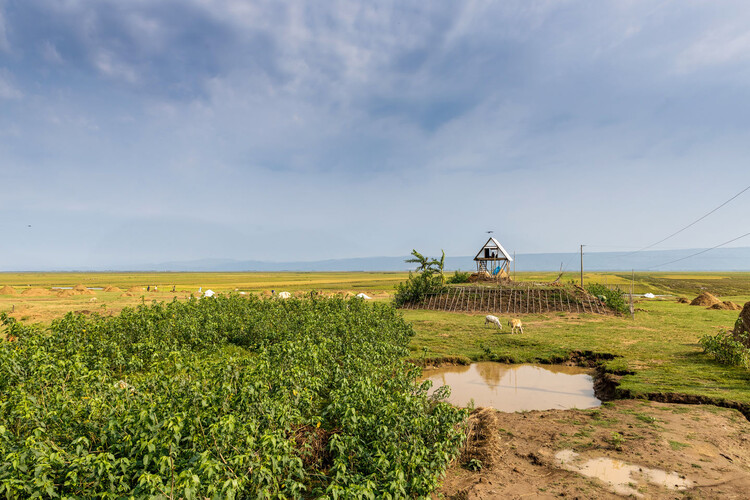
In the low-lying deltas of Bangladesh, water defines both life and loss. Every year, millions are forced to rebuild after floods wash away their homes, crops, and livelihoods. In these precarious territories, the act of building has become an act of resilience. It is here that Khudi Bari emerges as a modest yet radical proposal. Designed by Marina Tabassum Architects, the project provides a lightweight, modular, and affordable dwelling for communities displaced by climate change. Recognized as one of the winners of the 2025 Aga Khan Award for Architecture, it represents a form of architecture that empowers rather than imposes.
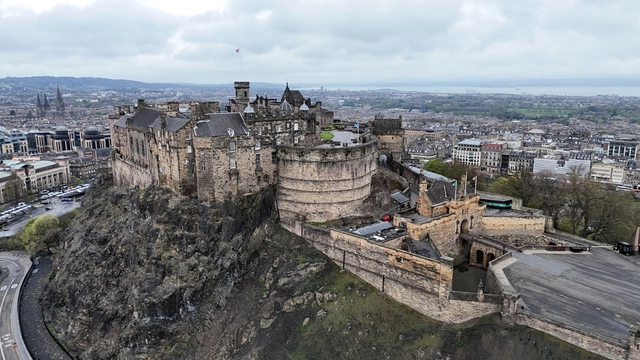
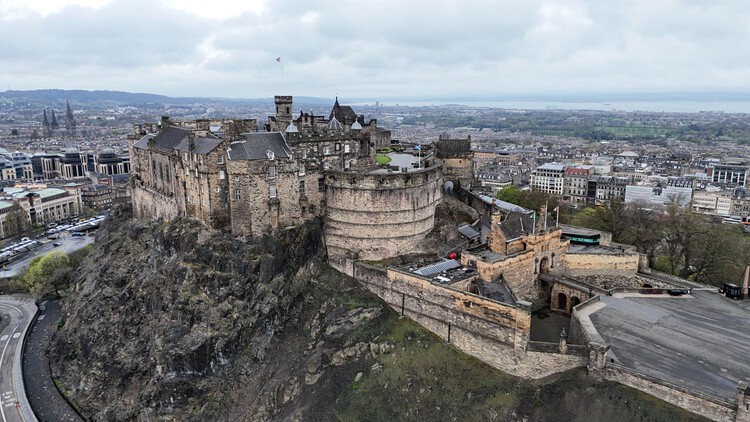
Edinburgh Castle in Scotland’s Capital. Image by 瑞丽江的河水, via Wikimedia Commons (CC BY-SA 4.0)
Edinburgh, Scotland's capital, has long been recognized for its rich cultural history and intricate urban fabric. The city thrives within its museums, tenement housing, and shops nestled in Georgian buildings. In 2022, Time Out ranked Edinburgh as the world's best city, citing its efficiency across community building and urban systems such as public transport. However, as climate change makes its effects progressively visible at an urban level, the city inevitably runs into a pressing dilemma: how to sustain this quality of life in increasingly difficult conditions.
The journey toward this balance unfolds through several interconnected strategies, such as retrofitting, adaptive reuse, circular design, and community collaboration, each contributing to Edinburgh's evolving vision of a sustainable urban future.
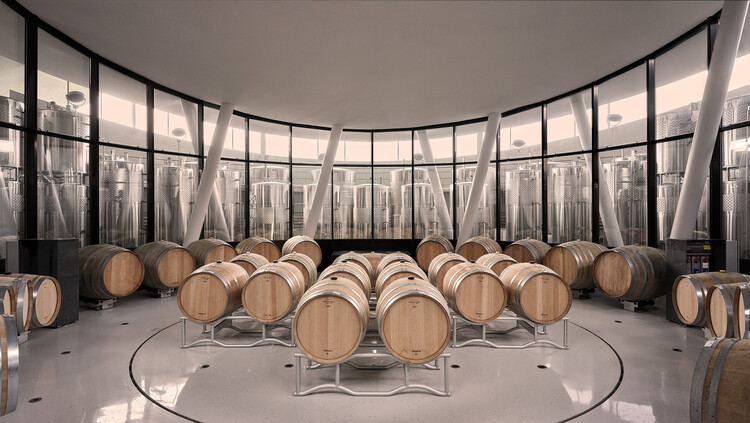
Wine production has long been tied to place, climate, and culture, and in recent decades, architecture has become a central part of this relationship. Wineries are no longer understood only as functional facilities for fermentation, storage, and distribution, but also as spaces where landscape, materiality, and visitor experience intersect. From subterranean cellars hidden beneath fields to sculptural landmarks rising in rural territories, these buildings shape the identity of winemaking regions while offering visitors a carefully choreographed encounter with the process of production.
At the intersection of agriculture, tourism, and culture, wineries present architects with unique opportunities to merge technical requirements with a spatial narrative. They must respond to environmental conditions, manage temperature and humidity with precision, and integrate with delicate ecosystems, while also providing spaces for tasting, gathering, and celebration. As a result, the typology has given rise to a wide range of architectural solutions. Some are rooted in tradition and local craft, others are exploring advanced technologies and contemporary forms.
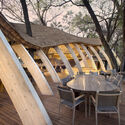
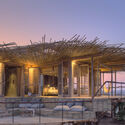
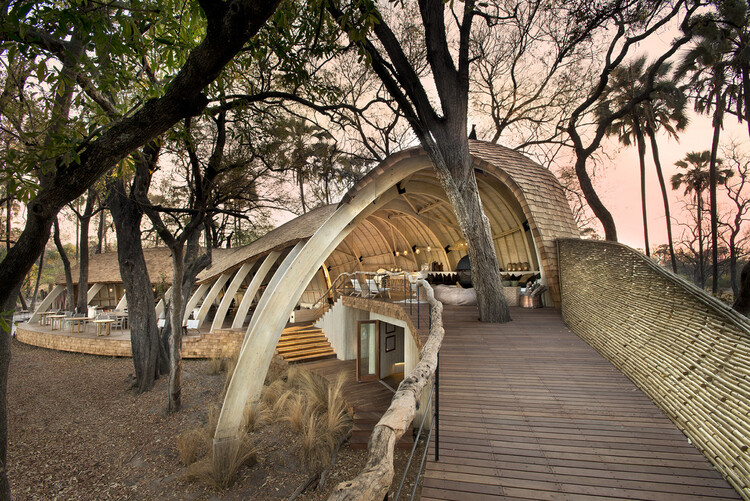
Sandibe Okavango Safari Lodge / Nicholas Plewman Architects in Association with Michaelis Boyd Associates
In Eastern and Southern Africa, safari lodges attract tourists from around the world wishing to witness the landscapes and fauna of the natural world. Usually situated in national parks and game reserves, their remote locations make for costly journeys and are therefore suitable for luxury stays. Often overlooked as an architectural typology, many lodges risk falling into the trap of being contextually insensitive or crudely mimicking vernacular building methods, resulting in pastiche. On the other hand, the safari lodge sits at the intersection of the man-made and natural worlds, bringing together rural dwellers and townfolk, wealth and poverty, wildlife and humans. Thus, it can be an opportunity to design with the highest social and environmental responsibility.