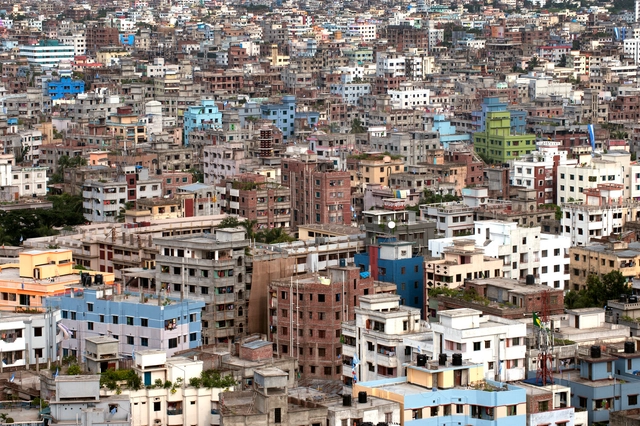
With millions of residents flocking to metropolitans each year, South Asia is witnessing staggering levels of urban development. Growth brings economic prosperity and ecological strain as concrete jungles replace natural habitats. The region, home to countries such as India, Pakistan, Bangladesh, Sri Lanka, Bhutan, the Maldives, and Nepal, is faced with addressing contextual challenges when it comes to balancing urbanization with environmental sustainability. These negotiations are fairly nuanced, with a need to understand the economic, social, and political scenarios systematically in each country.
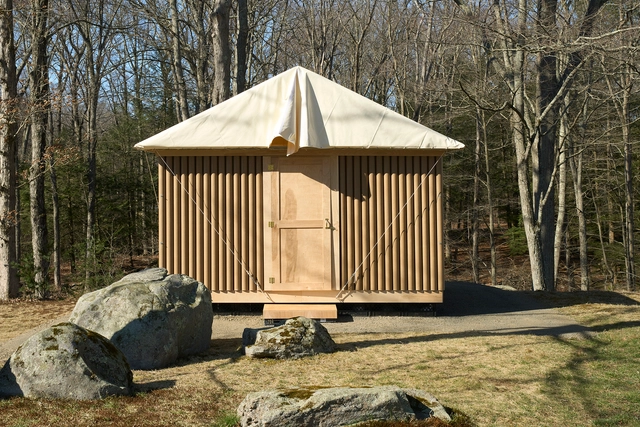
The concept of low-tech architecture recognizes the impact of carbon-intensive technologies and building practices and proposes an alternative: a rediscovery of practical, rational, locally adapted solutions that count on smart design strategies instead of energy-intensive devices to ensure a safe, comfortable living environment. Far from being a regressive approach, the term remains open to innovations but seeks to rebalance the industry's reliance on mechanization. It thus favors an architecture of fewer components, minimized dependence on high-tech solutions, and a preference for low-embodied carbon materials.
This article is the winning entry of the Epistle Writing Prize 2024, an annual competition dedicated to recognizing outstanding writing on design, architecture, and the environment.
We might be in the age of the digital cloud - however celestial or ethereal it may appear to be - but it is not only incontrovertibly material but also a powerful ecological force. In present times, data centers are mammoth powerhouses of modern information, communication, and technology industries with giant servers that store and process data. While their proliferation is in a sense, a consequence of our consumption patterns, and as the global demand for the digital grows, so does the data center footprint.
In 2024, a diverse range of topics have been comprehensively explored, some focusing specifically on architectural details and construction systems. These articles provide valuable insights into architecture's often-overlooked technical and functional aspects. By shifting attention away from aesthetics, materials, and spatial massing, they reveal the importance of intricate details and the construction systems underpinning contemporary projects' larger architectural vision.
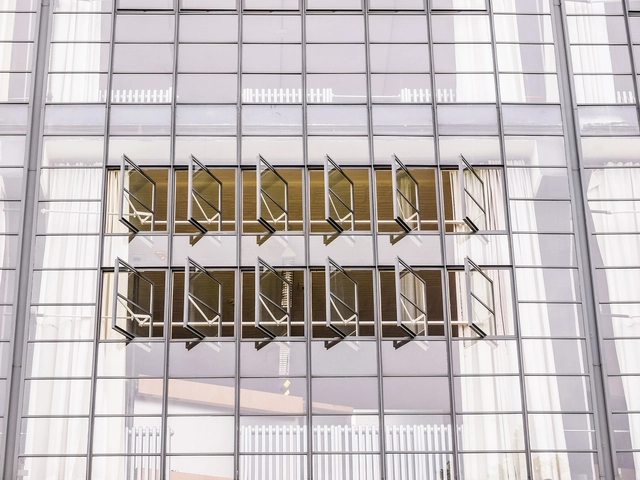
Executing these seemingly small elements is crucial in shaping how architecture is perceived and experienced. Specifying and drawing a thoughtfully designed detail is not dissimilar to determining the correct screw in building a car—its thread count, material, and length—can dramatically influence not only the success of an architectural design but also the quality of the human experience it fosters. Such details, while often dismissed as mundane and may not be the most recognizable features of stellar projects, profoundly impact the cohesiveness and functionality of architectural projects.
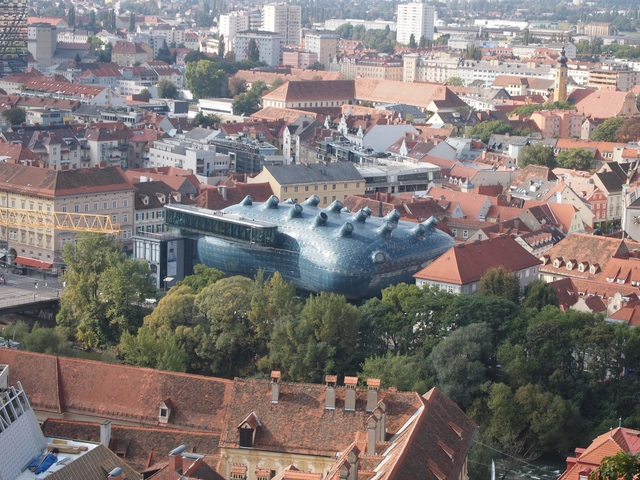
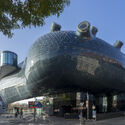
Situated along the River Mur in the Lend district, the Kunsthaus challenges traditional architectural norms with its organic, free-flowing design. Rejecting orthogonal geometry, the museum seamlessly merges art, architecture, and public interaction, redefining the concept of a cultural institution. Its impact extends beyond aesthetics, sparking urban revitalization in a once-overlooked neighborhood, and bringing cultural vibrancy and economic activity.
Lydia Kallipoliti is a recognized architect, author, and educator whose pioneering research has transformed the way architecture engages with the pressing challenges of sustainability, technology, and environmental politics. As an Associate Professor at Columbia University's Graduate School of Architecture, Planning, and Preservation (GSAPP), Kallipoliti's approach to architectural education encourages students to confront critical issues such as waste, reuse, and closed-loop systems. Her pedagogical philosophy empowers students to see design not only as an aesthetic or functional pursuit but as a powerful tool for addressing global ecological crises, urging them to think systemically and creatively about the future of the built environment.
In addition to her role in academia, Kallipoliti has authored influential works such as The Architecture of Closed Worlds and Histories of Ecological Design: an Unfinished Cyclopedia, which delve deeply into the relationship between architecture and environmental politics. Her research and writings have sparked discourse on methods for architects to reconsider traditional design paradigms and embrace sustainability as a core tenet of architectural practice.
Contemporary challenges and technological developments inevitably trigger changes in how we design and build our cities. The traditional construction industry suffers from inefficiencies that render methods slow, expensive, or harmful to the environment. Excessive material waste and lengthy build times pose significant challenges to built environment professionals, calling attention to the complexity and rigidity of conventional construction processes. The optimization of time and physical resources in construction calls for innovative methods that enhance efficiency.
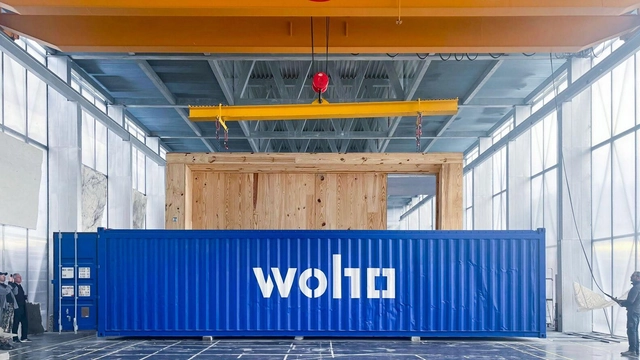
In an industry where innovation often moves with the eagerness of setting mortar, WoHo Systems, one of ArchDaily's 2024 Best New Practices, has emerged as a disruptor aiming to address global sustainability and housing affordability issues. Born from the experimental roots of Ensamble Studio, this architectural startup wields prefabrication and sustainability as core pillars to redefine construction norms and deliver adaptable building solutions. Their solutions aim to speed up and simplify the construction process, as well as reduce costs and minimize environmental impact.
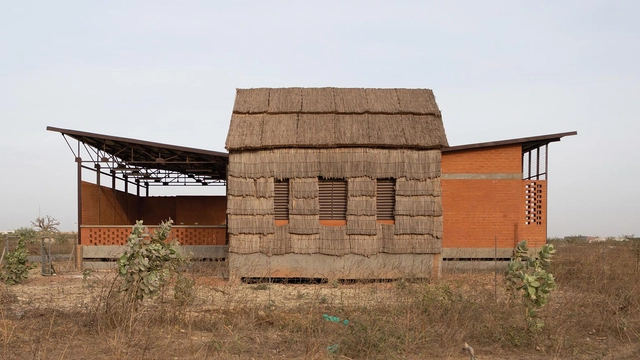
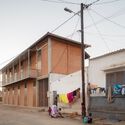
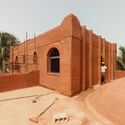
Founded by Senegalese architect Nzinga Mboup and French architect Nicolas Rondet, Worofila is a studio dedicated to bioclimatic and ecological architecture. Based in Dakar, Senegal, the firm explores the potential of vernacular materials like earth bricks and typha, applying modern techniques to create effective construction solutions. Their work addresses key issues of the environment, sustainability, and urbanization, merging traditional materials with innovative practices.
In this interview, Nzinga and Nicolas share their vision for a distinctly African modernity that integrates contemporary methods with traditional knowledge and resources. They advocate for a development approach that not only meets immediate needs but also empowers communities and fosters meaningful, long-term progress. Their insights provide a compelling perspective on how architecture can drive a more sustainable and contextually relevant future for African cities.
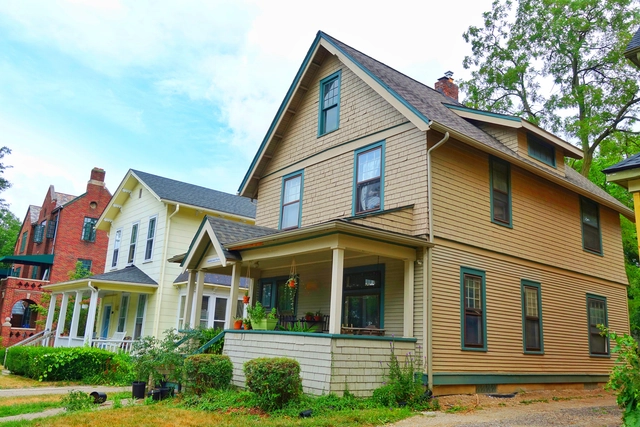
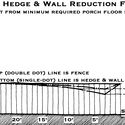
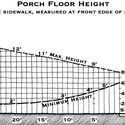
I was inspired to write this essay by a fascinating post on the social dynamic of porches by Patrick Deneen entitled A Republic of Front Porches. Sustainable places must be acccessible by a variety of means, especially walking. Neighborhoods where people walk to numerous destinations are more likely to be securable, because people tend to know more of their neighbors and therefore are likelier to know when a stranger is in the area. Walkability is essential to a serviceable place, because people won’t walk to those services as often if the pedestrian experience is bad. So walking is a fundamental aspect of a place’s sustainability. Porches can serve a crucial role in the walkability of residential streets in a neighborhood, and therefore in the ultimate sustainability of the neighborhood.
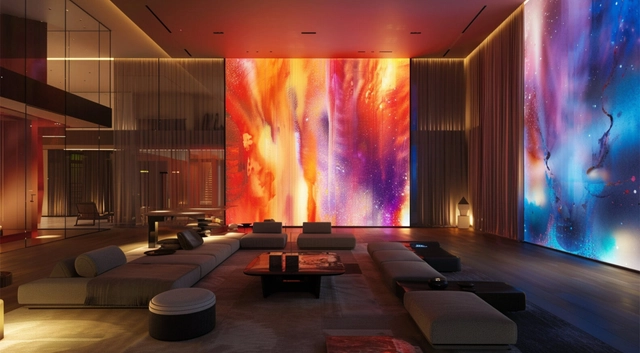
Walls have long been more than mere structural elements; they are canvases that narrate stories, reflecting desires for nature, spirituality, or the pursuit of tranquility and stimulation. With advancements in addressable LED pixels, walls have evolved into immersive digital surfaces capable of displaying any image in large format, adapting to the needs of the moment.
However, while universities continue to train architects and interior designers to create static buildings, the art of meaningful storytelling through digital screens—especially those with dynamics—remains largely unexplored in academic curricula.
Selected by ArchDaily as one of the Best New Practices of 2024, IDK is injecting a fresh and dynamic approach to building communities with quality architecture. Mike Lim, James Pockson and Roddy Bow met while studying for their master's degree in Architecture at the Royal College of Art (RCA and founded their architecture practice, IDK in London in 2019. The three, driven by a strong mission, to help communities and progressive institutions, organizations and cultures thrive – have been researching and delivering community-oriented projects that embody experimental building with a holistic approach. Their work focuses on nurturing social development, with an emphasis on ecological awareness, local material use, smart resource and budget management, respectful refurbishments, and designing only what is necessary without "over-building."
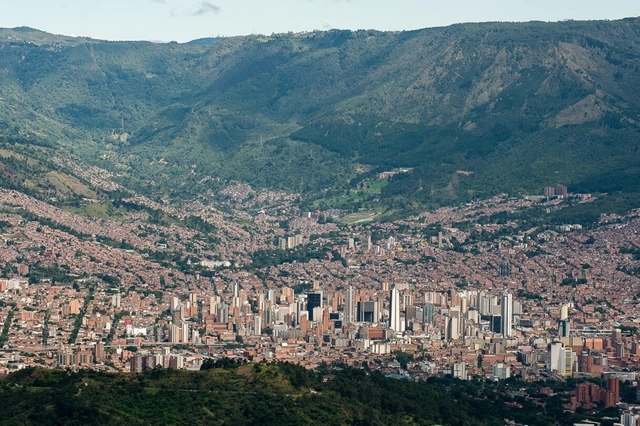
CityMakers, The Global Community of Architects Who Learn from Exemplary Cities and Their Makers, is working with ArchDaily to publish a series of articles about Barcelona, Medellin, and Rotterdam. The authors are the architects, urban planners, and/or strategists of the projects that have transformed these three cities, which are visited in the "Schools of Cities" and studied in the "Documentary-Courses" made by CityMakers. On this occasion, Alejandro Restrepo Montoya, Director of Urban Planning and Architecture of Medellín, presents his article "Environmental Urbanism and Urban Geographies, Medellín 2024-2027"
Medellín's urban plan focuses on answering how urban planning can improve people's quality of life. By developing its proposal, the city is promoting the social benefits that these urban planning practices can generate. Medellín emphasizes the use of natural and environmental conditions, such as valleys, streams, rivers, mountains, and hills, to develop urban planning criteria that address social needs.
The relentless drumbeat of climate disasters in the headlines—scorching heat waves, raging wildfires, historic floods, crippling droughts—are no longer a series of anomalies. As a grim new reality across much of the globe, these extreme weather events, driven by human-induced climate change, are becoming more frequent and severe. In short, they are clearly symptomatic of a broader and more pervasive environmental crisis.
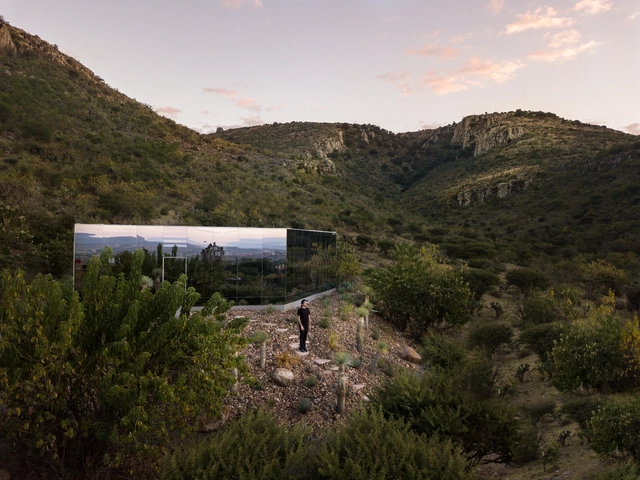
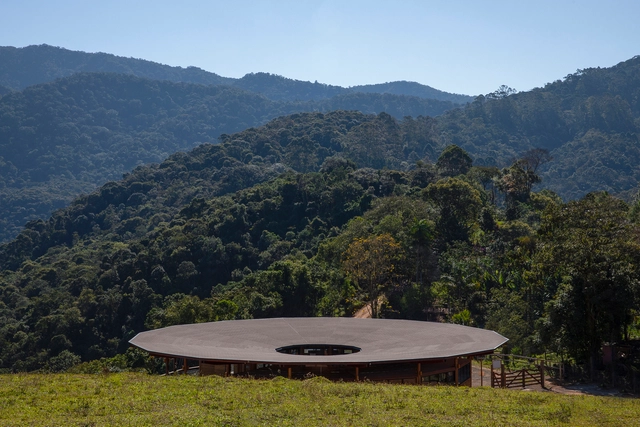
Anyone who lives in a big city may have dreamed of moving elsewhere and living isolated, in a house among the trees or on a deserted beach. During the pandemic and the endless months of quarantine, many more may have had this same idea. As romantic and seductive as this may seem, however, living deep in nature comes with some important practical challenges. Rarely would anyone give up the little comforts they are used to, like turning on a faucet or charging their cell phone. If the location is, in fact, remote, it may not have electricity, drinking water, gas, sewage, or solid waste collection. But there remain several possibilities for a life with comfort and without neighbors. What are the main solutions to enable this and how can an architectural project provide an off-the-grid life?
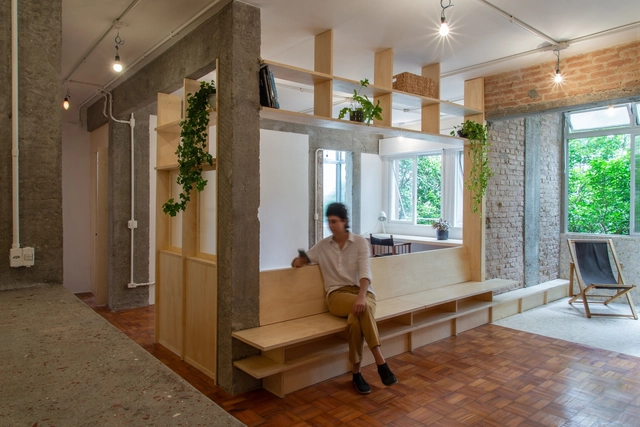
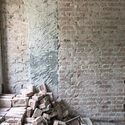
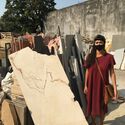
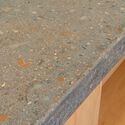
RUÍNA Arquitetura aims for greater socio-environmental awareness and the appreciation of materials while advocating for reuse as an alternative within the construction industry. In their practice, they explore new avenues for reclaimed materials, diminishing demolition waste and supplying construction materials with a reduced environmental footprint. In 2024, they were selected as part of ArchDaily’s 2024 Best New Practice for their unique attention to context, aiming to minimize its impact on the built environment through the effective reuse of materials and construction waste. Their participation in the 2023 Sharjah Architecture Triennale exemplifies how local ideas can achieve global recognition.
In June 2023, the planet experienced its hottest month on record. In Iran, the heat index reached a staggering 66.7 degrees Celsius, pushing the boundaries of human endurance. This alarming trend is not an anomaly. It is a stark reminder that temperatures will continue to rise as climate change intensifies.
Scientists are linking the rise to human-induced climate change and the El Niño phenomenon. Additionally, the natural warming of Pacific Ocean waters is being further intensified by global warming.
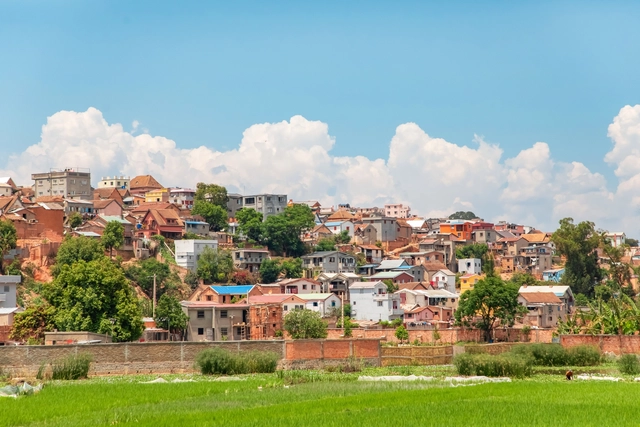
Madagascar is an island nation off the southeast coast of Africa that, despite its lush vegetation and unique flora and fauna, grapples with formidable environmental challenges, from rising sea levels to the excessive exploitation of natural resources. Joan Razafimaharo is an architect deeply involved in sustainability, climate change, and adaptation efforts in Madagascar and the broader Indian Ocean region. Razafimaharo is also one of only about sixty architects in the country, serving a population of 28 million.
Recently I spoke to her about environmental activism in the face of climate change, curbing the exploitation of natural resources, the role of architects in resource-scarce societies, and empowering women in isolated areas. The interview, originally conducted in French, has been translated and edited for length and clarity.
https://www.archdaily.com/1011140/how-madagascar-is-confronting-climate-changeMathias Agbo, Jr.