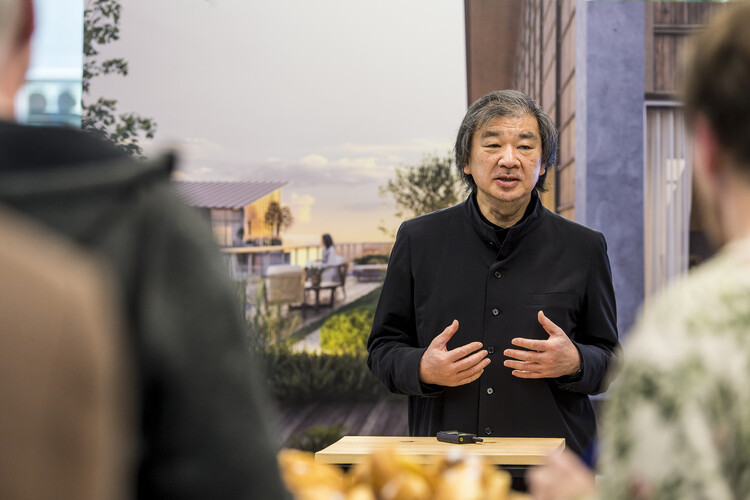
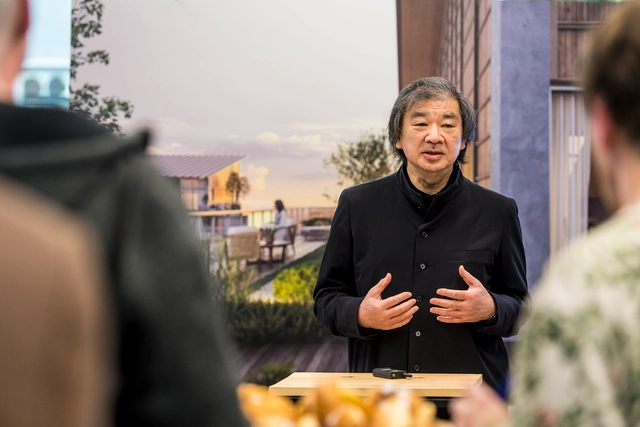
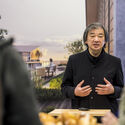
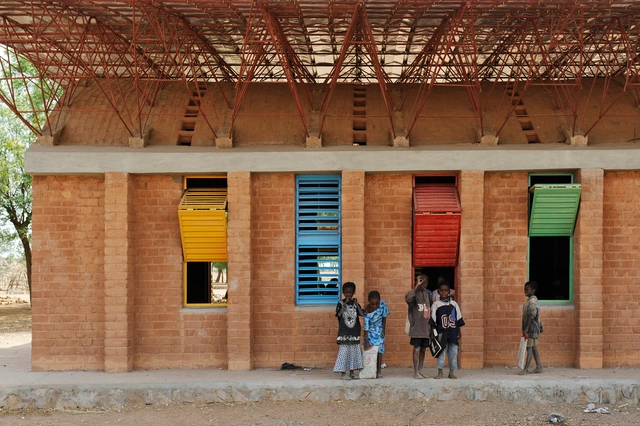
In a recent interview with Louisiana Channel, acclaimed Japanese architect Shigeru Ban shared his perspectives on architecture, his journey in the field, and his dedication to socially responsible design. Known for his innovative use of materials such as paper and timber, Ban has spent much of his career creating solutions for disaster-stricken communities and displaced populations around the world.
The concept of low-tech architecture recognizes the impact of carbon-intensive technologies and building practices and proposes an alternative: a rediscovery of practical, rational, locally adapted solutions that count on smart design strategies instead of energy-intensive devices to ensure a safe, comfortable living environment. Far from being a regressive approach, the term remains open to innovations but seeks to rebalance the industry's reliance on mechanization. It thus favors an architecture of fewer components, minimized dependence on high-tech solutions, and a preference for low-embodied carbon materials.
Japanese architect and humanitarian Shigeru Ban has been named the 35th Laureate of the Praemium Imperiale Award for Architecture. Established in 1988 by the Japan Art Association, the annual award seeks to recognize exceptional achievements in Painting, Sculpture, Architecture, Music, and Theatre/Film. Shigeru Ban's contributions to architecture have been significant, not only for the distinctive design aesthetics but also for the innovative use of materials, particularly in the context of emergency interventions and humanitarian work.
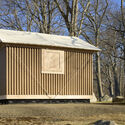
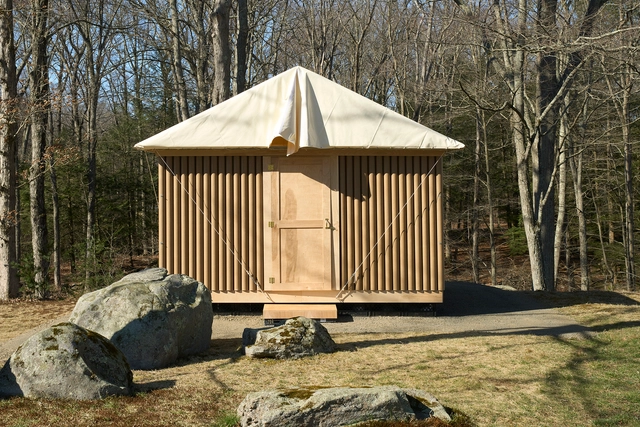
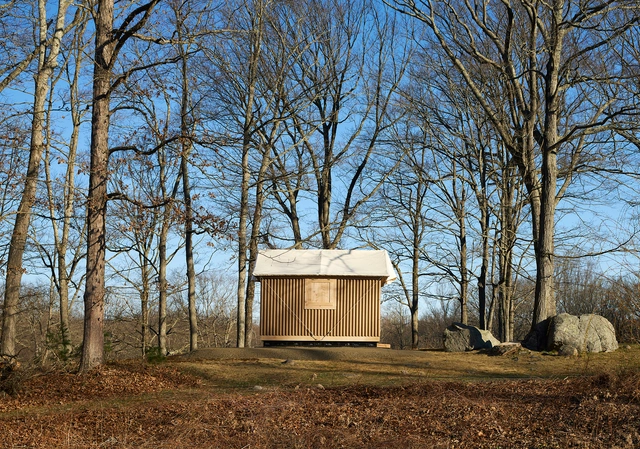
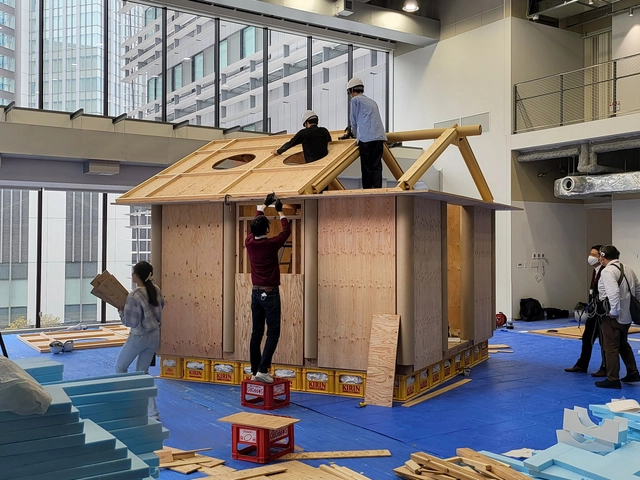
Shigeru Ban Architects, in collaboration with The Glass House and The Irwin S. Chanin School of Architecture of the Cooper Union, have just revealed “Shigeru Ban: The Paper Log House at The Glass House.” This collaborative installation opened on April 15th and is on display until December 15th, 2024, welcoming more than 13,000 annual visitors. This year, students from The Cooper Union actively participated in the making of this structure as part of the university’s Building Technology Course.
Chinese temples have stood for centuries, battered by wind and earthquakes, without a crack or timber out of place. They employ an ancient technique called “bracket set construction” that requires no nails or metal parts to connect wooden structural elements. Scandinavian stave churches are nearly as durable. Unsurprisingly, there are plenty of trees in Sweden and all over China.
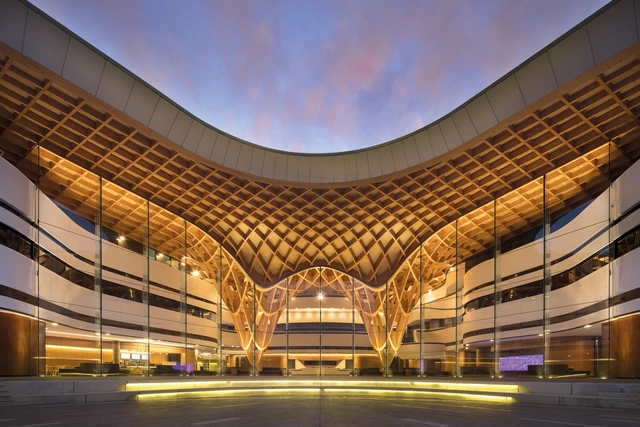
So what is with the hype about innovation in “mass timber” construction over the past few years? As Boyce Thompson argues in his thoughtful new book, Innovations in Mass Timber: Sequestering Carbon with Style in Commercial Buildings (Schiffer Publishing), this will be the next big thing in “green” tech for architects feeling guilty about their costly titanium skins and outsized carbon footprints. The color photos show some impressive buildings in places where the wood industry has always been healthy, such as the Pacific Northwest and Scandinavia. The Japanese build log cabins with imported material that might as well be gold.
Last week, Japanese architect and social advocate Riken Yamamoto was announced as the 2024 Pritzker Architecture Prize Laureate, becoming the 9th Japanese architect honored with the profession's most prestigious award. Throughout the 45-year history of the Pritzker Prize, Japan stands out as the nation with the highest number of laureates. While geography is not a criterion in the selection of the laureates, Japanese architecture consistently impresses with its interplay of light and shadow, the careful composition of spaces, soft transitions between interior and exterior, and attention to detail and materiality. An ingrained culture of building also celebrates diverse designs and encourages global dialogue and the exchange of ideas and best practices. Read on to rediscover the 9 Japanese Pritzker laureates and glimpse into their body of work.
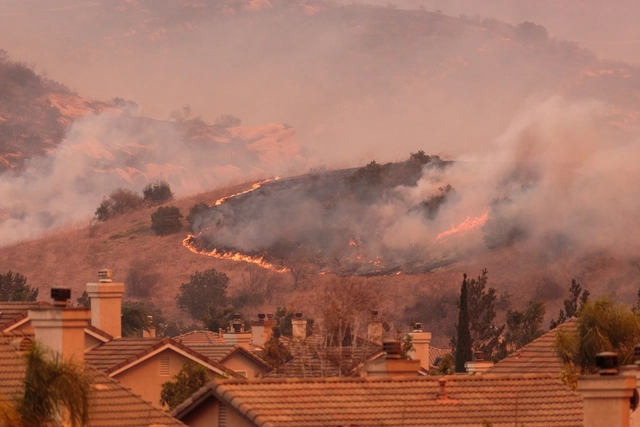
As the world grapples with the effects of climate change, natural disasters like flooding, and the spread of incontrollable wildfires are increasingly threatening cities and inhabitants. While architecture and urban planning cannot prevent these occurrences, they still possess strategies to minimize the damage associated with these events and help protect the citizens. Unfortunate events over the course of last year, like the earthquake that hit central Turkey and north-west Syria this February or the more recent earthquake in western Afghanistan, the flooding and dam failures in Libya, and the wildfires that devastated the city of Lahaina, Hawaii, demonstrate the urgency of implementing preventative and mitigation measures in addition to creating procedures for emergency intervention. This article explores the strategies and resources available to architects and urban planners to address these challenges in three types of natural disasters: flooding, wildfires, and earthquakes.
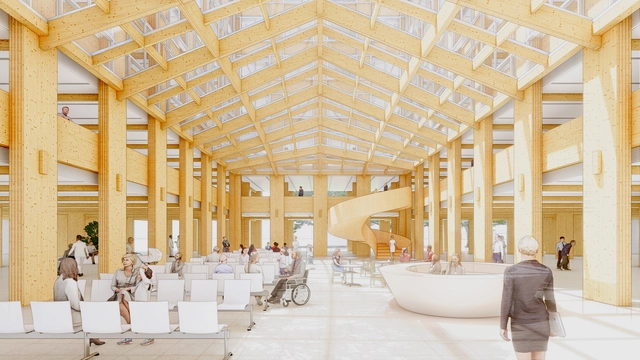
Lviv Hospital Proposal. Image Courtesy of Shigeru Ban
Shigeru Ban has announced the intention to collaborate with the municipality of Lviv to design an expansion of the Lviv hospital. As the largest hospital in Ukraine, this unit has witnessed an increase in the number of patients since the beginning of the war, leading to the need to increase the capacity of the institution. Shigeru Ban’s proposal uses cross-laminated wood and joints inspired by traditional wooden construction techniques to create a safe and welcoming environment for healing and recuperating.
Shigeru Ban Architects, in collaboration with Voluntary Architects’ Network, has developed an improved version of the temporary housing developed to help those affected by the recent Turkey-Syria earthquake. The new prototype represents an upgrade of the paper tube system deployed in northwestern Turkey after the 1999 earthquake. This new version takes into consideration matters of efficiency and the need to minimize construction time on site.
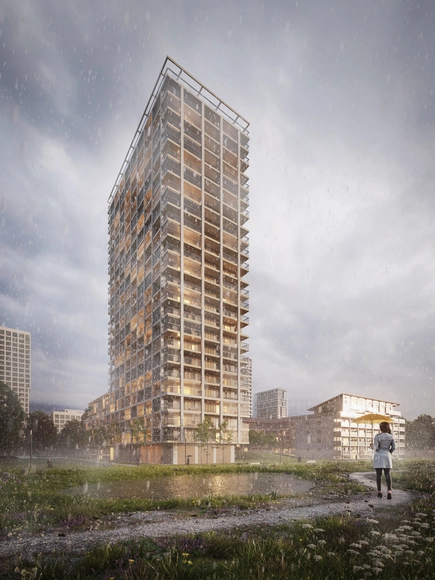
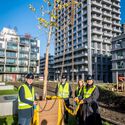
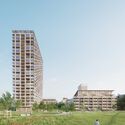
Shigeru Ban has just launched the office’s most recent project in Nieuw Zuid in Antwerp, Belgium. Named Ban, after its creator, and in collaboration with Bureau Bouwtechniek, the complex puts in place a 25-story residential tower and a separate building, creating a total of 295 residential units. During the breaking ground ceremony, the architect also inaugurated an exhibition of images highlighting his humanitarian work in conflict and disaster areas, in near proximity to the construction site.
Hard times bring people together. In recent years we have seen how collective work can be a driving force to help those affected by natural or man-made disasters. After a disaster or displacement, a safe physical environment is often essential. Therefore, the need for coordination becomes a key factor in assisting people in times of need.
Architects, as "Shelter Specialists", play an important role in creating safe and adequate environments, whether it is individual housing, public buildings, schools, or emergency tent camps. But as architect Diébédo Francis Kéré says, "When you have nothing and you want to convince your community to believe in an idea, it may happen that everybody starts working with you, but you need to keep fighting to convince them."
Finnish architect Juhani Pallasmaa once said that "architecture is essentially an extension of nature into the man-made realm, providing the ground for perception and the horizon of experiencing and understanding the world."
In the constant hustle and bustle of the modern surroundings, it is more than needed to take a step back and listen to the sounds of something as calmly powerful as nature. Moreover, listening to the beautiful harmonies created by birds chirping and sound waves can make our inner voice louder as well.
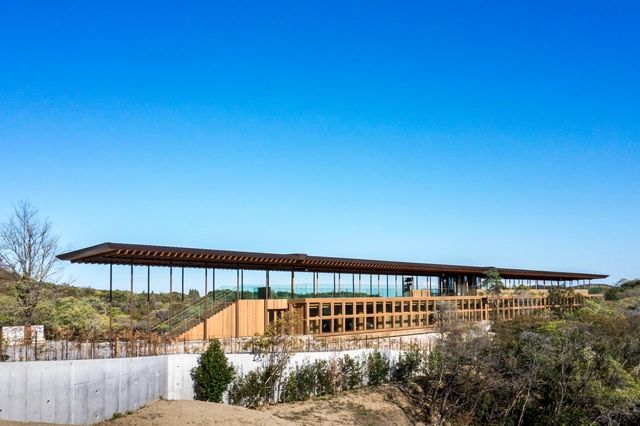
Shigeru Ban Architects designed a wellness retreat on Japan’s Awaji Island. The project features a bridge-like wooden structure suspended above the lush landscape, providing visitors with a zen experience. The Vierendeel timber girder allows for a 21-metre span and a significant cantilever on one end of the 90-metre long structure. The Zenbo Seinei retreat, which will focus on meditation and healthy food, is currently under construction and is set to open this spring.
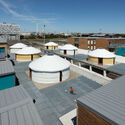
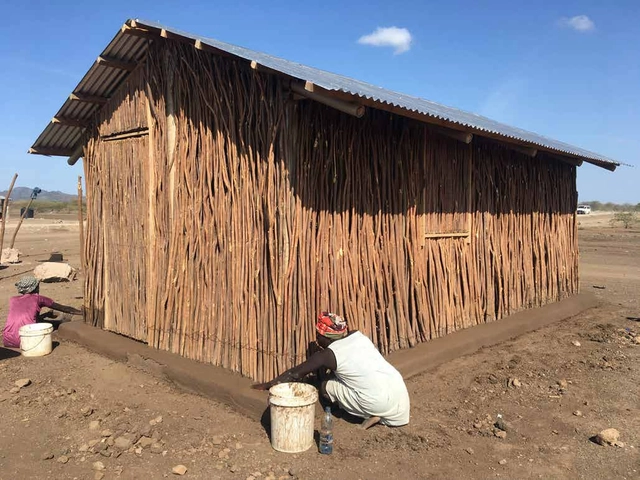
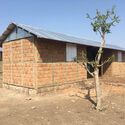
Since 2017, UN-Habitat, together with Shigeru Ban Architects, Philippe Monteil and the NGO Voluntary Architects' Network, developed several shelter typologies for a pilot neighborhood in Kalobeyei Settlement in Kenya. The Turkana Houses are meant to house South Sudanese and other refugees living in Northern Kenya who could not return to their original villages due to endless civil wars and conflicts. Unlike typical refugee shelters, these structures were meant to provide a home for long periods of displacement and the four typologies developed are informed by the extensive experience of Shigeru Ban Architects with disaster relief projects and the local building techniques of local people.