-
Architects: Duque Motta & AA, Gabriela Manzi, Rafael Hevia
- Year: 2013
-
Manufacturers: Arauco, Cbb ReadyMix, Cintac®, MK, Tupemesa



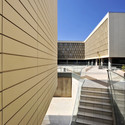
In January of this year, the latest work by Smiljan Radic, the Chilean architect chosen to design the next Serpentine Pavilion, opened to public acclaim. The Museum of Pre-Columbian Art (Museo de Arte Precolombino), located in Santiago de Chile, is a restoration project that managed to sensitively maintain an original colonial structure - all while increasing the space by about 70%.
Two days before the The Museum of Pre-Columbian Art opened, the Museum of Metropolitan Art (MOMA) in New York issued a statement that it would demolish the American Folk Art Museum (AFAM), designed by Tod Williams Billie Tsien Architects, in order to accomplish its envisioned expansion. Two weeks ago, preparations for demolition began.
Some background: MOMA had hired Diller Scofidio + Renfro a year earlier to design the expansion. The office asked for a period of six months to consider the possibilities of integrating the American Folk Art Museum into the design. After studying a vast array of options (unknown to the public) they were unable to accommodate MOMA’s shifting program needs with the AFAM building. They proposed a new circulation loop with additional gallery space and new program located where the AFAM is (was) located.
What appears here is not strictly a battle between an institution that wants to reflect the spirit of the time vs a building that is inherently specific to its place. It represents a lost design opportunity. What if the American Folk Art Museum had been considered an untouchable civic space in the city of New York, much like the The Museum of Pre-Columbian Art is for the city for Santiago? Then a whole new strategy for adaptive reuse would have emerged.
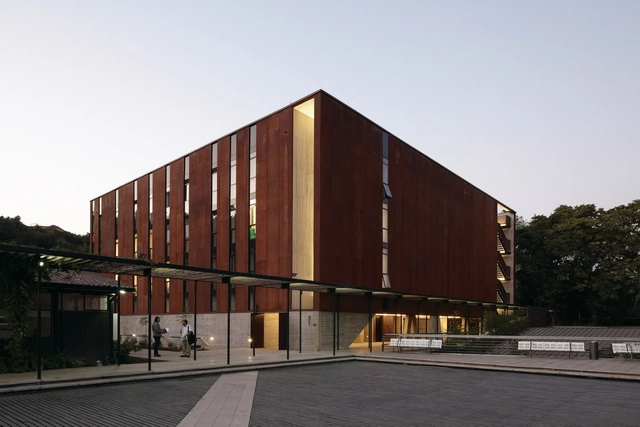
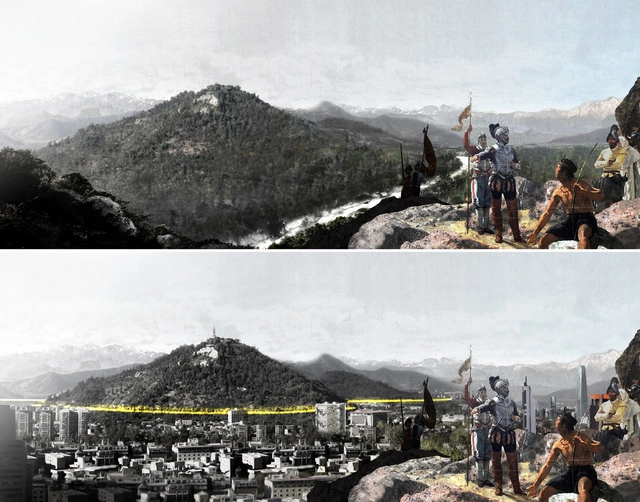
ELEMENTAL has given us details on a proposed 14.5 km pedestrian and bike path within Santiago, Chile that will run along the base of San Cristobal Hill and connect the city's many distinct communities. According to ELEMENTAL, the proposal - named "Metropolitan Promenade" - seeks to facilitate the use and quality of the city's public spaces.
The total project will cost about $16 million USD and will be constructed in two stages. The first is expected for March 2015 and will deal with 7.2 kilometers in the western sector of the park. The second stage, which should be ready in September 2015, will complete the following 7.3 kilometers in the eastern sector of the park.
Read the full architect's description, after the break.

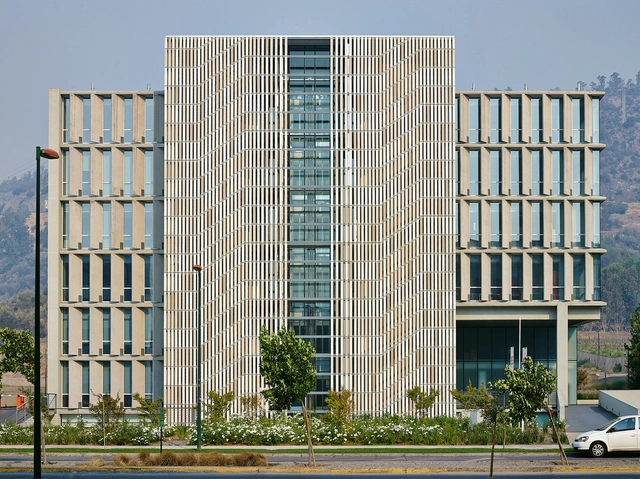





Smiljan Radic has been announced as the winner of the competition to design a landmark on San Cristobal Hill, in the heart of Santiago, Chile, that consolidates the hill's numerous antennas into a single infrastructure.
According to the Contest Director, Luis Eduardo L. Bresciani, the purpose of this competition was to generate an innovative structure of iconic character, an architectural work of outstanding quality that would differ from other towers in other cities and give an identity not just to the hill, but to the city of Santiago. The jury also took into account the landscape of the site, particularly the care with which the park would be treated, as well as the tower's relationship with the statue of the Virgin and the hilltop in general. Finally, the functionality of the infrastructure, which should act as both a telecommunications tower as well as a public space with panoramic views, was considered. See the six shortlisted proposals, after the break.





































































.jpg?1391540650 "Segundo Lugar: Tomás Folch y equipo. Image")