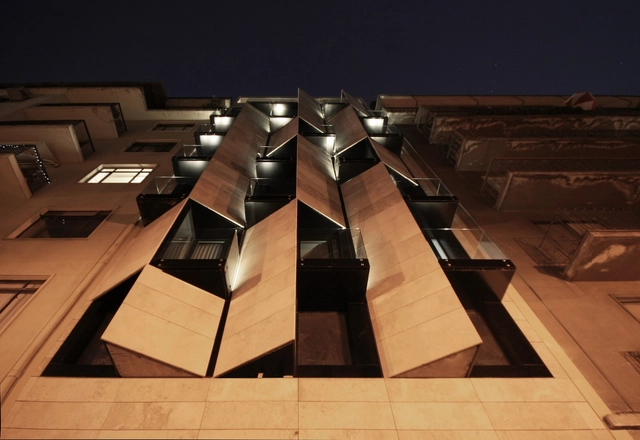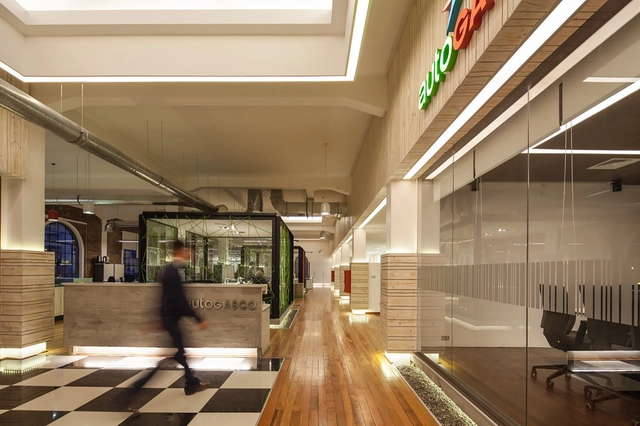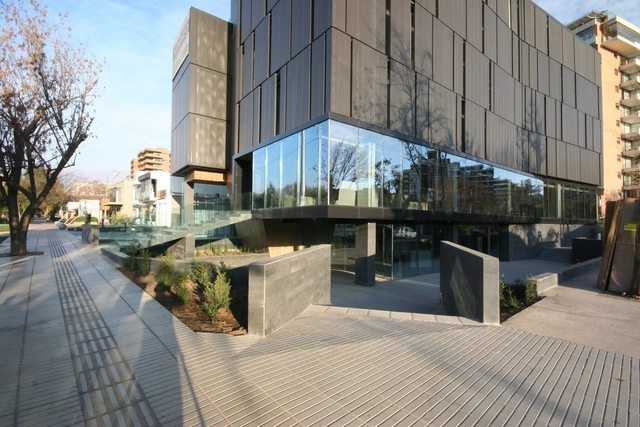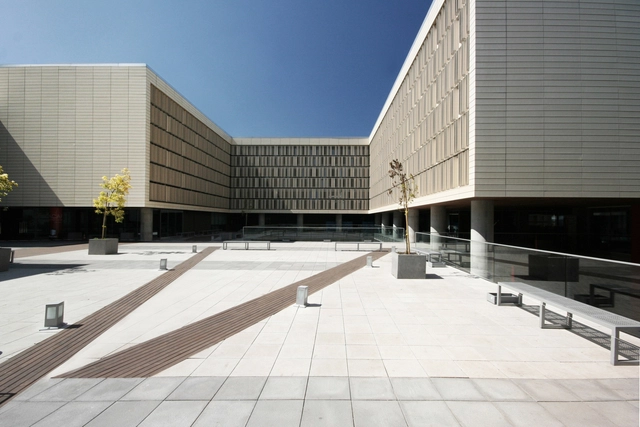


-
Architects: PLAN Arquitectos
- Area: 6650 m²
- Year: 2015
Yesterday, and for the first time in La Biennale's history, the press tour included a stop in the Southern Hemisphere. From his home city of Santiago, Alejandro Aravena shared more details about the upcoming exhibition in Chile's presidential palace (La Moneda) alongside the president of the Biennale and the president of Chile.
The main information to emerge from the press conference was the presentation of the lone image that represents this year's Biennale and the announcement of the participants. In the video above, Aravena gracefully explains how Bruce Chatwin's image of German archaeologist Maria Reiche encapsulates "the Biennale as a whole."
Aravena stressed that he wanted the disclaimer for the exhibition to be the exact opposite of "Don't Try This At Home." He explained, "Given the complexity and variety of challenges that architecture has to respond to, 'Reporting from the Front' will be about listening to those that were able to gain some perspective and consequently are in the position to share some knowledge and experiences with those of us standing on the ground."
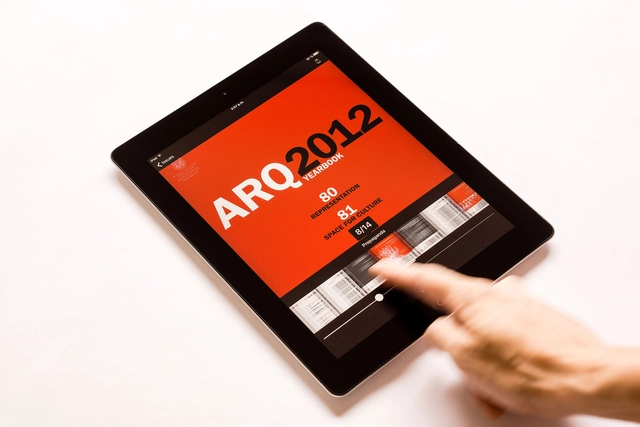
ARQ Magazine, described as of the most prestigious academic architectural journals in Latin America, have released a new app (ARQ Yearbooks) dedicated to collecting and presenting English-language articles published in their magazine over the past three years. Since its foundation in 1980, ARQ (the journal of the Pontificia Universidad Católica de Chile School of Architecture in Santiago) has been published without interruption. In this new app, papers which address issues related to representation, construction techniques, urban history, cultural processes, landscape architecture and more have been aggregated together.
The word activist, long part of the vocabulary of social causes and political engagements, is an identifier gaining currency in architecture. As an era of “star architects” fades to be replaced by a generation eager to tackle local issues for everyday citizens, the shift has become the calling card of Santiago-based Grupo TOMA. Produced by ArchDaily as part of our partnership with The Architectural Review, the above film profiles the group of five friends – Mathias Klenner, Ignacio Rivas, Ignacio Saavedra, Eduardo Pérez and Leandro Cappetto – who have become an architectural collective interested in “the architect as a mediator, as an entity capable of linking organizations, of connecting political and economic powers."
For the past two and a half years, the group has sought out projects that convert industrial spaces of past eras into new facilities. Working without intermediaries has been a boon to the group’s experimental attitude and productivity, which might otherwise be curtailed by bureaucratic setbacks. With projects spanning from a few days to a few months, and some potentially longer, the group privileges social impact and memory over duration and material certainty.


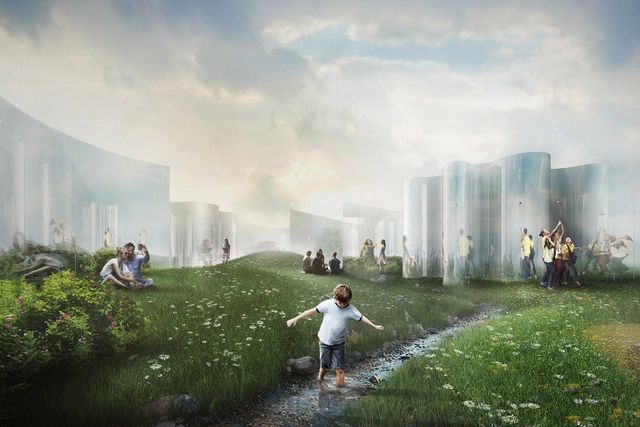
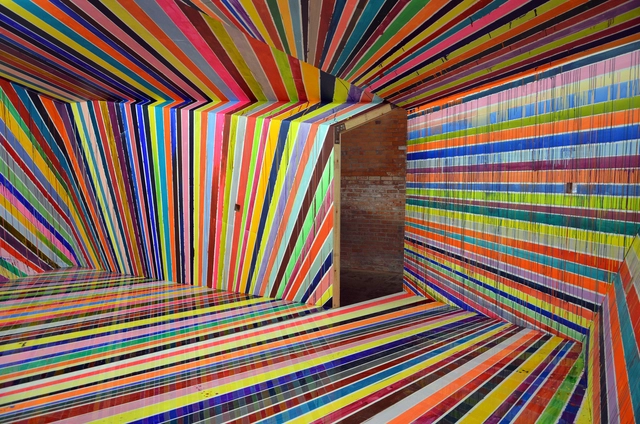
Chilean architects, Guillermo Hevia García and Nicolás Urzúa Soler, have been selected as the winners of the 2015 Young Architects Program (YAP) Constructo in Chile for their installation proposal, “Your Reflection." The installation will be inaugurated in March 2016 in Santiago, and aims “to build an uncertain experience, a situation of estrangement” so that the visitor is waiting to see “what is going to surprise them in the next place."
Along with New York, Istanbul, Rome and Seoul, Yap Contructo (Chile) is one of five versions of the Young Architects Program (YAP), carried out by MoMA and MoMA PS1, which aims to “support research in innovative design and promote emerging talent.”
Learn more about the proposal after the break.
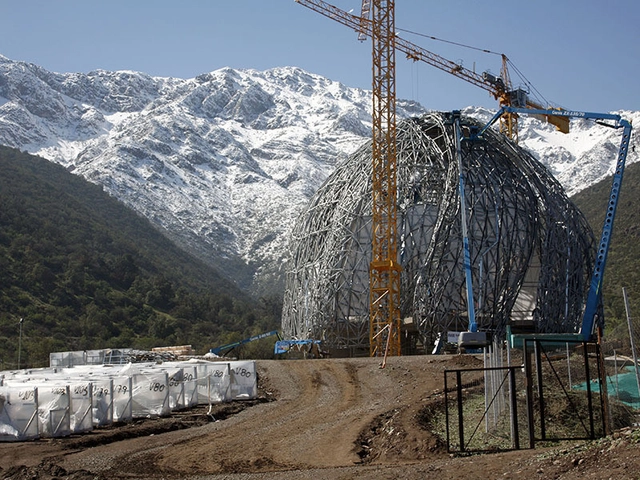
Now nearing completion just outside Santiago, Hariri Pontarini Architects' Bahá'í Temple of South America is currently one of the most significant religious construction projects in the world. In this article, originally published by Metropolis Magazine as "Sacred Structure," Guy Horton relates how - despite being in progress for almost a decade already - the design has changed remarkably little from the initial design sketch, using the latest technology to create a spiritual and emotional space.
For the last few years, in the Andean foothills just outside Santiago, Chile, a mysterious orb-like structure has been slowly rising under construction cranes. The new Bahá’i Temple of South America will be the first of its kind on the continent when it opens in 2016. It has been a historic journey for the Bahá’i faith in this part of the world—Bahá’i first arrived in Chile in 1919—and a patient journey for the architects, engineers, and builders who have brought the temple to life through a decade-long process of innovation.