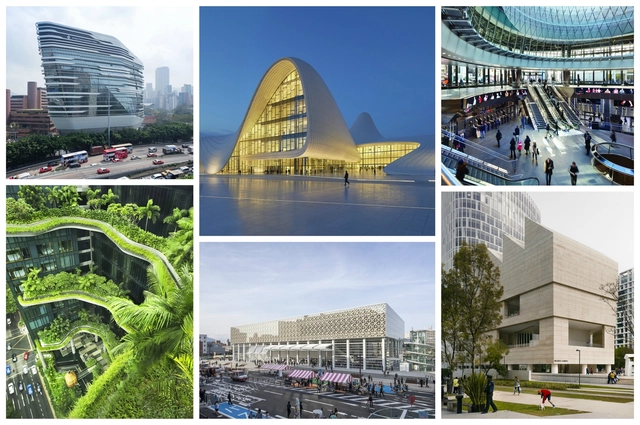
The Royal Institute of British Architects (RIBA) has announced its longlist of 30 buildings to be considered for the inaugural RIBA International Prize. According to the organization, “Projects range from large urban infrastructure schemes to private residential projects; cultural destinations to civic spaces; academic buildings to places of worship. The RIBA International Prize will be awarded to the most significant and inspirational building of the year. The winning building will demonstrate visionary, innovative thinking and excellence of execution, whilst making a distinct contribution to its users and to its physical context.” This is the first RIBA Award to be open to any qualified architect in the world.
The 30 long-listed buildings will be visited over the summer by the RIBA awards committee, after which, the list will be reduced to 20 winners of RIBA Awards for International Excellence. Subsequently, six finalists will be chosen and visited by a Grand Jury in the fall. According to RIBA, “[Awards for International Excellence] will be given to buildings worldwide that stretch the boundaries of architecture. Irrespective of style, complexity and size of both scheme and budget successful projects should demonstrate visionary or innovative thinking and excellence of execution.” The Grand Jury is being lead by Richard Rogers and includes Billie Tsien, Kunlé Adeyemi, Philip Gumuchdjian, and Marilyn Jordan Taylor.
The Royal Institute of British Architects (RIBA) has announced 17 winners for its RIBA South Awards, which recognize architectural excellence. These 17 regional award winners were drawn from a shortlist of 30 projects. Over the next few months, they will be considered for the RIBA National Awards, and then for the RIBA Stirling Prize.
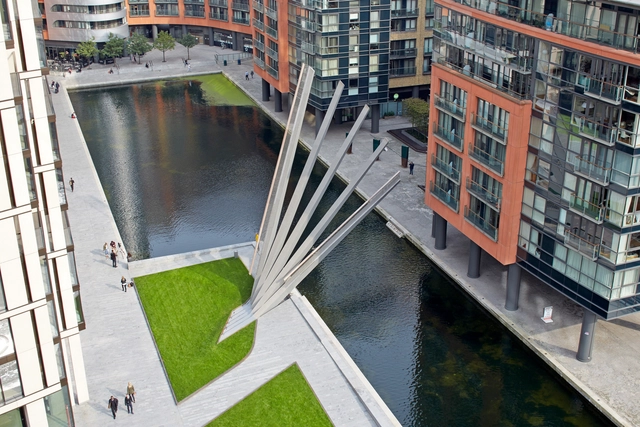
From a shortlist of 68 buildings, 36 London projects have been awarded the 2016 RIBA LondonAwards for architectural excellence, the city's most prestigious design honor. The winners include a home for ravens, a Japanese-inspired London terrace home and a historical restoration. All of these designs will be further considered for the RIBA National Awards, to be announced in July. The winners of the national award will then create a shortlist for the RIBA Stirling Prize – the highest award for architecture in the UK.
“All nations and regions returned positive workload forecasts, with practices in the North of England being the most optimistic. Large practices (51+ staff) remain the most positive. Medium-sized practices (11–50 staff, balance figure +48) saw a boost in confidence levels, while small practices (1–10 staff, balance figure +28) were upbeat, however to a lesser degree," states the report.
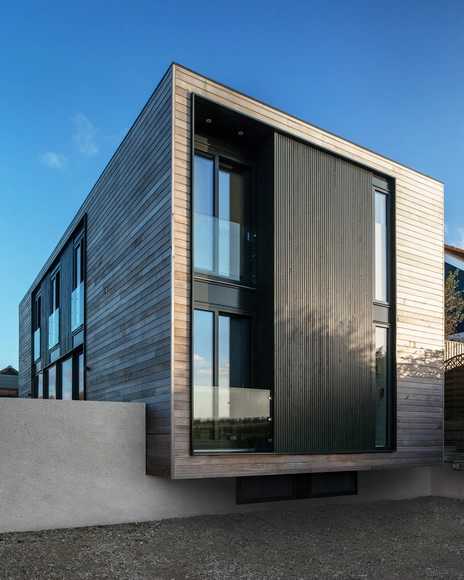
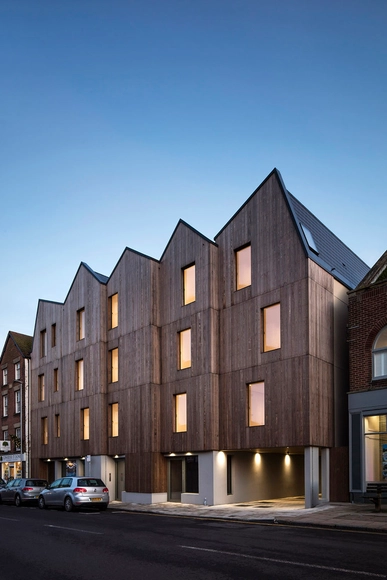
The Royal Institute of British Architects (RIBA) has announced six winners for its RIBA South East Awards, which recognize architectural excellence in the regions of Kent, Surrey, East Sussex, West Sussex and the Channel Islands. These winners will be considered for a RIBA National Award, which will be announced on June 23. Winners of the National Award will then be eligible for the RIBA Stirling Prize later in the year.
The six winners of the RIBA South East Awards are:
The Sixth International Conference on Competitions launches, looking at the concept of experimentation within architectural competitions.
The Sixth International Conference on Competitions (ICC) has launched with support from the RIBA and the UIA and will take place at Leeds Beckett University from 27 to 29 October 2016. This year will be the first time that the ICC is to be held in the UK.
A total of 12 projects have been shortlisted for the 2016 RIBA East Midlands Awards. The shortlisted buildings will be assessed by a regional jury, and winners will be announced on April 27. Regional winners will then be considered for a RIBA National Award, and National winners are then considered for the RIBA Stirling Prize for the best building of the year.
The 12 projects shortlisted for the 2016 RIBA East Midlands Awards are:
Temporary architecture is often misrepresented as a flimsy trend or photo-ready quick fix: easy, entertaining and often, mistakenly, cheap. This is Temporary concerns itself with a group of young, emerging, socially minded group of architects and designers who are taking the city back into their own hands and creating experimental sites for interaction and engagement. These architects, collectives, students and artists are designing transient structures, situations and events that invest and embed themselves in a community, public space or set of ideas.
Read an excerpt from the book This is Temporary after the break.
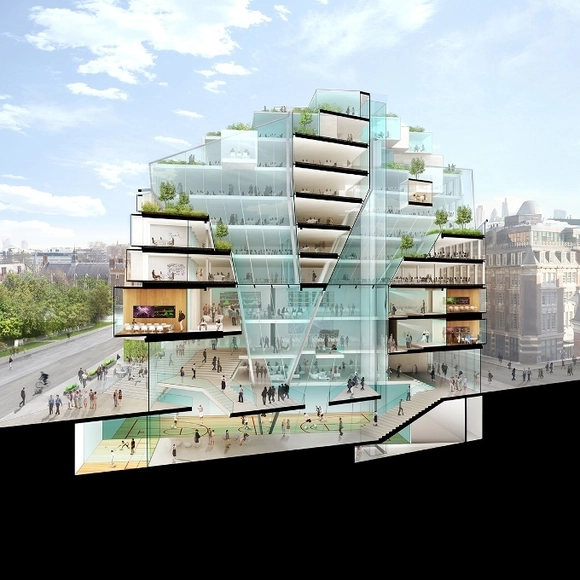
“The amount of analysis and intellectual effort that has gone into the designs from each team is staggering and the results are impressive and very exciting. Given its size and prime location on Lincoln’s Inn Fields we want this to be a seminal university building; its legacy will endure for many generations so it is vital that we make the right decision,” said Julian Robinson, LSE’s Director of Estates.
All six schemes are being publicly exhibited at the LSE's Saw Swee Hock Student Centre through March 17. Read on for a glimpse of each.
Inspired by the idea of creating something from ‘nothing’ and starting from scratch, RIBA presents a special evening exploring big urban thinking on a blank canvas. Selected from an open call, the Make No Small Plans program features fast-paced and dynamic selection of screenings (including a ‘Bring Your Own Beamer’ event), talks, active installations, readings and workshops, all from a wide range of professional and student architects, artists and curators. With special guest Alexander Eisenschmidt via Periscope video feed delivering a unique talk LIVE from Chicago, USA.
Courtesy of The Royal Institute of British Architects (RIBA)
The Royal Institute of British Architects’ (RIBA)Future Trends Survey for January 2016 has reported overall increases in predicted workloads and staffing for the New Year. Completed by a mix of small, medium, and large firms based on a geographically representative sample, the survey was launched in January 2009 “to monitor business and employment trends affecting the architects’ profession.”
The Future Trends Workload Index “bounced back strongly in January 2016, rising to +29 (up from +15 in December 2015). Increased workload optimism was shown across most of the UK, with the South of England (balance figure +38) showing particular strength, and only Scotland (balance figure -25) in negative territory."
Henk Ovink has transformed the way communities affected by continuing threats of flooding respond to change and how architects and city planners rebuilt their cities after flooding disasters. Both Henk Ovink and OMA are involved in the post-Hurricane Sandy rebuild in the United States through the ‘Rebuild by Design’ competition. In this event Reinier de Graaf (Partner at OMA) and Henk Ovink (Special Envoy for International Water Affairs for the Kingdom of the Netherlands) discuss with Ricky Burdett the challenges and approaches of rebuilding critical infrastructure in areas prone to flooding and their engagement with communities.
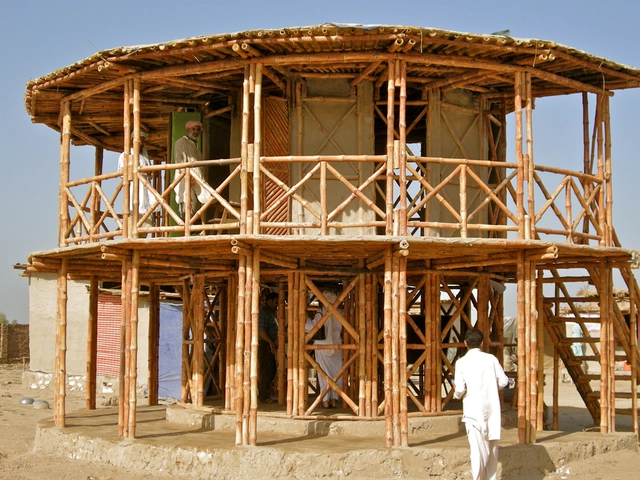
The RIBA welcomes Yasmeen Lari, Pakistan’s first woman architect, to discuss her work and the importance of vernacular architecture with BBC Correspondent Razia Iqbal. Over 45,000 disaster relief structures have been built under the direction and influence of Yasmeen Lari since 2010. With an emphasis on vernacular building techniques and materials she produces buildings that not only create a smaller carbon footprint, but also are simple enough to be built by the inhabitants in need.
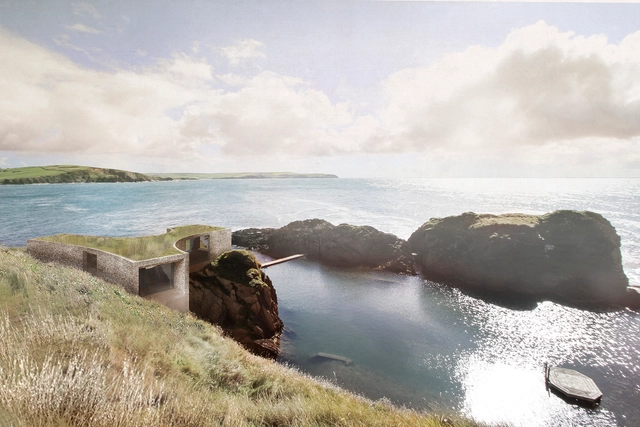
London-based firm Carmody Groarke has been selected to design a standalone hotel suite on Burgh Island, a tidal island on the South Devon coast. Commissioned by Burgh Island Ltd, the owners of the site's eponymous Grade-II listed art deco hotel, the new standalone "Pool House" suite sits atop the island's cliffs offering customers generous views of the Bantham Estuary and the hotel’s Mermaid Pool, an outdoor seawater pool and private beach for hotel guests.
The Royal Institute of British Architects (RIBA)’s Future Trends Survey for December 2015 showed a dip in UK architects’ confidence, reflecting the low number of new inquiries received by practices at the end of the year. The Future Trends workload index dropped substantially to +15 in December from +27 in November, showing a decrease in expected new projects. However, all regions in the UK, with the exception of Wales and the West (balance figure -3) and Scotland (balance figure -50), showed positive balance figures, with Scotland’s low numbers possibly related to the impact of oil price changes. The South of England was the most optimistic region with a balance figure of +30.
Zaha Hadid, who was named as the the first sole woman to be awarded the UK's highest honour for architects in her own right in 2015, received the Royal Institute of British Architects (RIBA) 2016 Royal Gold Medal at a ceremony in London yesterday. Hadid, who was appointed a Dame of the British Empire in 2012, received the Pritzker Prize in 2004. Her practice also took both the 2010 and 2011 RIBA Stirling Prizes.
A new exhibition, opening later this month in London, aims to examine the varying ways that cities and communities have been re-imagined in the aftermath of natural, or man-made, disasters. Including work by Yasmeen Lari, ELEMENTAL, OMA, Shigeru Ban, NLÉ, Toyo Ito, Metabolism (Kenzo Tange and Kurokawa Kisho) and Sir Christopher Wren, who redesigned London in the aftermath of the Great Fire of 1666, the exhibition will primarily explore contemporary responses to earthquakes and tsunamis. Posing questions about the fragility of architecture, our relationship to nature, and the power of architects to instigate change, it will ask whether we are facing a paradigm shift in the way that cities and communities recover from destruction.









_MOMA.jpg?1451989017&format=webp&width=640&height=580)