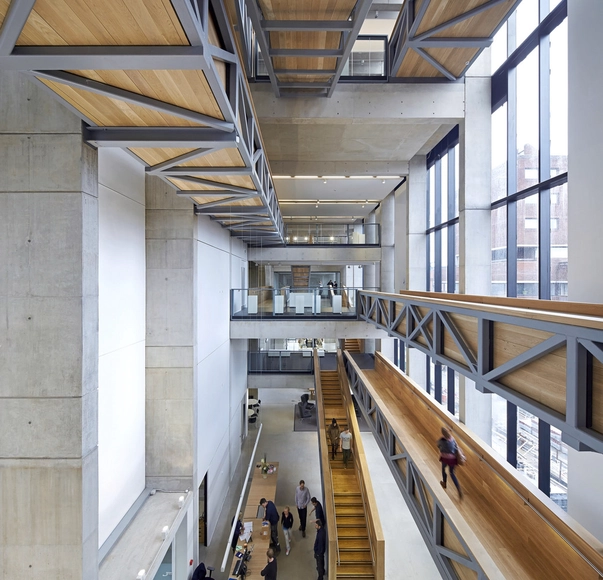
The Royal Institute of British Archtects (RIBA) has announced the launch of its new global architecture award for the world’s best new building, called the RIBA International Prize. Open to any qualified registered architect around the world, the new prize will be awarded to a building that “demonstrates innovative and visionary design whilst making a distinct contribution to its users and to its physical context.”
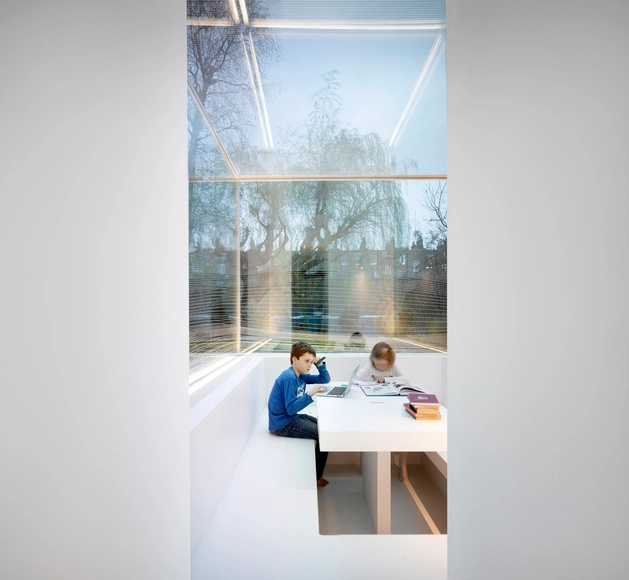
White on White by Gianni Botsford Architects. Image Courtesy of RIBA
RIBA (Royal Institute of British Architects) has released a report forecasting the greatest design trends in housing in the UK for 2016, based off a survey of 250 RIBA charted practices that are currently active in the housing design market. Noticeable trends include an increase in sustainable, energy conservation measures such as sustainable materials, improved insulation and water conservation/recycling; large extensions and bigger homes; housing designed for aging relatives/occupants; and flexible open-plans for family gathering.
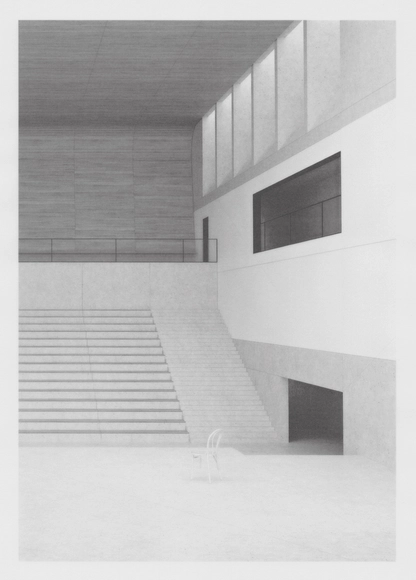
'The Heteroglossic City' (RIBA Silver Medal: Finn Wilkie, Mackintosh School of Architecture). Image Courtesy of RIBA
The Royal Institute of British Architects (RIBA) announced the President’s Medals Student Awards at a special event yesterday in London. The awards, recognised as the world’s most prestigious in architectural education, were inaugurated in 1836 (making them, including the RIBA Gold Medal, the institute's oldest award). Three medals in particular – the Bronze for a Part I student (Bachelor level), the Silver for a Part II student (Master level), and the Dissertation Medal – are awarded to “promote excellence in the study of architecture [and] to reward talent and to encourage architectural debate worldwide.” In addition to these, the winners of the Serjeant Award for Excellence in Drawing and the inaugural RIBA Research Medal alongside a rostra of commendations have also been announced.
See the winning projects and a full list of commendations after the break.
The Royal Institute of British Architects (RIBA)'s Future Trends Survey for October 2015 showed a level of caution among UK architects, reflecting a period of slowing growth in the industry. The Future Trends workload index dropped to +18 from last month's mark of +21, showing a decrease in the number of practices that expect their workload to increase in the coming months. All regions of the UK still reported a positive balance though, with the most optimism coming from Northern Ireland with a balance figure of +25, while the most uncertain figures came from the Midlands and East Anglia, where a balance figure of +12 was reported.
The Royal Institute of British Architects (RIBA)’s Future Trends Survey for September 2015 shows a level of consistency with the workload index remaining unchanged at a balance figure of +21. All nations and regions within the United Kingdom returned positive balance figures, with practices in Scotland responding most confidently about workloads in the next quarter. The report states that practices remain firmly positive about overall workload prospects in the medium term, though with "an apparent leveling-off in the rate of growth."
Communicating forms André Tavares debates with Mark Tuff and Tim Abrahams
The Lisbon Architecture Triennale is very pleased to announce the kick-off debate - Communicating Forms – with André Tavares chief curator of 2016’s Lisbon Triennale, Mark Tuff and Tim Abrahams.
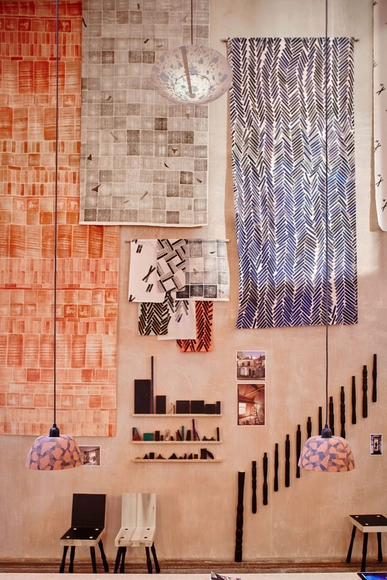
In the late nineteenth century the rise of the industrial revolution inspired a counter-movement to reignite the production of handmade goods across the world. Led by classically trained artisans from rural England, the Arts and Crafts movement briefly swept Europe and North America on principles of celebrating high calibre and unique goods resulting in an array of furniture, textiles, wallpaper and architecture, among others.
More than a century later, the Arts and Crafts movement is in the midst of a renaissance led by 2015 RIBA Turner Prize nominees Assemble Studio. Founded under the moniker Granby Workshop, the newly formed Liverpool-based artisan collective aims to eliminate widespread dereliction in one of the city's most blighted boroughs through the replacement of objects that have, over time, been stripped away. Sustained through a crowd funding model, Granby Workshop has launched a broad collection of locally sourced, designed and assembled homewares available for purchase online.
The Royal Institute of British Architects (RIBA) have made 90,000 unique images from their visual archive available online. Architecture.com/images (also known as RIBApix) hosts the world's largest collection of 16th century drawings by Palladio, as well as drawings by Sir Christopher Wren, Erno Goldfinger, Augustus Pugin, Denys Lasdun, and Edwin Lutyens. In addition, many original London Underground station designs sit alongside collections of some of the world’s leading photographers, including John Maltby, Edwin Smith, Henk Snoek, John Donat, Dell & Wainwright, Martin Charles and Tony Ray-Jones.
With a week to go until the announcement of the 2015 RIBA Stirling Prize, we're interested to see which project ArchDaily readers would place at the top spot. Six projects are vying for this year's prestigious award, which was won last year by Haworth Tompkins'Everyman Theatre in Liverpool. Following a rigourous system of regional awards (all of which you can see on ArchDaily), the shortlist has been picked from a handful of nationally award-winning projects. The winning scheme will be the one which, in the eyes of the jury, "has made the greatest contribution to British architecture over the past year."
You can see each project in more detail and read the judges' citations here.
The RIBA Future Trends Survey for August 2015 showed signs of slowing after indications of growth for architects during the summer. The RIBA Future Trends Workload Index dropped one point to +21.
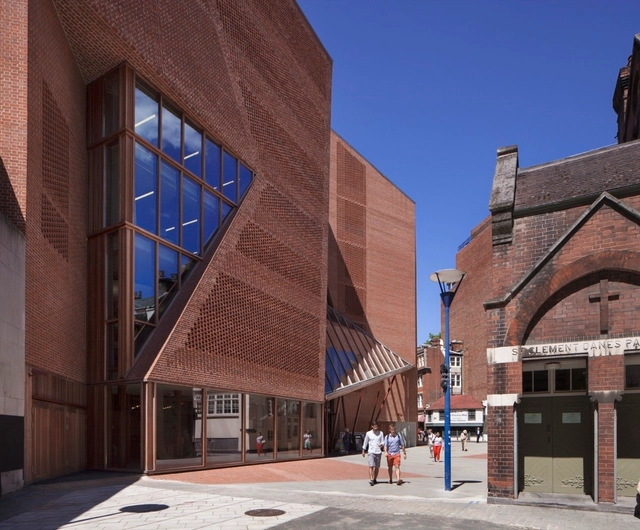
Following its redevelopment, the new building on the site of 44LIF will house a number of academic and research departments including the Marshall Institute for Philanthropy and Social Entrepreneurship. Paul Marshall is a major benefactor of the School and the Marshall Institute will make its permanent home in the new building at 44 Lincoln's Inn Fields which will take his name.
The Royal Institute of British Architects (RIBA) have announced fourteen 2016 RIBA Honorary Fellowships (of whom two are in partnership) and eight International Fellowships which will be awarded at an event on the 1st February 2016, alongside the recently announced RIBA Royal Gold Medal. RIBA Honorary Fellowships are awarded annually to people who have made "a particular contribution to architecture in its broadest sense," be it in the fields of architecture, construction, media, education, or the arts.
The Royal Institute of British Architects (RIBA) have revealed that Dame Zaha Hadid will receive the 2016 Royal Gold Medal — the first sole woman to be awarded the UK's highest honour for architects in her own right. Previous female winners (Sheila O’Donnell in 2015, Patty Hopkins in 1994, and Ray Eames in 1979) were each recognised alongside their husbands and practice partners.
Given in recognition of a lifetime’s work, the RIBA Royal Gold Medal is approved personally by Her Majesty The Queen and is awarded to those who have had a significant influence "either directly or indirectly on the advancement of architecture." Other notable Royal Gold Medallists include Frank Gehry (2000), Lord Norman Foster, Baron of Thames Bank (1983), Ludwig Mies van der Rohe (1959), Le Corbusier (1953), and Frank Lloyd Wright (1941). The medallists' names are engraved into the marble wall at the RIBA's headquarters in London.
Building projects are inherently complex: as projects progress, architects are joined by contractors, engineers, and myriad consultants. Architects, according to a recent report by RIBA, are considered the "spiritual leaders" of a building project. Cemented in this perception by a monopoly on design, architects continue to sit precariously atop project hierarchies despite a shifting landscape in building production. This begs the question: how can architects leverage this spiritual responsibility to translate into the best results for clients?
In their latest report Client & Architect: Developing the Essential Relationship, RIBA delves into the nuanced problem of connecting architecture to its owners, emphasizing the importance of a strong, functional and mutually educational relationship. Currently, architects have a tremendous opportunity to learn, improve and capitalize on understanding of clients, regardless of firm size, portfolio and established skills.
Read on to discover RIBA's findings from two years of client analysis
The Royal Institute of British Architect (RIBA)'s Future Trends Survey results for July 2015 present a note of caution for architecture practices with a fall in both workload and staffing forecasts. However, optimism remains as staffing levels are higher than a year ago. Despite June’s record-high forecast, July 2015 saw a downturn in the RIBA Future Trends Workload Index from +44 to +22. Even so, practices reported an overall increase in workload at an annual rate of 8%, and staffing levels 6% higher than in 2014.
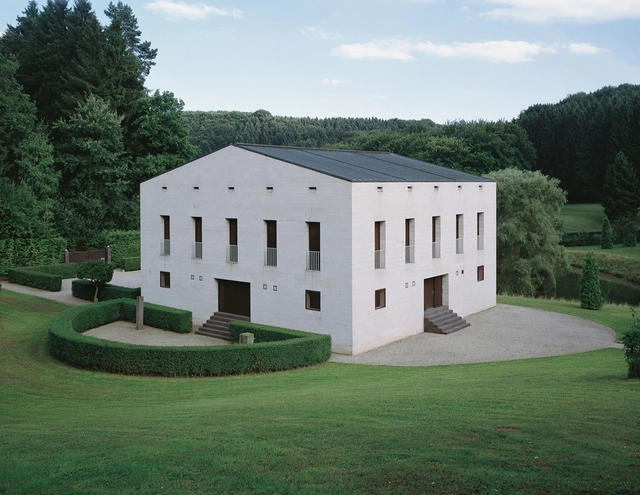
Glashutte, France by Oswald Mathias Ungers, 1985 (c) Stefan Mueller
Andrea Palladio is the only architect who has given his name to a style – one that is still in use around the world after nearly 500 years. From the US Capitol to a 21st century Somerset cowshed, 'Palladian Design: The Good, the Bad and the Unexpected' introduces Palladio’s design principles and explores how they have been interpreted, copied and re-imagined across time and continents from his death in 1580 to the present day.


_Philip_Vile.jpg?1450856752&format=webp&width=640&height=580)





_RIBA_Collections.jpg?1446712899&format=webp&width=640&height=580)


_Ronald_Tilleman_20130916-0033.jpg?1443101122&format=webp&width=640&height=580)

_Keith_Collie_05.jpg?1441656171&format=webp&width=640&height=580)