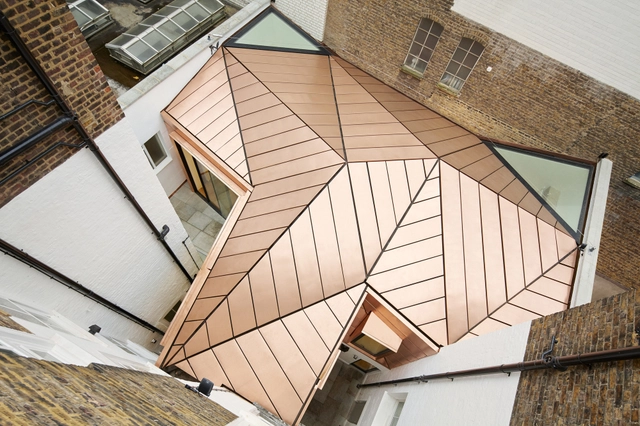
Pop Brixton (entrance). Image Courtesy of RIBA London
The London branch of the Royal Institute of British Architects (RIBA) have unveiled a series of events themed along the lines of 'Work In Progress' for the 2015 London Festival of Architecture. The festival, which is a month-long celebration of architectural experimentation, thinking and practice taking place at venues across the capital, will open in next month. The RIBA London's chosen theme "will explore the changing nature of work, and workspace, as well as its impact on, and role in, the continued evolution of London."
Following the devastating earthquake in Nepal this week, the Royal Institute of British Architects (RIBA) have teamed up with the International Federation of the Red Cross and Red Crescent Societies (IFRC) to "help to identify Nepalese nationals or others with local or regional experience to provide technical expertise." According to the RIBA, the IFRC "has already deployed approximately 100 people to support the Nepal Red Cross in search and rescue efforts, emergency health, water and sanitation, relief, shelter and inter-agency coordination as well as support services such as telecoms and logistics." They state that "given the operational constraints in the country, most agencies are wary of overloading country teams at this stage. However, the IFRC anticipates there will be a need for additional technical expertise in due course."
The Royal Institute of British Architects (RIBA)’s Future Trends Survey for March 2015 has "bounced back strongly" in comparison to February, as the workload index rose to +36 from +26 last month. Private housing and the commercial sector remains strong, while uncertainty still surrounds forecasts in the public sector. Workload forecast balance figures have remained high, the highest numbers being reported from practices in London (+42) and in the south of England (+39). In addition, large and medium sized practices have reported confidence about staffing levels, while small practices remain "more circumspect."
A total of sixteen projects have been shortlisted for RIBA East 2015 Awards, featuring buildings by Hawkins\Brown, Proctor & Matthews, Allies & Morrison, and AHMM. All shortlisted buildings will now be assessed by a regional jury. Regional winners will then be considered for a RIBA National Award in recognition of their architectural excellence, the results of which will place some projects in the running for the 2015 RIBA Stirling Prize.
See the complete list of shortlisted projects after the break.
The Royal Institute of British Architects (RIBA)’s Future Trends Survey for February 2015 has revealed continued optimism, although the public sector workload forecast has dipped with uncertainty about spending commitments ahead of the UK General Election in May. The workload index fell back slightly to +26 (from +29 in January) and workload forecast balance figures have remained high, the highest numbers being reported from practices in the Midlands and East Anglia (+43) and in Wales and the West (+39). In addition, practices have reported that they are now employing 16% more Part 1 (undergraduate) and Part 2 (postgraduate) students than they were twelve months ago.
A total of sixteen projects have been shortlisted for RIBA South West 2015 Awards, featuring buildings by Glenn Howells Architects, Feilden Clegg Bradley Studios, AHR, and Stonewood Design. All shortlisted buildings will now be assessed by a regional jury. Regional winners will then be considered for a RIBA National Award in recognition of their architectural excellence, the results of which will place some projects in the running for the 2015 RIBA Stirling Prize.
See the complete list of shortlisted projects after the break.
A total of eleven projects have been shortlisted for RIBA East Midlands 2015 Awards, featuring buildings by Evans Vettori, Make, Orms, and Studio Gedye. All shortlisted buildings will now be assessed by a regional jury. Regional winners will then be considered for a RIBA National Award in recognition of their architectural excellence, the results of which will place some projects in the running for the 2015 RIBA Stirling Prize.
See the complete list of shortlisted projects after the break.
A total of eleven projects have been shortlisted for RIBA Yorkshire 2015 Awards, featuring buildings by Populous, HLM, and Studio Gedye. All shortlisted buildings will now be assessed by a regional jury. Regional winners will then be considered for a RIBA National Award in recognition of their architectural excellence, the results of which will place some projects in the running for the 2015 RIBA Stirling Prize.
See the complete list of shortlisted projects after the break.
At the request of the Tristan da Cunha government, RIBA has launched of a design competition in search of ideas for a more self-sustainable and innovative future of Edinburgh of the Seven Seas community on the remotest inhabited island in the world.
Situated 1,750 miles southwest of Cape Town in the South Atlantic Ocean, Tristan da Cunha’s activity is largely governed by the severe maritime weather. Only reachable some 60 days annually, the island’s community of Edinburgh of the Seven Seas is home to 270 people. Of the four islands Tristan da Cunha contains (two of which are UNESCO World Heritage sites), it is the only one to support a permanent residence.
Exactly one year ago an important event took place. A gathering of seventy student delegates, organised by the Architecture Students Network (ASN), met to discuss the future of architectural education. Their meeting was sparked by the latest directive from the European Union which seeks to “establish more uniformity across Europe by aligning the time it takes to qualify”, making mutual recognition of the architect’s title easier between countries.
The ASN’s discussions concluded that the course content throughout the UK system of ‘Part I, II, and III’, and the duration of said course, urgently needs to be re-evaluated in order to reflect the changing needs of the profession - especially in light of the recent rise in tuition fees and associated university costs. Back then, a spokesperson for the ASN said that “it really felt like momentum for change has finally reached a tipping point.”
The Royal Institute of British Architects (RIBA) has launched a call for applications for the 2015 RIBA Boyd Auger Scholarship. The generous scholarship, which has been awarded since 2008, supports the personal, professional and academic development of its student recipients by contributing towards their "imaginative and original research and travel."
The Royal Institute of British Architects (RIBA)’s Future Trends Survey for January 2015 has revealed strong levels of optimism as workload forecasts remain strongly positive across all regions of the UK. Following little change in indexes between November and December 2014, the workload index has once again remained consistent at +29. Workload forecast balance figures have remained high, the highest numbers being reported from practices in Northern Ireland at +67 (from +50) and Scotland at +57 (from +75). Furthermore, practices of all sizes have been responding with positive workload prospects heading into the next quarter.
The Royal Institute of British Architects (RIBA) has launched an international design competition in search of ideas to transform Lancashire’s iconic Preston Bus Station into a new public hub and youth center. The anticipated £13 million plan hopes to not only provide a home for the new Preston Youth Zone Plus, but preserve the historic structure's brutalist appearance.
Preston Bus Station, designed by BDP and completed in 1969, was previously slated for demolition. However, last year the success of an international preservation campaign saved it from destruction and helped the building achieve Grade-II listing.
The proposed program and competition details, after the break.
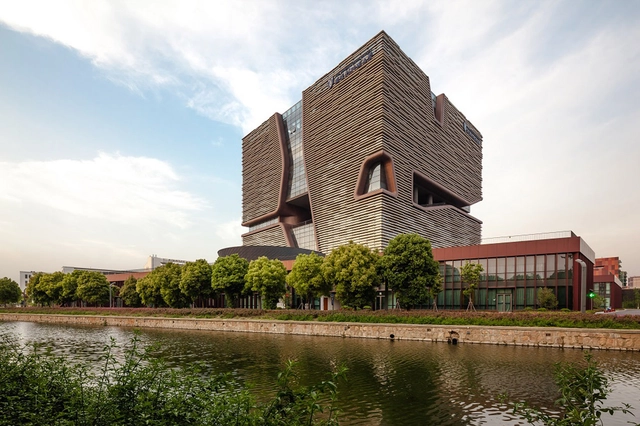
XJTLU's Administration Information Building, completed in 2013 by Aedas. Image Courtesy of Aedas
The Royal Institute of British Architects (RIBA) has awarded unconditional RIBA Part 1 accreditation to the undergraduate program at Xi’an Jiaotong-Liverpool University (XJTLU) in Suzhou, making it the first Chinese architecture program to be certified by the UK architecture body. The accreditation marks another first for XJTLU's partner university at Liverpool, which pioneered the RIBA accreditation system by becoming the first certified course in the world in 1906, and officially marks the program at XJTLU as on a par with other architecture schools around the world.
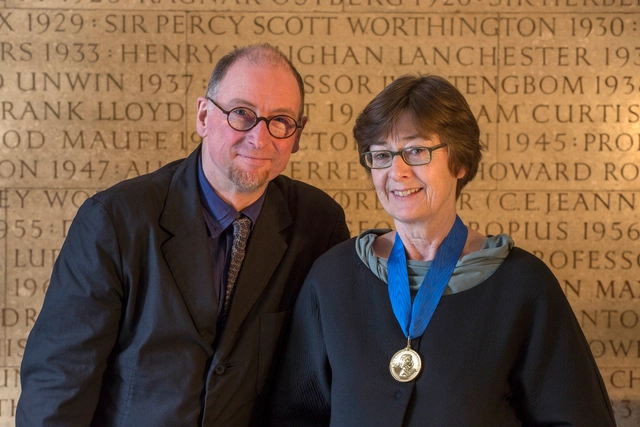
John Tuomey and Sheila O'Donnell - recipients of the 2015 Royal Gold Medal. Image Courtesy of RIBA
When Sheila O'Donnell and John Tuomey, who practice in partnership as O'Donnell + Tuomey, were named as this year's recipients of the RIBA Royal Gold Medal, a palpable collective satisfaction appeared to spread throughout the profession. No one could find criticism in Joseph Rykwert and Níall McLaughlin's nomination, nor the ultimate choice of the RIBA Honours Committee, to bestow the award upon the Irish team. Their astonishingly rigourous body of work, compiled and constructed over the last twenty five years, has an appeal which extends beyond Irish and British shores. A robust stock of cultural, community and educational projects, alongside family homes and social housing projects, leaves little doubt about the quality, depth and breadth of their mutual capabilities and the skill of those that they choose to collaborate with.
Read the conversation with the Gold Medallists after the break.





Tim_Crocker.jpg?1429192296&format=webp&width=640&height=580)

_JoChambers-Cropped-764x500.jpg?1428504204&format=webp&width=640&height=580)


AlanWilliams.jpg?1426489201&format=webp&width=640&height=580)