1. ArchDaily
  2. Preservation

Preservation: The Latest Architecture and News

The Question of Preserving Melbourne's Modernism

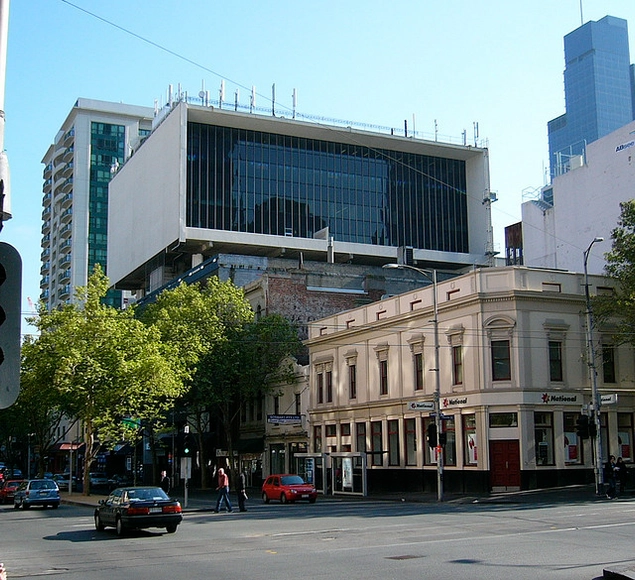
Melbourne newspapers are reporting on an argument breaking out over the preservation of the city's postwar modernist buildings, centering (as ever) on the dispute between their value as cultural heritage vs their 'ugliness' (you can see all the contested buildings in a neat graphic at The Age). While many are in favor of preservation, Alan Davies, in anarticle for Crikey, warns that the cultural benefit in protecting these buildings should always be weighed against the cost of preventing the developments that would have taken their place. Read the full article here.

The Eileen Gray Movie: E1027, Insidious Chauvinism, and "The Price of Desire"

Subscriber Access | 

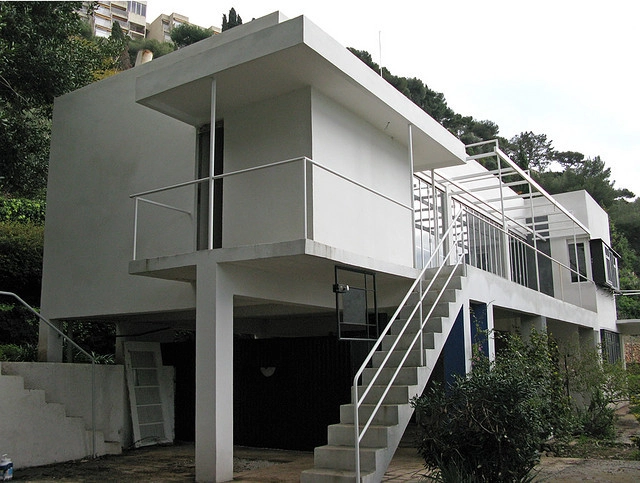
In a public interview, director Mary McGuckian speaks with Shane O'Toole of DoCoMoMo Ireland about her soon-to-be-released film, "The Price of Desire," a biopic about the influential Irish modernist Eileen Gray - narrated from the perspective of Le Corbusier, no less. McGuckian explains how the film and the extensive research behind it went far beyond the usual remit of a biopic. Indeed, not only did it spawn an accompanying documentary ("Gray Matters", directed by Marco Orsini) and book, it even played a pivotal role in the restoration of E1027, Gray's seminal house design, to a point where it was possible to film on location.

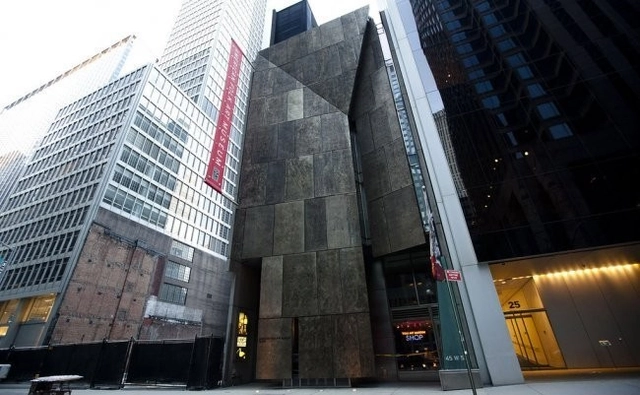
MoMA to Preserve Folk Art Facade

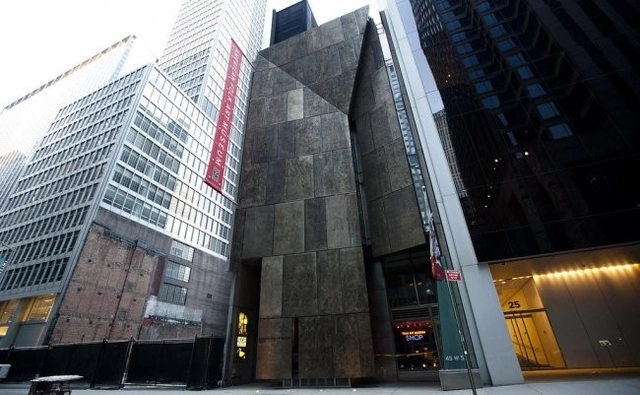
Though it has been confirmed that Diller Scofidio + Renfro’s Museum of Modern Art expansion will result in the demise of Tod Williams and Billie Tsien Architects' American Folk Art Museum, the New York Times has confirmed that the beloved copper-bronze facade will be preserved.

“We will take the facade down, piece by piece, and we will store it,” Glenn D. Lowry, the director of the Museum of Modern Art, said in an interview. “We have made no decision about what happens subsequently, other than the fact that we’ll have it and it will be preserved.”

Harboe Architects Selected to Create Preservation Master Plan for Taliesin West

Chicago-based Harboe Architects has been chosen by the Frank Lloyd Wright Foundation to construct a preservation master plan for Taliesin West, which will guide future restoration and conservation efforts for the prized National Historic Landmark. Built in Scottsdale, Arizona, by the hands of the architect himself, alongside his apprentices between 1937 and 1959, the desert landmark served as the winter home, studio and school of Frank Lloyd Wright. Read and relive the story of Taliesin West here on ArchDaily.

How to Preserve Post-War Modernism

Subscriber Access | 

This article by Carlos Harrison appeared in Preservation Magazine as Reinvention Reinvented: Hope for Modernism, and discusses the issues surrounding the (increasingly popular) drive to preserve post-war modernism, including what we can learn from past successes and failures, and what it takes to preserve different types and styles of building.

Columbus, Indiana, is something of a modern marvel. It boasts more than 70 buildings by some of the architecture world’s greats, including titans of Modernism such as Eero Saarinen, I.M. Pei, and Richard Meier. Schools, churches, a library, a post office, and even a fire station stand as examples of the distinctively diverse architectural styles spanning the decades from World War II through Vietnam.

Crisp lines, sharp angles, connected like Lego blocks. Nearby: a 192-foot spire aims toward the heavens like a laser.

Read on after the break for more about preserving modernism

Frank Lloyd Wright House Saved

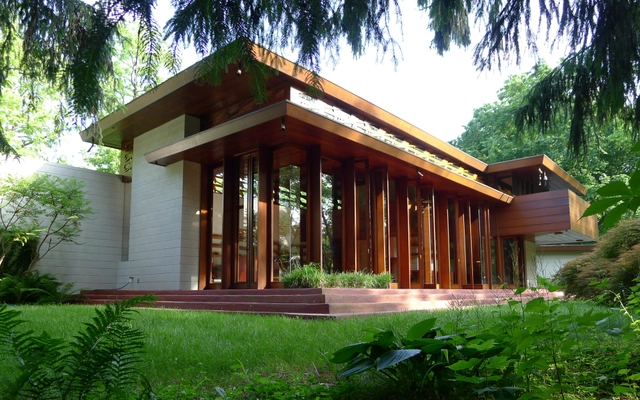
A rare house from Frank Lloyd Wright's Usonian house period has been saved by the Crystal Bridges Museum in Arkansas. The dramatic rescue plan to disassemble and move the house to a site over 1,000 miles away is required due to frequent flooding of the home's existing site in Millstone, New Jersey. The Crystal Bridges Museum will rebuild and restore the house at a site on their 120-acre grounds.

Read on for more about this unusual preservation

The Ongoing Battle to Preserve Midcentury Modernism

Subscriber Access | 

This article by Fred A Bernstein originally appeared in Metropolis Magazine as "Worth Preserving". Bernstein tracks the preservation battles fought, won and lost in 2013, unearths their root cause (money), and questions: was preservation better off in recession?

“It’s the old adage: location, location, location,” says Linda Dishman, executive director of the Los Angeles Conservancy. Dishman isn’t talking real estate, but historic preservation. In California, a midcentury house on a modest lot may find a buyer willing to maintain it. But the same modernist house on a large lot in Brentwood or Pacific Palisades, is practically wearing a “tear me down” sign. (How does a 1,200-square-foot house stand a chance in a neighborhood where 12,000 is the new normal?) “Small houses on large lots are the greatest concern,” says Dishman.

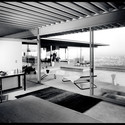
The Conservancy won a victory this year when ten of the surviving Case Study Houses—including the celebrated Stahl House by Pierre Koenig—were added to the National Register of Historic Places. But listing doesn’t stop the houses from being demolished—it simply triggers additional reviews before bad things can happen to good buildings, the kind of red tape that doesn’t always deter the super-rich. Money, especially big money, can be the enemy of preservation.

Read on about preservation's fight with big money after the break.

The Ongoing Battle to Preserve Midcentury Modernism - Image 1 of 4The Ongoing Battle to Preserve Midcentury Modernism - Image 2 of 4The Ongoing Battle to Preserve Midcentury Modernism - Image 3 of 4The Ongoing Battle to Preserve Midcentury Modernism - Image 4 of 4The Ongoing Battle to Preserve Midcentury Modernism - More Images+ 4

How to Get a Building Through its Mid-Life Crisis

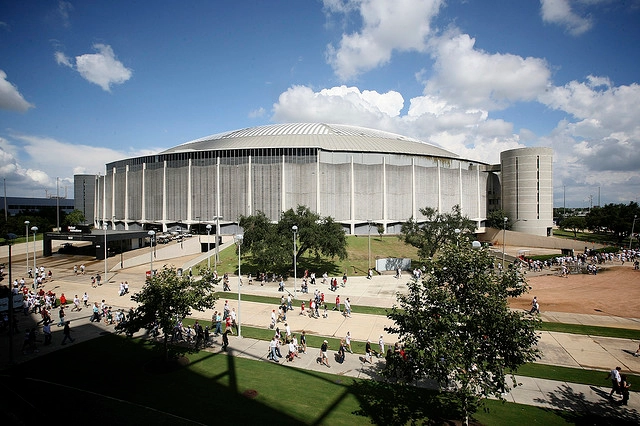
According to LA Times architecture critic Christopher Hawthorne, buildings experience a pretty distinct mid-life crisis. After seeing the demise of mid-century gems such as the Houston AstroDome and the Prentice Women's Hospital in Chicago, it's difficult to disagree. But unfortunately architectural value isn't convincing enough an argument - if preservationists want to get serious about their cause, he suggests, they will have to pick their battles far more strategically.

The Absent Column: Examining the Prentice Preservation Battle

Subscriber Access | 

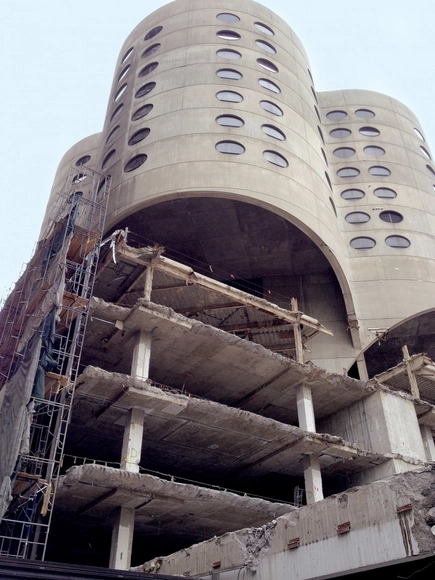
In light of the extensive demolition that has already taken place at Bertrand Goldberg’s Prentice Women’s Hospital in downtown Chicago, we present to you this short film that examines the hospital’s preservation battle and poses the question, “Who determines the future of the past?”

Is The Demolition of Prentice Hospital Another "Penn Station Moment"?

Subscriber Access | 

This article, by Michael R. Allen, was originally published on Next City as "Prentice Hospital Could Become Modernism's 'Penn Station Moment'"

When the concrete cloverleaf of Prentice Hospital sprouted from the Chicago ground in 1975, its award-winning design met the praise of critics and the admiration of many Chicagoans. Architect Bertrand Goldberg drew from Brutalism, but with a symmetry and grace that distinguished Prentice from more angular works in that style.

This week, as Goldberg’s famous work is pulled apart by wreckers, nothing about its loss seems symmetrical or graceful. Within 40 years, the building transitioned from a proud symbol of civic renewal and design innovation to the victim of old-fashioned Chicago politics. The controversy surrounding the demolition of Prentice, however, injected the preservation movement into an urban design discussion with a presence not seen in a long time.

Preston Bus Station Listed, Escapes Demolition

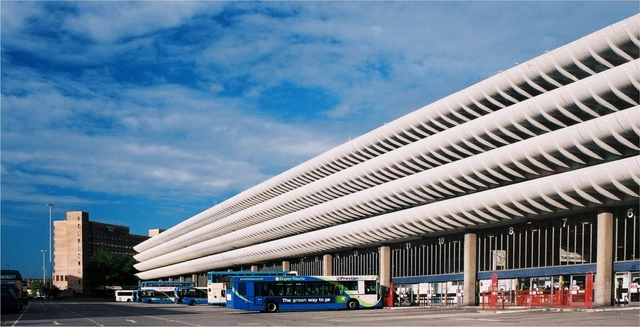
Following news last week that four post-war buildings had been listed in the UK, the campaign to Save Preston Bus Station reached a victory today when it was announced that Ed Vaizey (Architecture and Heritage Minister) has listed the Brutalist icon, removing the threat of demolition. The campaign, which has garnered words of support from the likes of Richard Rogers and Rem Koolhaas, has been been underpinned by support from Angela Brady PRIBA, former President of the Royal Institute of British Architects.

Parasite or Savior? Ibelings van Tilburg's Hovering New High-Rise

Subscriber Access | 

This article originally appeared in uncube magazine as "Saviour or Parasite?"

The post-war city centre of Rotterdam is ruled by commerce. Only five percent of the city's inhabitants live in the centre, which is almost entirely occupied by highstreet fashion chains, fast food restaurants, and offices. After shop closing time, the shutters go down and the streets are deserted. The municipality would like to lure more inhabitants into the centre – but space for new residential buildings is scarce. So in recent years, a 1960s cinema and church had to make way for a huge new housing complex designed by Alsop Architects, and a residential tower by Wiel Arets was speedily attached to Marcel Breuer's department store, De Bijenkorf. It was not until the municipality suggested forcing new housing high-rises into the green courtyards of the Lijnbaanhoven residential complex, designed in 1954 by Hugh Maaskant, that there were protests and the project had to be cancelled. For the time being, that is.

One densification project, however, tried not to destroy or debase the post-war building originally occupying its site. In many respects, the Karel Doorman residential high-rise could even be called the saviour of the old Ter Meulen department store. It might be rather uncommon for a valiant hero to crouch down on the shoulders of the little old lady he intends to rescue – but that's more or less what happened here.

The Controversy Regarding The Restoration of Eileen Gray's E-1027

The Wall Street Journal recently detailed the complex history of E-1027, the house which Eileen Gray designed with her lover Jean Badovici in Southern France: from the murals which Le Corbusier painted on the walls (without Gray's permission) to the murder that happened there in 1996 to the restoration that has been going on for over a decade (a supposed "massacre" of the original). You can read the full article here.

LA’s Iconic Case Study Houses (Finally!) Make National Register

Ten of Los Angeles’ Case Study Homes have been deemed historically significant an worthy of being included on US’s National Register of Historic Places. Despite the Los Angeles Conservancy’s belief that all of them deserve “equal preservation protections,” the 11th home was not included due to “owner objection.”

The Case Study Houses spawned from a post-WWII residential experiment, presented by the Arts & Architecture magazine in 1945, which introduced modern movement ideas for affordable and efficient housing. The homes - designed by the likes of Richard Neutra, Charles and Ray Eames, Pierre Koenig, Eero Saarinen and others - redefined the modern home. And, with the help of Julius Shulman, placed Los Angeles as an epicenter for mid-century modernism.

The 11 homes included on the register are:

Urban Fragment: Jose Oubrerie’s Miller House

Subscriber Access | 

This article was written by Seattle-based designer and critic Evan Chakroff.

Lexington Kentucky’s Miller House is a built manifesto: an ambitious proposal for the future of suburbia in an age of unprecedented urbanization. Despite its pedigree – designed and built by Le Corbusier protégé José Oubrerie – and despite its (appropriate) selection as a “masterwork” by Kenneth Frampton, the project remains somewhat unknown and the architect underappreciated.

The house should absolutely occupy a place in the canon of great residential architecture. The complex composition alone should inspire myriad formal readings, but more importantly the house represents a model for communal life amid continuously-shifting family structures. It’s a radical rejection of a suburban lifestyle that has become socially, economically, and culturally unsustainable. 

Is NYC "Landmarking Away" Its Future?

Subscriber Access | 

A recent study by the Real Estate Board of New York (REBNY) concluded that by preserving 27.7% of buildings in Manhattan, “the city is landmarking away its economic future.” REBNY is challenging the Landmarks Preservation Commission, arguing it has too much power when it comes to planning decisions, and that by making business so difficult for developers it is stifling the growth of the city.

Yet not three days before releasing this study, president of REBNY Steve Spinola said in an interview with WNYC that “if you ask my members, they will tell you [the twelve years of Mayor Bloomberg's tenure] has been a great period of time for them”. The conclusion of WNYC is that the past decade has actually been a period of increased growth for developers, rather than a period of stagnation.

It would be easy to echo the opinion of Simeon Bankoff, executive director of the Historic Districts Council, who believes the actions of REBNY come down to greed, even comparing its members to Gordon Gekko, the anti-hero of the film Wall Street. But is greed really what’s behind this attack on the Landmarks Preservation Commission? Find out after the break.

Paul Rudolph’s Orange County Government Center Still at Risk

Despite a 15-6 Legislature vote in February that ruled in favor of preserving Paul Rudolph’s brutalist landmark in Goshen, reports indicate that demolition is still being considered as an option. According to the Times Herald-Record, an ad hoc panel led by pro-demolition County Executive Ed Diana selected a team of architects and engineers to develop three options in 90 days for “renovating and replacing” sections of the 43-year-old complex. Though many thought the 18-month-long campaign ended with February's ruling, it is apparent that the heated debate is far from over. Ultimately, lawmakers must vote again on the project to authorize bonding for construction.

Three Firms Shortlisted to Design Prentice Successor

Shortly after confirming the demise of Bertrand Goldberg’s beloved Prentice Women’s Hospital in Chicago, Northwestern has released a shortlist of three firms competing to design the school’s new biomedical research facility. This comes with the support of Chicago Mayor Rahm Emanuel and despite strong backlash from architects and preservationists worldwide.

The finalists are: