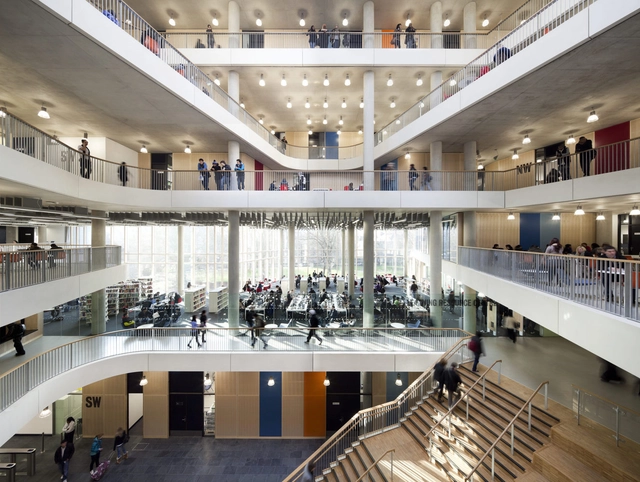
The Smithsonian Institution selected Perkins&Will to design the Bezos Learning Center at the National Air and Space Museum in located on the prominent National Mall in Washington D.C. Perkins&Will was one of the five shortlisted finalists for the competition. According to the Smithsonian, the selection was based on the architects’ ample experience in designing cultural and educational spaces, the reliability of their management team and the team’s aesthetic approach.
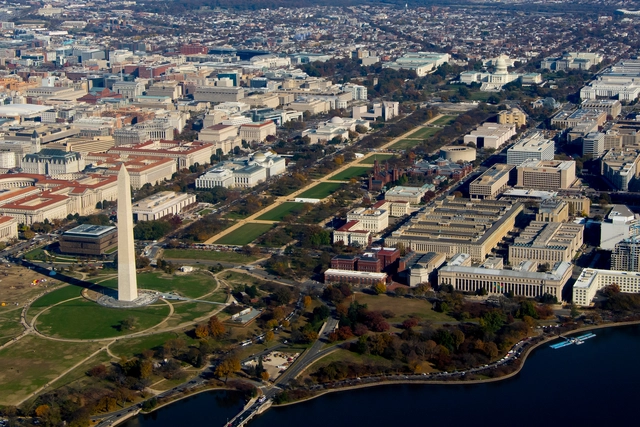
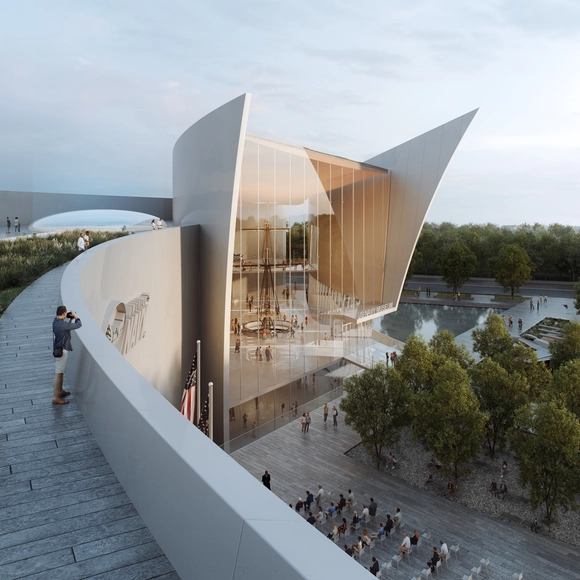
Perkins&Will has been selected as one of the five finalists in the nationwide artistic ideas competition for the design of the new National Museum of the U.S. Navy. The other finalists are DLR Group, Frank Gehry Partners, Quinn Evans, and BIG. Organised by the Naval Heritage History and Command’s (NHHC), the competition’s aim is to create a modern museum for Naval veterans and the public, a new building and ceremonial courtyard to reflect the Navy’s values and legacy. The campus would consist of approximately 270,000 square feet, with 100,000 square feet of gallery space. The Navy’s preferred location for the museum is on a site adjacent to the Washington Navy Yard.
Bjarke Ingels Group (BIG) was selected as one of the finalists in the Naval Heritage History and Command’s (NHHC) competition for the design of the new National Museum of the U.S. Navy. The competition’s aim is to create a publicly accessible modern museum for Naval veterans and the public, a memorial to the U.S. Navy’s heritage, and a center for education and cultural events. The other finalists are DLR Group, Frank Gehry Partners, Quinn Evans, and Perkins&Will.
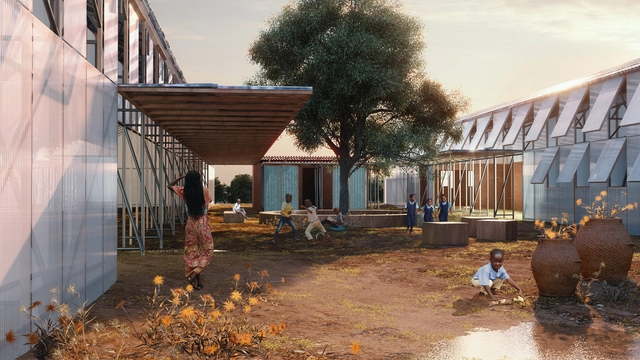
The year 2022 was marked by several socio-cultural and economic crises across the globe, from the Russian invasion of Ukraine to the increasing cost of living worldwide, combined with a number of natural disasters such as the devastating floods in Pakistan and hurricane Ian in the US. In these difficult times, architects are stepping up and embracing their role in developing design-based solutions to humanitarian crises, ranging from temporary shelters and affordable housing schemes to centers for protecting at-risk groups such as homeless underage girls, children from low-income environments, or families in need of medical care.
This week's curated selection of Best Unbuilt Architecture highlights projects submitted by the ArchDaily community that engage with their local communities, offering safe spaces for disadvantaged and at-risk groups. From a sanctuary for homeless girls in Iraq to an affordable housing project in Prague’s first skyscraper, this selection features projects centered around people, their needs, and desires. Many of the projects employ local materials such as clay bricks to lower the construction costs. They also reuse existing buildings and hope to engage the local community in building and appropriating the proposed spaces.
Walking through the streets of Mumbai, India, is an experience unmatched anywhere else. The energy of India’s largest and most populous city is palpable through the people, their activities, and most importantly, the built environment. The city’s dynamic culture is evidently expressed through the structures that dot its landscape.
Mumbai is an eclectic mix of buildings large and small, old and new, and traditional and modern. The city of contrasts boasts an architectural legacy that goes back over 2000 years. Located in the state of Maharashtra along the west coast of India, Mumbai hosts a variety of architectural styles such as Victorian, Gothic, Art Deco, Indo-Saracenic, Modern and Post-modern. The city is characterized by its old charm and liveliness, a diverse stage for people to pursue their dreams.
Perkins & Will has just begun construction on the Gateway Project for the University of British Columbia. The project will serve as the primary entrance point to the campus, as well as the new hub for the Nursing, Kinesiology, Language Science, and the university's health clinics. This project is inspired by the surrounding landscape and is informed by the Musqueam people, who have been occupying these territories for generations.
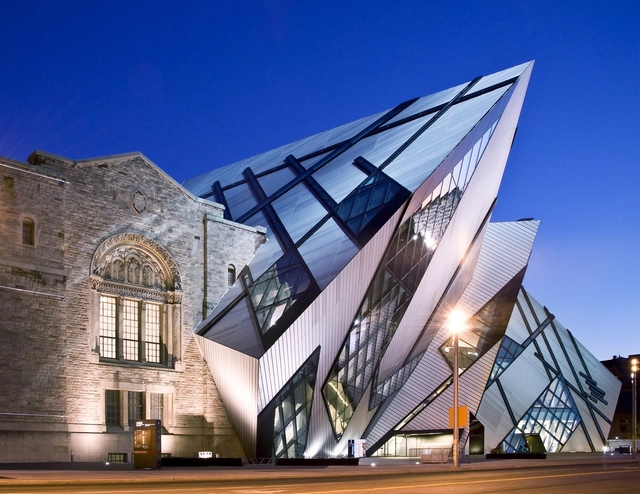
As Canada’s most populous location, Toronto has developed into a global powerhouse, both as an economic and cultural hub. This extends to the significant museums and arts facilities across Queen City. With one of the most unique landscapes and ground conditions in the country, Toronto was built on a large ravine system running throughout its urban fabric. Today, the city’s educational, arts, and cultural buildings are thriving.
Boston architect Brian Healy moved around for his early career, before settling and building in New England. He had studios in Florida, California, and New York, eventually opening his office in Boston. Healy acquired his bachelor’s degree in architecture at the Pennsylvania State University in 1978 and continued his studies at Yale where he encountered such influential professors as James Stirling, Vincent Scully, John Hejduk, Aldo Rossi, and Cesar Pelli, among others.
Healy graduated with a Master of Architecture in 1981 and then used traveling scholarship money from Yale, the Van Allen Institute, and the American Academy in Rome to travel around the world for a year, exploring ancient ruins in Ireland, Italy, Greece, Sudan, Egypt, India, Nepal, and Thailand. Prior to the trip, he had worked at the offices of Charles Moore and Cesar Pelli. Upon his return, he designed and built homes in Florida before working for Richard Meier in New York. In 1985, he started Brian Healy Architects. Parallel to that he taught at over twenty universities across North America, including Yale, Harvard, MIT, and the University of Pennsylvania. Healy was the 2004 president of the Boston Society of Architects and, from 2011-2014 he served as Design Director at Perkins + Will.
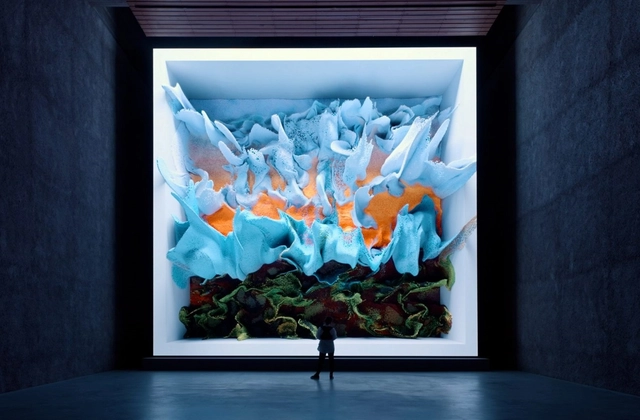
Architecture shapes our lives every day, but how can it be decentralized? At the core of efforts to design extended reality (XR) environments is a desire to make these projects more human and more relatable. As technologists, architects, and users themselves develop new tools for the metaverse, as well as augmented and virtual spaces, new projects are increasingly democratized and open source. At the same time, the design process is being reimagined.
JW Marriott Hotel / Gensler. Image Courtesy of Gensler
Architectural Record has unveiled its list of Top 300 U.S. Architecture Firms of 2022, ranked by revenue for architectural services performed in 2021. Gensler, Perkins&Will, and HDR continued a three-year streak leading the annual rankingof the top 300 American architecture firms, joined by AECOM, which saw one of the largest reported increases in architecture revenue, rising from eighth to fourth place.
This week's curated selection of Best Unbuilt Architecture highlights designs submitted by established architecture practices, featuring conceptual works, competition entries and projects in different stages of development. From the transformation of a former mall into a healthcare facility in the United States, a masterplan for the redevelopment of a zoo in Canada to a brewery regeneration in China, the following explores a variety of designs by global architecture offices.
Featuring firms like Perkins +Will, Henning Larsen Architects, URBANUS or Mandaworks, this week's selection of unbuilt projects highlights worldwide interventions that illustrate a variety of ideas, from adaptive-reuse strategies, interventions in heritage sites and new models for public buildings.
The American Institute of Architects (AIA) has selected 11 projects as winners of its 2022 Architecture Awards. The annual Architecture Award program celebrates the best contemporary architecture, and highlights how spaces can cater to their residents and context and include a sense of place, purpose, history, and environmental sustainability. The selected projects include commercial, residential, and civic typologies, all designed by US-licensed architects.
While research seems intrinsic to the design process, architectural research is a professional path in itself, whose purpose is to highlight scientific evidence and explore alternatives outside of pre-established norms or empirical considerations. Its purpose is to create a framework of knowledge that can inform the design to reach objectively better outcomes. The following discusses the role and state of research in architecture, some prominent areas of inquiry, and the architects or institutions that dedicate their work to these subjects.
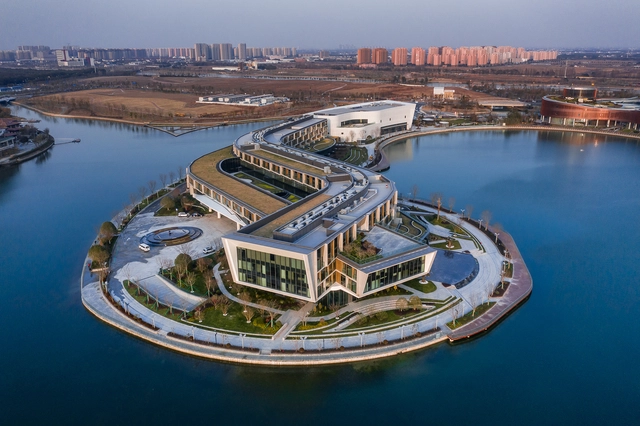
Perkins&Will has revealed the designs of the second phase of Duke KunshanUniversity which reflect the natural context and local culture of Kunshan, China. The architecture blends nature and architecture, and highlights the university's ethos and education values through spaces dedicated for living and learning. The 189,334 sqm master plan includes 22 buildings of administration, educational, and recreational facilities.
Courtesy of Steelblue for the City of Sacramento / Perkins&Will
Global architecture firm Perkins&Will, in collaboration with ARUP, Grimshaw Architects, EPS , AIM Consulting, and the City of Sacramento, have transformed the city's historic train station into a self-reliant and regenerative transportation hub, making it one of the most sustainable public areas in California. The design team worked alongside the local community to create a people-centric 31-acre master plan that reflects what the community envisions for a public train station and gateway to the city of Sacramento.
Greater Accra Regional Hospital Accra Ghana, photo by Mark Herboth. Image Courtesy of Perkins&Will
For the architects and designers at Perkins&Will, the profession is full of women who deserve to be celebrated. While gender inequity in architecture remains a serious problem, in March 2019 the firm set out to shift the narrative. For the last three years over the course of Women’s History Month, they have highlighted the amazing designers, researchers, managers and professionals who are building a move inclusive world.
Perkins&Will and the American Institute of Architects (AIA) have released a handbook for best practices to create and implement comprehensive diversity programs for U.S. firms. Entitled “Creating a Culture of Justice, Equity, Diversity, and Inclusion in Your Architectural Practice,” authors Gabrielle Bullock, FAIA and Bill Schmalz, FAIA outline how firms must uphold J.E.D.I. principles now and into the future.







































_1.jpg?1615434124&format=webp&width=640&height=580)

_1.jpg?1615434124)