



-
Architects: Atelier LAVIT
- Area: 110 m²
- Year: 2022
-
Manufacturers: Acqualift, Shüco France
-
Professionals: Bollinger + Grohmann Ingenieuere
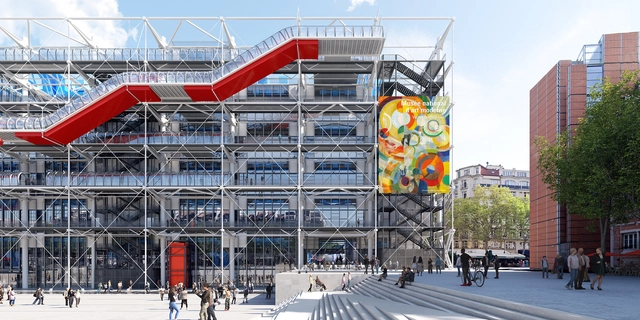
In 2020, the French Minister of Culture approved an extensive renovation program for the Centre Pompidou with the purpose of resolving the building's technical issues and ensuring the long-term viability of the iconic structure. Designed by Renzo Piano and Richard Rogers in 1971, the museum was conceived as a "living cultural machine," sparking controversy due to its unusual architecture. To ensure an efficient renovation process, the building will be fully closed for a period of 5 years, from September 2025 until 2030. French architecture studio Moreau Kusunoki has been commissioned to lead the renovation project, collaborating with Frida Escobedo Studio and AIA Life Designers, who are entrusted with the technical component of the project. The architects have been selected following an international competition, with Renzo Piano as one of the jury members.
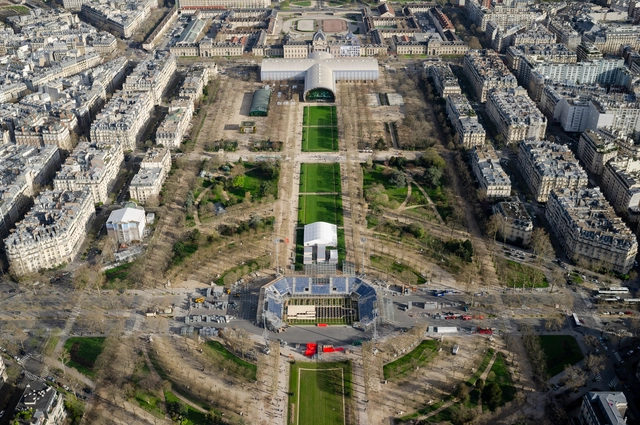
With just one month to go until the XXXIII Olympic Games in Paris, the city is in a final push to ensure that the landscape and infrastructure are ready for the world’s largest sporting event. Set to start on July 26 and continue until August 11, 2024, the Paris City Council has approved numerous initiatives to transform the city. Aiming for a greener, healthier, and more mobile Paris, the city has undergone massive changes to showcase its modern advancements and rethink the structure of the Olympic Games.
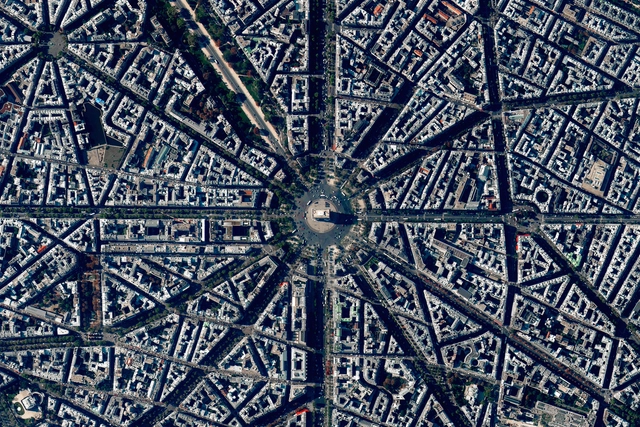
They say Rome wasn’t built in a day, and the same surely applies to one of the most prominent and glitzy cities in the world: magnificent Paris. It might even seem that both cities, of legendary repute, are somehow counterparts. They were both envisioned by an emperor who wanted to display a political message of innovation, grandeur, and opulence. In both cases, these major urban reforms and massive reconstructions blanketed any popular struggle or resistance with blinding beauty and a popular entertainment setup (from gladiators to cancan dancers and brasseries). And thus came to be the Paris that we now know, a city of divertissement that amasses over 30 million tourists a year.
But it’s also fascinating to learn how an entire growing city was dealt with as a single, almost experimental mass project. For over twenty years, from 1853 to 1870, Paris was a continuous construction site. With the implementation of new technologies and new design standards, the result was not just a different aesthetic but a completely new social order, urban sprawl, and way of life.
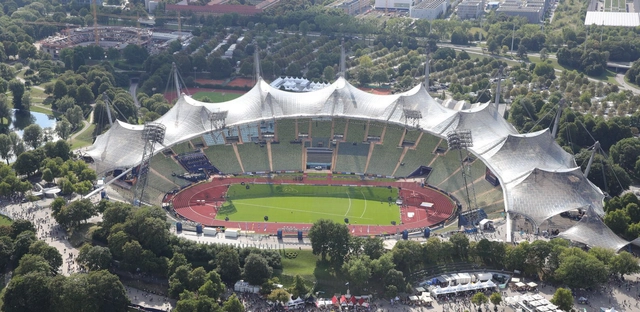
For cities, hosting an Olympic event represents both an honor, an important opportunity for growth, and a significant challenge. With over 200 nations taking part in the Games, the Olympics are the largest sporting competition in the world. Adapting the public and sporting infrastructure to accommodate this sudden influx of people and the scale of these events runs the risk of misunderstanding the cities’ needs after the closing ceremony, often producing “white elephants” that struggle to adapt to the rhythm and necessities of everyday urban life. Urban transformations are often cited as an advantage of hosting the Olympic Games, as cities are incentivized to invest in their traffic infrastructure, housing, and public spaces. One such example is the city of Paris, which introduced its first metro line on the occasion of hosting the second edition of the Olympic Games in 1900.
When it comes to the venues, however, the issue of adaptive reuse becomes a pressing one, as the architecture is challenged to find solutions to transform, accommodating thousands of people during the Olympics, then scaling down to become a financially sustainable part of a city’s sporting offering. Across the world, several Olympic venues have managed to extend their usability after the closing of the games, opening themselves to the local communities and welcoming a more diverse programming of sports and leisure events. While the high construction costs are often difficult to justify, these venues have become markers of local identity and attractive tourist attractions, extending their use decades after welcoming the Olympic crowds.
Beyond serving as mere backdrops for fashion shows, architecture often influences fashion collections, contributing spatially to their storytelling, offering material inspiration, and showcasing the connection between structure and shape. As both disciplines revolve around form, structure, and the human experience, architecture, and fashion share a strong connection, one often explored by creators in both fields. From meticulous tailoring and structural designs that mimic architectural lines, contours, and volumes, to architecture taking cues from how fashion works with the human shape, this interplay can create multidimensional experiences for the enthusiasts of both high fashion and architecture.
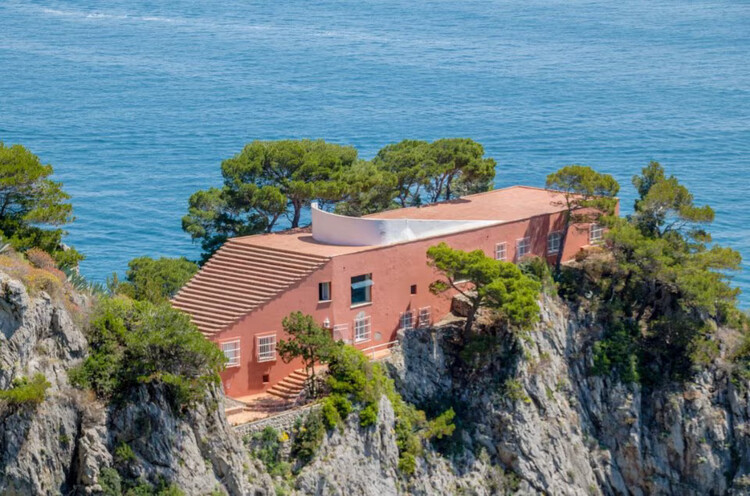
On June 10, French brand Jacquemus, known for its minimalist designs with surrealist touches, chose to celebrate its 15th anniversary with an exclusive runway show at Villa Malaparte. The location, usually inaccessible for this type of event, has made another exception for Saint Laurent, who featured it as the backdrop of its 2018 spring campaign starring Kate Moss.
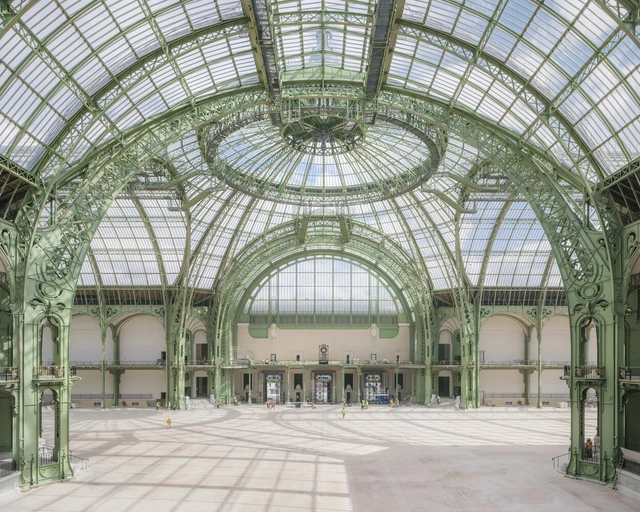
The Grand Palais, an iconic Parisian landmark, is set to play a significant role in the 2024 Paris Olympics following a major restoration by French studio Chatillon Architectes. The first images of the refurbished building, captured by Laurent Kronental, reveal the progress of the extensive project that began in 2021. While the full restoration is expected to be completed by 2025, the initial phase will be unveiled this summer, allowing the historic venue to host Olympic events, including the fencing and taekwondo competitions.

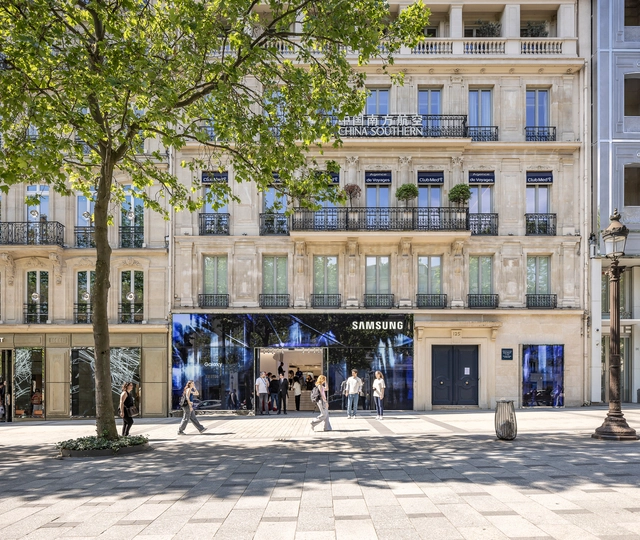
Renowned French architect Jean Nouvel has unveiled his design for Samsung’s pop-up store on the iconic Avenue des Champs-Élysées in Paris, France. The store aims to represent the company’s role as a Worldwide Olympic Partner, offering visitors a space where they can engage with the newest mobile technologies and Olympic-related activities. The first images by architectural photographer Jad Sylla highlight Jean Nouvel’s design of the immersive retail space.
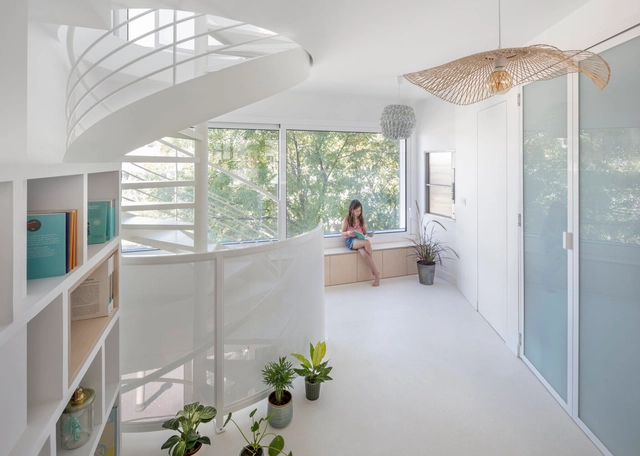
Whether rising to the highest room of the tallest tower in a Disney-esque castle, giving an admirer the chance to confess their love on an apartment building fire escape, or connecting a basement or attic room with a decorative period feature, there’s something unavoidably romantic about spiral staircases. But there’s more function behind these coiling forms than just their good looks.
One common-held theory is that spiral staircases were first installed in historic castles as vertical baffles, tiring out enemy infiltrators before they could make it to the top. This is why – it is said – many are set to turn clockwise on the ascent, so attackers have a smaller arc for swinging weapons (mostly held in right hands) than defenders making their descent.
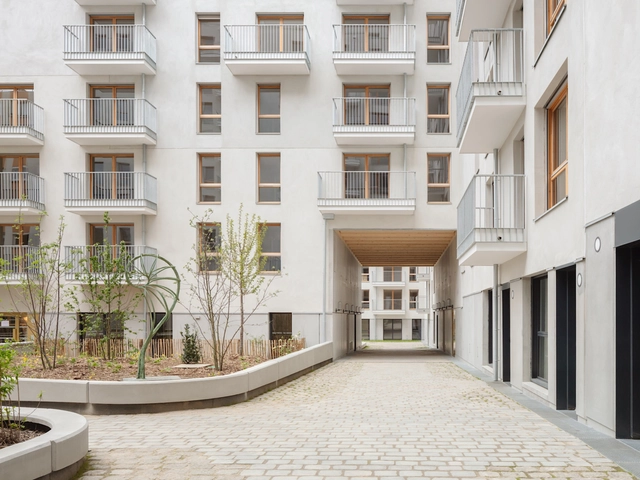
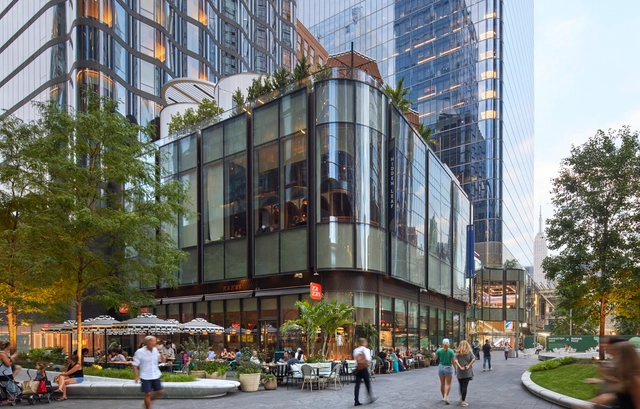
Airbnb has undoubtedly disrupted the hospitality industry, inspiring an ecosystem of companies leveraging the sharing economy such as co-living startups. While these companies have achieved impressive financial success, they have been purported to produce problematic effects at the scale of the city. Airbnb, in particular, is alleged to have driven an increase in rental prices in cities already grappling with housing affordability challenges. Much like the case of Uber's impact on urban mobility, Airbnb's rapid growth has caused significant challenges for local governments, demanding comprehensive regulation and a re-evaluation of its functioning at the city scale.


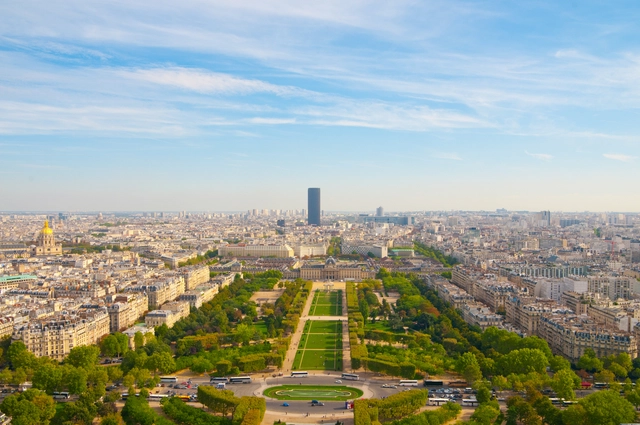
As France prepares for the XXXIII Olympic Games, Paris plans to showcase its rich cultural legacy. The 2024 Olympics, which will begin on July 25, 2024, are set to be a momentous occasion for the city as it anticipates competitors and spectators worldwide. Embracing a “pioneering approach,” Paris 2024 aims to reimagine the Olympic experience by departing from the traditional stadium venues and “integrating sports into the fabric of the city.” From the iconic Grand Palais to the Eiffel Tower, the Gardens of Versailles, and the famous La Concorde, world-famous landmarks are set to host the 2024 games.

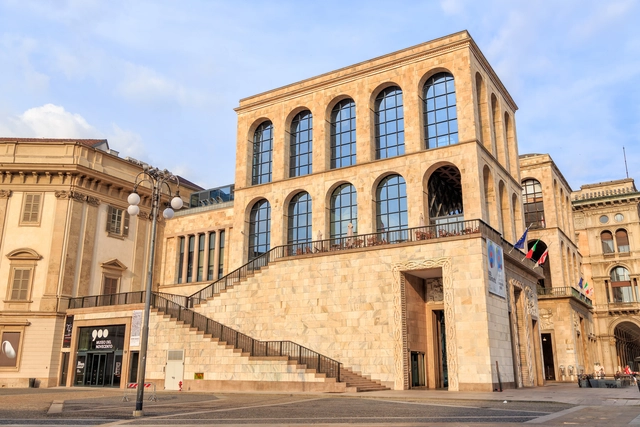
Italo Rota, the Milan-born Italian architect, designer, and innovator, passed away on Saturday, at the age of 70. Throughout his career, Rota demonstrated a remarkable ability to weave together thought-provoking ideas, often challenging mainstream conventions with his avant-garde visions. Often collaborating with the Italian firm CRA-Carlo Ratti Associati, his studio Italo Rota Building Office was involved in several high-visibility projects, including the design for the Italian Pavilion at Dubai Expo 2020 and the masterplan for Rome’s bid to host the World Expo in 2030.
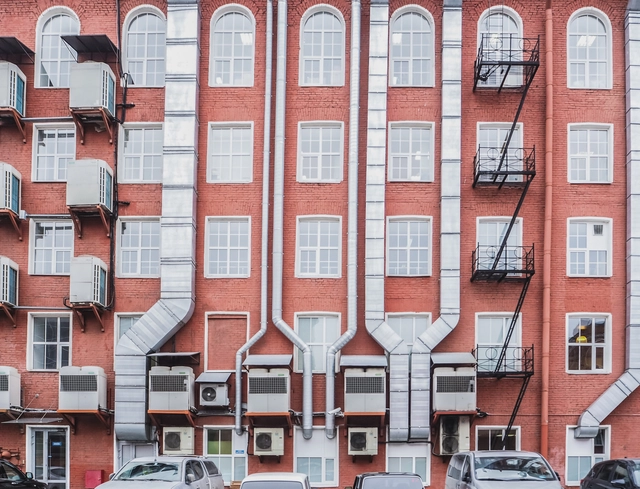
Rising demands for energy efficiency, technical functionality, and interior comfort in buildings necessitate the development of more efficient building envelope constructions. The building envelope serves as a mediator between a building's exterior and interior. In today's architectural landscape, it performs a multitude of functions to enhance the building's performance. These functions include building control systems, energy supply (such as gas and electricity), and heating, ventilation, and air conditioning (HVAC), among others. These elements primarily determine the functionality, efficiency, and safety of building spaces. Given that the nature of building envelopes heavily depends on these services, how can they serve as primary frameworks for building design development?