Arguably the leading name of a generation of internationally high-profile British architects, Norman Foster (born 1 June 1935)—or to give him his full title Norman Robert Foster, Baron Foster of Thames Bank of Reddish, OM, HonFREng—gained recognition as early as the 1970s as a key architect in the high-tech movement, which continues to have a profound impact on architecture as we know it today.
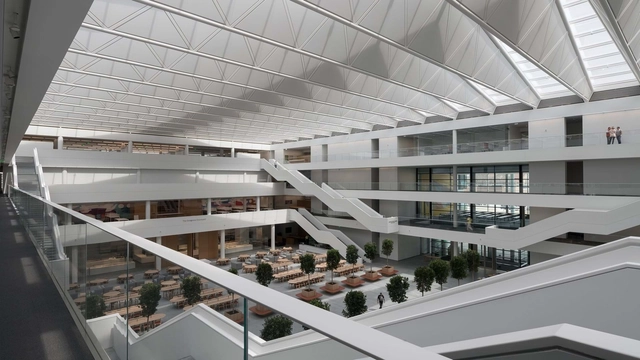
Foster + Partners'new Samson Health Pavilion celebrated its opening with a dedication ceremony in Cleveland, Ohio. Designed as part of the Health Education Campus at Case Western Reserve University, the project features an overhead canopy that leads to a grand internal courtyard. The pavilion was made as an investment in the future of health education for Case Western Reserve University and Cleveland Clinic.
Agustín Ferrer Casas has published an illustrated comic book charting the life and work of the renowned architect Mies van der Rohe. Featuring texts by Anatxu Zabalbeascoa and Norman Foster, MIES is a biopic inspired by Ferrer Casas’ reading of Mies van der Rohe: Menos es más by Anatxu Zabalbeascoa.
The presentation of the graphic novel is part of the Fundacio Mies van der Rohe's efforts to support new languages for the dissemination of knowledge of architecture that will be of interest to both professionals and those who want to learn about modern architecture through a rich, visual medium.
https://www.archdaily.com/914164/this-illustrated-comic-of-mies-van-der-rohe-features-text-by-norman-fosterNiall Patrick Walsh
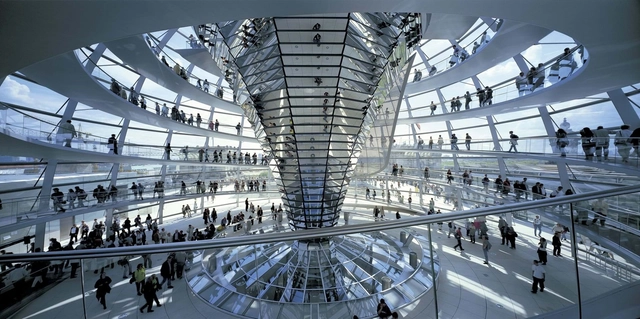
While many architects consider windows for brightening interior spaces, Norman Foster is intrigued by natural light from above. The British star architect has long held Louis Kahn and Alvar Aalto in high esteem for how they handled daylight - especially with regard to the roof. In particular large public buildings benefit from this strategy creating enjoyable spaces. Therefore, Foster regards daylight from above as indispensable when he develops megastructures for airports on the ground or tall skyscrapers for work. But daylight from above is much more than an aesthetic dimension, remarks Foster: "Quite apart from the humanistic and poetic qualities of natural light there are also energy implications."
When we get wrapped up in everyday life, it can be easy to take the place we live for granted. In the MiniLook Berlin video, Okapi Creative Studio takes a step back to show the beauty of daily life in the city of Berlin via a stop-motion, tilt-shift technique that makes the city appear as if in miniature. The video highlights everyday street scenes and picturesque shots of nature, while some famous buildings make appearances as well.
There are at least as many definitions of architecture as there are architects or people who comment on the practice of it. While some embrace it as art, others defend architecture’s seminal social responsibility as its most definitive attribute. To begin a sentence with “Architecture is” is a bold step into treacherous territory. And yet, many of us have uttered — or at least thought— “Architecture is…” while we’ve toiled away on an important project, or reflected on why we’ve chosen this professional path.
Most days, architecture is a tough practice; on others, it is wonderfully satisfying. Perhaps, though, most importantly, architecture is accommodating and inherently open to possibility.
This collection of statements illustrates the changing breadth of architecture’s significance; we may define it differently when talking among peers, or adjust our statements for outsiders.
Below, we have rounded up the 30 most influential architects in London, complete with examples of the architectural works which have put them on the city and world map.
Vatican City participated in the Venice Architecture Biennale for the first time this year, inviting the public to explore a sequence of unique chapels designed by renowned architects including Norman Foster and Eduardo Souto de Moura. Located in the woods that cover the island of San Giorgio Maggiore, the chapels offer interpretations of Gunnar Asplund’s 1920 chapel at Woodland Cemetery in Stockholm, a seminal example of modernist memorial architecture set in a similarly natural wooded context.
A new video produced by Spirit of Space offers a brief virtual tour of the structures that make up the Holy See’s pavilion, lingering on each just long enough to show different views and angles. As members of the public circulate through the chapels in each shot, the scenes give an impression of how each chapel guides circulation.
With the opening of the 16th Venice Architecture Biennale comes a look at the first ever contribution by the Holy See, an exhibition that brings together architects to design chapels that, after the Biennale, can be relocated to sites around the globe.
Located in a wooded area on the Venetian island of San Giorgio Maggiore, 10 chapels by architects including Norman Foster, Eduardo Souto de Moura, and Smiljan Radic, are joined by the Asplund Chapel by MAP Architects. This 11th structure serves as a prelude to the other chapels, while reflecting on Gunnar Asplund's 1920 design for the Woodland Chapel.
After being knighted in 1990 for services to architecture, winning the 1999 Pritzker Prize and then gaining peerage in the same year, it could be argued that there is no living architect that has had a larger impact on urban life than Norman Foster. In a recent talk, Foster addressed a sold-out Barbican Hall on the future of our growing urban landscape, in the seventh installment of the Architecture On Stage series organized by The Architecture Foundation with the Barbican. While the content was full of grandiose statements and predictions, of a scale similar to the projects Foster's practice undertakes, it was the problem-solving approach he showed that gave more of an insight into the man himself. The following 5 lessons gleaned from the presentation won't guarantee Foster-like levels of success, but they may be able to help you navigate the challenges that architecture can present, both personally and professionally.
The argument, made by architectural historian Charles Jencks in the introduction for the recently released book Postmodern Design Complete, that Postmodern styles never truly left the architectural profession is stronger than ever. The movement from the late 70s and 80s which began as a reaction against the utopian canon of modernism has recently been re-entering the architecture scene and defining our present moment of architectural culture.
This brings up an important question: What is the current movement of architecture? And what came directly after postmodernism? If anything, it was an immediate cry of “No more Po-Mo,” followed recently by a wave of “save Po-Mo” perhaps best demonstrated by the rallying to save Philip Johnson’s AT&T Tower from a Snøhetta makeover. Even Norman Foster claimed that although he was never a fan of the postmodern movement, he understood its importance in architectural history. Postmodernism is making its recursive return with Stirling-esque rule-breaking jokes and pictorial appearances.
In 2018 the Vatican will participate in the Venice Architecture Biennale for the first time. Ten international architects will construct 10 different chapels as part of the representation of the city-state in the Italian architecture event. The news was confirmed by Paraguayan media outlets ABC y Última Hora, who revealed that one of the participants was local architect Javier Corvalán.
The elite group of architects was selected by Francesco Dal Co, an Italian architecture historian and curator. The designers have been instructed that their chapels must be able to be relocated so that they can be deployed around the world, in places that are in need of these spaces of worship.
The architects who will build chapels in the 2018 Venice Architecture Biennale:
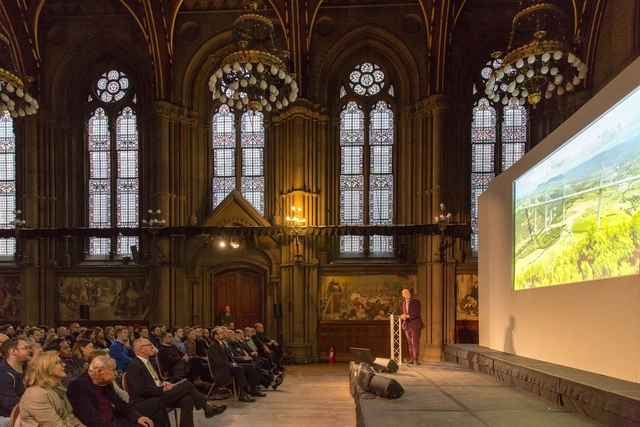
Lord Norman Foster speaking at the Royal Fine Art Commission Trust’s annual lecture in Manchester last year. Image Courtesy of Royal Fine Art Commission Trust
Lord Norman Foster has been named the next President of the UK’s Royal Fine Art Commission Trust, an independent charity aimed at promoting “visual awareness and public appreciation of high-quality design” within the United Kingdom.
Chaired by one of architecture’s foremost patrons, Lord Peter Palumbo, the organization was established in 1987 as a complement to the Royal Fine Art Commission (since absorbed into the UK Design Council), the Government’s advisor on matters affecting public amenity and aesthetics in England and Wales.
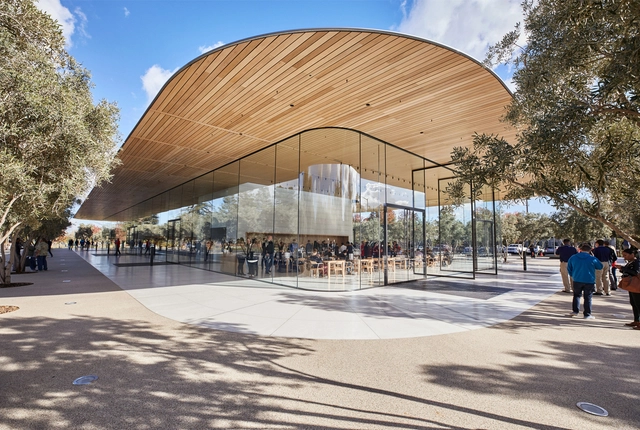
The Visitor's Center at Apple's new Cupertino campus has opened to the public. As the public face of a vast complex designed by Foster + Partners, the independent building is "a uniquely designed architectural extension" of the company's new headquarters. "With similar aesthetics in staircases, stone walls, and terrazzo floors," the center’s "cantilevered carbon fiber roof appears to float," supported only "by stone clad cores and no other extraneous columns for support."
https://www.archdaily.com/883989/foster-plus-partners-apple-park-visitors-center-opens-to-the-publicAD Editorial Team
Your obsession with transit-oriented design has been answered with the newest map series by Blue Crow Media. The first in this series, London Underground Architecture and Design Map curates original content by transport design historian, Mark Ovenden paired with photography by Will Scott to depict the London Underground. Mark Ovenden is a specialist in graphic design, cartography, and architecture in public transport with an emphasis on underground rapid transit, making him the natural fit for the design of this map.
If you’re trying to get buildings that work with nature, that consume less energy, that are more healthy, and more joyful, you need to go out to a younger generation, and try to anticipate the future
- Norman Foster
Even for a career filled with an impressive number of peaks, right now Norman Foster seems to be having a particular moment, with the completion of the world's most sustainable office building in London and the recent opening of the new Madrid headquarter of his eponymous think tank, the Norman Foster Foundation.
These triumphs have an inspired a profile in the most recent edition of Surface Magazine that takes a look at the extraordinary path of Foster's career and how he has grown into one of the architecture world's most successful businessmen. Written by the magazine's executive editor, William Hanley, the story features quotes from Foster during his recent trips to Madrid and London on topics ranging from tackling world problems to becoming the go-to designer for Apple's corporate headquarters and flagship stores.
https://www.archdaily.com/882623/surface-magazine-talks-to-norman-foster-about-designing-for-bloomberg-and-cementing-his-legacyAD Editorial Team
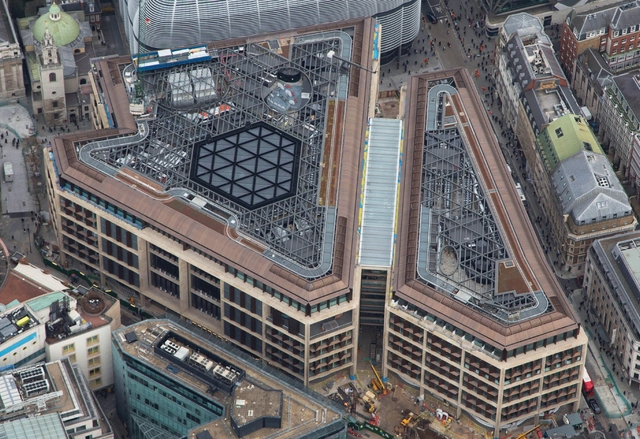
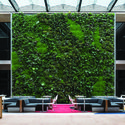
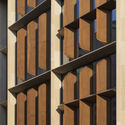
Bloomberg’s new European HQ, which is located in the heart of the City of London, has been rated the world’s most sustainable office building. Designed by Foster + Partners, the office complex has been awarded an Outstanding BREEAM rating, attaining a 98.5% score – the highest design-stage score ever achieved by any major office development.















.jpg?1526385880&format=webp&width=640&height=580)