

-
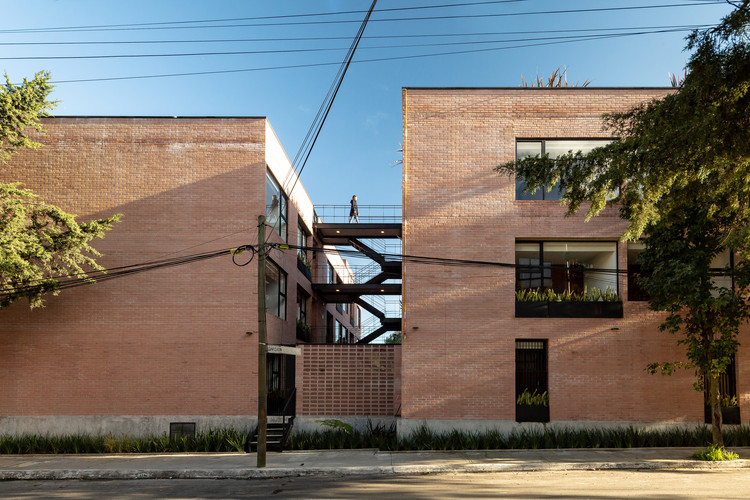
Architects: Ambrosi I Etchegaray
- Area: 2000 m²
- Year: 2016
-
Manufacturers: Subzero/Wolf, Cocinas Quetzal, Du Chateau, Hunter Douglas, Porcelanosa Grupo


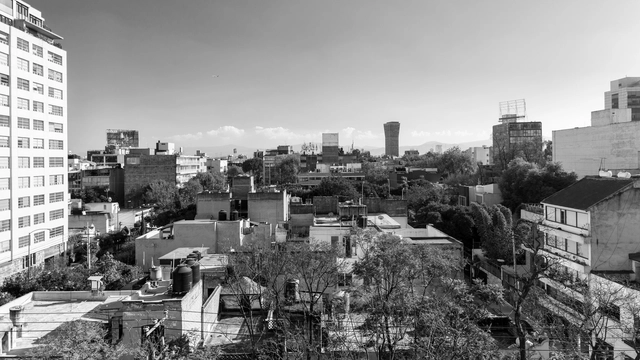
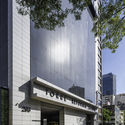
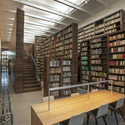
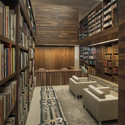
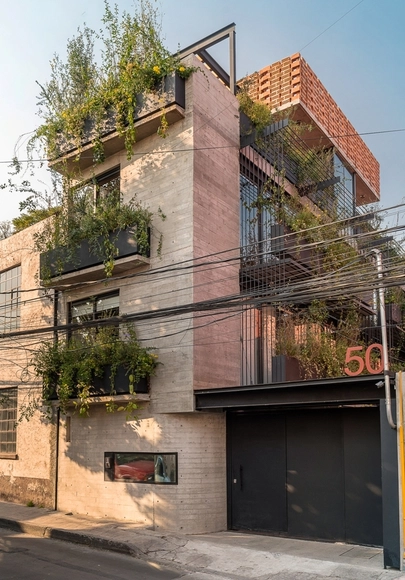
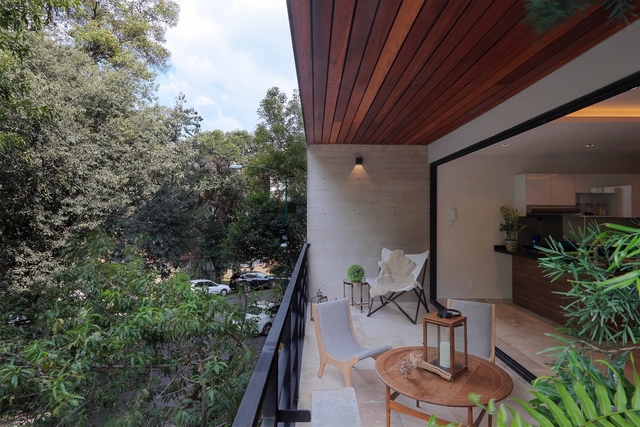
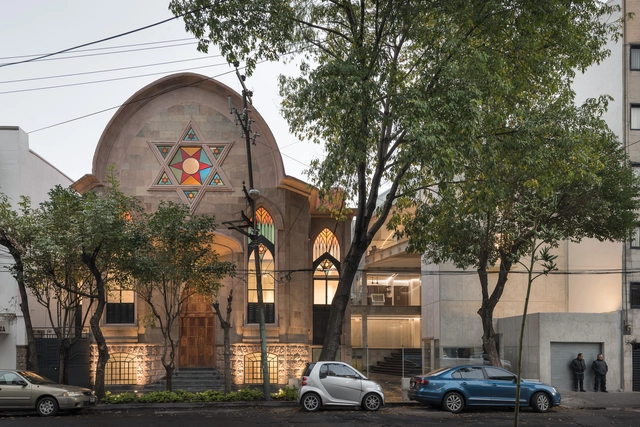
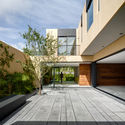
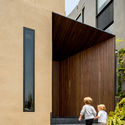
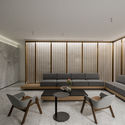
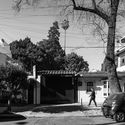
Colonia Roma, a neighborhood in Mexico City, is well known among locals for its art galleries, restaurants, bookstores and museums - it is a hotspot of contemporary art and culture. However, this cultural tradition actually dates back to the Porfirian Era in the early twentieth century. The area was a way to present Mexico City as a modern city by creating the first colony, along with Colonia Condesa, with all basic services available to the residents. Drawn with Parisian boulevards and tree-lined streets, Roma is an exemplar of art nouveau architecture, eclectic and French-ified – an attractive area that immediately led to the arrival of wealthy families.

The Zaha Hadid Virtual Reality Group has concluded the design phase of Project Correl, a collaborative experiment to test the potential of virtual reality as a tool for design. The results of the experiment are currently on display in the University Contemporary Art Museum (MUAC) in Mexico City, where it forms part of Zaha Hadid Architects’ “Design As Second Nature” exhibition.
Having launched at the end of 2018, Project Correl used VR headsets and apparatus to transport visitors to a virtual environment to collaborate with each other on an ever-evolving structure. The design was periodically captured and exhibited in the gallery as scaled 3D printed models to further demonstrate the design process encouraged by Correl. The final resulting model is now on display as part of the Design As Second Nature Exhibition.
.jpg?1414606549&format=webp&width=640&height=580)

Born in 1969 in Mexico City, Michel Rojkind was educated in the 1990s at the Universidad Iberoamericana, while also performing as a drummer in Aleks Syntek’s popular rock band la Gente Normal. He opened his practice Rojkind Arquitectos in 2002. Among his most representative built works are Foro Boca for the Boca del Rio Philharmonic Orchestra in Veracruz, a newly expanded film complex Cineteca Nacional in Mexico City, a pair of factory additions for the Nestlé Company in Queretaro, and the Nestlé Chocolate Museum in Toluca, all in Mexico. We spoke about how his architecture engages with people, why architects should assume roles that extend beyond architecture, and the importance of generosity and not worrying about designing everything 100%.
The following excerpt from my interview with Rojkind completes a series of conversations that I conducted in Mexico City while preparing my exhibition “Something Other than a Narrative” from the Architects’ Voices and Visions series at Facultad de Arquitectura Universidad Nacional Autónoma de México, UNAM.


Although the National Autonomous University of Mexico (UNAM), south of Mexico City, is home to the well-known O’Gorman murals, it is, in fact, the campus itself, that is quite intriguing. Walking through UNAM, individuals find themselves in an architectural display of modernist buildings that date back 70 years, along with open courtyards, hidden walkways, and pavilions. Uniquely, the campus buildings have a little bit of everything: bold geometry, openness, abstraction, humanistic design, permeability with nature, decaying masonry walls, local lava rocks used as walls, and pavers throughout the campus.
















.jpg?1414606492 "© Jaime Navarro")
.jpg?1414606523 "© Jaime Navarro")
.jpg?1414606538 "© Jaime Navarro")
.jpg?1414606519 "© Jaime Navarro")
.jpg?1414606549)
-2-72dpi.jpg?1549753958 "© The Raws")