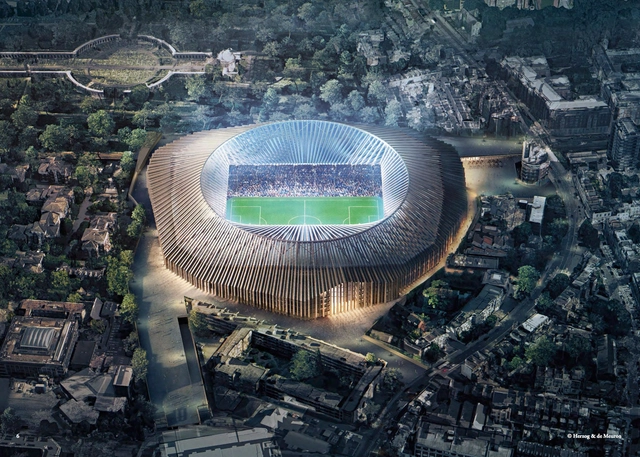
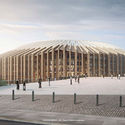
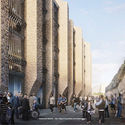
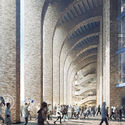
Originally, set to be completed by 2020, the Herzog & de Meuron £500million stadium for ChelseaFootball Club, will not move forward as planning permissions expired. The redevelopment plans, subject to numerous legal challenges throughout the years, are interrupted for now.
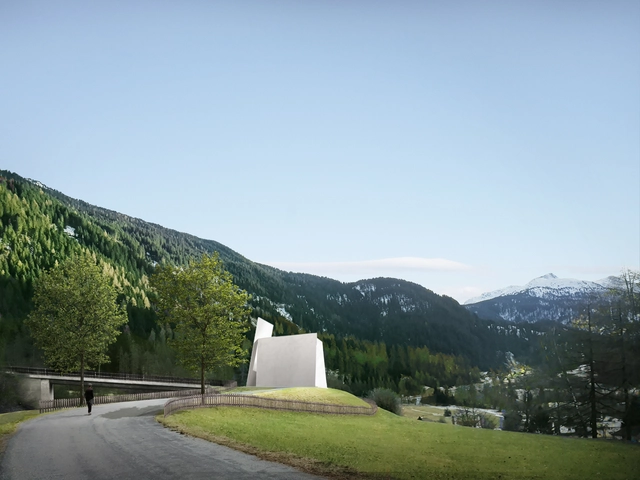
Herzog & de Meuron have designed a new motorway chapel for Andeer, Switzerland. The new project is sited on A13, the road that connects the village with Chur to the north, and to Ticino and Italy to the south. The idea for the chapel in Andeer was inspired by the site alone and its location, from the road itself.
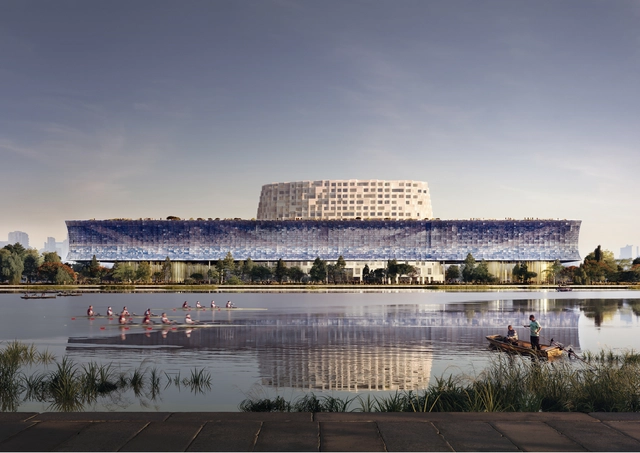
Waterfront View. Image Courtesy of Herzog & de Meuron
The Grand CanalMuseum Complex in Hangzhou, China designed by Herzog & de Meuron reflects on the importance of this area in Chinese cultural and natural landscapes. The project illustrates the story of the Grand Canal, through a continuous dialogue between the water and the museum.
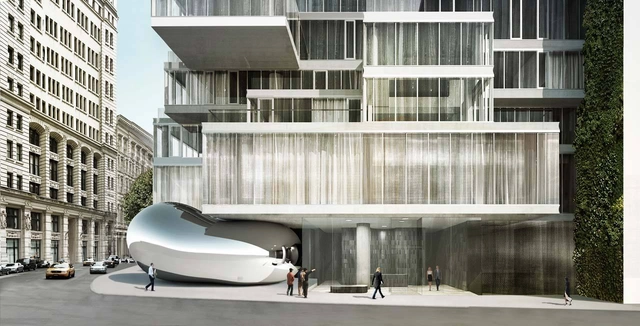
Artist Anish Kapoor will have his first permanent public work opening as part of 56 Leonard St. in New York. Located at the base of the residential tower by architects Herzog & de Meuron, the specially commissioned artwork is integrated into the architecture of the iconic New York tower. Marking the collaboration between artist and architect, the work aims to become a new cultural landmark in Tribeca.
Photographer Paul Clemence has captured a series of new photographs featuring Herzog & de Meuron's new Conrad Hotel. Sited in Washington D.C., the project worked with a range of height and volume restrictions to create a monolithic volume with subtle detailing. Showcasing the hotel's mirrored facade and interiors by Rottet Studio, the photographs from Paul and ARCHI-PHOTO capture both the project’s exterior and its signature interior atrium.
Videos
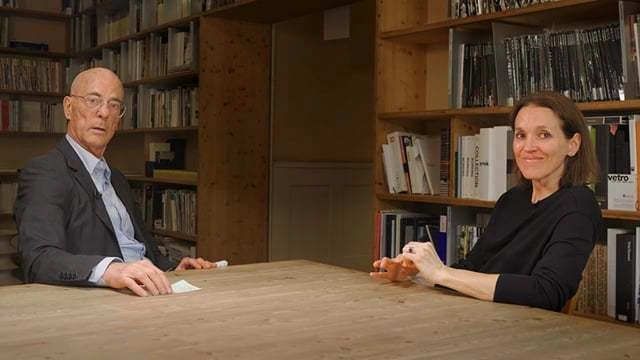
Jacques Herzog Meets Tatiana Bilbao: Everybody Deserves a Decent Home
Jacques Herzog met with Tatiana Bilbao at the Herzog & de Meuron’s studio in Basel, Switzerland on May 2019, and got to discuss the Mexican architect’s projects and architectural approach. The two long-time friends and prizewinning architects talked about the defining moments in their friendship and the advice of Herzog that improved Bilbao’s method.
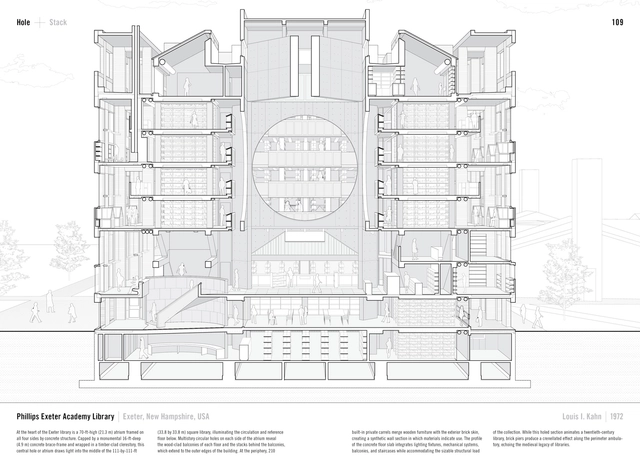
Phillips Exeter Academy Library by Louis I. Kahn (1972). Published in Manual of Section by Paul Lewis, Marc Tsurumaki, and David J. Lewis published by Princeton Architectural Press (2016). Image Courtesy of LTL Architects
For Paul Lewis, Marc Tsurumaki and David J. Lewis, the section “is often understood as a reductive drawing type, produced at the end of the design process to depict structural and material conditions in service of the construction contract.” A definition that will be familiar to most of those who have studied or worked in architecture at some point. We often think primarily of the plan, for it allows us to embrace the programmatic expectations of a project and provide a summary of the various functions required. In the modern age, digital modelling software programs offer ever more possibilities when it comes to creating complex three dimensional objects, making the section even more of an afterthought.
With theirManual of Section(2016), the three founding partners of LTL architects engage with section as an essential tool of architectural design, and let’s admit it, this reading might change your mind on the topic. For the co-authors, “thinking and designing through section requires the building of a discourse about section, recognizing it as a site of intervention.” Perhaps, indeed, we need to understand the capabilities of section drawings both to use them more efficiently and to enjoy doing so.
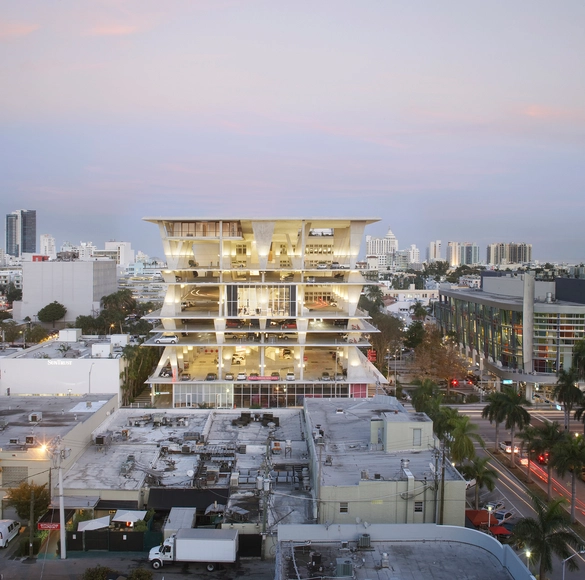
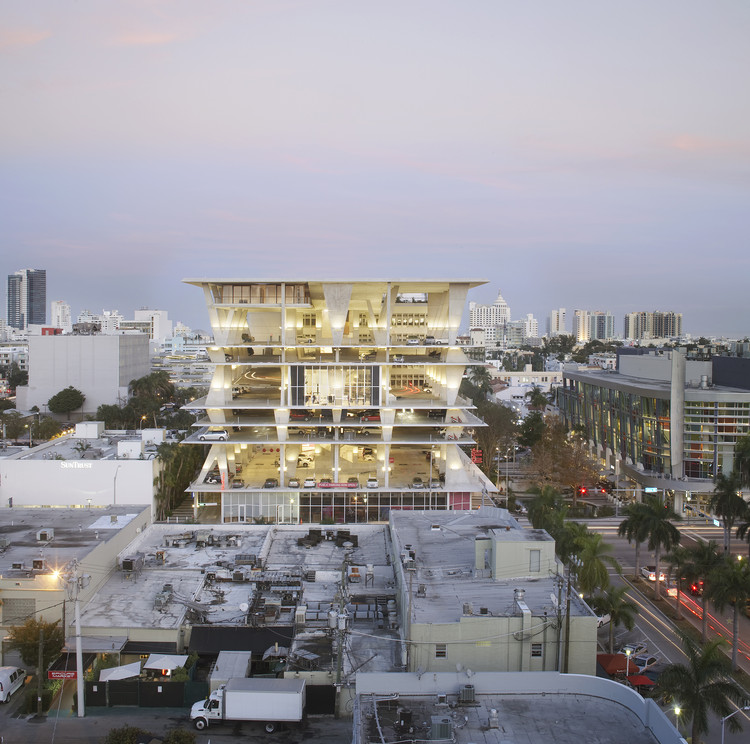
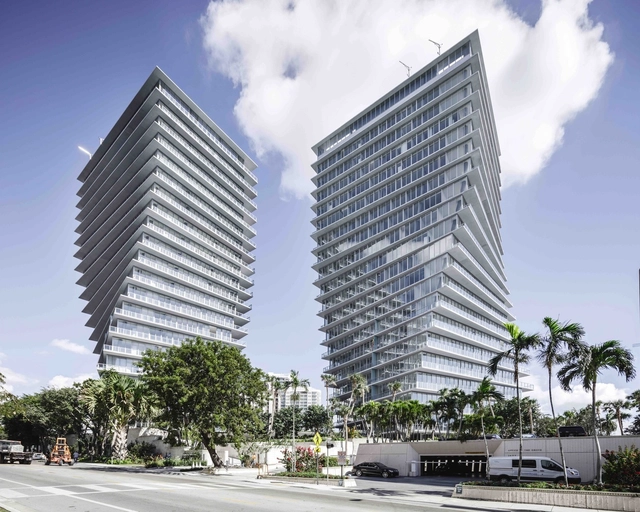
In the last decade, Miami has progressively transformed into a mecca of architecture and design. While the city’s tropical persona is most often associated with Art Deco, Miami offers a wide range of architectural styles from Mediterranean Revival to Miami Modern and everything in between. Over the years, the city has welcomed a some of the world’s leading talent including Pritzker Prize winners like “Queen of the Curves” Zaha Hadid, French visionary Jean Nouvel, Swiss duo Herzog & de Meuron, Frank Gehry and more – who have all left a lasting impression on Miami through their work. Whether visiting Miami Beach’s Art Deco district or the quaint, village-like Coconut Grove neighborhood, visitors can discover an array of awe-inspiring architecture no matter where their travels take them.
Herzog & De Meuron presented this week to the public their new vision for the cityscape and the urban life of Munich. The plan revolves around a former postal railway hub, the Paketposthalle, an impressive concrete structure built in the 60’s, used lately as a sorting office for general mail. The 87,000 square meters site was recently acquired by Büschl, a private group of developers, who commissioned Herzog & de Meuron to create a new urban study for the area.
For its 9th edition, the Moscow Urban Forum continues to consolidate as one of the world’s most relevant urban conferences, bringing together a diverse group of architects, urbanists, city mayors, government officials, economists, developers, academics, citizens, and professionals from diverse fields and nationalities.
While Pierre de Meuron’s main keynote puts focus on ongoing developments in the city of Moscow, by showcasing the ambitious scheme to redevelop the Badaevskiy Brewery, the lectures and presentations acknowledged the diverse areas that shape the city, including topics such as mental health, lifestyle of the millennial generation, evolution of work, or delivery platforms. The evolution of the role of the architect was present, with a growing number of professionals now working on startups in the tech, infrastructure, real estate, construction, and mobility sectors, the new city makers.
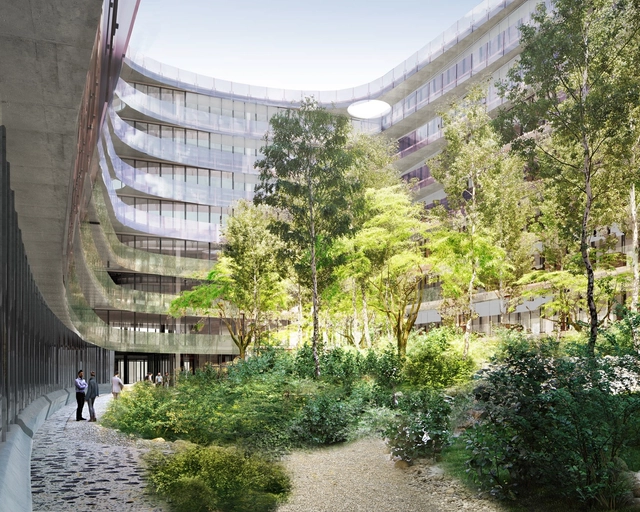
Herzog & de Meuron have released images of their proposed mixed-use office scheme in Munich, Germany. Reusing an old building south of Munich rail station, the project features a large courtyard garden accessible to the neighborhood at the center of the site.
https://www.archdaily.com/921288/herzog-and-de-meuron-reveal-urban-forest-office-in-munichNiall Patrick Walsh
With no shortage of historical buildings in need of expansion or repurposing, alterations of older architecture via contemporary interventions have flourished in the past four decades – particularly in service of new or growing art museums. These spaces represent the resilience of our historical legacy through contemporary times, demonstrating that the combination even of two vastly different architectural styles can be both beautiful and impressive. Here are ten of the best examples of contemporary interventions on historical buildings in art museums around the world.
https://www.archdaily.com/920474/10-historical-museum-buildings-with-contemporary-interventionsLilly Cao
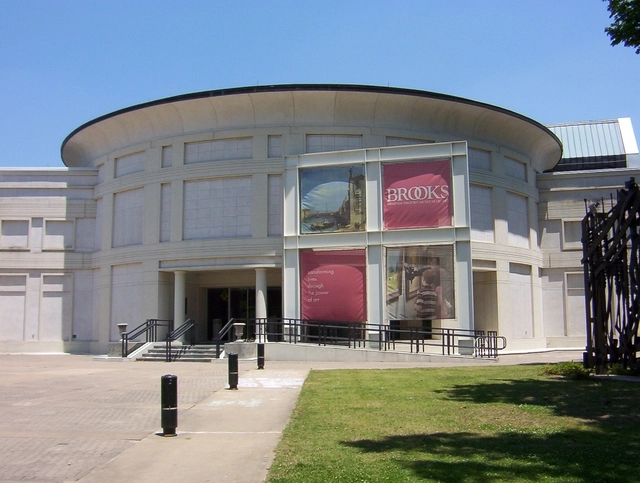
The Memphis Brooks Museum of Art has selected Herzog & de Meuron as design consultant for its new $105 million facility overlooking the Mississippi River in downtown Memphis, Tennessee. As the oldest and largest art museum in Tennessee, the Brooks is a cultural anchor for the tri-state area. Memphis-based archimania will serve as architect of record. The new Brooks aims to become the crowning jewel of the larger Memphis riverfront redevelopment project.
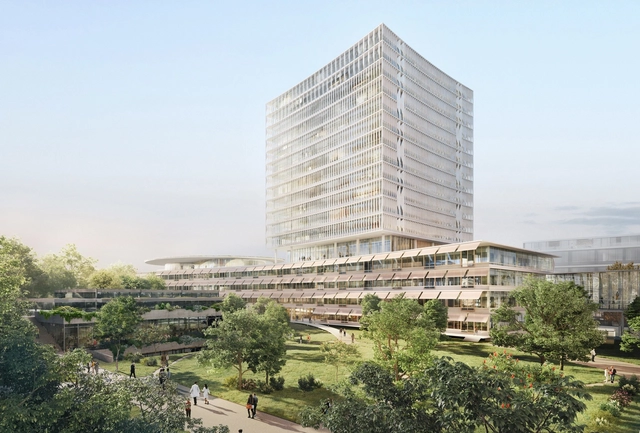
Herzog & de Meuron have released images of their proposed University Hospital Basel, Perimeter B in Switzerland. The 68-meter-tall building, with a footprint of over 5000 square meters, exhibits the firm's familiar clean, crisp aesthetic while paying respect to the surrounding historic context. Designed in collaboration with Rapp Architekten, the 12-story scheme will facilitate the hospital’s outpatient and nephrology centers.
https://www.archdaily.com/916930/herzog-and-de-meuron-design-crisp-university-hospital-for-baselNiall Patrick Walsh
Led by Jacques Herzog (born 19 April 1950) and Pierre de Meuron (born 8 May 1950), most descriptions of Herzog & de Meuron projects are almost paradoxical: in one paragraph they will be praised for their dedication to tradition and vernacular forms, in the next for their thoroughly modern innovation. However, in the hands of Herzog & de Meuron this is no paradox, as the internationally renowned architectural duo combine tradition and innovation in such a way that the two elements actually enhance each other.
Over 40 years of practice, Herzog + de Meuron have established themselves as one of the most celebrated practices in architecture. Their works span scale and site but are united by a sensitivity to material and detail that, today, often seems to fall by the wayside. The inner workings of the practice are notoriously private, but those interested in the process behind the project may soon have reason to celebrate.
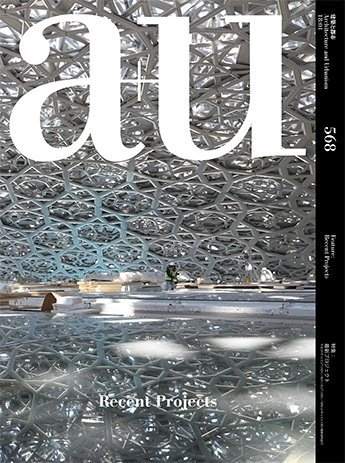
This edition of a+u introduces the 23 recent works of architecture and technology that emerged from their relationship with the urban structure or the development history. In this issue, we focus our attention on the process of conceiving and realizing the projects driven by various motivations and tactics. We invite readers to look beyond the confinement of a single building and examine the works on their possibilities to be in use for a long time.
The sale has not been without controversy, with opposition from the Arts Council’s reviewing committee on the export of works of art and objects of cultural interest. The committee had sought a delay in the sale until a buyer was found who would keep the collection in the UK.





.jpg?1570127165&format=webp&width=640&height=580)
.jpg?1570127040 "© Paul Clemence from ARCHI-PHOTO")
.jpg?1570127009 "© Paul Clemence from ARCHI-PHOTO")
.jpg?1570127020 "© Paul Clemence from ARCHI-PHOTO")
.jpg?1570127061 "© Paul Clemence from ARCHI-PHOTO")
.jpg?1570127165)


_HI_RES_(5)_copy.jpg?1565259186 "© Robin Hill. ImagePark Grove / OMA | Shohei Shigematsu")


.jpg?1565259275 "Courtesy of Herzog & de Meuron. Image1111 Lincoln Road / Herzog & de Meuron")