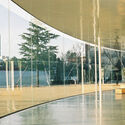
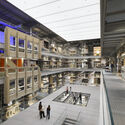
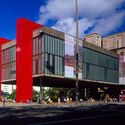
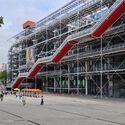
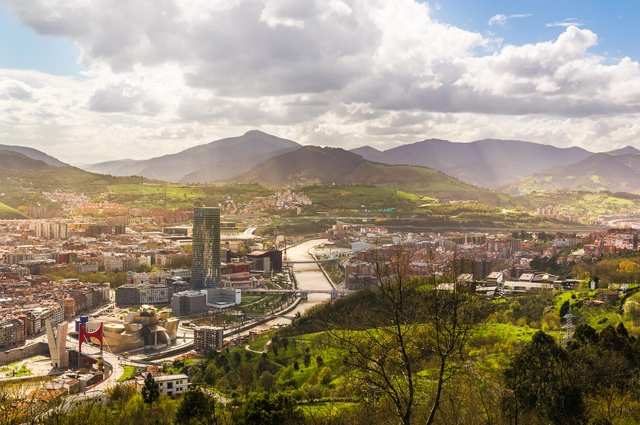
Bilbao, the largest city in Spain's Basque Country, has undergone a remarkable transformation over the past few decades. Once an industrial hub, the city has redefined itself as a center for culture, innovation, and urban regeneration. This evolution has been partly driven by architecture, which plays a central role in shaping Bilbao's identity. From contemporary landmarks to thoughtfully repurposed spaces, the city's built environment reflects a careful balance between honoring its industrial heritage and embracing modernity.
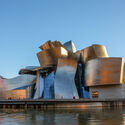
The turning point in Bilbao's architectural narrative came with the inauguration of the Guggenheim Museum Bilbao in 1997. Designed by Gehry Partners, this iconic structure catalyzed the city's renewal, sparking a wave of urban and cultural investments. This transformation became known as the "Bilbao effect," a phenomenon where a single, significant architectural project triggers wider urban regeneration and economic growth. Today, Bilbao is a dynamic architectural landscape, where works by international figures like Santiago Calatrava, Norman Foster, and Arata Isozaki coexist with projects by local studios such as ACXT and Coll-Barreu Arquitectos. Together, these interventions illustrate how architecture can be a powerful social, economic, and cultural revitalization tool.
As the largest city in the United States, New York City is one of the most diverse and vibrant cities in the world, recognized by many as the center for global media, culture, fashion art, and finance. The city was founded in 1624 by settlers from the Dutch Republic and has since grown into “the city that never sleeps”.
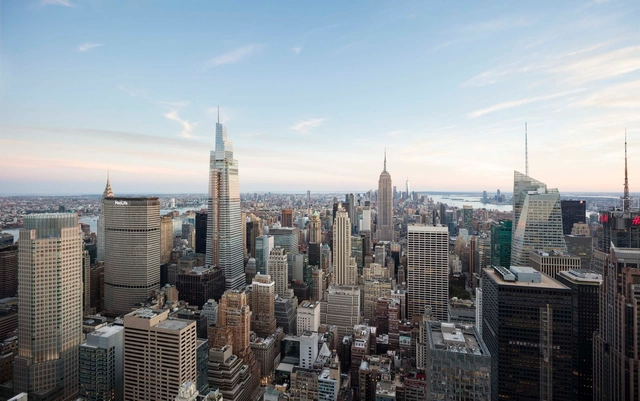
While almost every style of architecture exists in New York City, the metropolis is most well known for its skyscrapers, both in historical styles such as Neoclassical and Art Deco and in their varied contemporary expressions. The first building to bring the world's tallest title to New York was the New York World Building, in 1890. Later, New York City was home to the world's tallest building for 75 continuous years, starting with the Park Row Building in 1899.
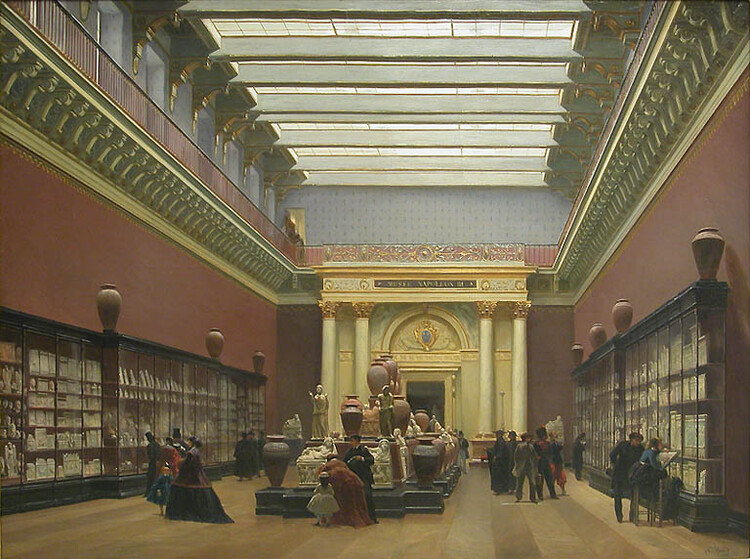
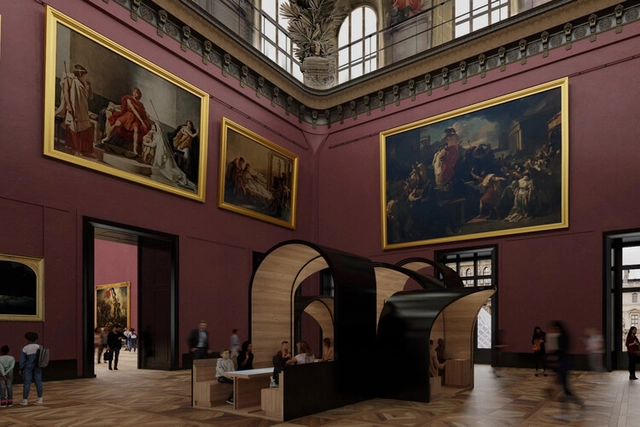
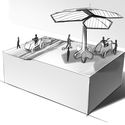
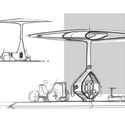
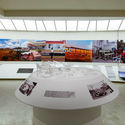
Louvre Museum Pavilions / France . Image Courtesy of Studio Malka Architecture
Housing objects of artistic, cultural, historical and scientific importance, the term ‘museum’ is derived from the Latin language. In regards to classical antiquity, in Ancient Greek ‘mouseion’, meaning ‘set of muses’ was a philosophical institution, a place for contemplation and thought. These muses refer to the 9 muses in Greek mythology, the goddesses of the arts and sciences, and patrons of knowledge. Early museums’ origins stem from private collections of wealthy families, individuals or institutions, displayed in ‘cabinets of curiosities’ and often temples and places of worship. Yet these ‘collections’ are predecessors of the modern museum, they did not seek to rationally categorize and exhibit their collections like the exhibitions we see today.
In definition, the modern museum is either a building or institution that cares for or displays a collection of numerous artifacts of cultural, historical, scientific or artistic importance. Through both permanent and temporary exhibits, most public museums make these artifacts available for viewing and often seek to conserve and document their collection, to serve both research and the general public. In essence, museums house collections of significance, whether these be on a small or large scale.
AMO, the think tank of the Office for Metropolitan Architecture (OMA), co-founded by Rem Koolhaas and led by Samir Bantal, has announced a recent research collaboration with Volkswagen. Focused on rural areas and the countryside, the partnership will look into the future of rural mobility, through a first conceptual study on electric tractors.
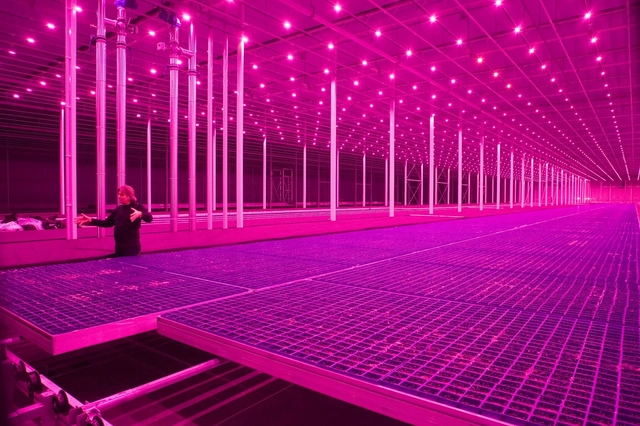
Countryside: Future of the World, a collaboration between Guggenheim and AMO / Rem Koolhaas examines radical changes transforming the non-urban landscape opens Fall 2019. Photo: Pieternel van Velden (Koppert Cress, The Netherlands 2011). Image Courtesy of Guggenheim
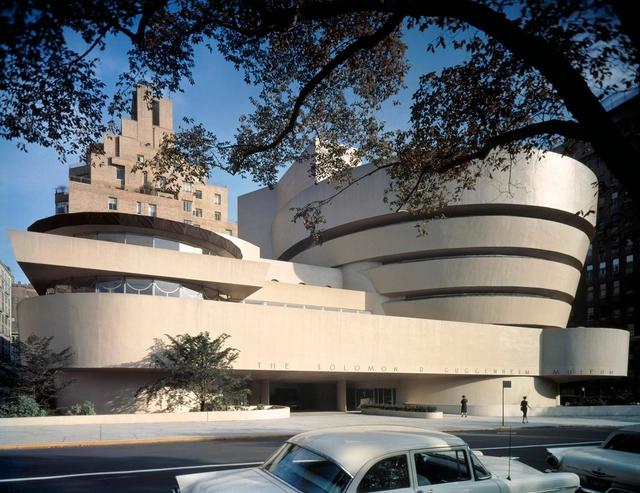
The Solomon R. Guggenheim Museum has announced a new research project exploring the “radical changes in the countryside, the vast nonurban areas of Earth” that will culminate in an exhibition at the museum’s Frank Lloyd Wright-designed New York home in Fall 2019.
Collaborating with Rem Koolhaas and his firm AMO, the think tank wing of OMA, the project will continue research already conducted by the Dutch architect and students from the Harvard Graduate School of Design.
This article originally appeared on guggenheim.org/blogs under the title "How Analog and Digital Came Together in the 1990s Creation of the Guggenheim Museum Bilbao," and is used with permission.
The Guggenheim Museum Bilbao, which celebrates its twentieth anniversary this month, has been hailed as a pinnacle of technological progress since its October 1997 opening. While the use of the modeling software CATIA (Computer Aided Three-Dimensional Interactive Application) was without question groundbreaking, some of the greatest moments of ingenuity during the building’s design and construction were distinctly low-tech. Developed between 1991 and 1997, the curved and angular titanium-clad building was conceived at the turning point between analog and digital practice. This profound shift enveloped and permeated every aspect of the project, from the design process and construction techniques to the methods of communication technology put to use.
Immerse yourself in the cultural and architectural heritage of Portugal and Northern Spain on a once-in-a-lifetime 17-day journey with Architectural Adventures. From historic Lisbon to vibrant Barcelona, visit and explore 14 cities and 6 UNESCO World Heritage Sites while enjoying world-class accommodations and fine regional dining. Sip Oporto’s famed port wine, see Santiago’s monumental cathedral, tour the Frank Gehry-designed Guggenheim Museum in Bilbao, and see where the bulls run in Pamplona before traversing the breathtaking Pyrenees Mountains en route to Barcelona and the Mediterranean Sea.
This article originally appeared on guggenheim.org/blogs under the title "Wright’s Living Organism: The Evolution of the Guggenheim Museum," and is used with permission.
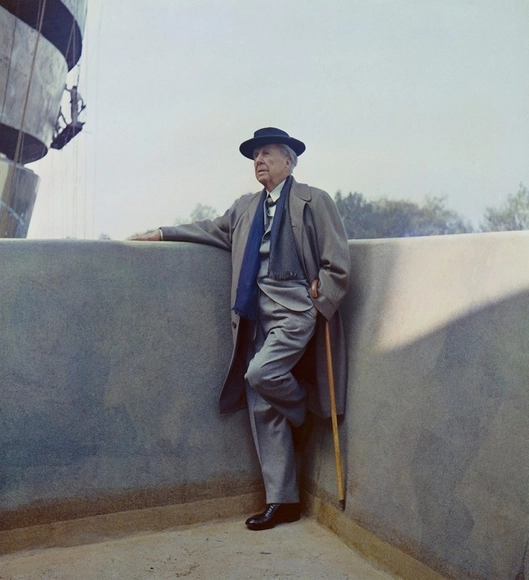
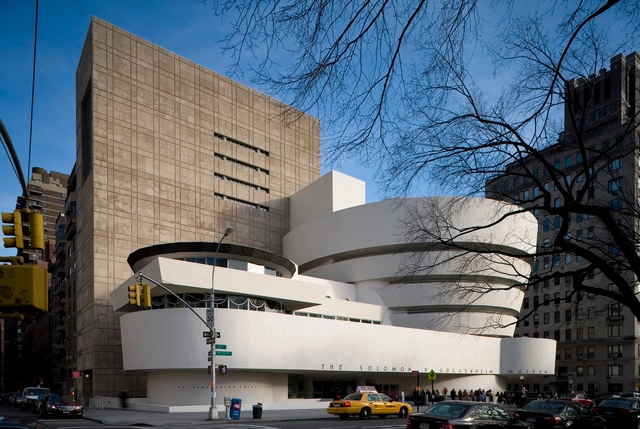
Standing on the Solomon R. Guggenheim Museum construction site in 1957, architect Frank Lloyd Wright proclaimed, “It is all one thing, all an integral, not part upon part. This is the principle I’ve always worked toward.” The “principle” that Wright referred to is the design ideology that he developed over the course of his seventy-year career: organic architecture. At its core, that principle was an aspiration for spatial continuity, in which every element of a building would be conceived not as a discretely designed module, but as a constituent of the whole.
Although not Wright’s intention per se, it is fitting that the building he conceived of as a living organism has evolved over time. The overall integrity and character-defining spiral form have remained unchanged, but there have been a series of additions and renovations necessitated by the growth and modernization of the institution.
From wonderment to disgust, the opening of Solomon R. Guggenheim Museum by Frank Lloyd Wright in 1959 was met with a wide range of reactions from the public. This profound cultural moment was distilled in a series of witty cartoons published in the New Yorker that simultaneously lampooned both the innovative architecture and its critics, which were recently shared in a blog post by the Guggenheim Museum. Through detailed sketches, cartoonist Alan Dunn represents the experience of the building, from staring into the exterior porthole windows to walking around the grand ramp. In one drawing he depicts the perspective from the first floor looking up at the dome, giving a sweeping sense of the curvature and geometries of the building.
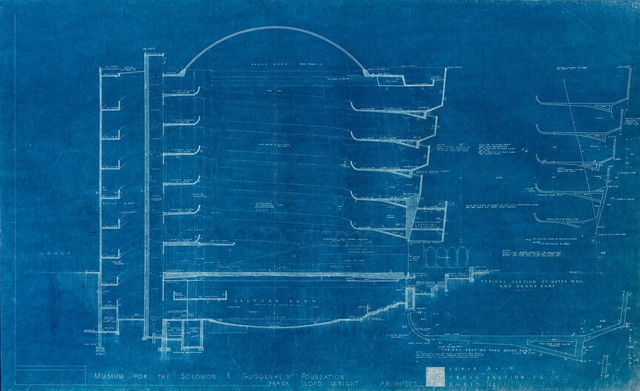
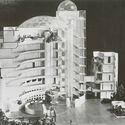
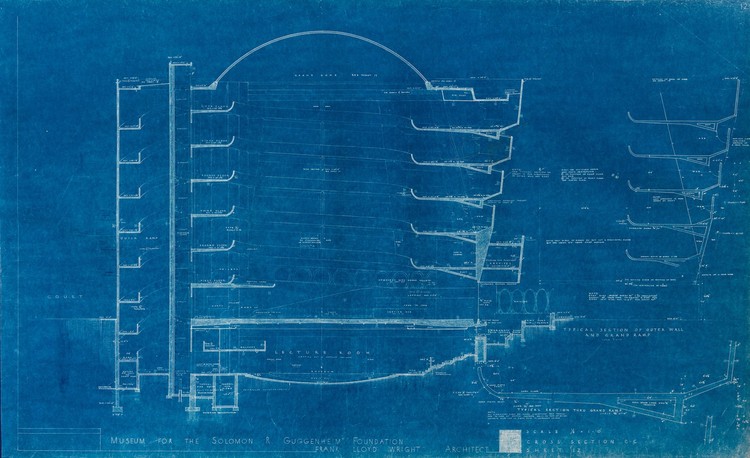
In a recent blog post from the Solomon R. Guggenheim Museum, curator Ashley Mendelsohn explores unrealized design details from Frank Lloyd Wright’s iconic design in New York City, based on blueprints and drawings from the museum’s archives. From large-scale questions of form to material choices, the 16-year period between the commission and the completion of the museum saw many design iterations. Most notable of these are the circulation paths drawn by Wright in the 1953 blueprints that include a steeper circular ramp—in addition to the "Grand Ramp"—that would allow for expedited access to the floors. Though replaced later with a triangular staircase, the "Quick Ramp" demonstrates Wright’s exploration of overlapping geometries.
The Guggenheim celebrates Frank Lloyd Wright’s 150th birth year kicking off on Thursday, June 8, Wright’s 150th birthday, with a special reduced admission of $1.50. Visitors will be treated to free birthday cupcakes in the Guggenheim’s newly renovated Cafe 3, which will feature large-scale, rarely seen photographs of the museum during its construction. An actor-historian portraying Frank Lloyd Wright will be on-site engaging with visitors between 9 am and 1 pm.
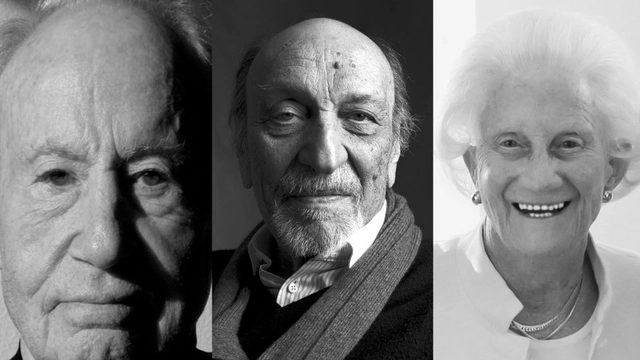
Chee Pearlman, journalist, conference creator, and design curator at TED Conferences moderates a conversation between design critic Ralph Caplan, graphic designer Milton Glaser, and architect Beverly Willis on the heritage of the design profession and its eventual legacy within the ecological, social, and service spheres, at the Solomon R. Guggenheim Museum.
The event is in celebration of the publication of "Twenty Over Eighty: Conversations on a Lifetime in Architecture and Design," a collection of insightful, intimate, and often irreverent interviews with twenty architecture and design legends over the age of eighty. The book’s authors, Aileen Kwun and Bryn Smith, will
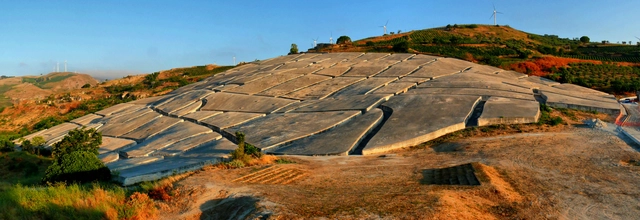
This first major retrospective of Alberto Burri's (1915-1995) work in the United States in nearly forty years will close at New York City's Guggenheim Museum later this week. More than one hundred works are on display covering his entire career, culminating in a film of Burri's largest work: the reinterpretation of the ruins of Gibellina, in Sicily. The old city, destroyed by the 1968 Belice earthquake, was later encased in concrete preserving the morphology of the buildings and the city's medieval streetscape. Alongside his two-dimensional work, the exhibition ultimately seeks to demonstrate how Burri blurred the line between painting and sculptural relief that directly influenced the Neo-Dada, Process art, and Arte Povera movements.
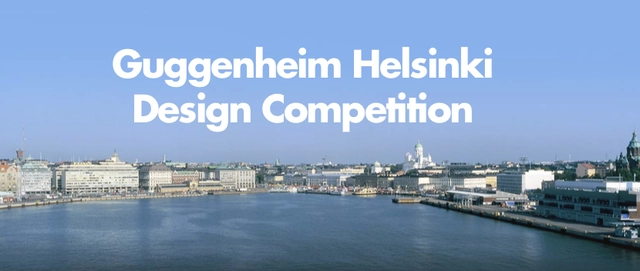
The Solomon R. Guggenheim Museum is planning to construct a second location in New York City. As reported on the Art Newspaper, the expansion project, known as the “Collection Center,” aims to “consolidate its staff and art storage into one efficient, multi-use building with a dynamic public programming component.” The news broke with the release of a curatorial job position, seeking personnel to assist in the center’s planning and a possible architecture competition that will ensure the “Guggenheim’s reputation for being a visionary architectural patron” is preserved. Meanwhile, the Guggenheim is expected to narrow its selection to six for its new Helsinki location in November.
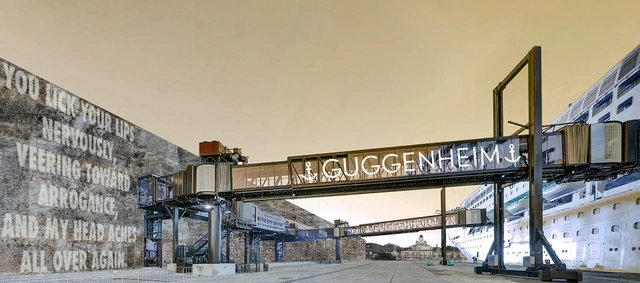
When you visit the galleries of GuggenheimHelsinki, you may have to bring a life vest. This submission to the Guggenheim Helsinki Design Competition floats the idea of a museum over water, traveling between the ports of St. Petersburg, Tallinn, and Helsinki. Proposed as a hypothetical submission to the worldwide contest, the team at OfficeUS delve into the notion of transience in the new world of architourism. The brief reads: "As a global freeport, the museum develops a completely new infrastructure, offering the strategic tax benefits of freeport art storage while enabling exhibitions of some of the most important pieces of modern art and design." Upcoming exhibits include (hypothetically) Olafur Elliasson, Yves Klein and Thomas Demand.
As part of his strategy to solidify the "Olympic Legacy" of East London, Mayor Boris Johnson has recently been focusing on providing the Queen Elizabeth Olympic Park with a little more diversity in its buildings, placing an emphasis on bringing cultural institutions alongside the sports buildings. Now, alongside the V&A's plans for new galleries and University College London's proposed design school and cultural centre, The Art Newspaper reports that Johnson is out to grab a headline attraction: London's own Guggenheim.