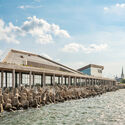
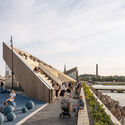
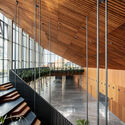
The Pier / Kavakava Architects

© Margit Argus

Architects: Kavakava Architects
Location: , Estonia
Architect In Charge: Siiri Vallner, Indrek Peil
Year: 2011
Photographs: Margit Argus, Siiri Vallner, Maarin Murk, Tarvo Hanno Varres, Courtesy of

Tallinn Architecture Biennale Vision Competition 2013

Courtesy of 2013

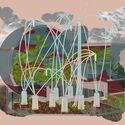
The topic of this year’s Tallinn Architecture Biennale Vision Competition, Recycling Socialism, seeks architectural ideas and methods to envision the future of an iconic circular block-housing district in – Väike-Õismäe (“Little Blossom Hill”). Väike-Õismäe stands apart from other similar neighborhoods in Tallinn by way of its concentric plan derived from the idea of a circle-city. The district is positioned circularly as a single, complete solution around a pond in the middle and the environment and modern-day life are still searching for a common language. More information and a video after the break.

Apartment Building in Lootsi Street / HGA (Hayashi-Grossschmidt Arhitektuur)

© Kalle Veesaar

Architects: HGA (Hayashi-Grossschmidt Arhitektuur)
Location: , Estonia
Architects In Charge: Hanno Grossschmidt, Tomomi Hayashi, Pille Heinloo
Area: 1701.0 sqm
Year: 2005
Photographs: Kalle Veesaar, Tomomi Hayashi

Rotermann’s Old and New Flour Storage / HGA (Hayashi-Grossschmidt Arhitektuur)

© Martin Siplane

Architects: HGA (Hayashi – Grossschmidt Arhitektuur)
Location: Tallin,
Design Team: Hanno Grossschmidt, Tomomi Hayashi, Yoko Azukawa
Area: 9002 sqm
Year: 2009
Photographs: Martin Siplane, Arne Maasik, Sven Soome, Tomomi Hayashi, Reio Avaste, Courtesy of Rotermann City

Winners of the Tallinn Vision Competition Street 2020

Peer to Peer / Warren Techentin Architecture (WTARCH)

Warren Techentin Architecture (WTARCH)’s entry “Peer-to-Peer” received the €3000 I prize of the Tallinn Vision competition STREET 2020, held under the auspices of TAB Tallinn Architecture Biennale.

Tallinn Vision competition STREET 2020 was addressed to young architects and architecture students who were asked to describe a fluently connected, compatible and diverse urban landscape, with a focus on one particular urban typology: the street. The organizers received 35 competition entries, 34 of which qualified. Entries were submitted from Japan, Bangladesh, New-Zealand, Turkey, Italy, Poland, USA, Austria, Lithuania, and other countries.

The architects from WTARCH describe their winning proposal after the break

Tallinn Architecture Biennale: September 8-11, 2011

Tallinn Architecture Biennale is a new international architecture forum that brings together theory and practice as well as young and experienced architects in order to arouse rich discussion upon the issues of architecture, urban planning and landscape. The first TAB concentrates on the hybrid issue of Landscape Urbanism.

Our hope is to see landscape urbanism as a ’third way’ which can solve urban problems that have proved too difficult for conventional planning methods. Landscape urbanism could provide answers to the question of how to guide urban processes from the inside so that the system as a whole would maintain its balance and integrity. The term ’landscape’ is here used primarily as a model of consistency, responsiveness and scale, that is, a conceptual tool rather than a direct reference to nature.

For further details on this years Architecture Biennale, please follow after the break.

NO99 Straw Theatre / Salto AB

© Martin Siplane

Architects: Salto AB
Location: Tallinn,
Project Year: 2011
Photographs: Martin Siplane, Karli Luik

Tallinn Music High School, Ballet School and Georg Otsa Music School / Atelier Thomas Pucher

rendering

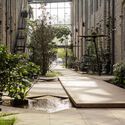
The key concept of this project was to create not only a building but also a new meaningful city space connecting the people, the place, its history and their music. The building delimits the boundaries of the plot, enclosing an expanse of green at its core: a garden that is urban yet isolated from the hubbub of the city.

RAKVERE Summer Theater / Kadarik Tüür Arhitektid

© Courtesy of Kadarik Tüür Arhitektid

Architects: Kadarik Tüür Arhitektid
Location: ,
Client: SA Rakvere Teatrimaja
Project Year: 2011
Project Area: 400 sqm
Photographs: Courtesy of Kadarik Tüür Arhitektid

Call for Ideas: TAB Vision Competition / Street 2020

Tallinn Architecture Biennale is a new architecture forum that brings together theory and practice, young and experienced architects in order to arouse rich discussion over architecture, urban planning and landscape issues. First TAB concentrates on the hybrid issue of Landscape Urbanism. TAB Vision Competition is addressed to students and young architects, landscape architects and planners who are welcome to shape future cities and make room for fresh ideas.

Our hope is to see landscape urbanism as so-called ‘third way’, which can possibly solve urban problems that have proved too difficult for traditional planning because of rapid processes, constant change and instability. Landscape urbanism could also provide answers how to guide urban processes from inside, so that the system as a whole still maintains a balance. The term ’landscape’ is used primarily as the model for consistency, responsiveness and scale.

For more information go to the competition’s official website.