In 2013 ArchDaily published the article “Can We Please Stop Drawing Trees on Top of Skyscrapers,” - its author was frustrated by rampant greenwashing. If you wanted it to look sustainable, you’d just have to put a tree on it. Plants have always been an effective marketing tactic to appeal to the environmentally conscious, but as soon as they are photoshopped in, they are often discarded at the first whiff of value engineering. Given the voluminous flurry of vigorous commentary and debate following that publication (2013, 2016, 2016) it is clear there is something that persists, perhaps a widely felt instinct that in truth, our urban “landscapes” are unsustainable, and often unlivable. Our cities not only take advantage of the ecosystem services of far-off forests and groundwater to support our carbon production, air pollution, and water wastage, exhausting arable land to feed our increasingly urban populations but simultaneously create urban areas devoid of life that increase our carbon footprints and negatively impact human health and well-being.
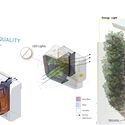
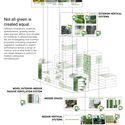
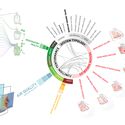
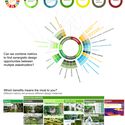

Currently, the Tallinn Architecture Biennale is also asking architects, designers, and thinkers from around the world to rec-consider our relationship to food. Beyond such alternatives as 3D printing meat, there is a direct and embedded relationship between food and agriculture, between food and growing plants, and rather than growing them in far-flung corners of the world, growing plants in and around the places we live. But there is a difficult relationship between urbanism, buildings, and “nature” whether cultivated or wild. Even though skyscrapers may not be built for trees, there is some grain of truth we hold onto that the concrete jungle isn’t always the proper jungle. We still strive to incorporate more plants, somewhere, somehow. There is increasing acknowledgment, both in the scientific community and the general public that natural systems have evolved far more advanced means of sustaining life than we can even imagine engineering, and therefore we might more wisely design with the intelligence of living systems as opposed to continuing to try to replace them with mechanical and chemical systems.