Bjarke Ingels Group has launched an exhibition at the Danish Architecture Center, reflecting on the firm’s extensive history in design. “Formgiving – An Architectural Future History from Big Bang to Singularity” explores how the world around us has taken shape with 71 BIG projects.
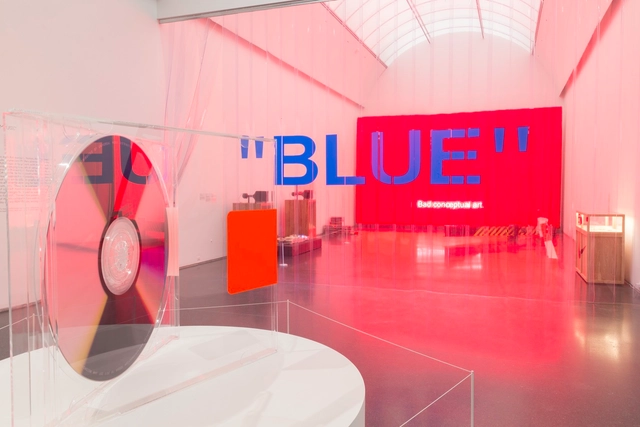
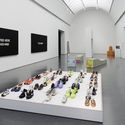
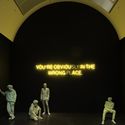
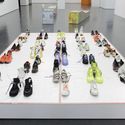
The Museum of Contemporary Art Chicago is presenting an exhibition devoted to the work of the ultra-modern, genre-bending artist and designer Virgil Abloh. Titled “Virgil Abloh: Figures of Speech” the immersive space has been curated by the Museum's Chief Curator Michael Darling, and Samir Bantal, a director at OMA’s research wing, focusing on the creative process and collaborative work of Abloh who is redefining fashion, art, and design.
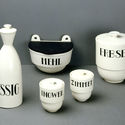
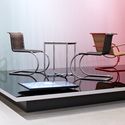
On the weekend of the 5th-7th of April, the city of Weimar celebrated the opening of the recently-completed Bauhaus Museum, along with its permanent exhibition of the 100-year history of Bauhaus.
Located near the Neue Museum, the concrete structure was designed by German architect Prof. Heike Hanada. The architect followed the school’s minimalist approach, and developed a 5-storey cubic building, with a clearly defined geometric form and horizontal grooves all around the facade. The museum’s permanent exhibition, which was designed and curated by Barbara Holzer of Holzer Kobler Architekturen, houses the world’s oldest Bauhaus collection, bringing forth debates on contemporary design and showcasing the school’s most notable inventions.
In an exclusive interview with ArchDaily, Holzer explains the creative process of designing the exhibition space, and some of the challenges she faced while exhibiting Bauhaus' distinguished works.
It is officially the time of year when the streets of Milan flood with design enthusiasts, eager to explore cutting-edge innovations and intricate Italian craftsmanship exhibited during Milan Design Week. From the 9th till the 14th of April, ArchDaily, along with 300,000 visitors hailing from countries all across the globe, will exchange ideas and indulge in the most recent furniture, product, and interior design technologies.
As part of Milan Design Week, Salone del Mobile, the most anticipated furniture and interior design event of the year, will be hosting more than 2,000 exhibitors at the Milan Fairgrounds in Rho, ranging from renowned architecture studios and architects to upcoming designers who are debuting their creations for the very first time. The list of acclaimed architecture studios participating in the Salone includes Zaha Hadid Design, Renzo Piano, John Pawson, and UNStudio to name a few.
Since graduating from the Cooper Union School of Architecture in 1996, Vladimir Belogolovsky has crossed disciplinary boundaries by transitioning from practicing architecture to becoming an exhibition curator and critic to evolving as a conceptual installation artist in his pursuit of continuously scrutinizing two fundamental questions – what is an exhibition and what is architecture?
I am Interested in Seeing the Future is Belogolovsky’s fifth installation of his 'Architects’ Voices' project for which he has interviewed over 300 leading international architects. Here, his focus is on five American and five Chinese architects who discussed with him their intentions, inspirations, dreams, frustrations, and hopes.
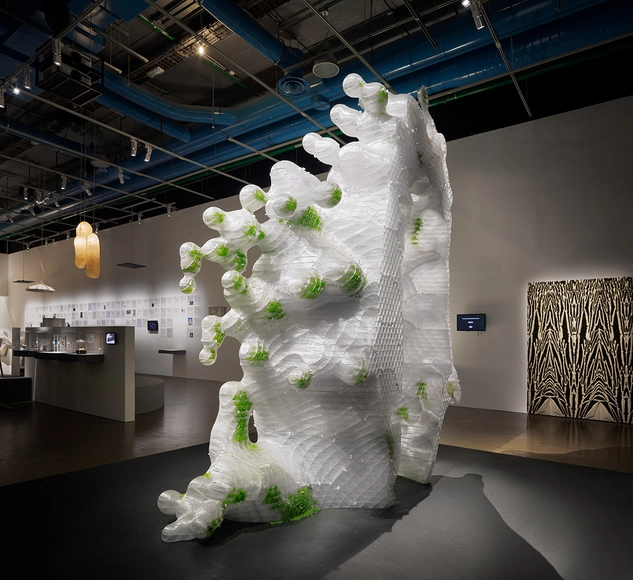
The renowned Centre Pompidou in Paris is to open its doors to two living sculptures, embodying the future forms of spatial intelligence. The exhibition, titled “La Fabrique du vivant” [The Fabric of the Living], will feature “H.O.R.T.U.S. XL Astaxanthin.g” by ecoLogicStudio in collaboration with Innsbruck University - Synthetic Landscape Lab, CREATE Group / WASP Hub Denmark - University of Southern Denmark, and "XenoDerma" by Urban Morphogenesis Lab directed by Claudia Pasquero at The Bartlett UCL.
Running from February 20th to April 15th, the exhibition will examine the notion of “living” in a digital era, where new interactions are emerging between the fields of life science, neuroscience, and synthetic biology. Permeating the entire urbanscape, this global, digital apparatus “encompasses miniaturization, distribution, and intelligence of manmade urban networks of in-human complexity, engendering evolving processes of synthetic life on Earth.”
Winter is hardly the high season for Toronto's waterfront. Nevertheless, the annual design competition Ice Breakers aims to draw people back to the outdoors, populating the frozen harborside with installations celebrating the winter. This year's winning designs are currently on show, centering around the theme "Signal Transmission."
For a third year in a row, Ports Toronto and the Waterfront Business Improvement Area (WBIA) partnered to produce this 2019 exhibition. Out of hundreds of international submissions, the winning designs include an illuminated starlight house, kaleidoscopic mirrors, and arches of bells, now on display until February 24.
See all five winning installations with descriptions by the architects below.
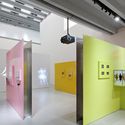
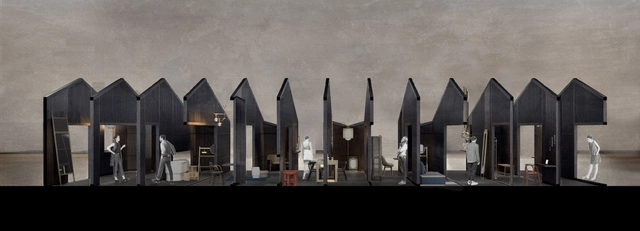
Shanghai/London-based firm Neri&Hu has published details of their “Unfolding Village” installation, set to take center stage at the StockholmFurniture & Light Fair 2019. The exhibition, taking place in February, will see Neri&Hu depart from the traditional convention of furniture fairs, often purely focused on product design, and instead actively engage with pressing social issues unique to their base country of China.
Having recently studied the issue of disappearing villages and village cultures in China, the designers were alarmed by the impact of such a disappearance on community, family, and cultural roots. With many products centered on the ideas of nostalgia, dwelling, and “the individual’s relationship within a collective,” the firm created the “Unfolding Village” exhibition to capture the essence of traditional Chinese villages.
https://www.archdaily.com/909620/unfolding-village-exhibition-celebrates-vanishing-cultures-of-gossip-and-eavesdroppingNiall Patrick Walsh
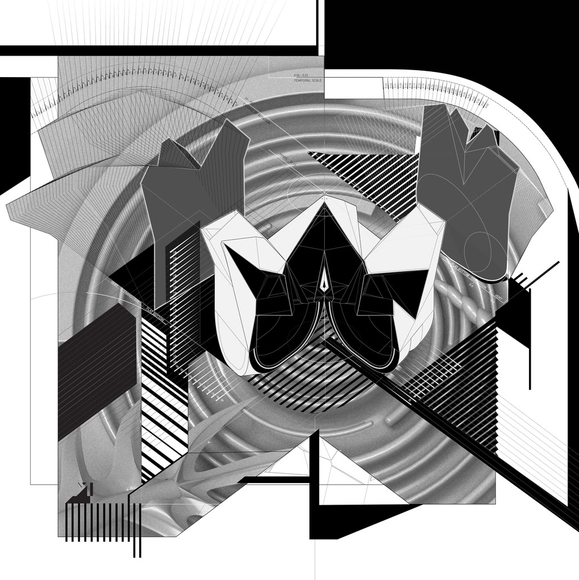
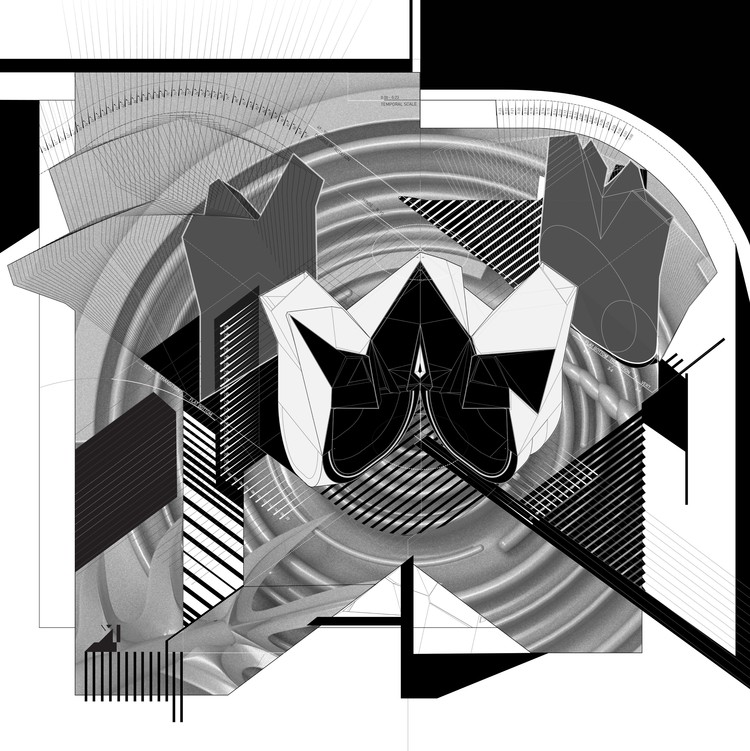
The Cooper Union is to host a new exhibition showcasing the impact of technology on architectural drawing. “Drawing Codes: Experimental Protocols of Architectural Representation: Volume II” will examine how “emerging design and production technologies impact the ways in which architects engage with traditional practices of architectural drawing and how rules inform the ways the built environment is documented, analyzed, represented, and designed."
The exhibition will feature 24 experimental drawings by firms such as Aranda\Lasch, Höweler + Yoon, and Outpost Office. The artists were challenged by the curators to consider at least one concept that expands on the notion of “code” in design and representation. A strict set of rules was enforced, including black and white media, and limiting the drawing to two dimensions.
“A drawing should be a key to the understanding of architecture – what is there to like or dislike, where do architects’ ideas come from, how do these ideas make it to paper, and what is important in this process.” - Sergei Tchoban
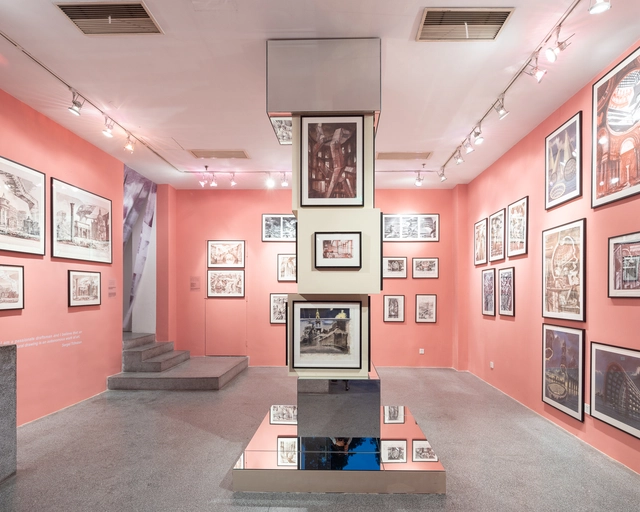
For the past month the Russian-German architect, artist, and collector Sergei Tchoban has been the focus of the exhibition, Sergei Tchoban: Drawing Buildings/Building Drawings, bringing together fifty of the architect’s large-scale urban fantasy drawings. These drawings, while intriguing for their technical and artistic value, also reflect Tchoban's deeply personal contemplations about the past, present, and future of his favorite cities - Saint Petersburg, Rome, Amsterdam, Venice, Berlin, New York – along with in-depth documentation of five realized projects (two museums, two exhibition pavilions, and a theater stage design.)
A recent exhibition at the MAK Vienna - Austrian Museum of Applied Arts / Contemporary Art, is showcasing the works of Sagmeister & Walsh, a NYC-based design firm investigating what makes beauty so appealing.
Titled "Beauty," the exhibition explores the notion that beauty operates as an independent function, and that in itself, it can be the primary motive for architecture: form is a function. In collaboration with the YouTube channel and design studio Kurzgesagt (In A Nutshell), this video released along with the exhibition explains why beautiful things make us happy.
Inducing a surreal physical experience through minimal maneuvers, buildings with smooth concrete panels and simple geometric volumes instinctively hint at the work of Japanese architect Tadao Ando. At an ongoing exhibition at the Centre Pompidou, photographs of the headquarters of Fabrica, Ando's first European commission in 1992, are showcased. Located near the city of Treviso, the building was an old villa restored to become a thriving creative research center.
Villa Pastega Manera, built on an area of 51,000 square meters, went through a rigorous study of traditional construction techniques and material sampling to commence the redesign. The photographs feature the harmonious integration between the historical structure and seamless renovations.
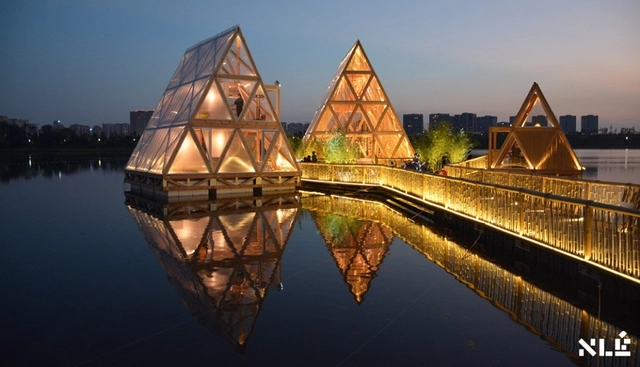
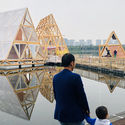
As part of a collaboration between the Centre Pompidou and the Mao Jihong Arts Foundation, the Cosmopolis #1.5: 'Enlarged Intelligence' exhibition features the developments of NLÉMakoko Floating School. The Minjiang Floating System (MFS IIIx3), the fourth prototype and the third iteration of the prefabricated self-built system for water, investigates methods to counter the challenges posed by urbanization and climate change.
Earlier prototypes of the Makoko Floating School include the Waterfront Atlas (MFS II) launched in Venice, Italy and the Minne Floating School (MFS III) in Bruges, Belgium. The project, initially developed for the water in Lagos, is now usable in all these sites including the Jincheng Lake in Chengdu.
From city master plans to pocket-sized products, Zaha Hadid Architects (ZHA) have explored architectural formalism through innovative digital design methods. In 2006, the collaboration with furniture-makers and fashion houses led to the creation of Zaha Hadid Design that served both as an iterative process for and a resultant of ongoing architectural design.
A pop-up exhibition, located suitably on the ground floor of ZHA's renowned condominium along the High Line in New York City, features a scale model of the building itself on display. To honor and present the work produced by the firm in the last four decades, the Zaha Hadid Gallery showcases a series of projects in a wide range of mediums including the six 'Silver Models' that represent eight of the firm's key works.
They say one cannot separate art from the artist, or perhaps in this case, the artist from the architect. Arguably one of the most criticized architects, Le Corbusier is often portrayed as cold and controlling. Depicting his more dreamy and humorous nature, the Nasjonalmuseet's exhibition titled, “Le Corbusier by the Sea,” draws upon his memories from his summer travels along the coast of southwest France.
Hosted in Villa Stenersen, one of the National Museum's venues, the exhibition showcases Le Corbusier's work as an artist during the period 1926-36. Not only does the exhibition include fifteen of his reproduced paintings alongside a collection of sketches, but also screens two films from Le Corbusier's own footage of his surrounding views.
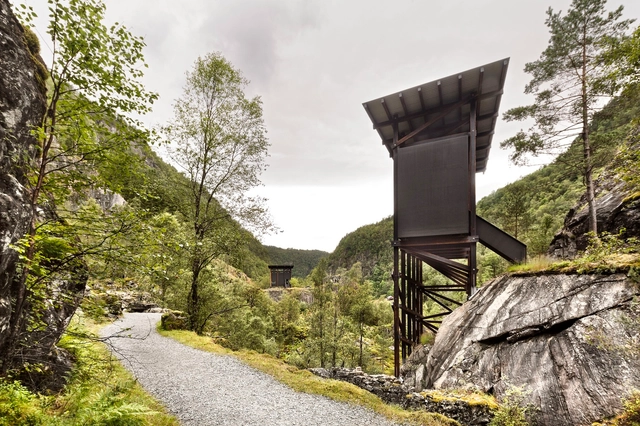
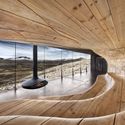
Architecture and Landscape in Norway, a photography exhibition by Ken Schluchtmann, will open this fall in the Felleshus of the Nordic Embassies in Berlin. Featuring architecture, landscapes and roads in northern light, the exhibition situates Ken Schluchtmann in a long tradition of landscape representation in Norway. Opening on October 5, 2018, the show is part of the "European Month of Photography." The exhibition will displays images taken along the National Tourist Routes in Norway.


.jpg?1562581239&format=webp&width=640&height=580)
.jpg?1562581175 "© Rasmus Hjortshøj")
.jpg?1562581122 "© Rasmus Hjortshøj")
.jpg?1562581191 "© Rasmus Hjortshøj")
.jpg?1562581141 "© Rasmus Hjortshøj")
.jpg?1562581239)






.jpg?1547730450 "Courtesy of Neri&Hu")
.jpg?1547730380 "Courtesy of Neri&Hu")
.jpg?1547730372 "Courtesy of Neri&Hu")
.jpg?1547730466 "Courtesy of Neri&Hu")