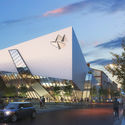
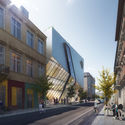
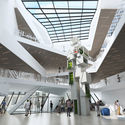
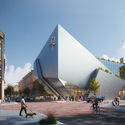
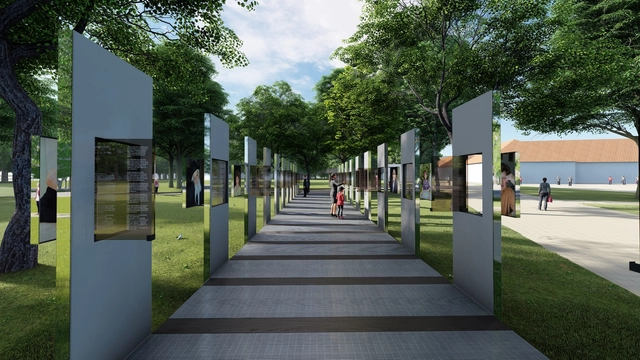
Daniel Libeskind and inLodz21 Institution are designing Nexus21, an urban revitalization project of 21 structures that vary between residential and commercial buildings to urban spaces. The new cultural hub is located in particular neighborhoods to promote the creativity and innovation that lies in the city, such as architecture, textiles, fashion, and film, which are all part of its heritage. The master plan will also work on the spaces in between the revived structures, creating a vibrant nexus between the old and the new, while adding value to the historic neighborhoods of Łódź, Poland.
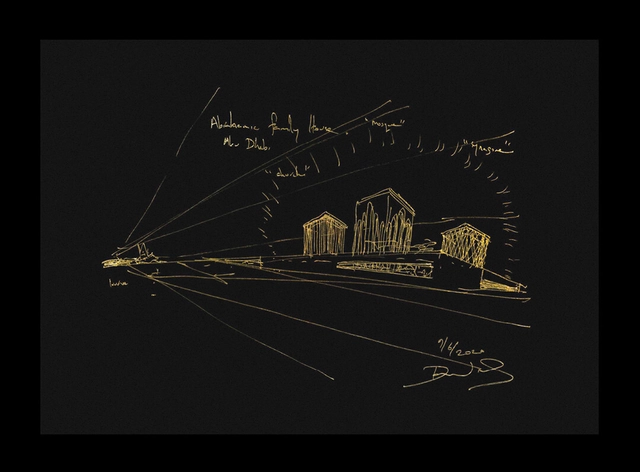
An autographed, 24k gold leaf sketch of the Abrahamic Family House by David Adjaye. Image Courtesy of ARCH
Architecture for Change (ARCH), a newly launched nonprofit initiative dedicated to addressing systemic racism in the architecture and design industry, is kicking off with an online auction featuring donated works—sketches, models, plans, photographic prints, and more—from a host of notable architects including Sir David Adjaye, Daniel Libeskind, Michel Rojkind, David Rockwell, Jennifer Bonner, Trey Trahan, and others.
Architects, not Architecture decided to open their archive to help us cope with the current situation of not being able to go out as usual and create a source of inspiration and entertainment through sharing one of the unique talks from their previous 35 events, which have never been published before – including, Tatiana Bilbao, Peter Cook, Richard Rogers, Massimiliano Fuksas, Kim Herforth Nielsen, Ben van Berkel, Benedetta Tagliabue, Anupama Kundoo, Sadie Morgan, Dan Stubbergaard, Manuelle Gautrand and Kjetil Thorsen.
Every week, Archdaily will be sharing one of the Architects, not Architecture. talks which they are currently publishing online in the form of daily full-length video uploads as part of their “new event”: Home Edition 2020 (www.architectsnotarchitecture.com).
Originally published in Metropolis Magazine as "Inside the Homes and Workspaces of 8 Great Architects", this article shows the spaces occupied by some of the best-known architects in the world. Documented for an exhibition that will be featured at the Milan Design Week 2014, the images give a glimpse inside the private worlds of some of our favorite designers.
It's a cliche that architects have messy workspaces. From chaos comes creation, so the phrase goes. But an upcoming exhibition at this year's Salone del Mobile intends to dispel the myth. Studio Mumbai.
Curator Francesca Molteni interviewed each of the designers in their private homes and came away with one finding: architects are actually quite tidy. The studios are all pristinely ordered; books are neatly stowed away, figurines and objets astutely displayed, and table tops swept clean. The photographs below are part of the exhibition materials, produced with the help of scenographer Davide Pizzigoni, which faithfully document the physical environments in images, video, and audio. These will be used to recreate the architects’ “rooms” at Salone del Mobile in April.
Where Architects Live is not limited to satisfying our curiosity about what these architects’ homes look like. Richard Rogers’ affirmation that “a room is the beginning of a city” resonates with the project’s aim in trying to articulate its subjects’ personal tastes and obsessions, and how those are reflected in their architectural work.
Read on to see more images of the inside of architects' homes and studios
With no shortage of historical buildings in need of expansion or repurposing, alterations of older architecture via contemporary interventions have flourished in the past four decades – particularly in service of new or growing art museums. These spaces represent the resilience of our historical legacy through contemporary times, demonstrating that the combination even of two vastly different architectural styles can be both beautiful and impressive. Here are ten of the best examples of contemporary interventions on historical buildings in art museums around the world.
https://www.archdaily.com/920474/10-historical-museum-buildings-with-contemporary-interventionsLilly Cao
Daniel Libeskind has collaborated with photographer Caryl Englander and curator Henri Lustiger Thaler from the Amud Aish Memorial Museum to present a temporary exhibition at the Auschwitz-Birkenau State Museum. “Through the Lens of Faith” opens on July 1st, 2019, marking the 75th anniversary of the concentration camp’s liberation in 1945.
Recorded on August 31st, 2011 at the architect’s New York office
I first met Daniel Libeskind on December 18, 2002, when he presented his vision for the New World Trade Center at the newly restored Winter Garden of the World Financial Center. I see that morning as the birth of starchitecture phenomenon and him as the very first starchitect, as he presented first in front of the mainstream world media and the way he did it, it was clear – here is the winner. Something clicked, and I thought – I must interview this great architect, even though I have never interviewed anyone before. But as soon as he left the stage, the man was mobbed by the press. Dozens of superficial questions flew his way… I looked across the grand atrium and saw the architect’s wife, Nina, standing proudly, but alone. We had a quick chat and set up my very first interview for the following day!
Louisiana Channel has released a video interview conducted with world-renowned architect Daniel Libeskind, where he advises young architects to follow their dreams, take risks, and expose themselves to the possibilities of short term sacrifice for long term gain. Reflecting on the pace of change, Libeskind says “the world is always changing, but not very slowly. It changes just suddenly. It doesn’t change by evolution, it changes suddenly. If a young architect realizes this, it is a big help. It took me a while to realize that.”
https://www.archdaily.com/915734/watch-daniel-libeskinds-advice-for-young-architectsNiall Patrick Walsh
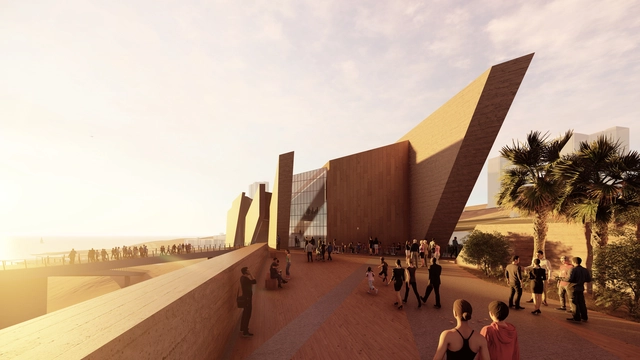
“The Dragon of Tarapacá,” a new project for Museo Antropológico Regional de Iquique (Regional Museum of Iquique) that will overlook Playa Huayquique, is moving forward with the design presented by Daniel Libeskind. The proposal comes after extensive work that began in December of last year, when the American-born architect visited Chile to familiarize himself with the the project, originally proposed by Mauricio Soria Macchiavello, the local mayor.
The first inklings of the project started almost 30 years ago, as the city sought to optimize the spaces along the coastline, allowing residents better access to the sea and optimizing the community's public spaces.
https://www.archdaily.com/913588/daniel-libeskind-to-design-the-regional-museum-of-iquique-in-northern-chileArchDaily Team
Author: Christian Dickson. Project Title: The Mark of Cain and Cain’s Mark. Course/AY: Thesis, 1991-92. Professors: John Hejduk, Roderick Knox, Sean Sculley, Regi Weile. Image Courtesy of The Irwin S. Chanin School of Architecture Archive, The Cooper Union
Drawing together the works of Elizabeth Diller,Laurie Hawkinson, Daniel Libeskind, and others, the exhibition titled “Archive and Artifact: The Virtual and the Physical” presents hand-drawn, digital, and three-dimensional works.
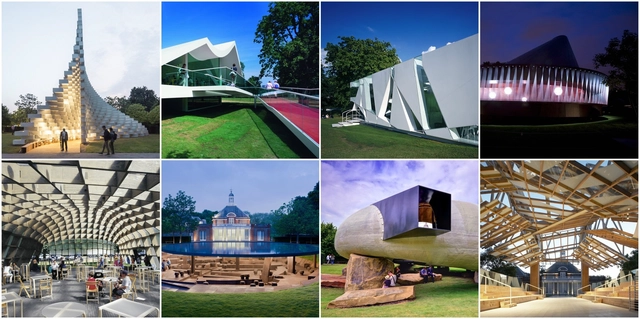
If the surest sign of summer in London is the appearance of a new pavilion in front of the Serpentine Gallery, then it’s perhaps fair to say that summer is over once the pavilion is taken down. The installations have gained prominence since its inaugural edition in 2000, acting as a kind of exclusive honor and indication of talent for those chosen to present; celebrated names from the past names include Zaha Hadid, Rem Koolhaas, and Olafur Eliasson.
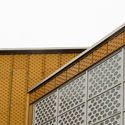
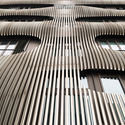
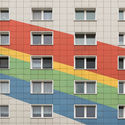
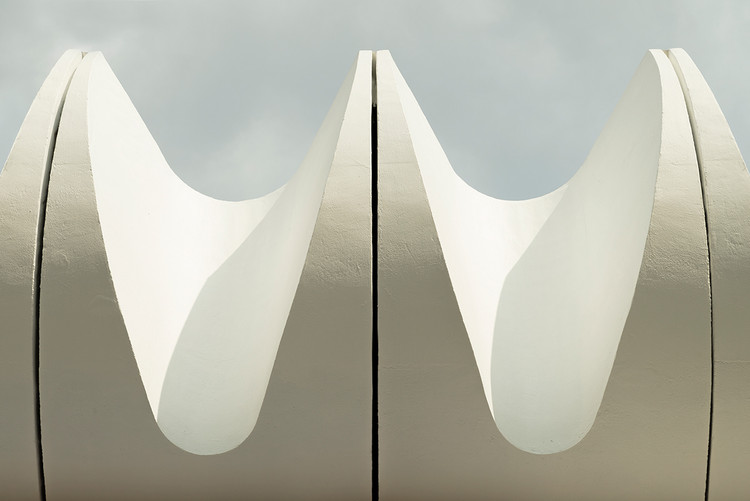
In the next chapter of his ongoing Urban Geometry project, self-taught Spanish photographer Andres Gallardo captures the elements of color, form, and materiality of post-war architecture in Berlin. This photo series, with installments featuring the modern marvels of Beijing, Seoul, Copenhagen, and Tallinn, among other cities, has become representative of Gallardo's personal growth from his humble start in his career as a professional photographer.
Following the announcement by SpaceX founder Elon Musk that Japanese billionaire Yusaku Maezawa would be the first paying customer to visit the Moon, the retail tycoon generated further excitement by declaring he would bring between six and eight artists to accompany him.
The “Dear Moon” project would see a painter, musician, film director, and others, accompany Maezawa in order to “dream dreams that have never been dreamed…to sing songs that have never been sung, to paint that which has never been seen before.”
https://www.archdaily.com/903090/life-on-the-moon-according-to-8-architects-and-artistsNiall Patrick Walsh
The Athens Architecture Club seeks to resurrect the historical architecture clubs of the 19th century, functioning as an “open forum, an infrastructural framework, and support platform for architects, artists, and writers to discuss, challenge and enrich a dialogue among practitioners and scholars.
https://www.archdaily.com/900323/drawings-by-tchoban-holl-and-calatrava-among-stunning-entries-for-the-first-athens-architecture-club-exhibitionNiall Patrick Walsh
Lasting for close to two decades now, the annual Serpentine Gallery Pavilion Exhibition has become one of the most anticipated architectural events in London and for the global architecture community. Each of the previous eighteen pavilions have been thought-provoking, leaving an indelible mark and strong message to the architectural community. And even though each of the past pavilions are removed from the site after their short summer stints to occupy far-flung private estates, they continue to be shared through photographs, and in architectural lectures. With the launch of the 18th Pavilion, we take a look back at all the previous pavilions and their significance to the architecturally-minded public.
Louisiana Channel has released a new video interview with acclaimed architect Daniel Libeskind, in which he retraces the story behind his architectural career. In the interview, Libeskind unravels his view of architecture, and the architectural profession, drawing comparisons between architecture and music, while reflecting on the adherence to legislation and inherent optimistic outlook required to practice architecture.
In the 30-minute in-depth interview, Libeskind guides observers through his childhood, the roots of his architectural career, and reflects upon his most noted schemes, including the Jewish Museum in Berlin and the World Trade Center Masterplan in New York.
https://www.archdaily.com/895087/daniel-libeskind-retraces-his-life-and-architectural-career-in-engaging-in-depth-interviewNiall Patrick Walsh
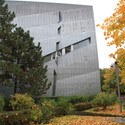
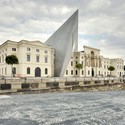
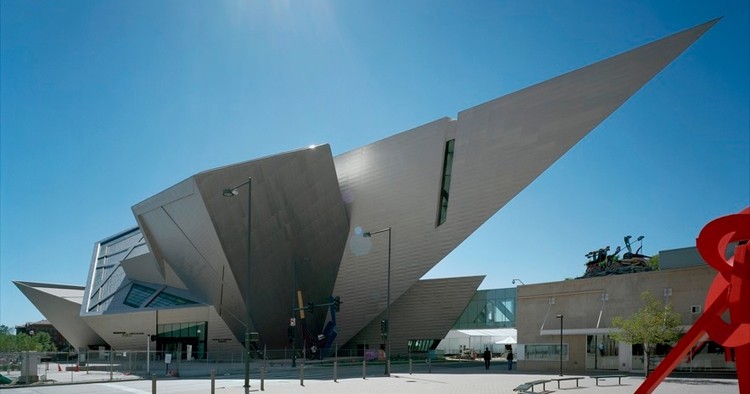
In the architecture world, few designers can claim to have a more clearly-defined style than Daniel Libeskind (born May 12, 1946). Much of Libeskind's work is instantly recognizable for its angular forms, intersecting planes, and frequent use of diagonally-sliced windows, a style that he has used to great effect in museums and memorials—but which he has equally adapted to conference centers, skyscrapers, and shopping malls.
In PLANE-SITE's latest video from their Time-Space-Existence series, Daniel Libeskind describes his work in relation to Shakespeare's quote that "time is out of joint." Weaving in his philosophy regarding time, memory and architecture, Libeskind discusses his seminal works such as the Jewish Museum Berlin and the Ground Zero master plan. These ideas will be transferred to his new project named Facing Gaia, an architectural sculpture to be located in Giardini Marinaressa, which explores the connections between climate, time, space and existence.











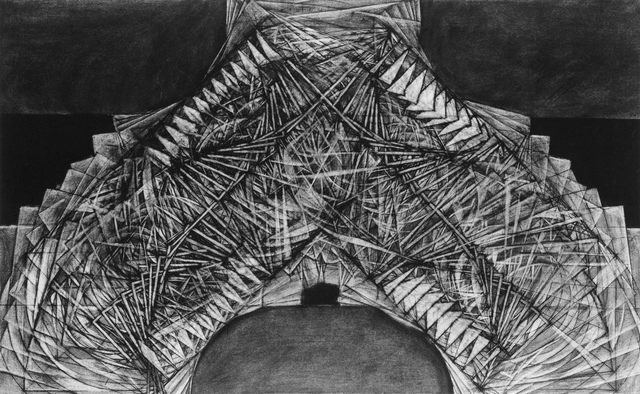



.jpg?1539856634&format=webp&width=640&height=580)


.jpg?1539856634)
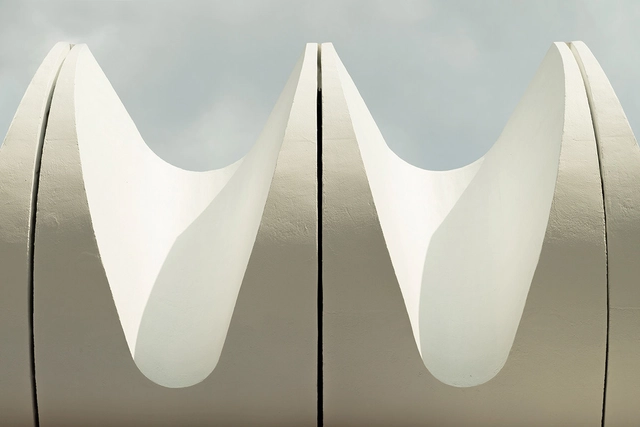
.jpg?1534440141&format=webp&width=640&height=580)
.jpg?1534440166 "Monster / Alessandro Mendini. Image Courtesy of The Chicago Athenaeum Museum of Architecture and Design")
.jpg?1534440176 "View of Lyon / James Von Klemperer. Image Courtesy of The Chicago Athenaeum Museum of Architecture and Design")
.jpg?1534440156 "Concept Sketch of Imperial War Museum North / Daniel Libeskind. Image Courtesy of The Chicago Athenaeum Museum of Architecture and Design")
.jpg?1534440147 "The Dance / Santiago Calatrava. Image Courtesy of The Chicago Athenaeum Museum of Architecture and Design")
.jpg?1534440141)




_Doublespace.jpg?1523414942 "National Holocaust Monument. Image© Doublespace")
.jpg?1523415119 "Facing Gaia Sketch. Image© Studio Libeskind")
_Georges_de_Kinder.jpg?1523414986 "Mons International Cogress Xperience. Image© Georges de Kinder")
_Studio_Libeskind.jpg?1523414813 "Modern Art Museum Vilnius. Image© Studio Libeskind")
_Doublespace.jpg?1523414942)