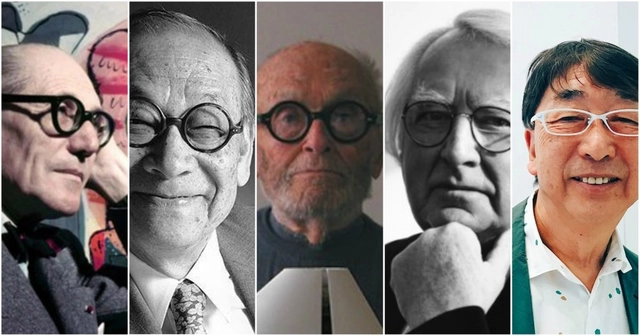
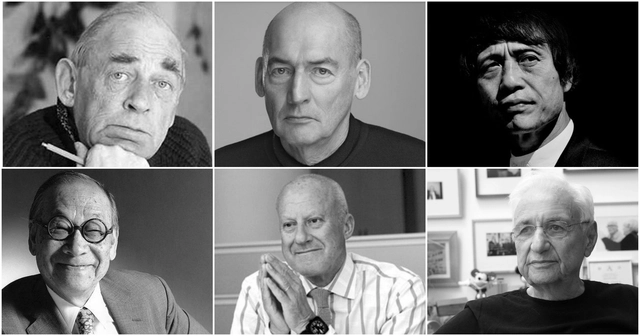
Eyeglasses: the quintessential accessory of the architect. They are mini pieces of architecture you can wear, and an outward expression of your inner persona. Whether they be square, round, or wire-frame, black, white, tortoiseshell, or bright neon tones, they represent our visionary ideals. As such, many of the most iconic spectacles have an interesting history behind them; so here are the stories behind seven of the most recognizable eyeglasses in the architecture world.
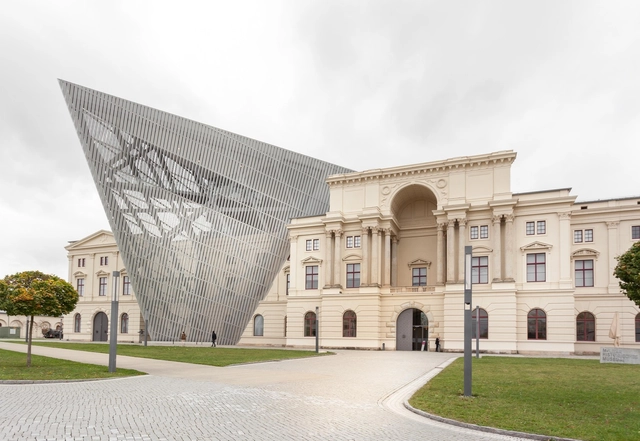
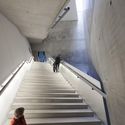
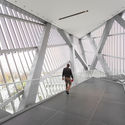
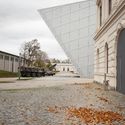
The complications of war and violence demanded a bold piece of architecture to provoke the public's understanding of the impact it had on Germany. Daniel Libeskind chooses to engage with such events in his extension to Dresden's Military History Museum, by crashing a huge steel and concrete structure through the neoclassical facade, tearing apart the symmetry of the original building. Photographer Alexandra Timpau has captured the sharp edges and harsh angles of the museum's extension that convey the pain and the stark reality of war Libeskind and the museum refer to.
Seniority is infamously important in the field of architecture. Despite occasionally being on the butt end of wage jokes, the field can actually pay relatively well—assuming that you’ve been working for a couple of decades. Even Bjarke Ingels, the tech-savvy, video-producing, Netflix-documentary-starring provocateur and founder of the ultra-contemporary BIG isn’t a millennial; at 42 the Dane is a full nine years older than Mark Zuckerberg.
As a result of this, it's common to lead a rich and complex life before finding architectural fame, and many of the world’s most successful architects started their careers off in an entirely different field. If you haven't landed your dream job yet, you may find the following list of famous architects' first gigs reassuring.
New renderings and details have been revealed of Studio Libeskind’s competition-winning mixed-use tower development located in the downtown business district of Vilnius, Lithuania as the project has secured funding. Located at the intersection of the White Bridge, the Neris River and Old Town, the 20,000 square meter (215,000 square foot) complex will be home to a class-A business center and the region’s first Radisson RED-branded luxury hotel, along will an array of restaurants, shops and public amenities.
Monocle’s Quality of Life Conference takes place this summer in Berlin, and will be a must-visit event for entrepreneurs, architects, urbanists and designers alike. Hosted by Monocle editor in chief Tyler Brûlé, topics unpacked across the conference include transport, city branding and the future of the property industry. From visionary entrepreneurs to acclaimed architects, guest delegates and panelists will join Monocle editors and radio hosts for a range of lively discussions, with talks interspersed with samplings of Berlin’s fine hospitality and opportunities to explore the city’s architectural sites.
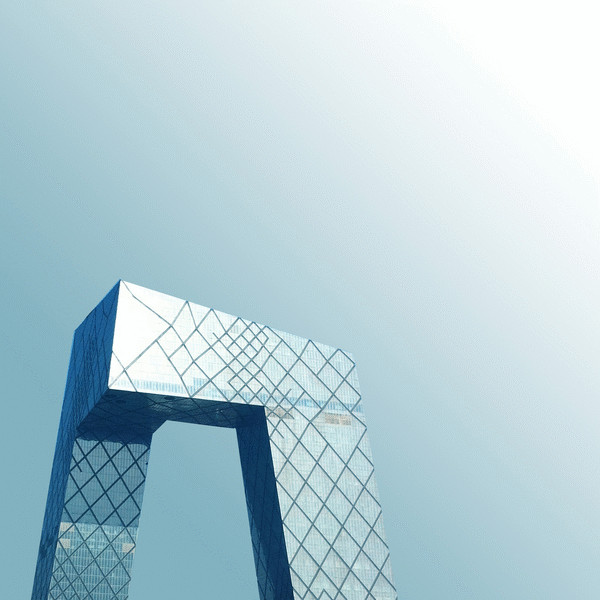
A simultaneous celebration of their cultural iconicity and distillation from their various contexts, Beautified China is a photographic essay by Kris Provoost (one-half of the vlogging duo behind #donotsettle) that tracks the evolution of Chinese architectural landmarks over the course of the past 7 years. Beginning his investigation with the 2010 World Expo in Shanghai, Provoost considers a decade of architecture proposed for China by the profession’s biggest names, many of which have been built now with monumental reputations in rising cities.
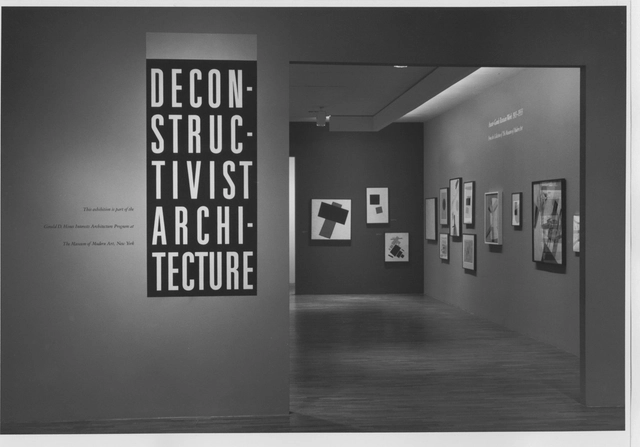
View into the exhibition (1988). Photographer unknown. Image via MoMA
When Philip Johnson curated the Museum of Modern Arts’ (MoMA) 1932 “International Exhibition of Modern Architecture,” he did so with the explicit intention of defining the International Style. As a guest curator at the same institution in 1988 alongside Mark Wigley (now Dean Emeritus of the Columbia GSAPP), Johnson took the opposite approach: rather than present architecture derived from a rigidly uniform set of design principles, he gathered a collection of work by architects whose similar (but not identical) approaches had yielded similar results. The designers he selected—Peter Eisenman, Frank Gehry, Zaha Hadid, Rem Koolhaas, Daniel Libeskind, Bernard Tschumi, and the firm Coop Himmelblau (led by Wolf Prix)—would prove to be some of the most influential architects of the late 20th Century to the present day.[1,2]
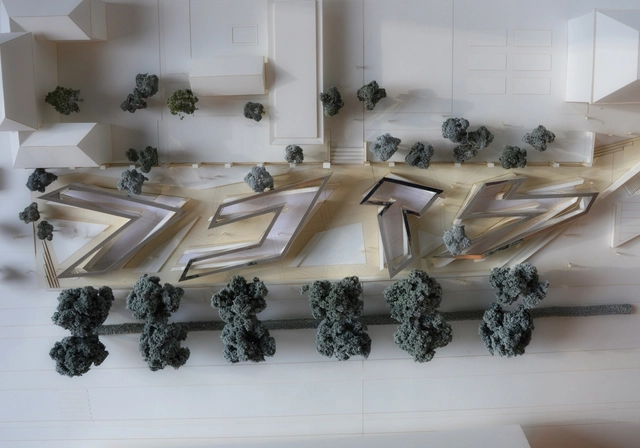
Studio Libeskind and the Dutch Auschwitz Committee have revealed plans for the Holocaust Monument of Names, to be located in the heart of Amsterdam’s Jewish Cultural District. Incorporating the letters of the Hebrew word לזכר (meaning “In Memory of”), the memorial will be the first to memorialize the names of all 102,000 Dutch victims of the Holocaust.
Clément Blanchet Architecture has released its bid for the international Nice Station Extension competition, which also received entries from Marc Mimram, Jean Duthilleul, and winner Daniel Libeskind. The proposal integrates buildings in the city center of Nice—which is surrounded by railways, a ring road, and the city—including a new mixed-use public complex, retail and office spaces, and a boutique hotel.
Stories have a way of clinging to places, charging buildings and spaces with an effect only perceptible to those who know what they once staged. Film is the most visual storytelling medium, and their environments often play memorable and vital roles in creating the movie's character and identity. The popularity of film tourism is testament to this phenomena. While the bulk of film tourism stems from blockbuster movies and their exposure and celebrity, the blog Filmap takes a more humble approach in highlighting the stories of everyday places.
For the past three years, the blog has laboriously tracked the locations of hundreds of movie scenes using Google Streetview, pairing stripped-back street views right next to their cinematographic counterparts. The resulting contrast elevates the everyday while also grounding fiction to our very streets, a reminder of the built environment’s role as a vessel of imagination.
A selection of Filmap’s posts are shared below – how many movies can you recognize from their real-life settings alone?
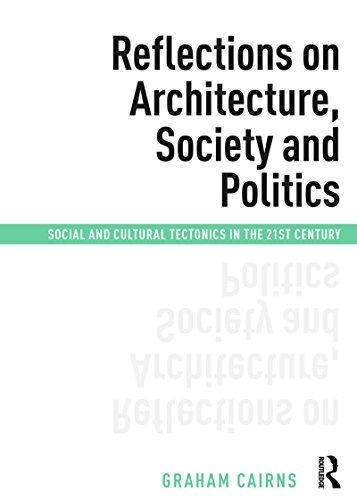
Reflections on Architecture, Society and Politics brings together a series of thirteen interview-articles by Graham Cairns in collaboration with some of the most prominent polemic thinkers and critical practitioners from the fields of architecture and the social sciences, including Noam Chomsky, Peggy Deamer, Robert A.M. Stern, Daniel Libeskind and Kenneth Frampton.
On the 15th anniversary of 9/11 yesterday, the skylights at Santiago Calatrava’s Oculus at the World Trade Center opened for the first time, allowing light to fill the massive space as a memorial to the attacks on the twin towers. Following the masterplan laid out by Daniel Libeskind, Calatrava’s design used the angle of light as a guiding principle for orienting the transportation hub – so that at precisely 10:28 am each September 11th (the time of the collapse of the North Tower), a beam of light would pass through the opening in the roof and project all the way down the center of the Oculus floor.
Daniel Libeskind has unveiled plans for The Kurdistan Museum in Erbil, Iraq. With the building, Studio Libeskind seeks to create “the first major center in the Kurdistan Region for the history and culture of the Kurdish people.” The project was developed as a collaboration between the Kurdistan Regional Government (the KRG) and client representative RWF World. The 150,000 square-foot museum will feature exhibition spaces for both permanent and temporary exhibitions, a lecture theatre, state-of-the-art multimedia educational resources, an extensive digital archive of Kurdish historical assets, as well as community center and landscaped outdoor spaces for public use.
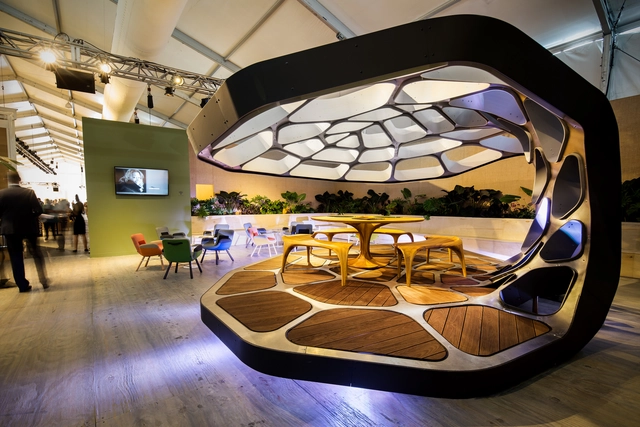
With recent advancements in building technology, Revolution Pre-Crafted hopes to democratize the design of pre-fab structures, offering a line of products that incorporate the distinct spatial and social brands of the designers. See a selection of the Revolution Precraft line after the break.
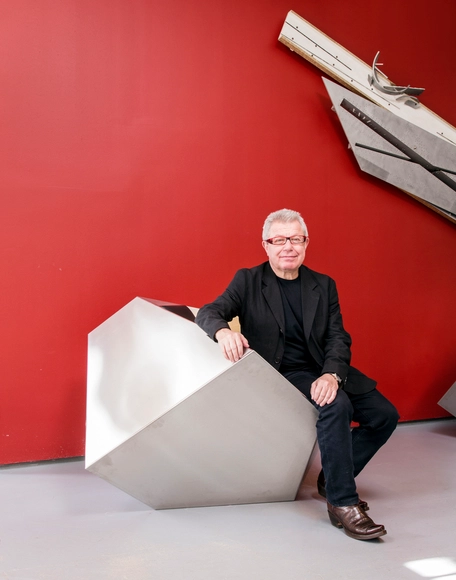
In an exclusive interview with Daniel Libeskind, who is based in New York City ("a microcosm of the world") and describes himself as having been "an immigrant several times," discusses his origins, his family, his early influences and the 'state of the world', touching upon a great theme in his built works: that of memorialising and remembrance in the built environment. Having grown up under "terrible oppression" in post-war Poland and moved between countries eighteen times, he describes himself as a citizen of the world with a great deal of retrospective advice for prospective architects.
In this edition of Section D, Monocle 24's weekly review of design, architecture and craft, David Plaisant speaks to Daniel Libeskind about the art and architecture of memory, with particular focus on his designs for his Ground Zero Masterplan and memorial in New York City. The show also discusses plans to transform John F. Kennedy airport's iconic TWA Terminal, and head to Singapore to meet the team at Ministry of Design.


_(1).jpg?1499875619)
_(4).jpg?1499875655 "© Studio Libeskind")
_(3).jpg?1499875666 "© Studio Libeskind")
_(5).jpg?1499875644 "© Studio Libeskind")
_(6).jpg?1499875634 "© Studio Libeskind")
_(1).jpg?1499875619)







_Hayes_Davidson.jpg?1460469639&format=webp&width=640&height=580)
_Hayes_Davidson.jpg?1460469570 "Courtesy of Hayes Davidson")
_Studio_Libeskind.jpg?1460469294 "Courtesy of Studio Libeskind")
_Studio_Libeskind.jpg?1460469305 "Courtesy of Studio Libeskind")
_Crystal.jpg?1460469334 "Courtesy of Crystal")
_Hayes_Davidson.jpg?1460469639)