1. ArchDaily
  2. Concrete

Concrete: The Latest Architecture and News

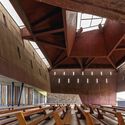
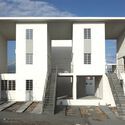
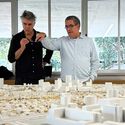
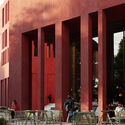
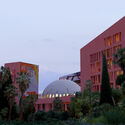
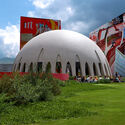
“I Think of My Work as Imploding Rather than Exploding:” in Conversation with Michael Rotondi of Roto Architects

Michael Rotondi’s buildings—museums, civic centers, education facilities, monasteries, restaurants, and residences—evoke kinetic mechanisms that fold, hinge, twist, and split open. They express the architect’s feelings, thinking, and mood at the time they had been designed, and, on some occasions, during their assembly and construction. Rotondi was born in 1949 in Los Angeles.

He established his RoTo Architects, a research-based firm in his native city, in 1991 after co-heading Morphosis for 16 years with Thom Mayne. Parallel to his practicing career, the architect has been teaching and lecturing at SCI-Arc, Southern California Institute of Architecture, which he co-founded in 1972, led its graduate program from 1978-1987, and was the school’s second director for a decade from 1987 to 1997.

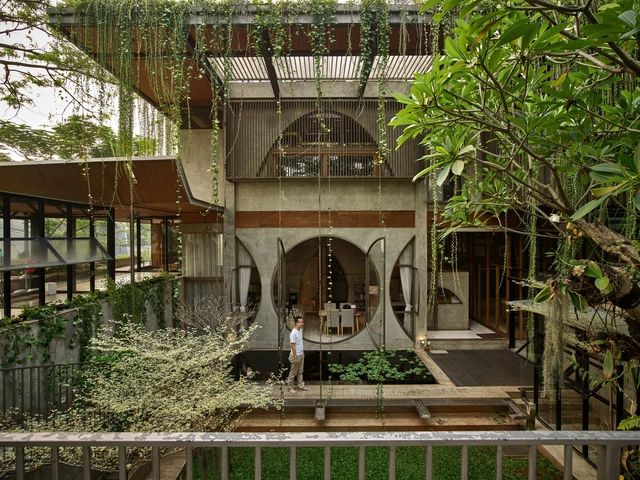
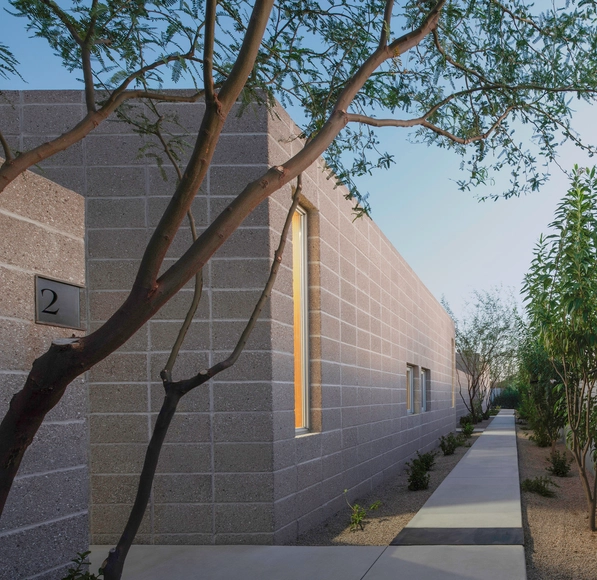
“I Think of My Work as Imploding Rather than Exploding:” in Conversation with Michael Rotondi of Roto Architects - Image 1 of 4“I Think of My Work as Imploding Rather than Exploding:” in Conversation with Michael Rotondi of Roto Architects - Image 2 of 4“I Think of My Work as Imploding Rather than Exploding:” in Conversation with Michael Rotondi of Roto Architects - Image 3 of 4“I Think of My Work as Imploding Rather than Exploding:” in Conversation with Michael Rotondi of Roto Architects - Image 4 of 4“I Think of My Work as Imploding Rather than Exploding:” in Conversation with Michael Rotondi of Roto Architects - More Images+ 21

Seratech, a Solution for Carbon-Neutral Concrete Wins the 2022 Obel Award

Material researchers and Ph.D. students at Imperial College London, Sam Draper and Barney Shanks have won the 2022 OBEL AWARD for Seratech, a solution for carbon-neutral concrete. With a special focus this year on “embodied emissions”, the OBEL AWARD jury selected scientists to obtain the architecture award to “encourage innovative cross-disciplinary solutions to the challenges of climate change”.

Succeeding to the 2021 laureate, the 15-minute city concept by Professor Carlos Moreno, to 2020’s Anandaloy, a community building made from mud in Bangladesh by Anna Heringer, and Junya Ishigami’s Water Garden in Japan, winner of the 2019 edition, Seratech is the fourth winner of this new international prize for architectural achievement.

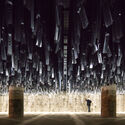
Seratech, a Solution for Carbon-Neutral Concrete Wins the 2022 Obel Award - 1 的图像 4Seratech, a Solution for Carbon-Neutral Concrete Wins the 2022 Obel Award - 2 的图像 4Seratech, a Solution for Carbon-Neutral Concrete Wins the 2022 Obel Award - 3 的图像 4Seratech, a Solution for Carbon-Neutral Concrete Wins the 2022 Obel Award - 4 的图像 4Seratech, a Solution for Carbon-Neutral Concrete Wins the 2022 Obel Award - More Images+ 3

Architecture Classics: Petroperú Building / Walter Weberhofer + Daniel Arana

The Petroperú building, jointly designed by architects Walter Weberhofer and Daniel Arana Ríos, was the result of a state competition held by the military government of Velasco Alvarado in the early 1970s. The building, strategically located in the capital of Peru, within the prosperous district of San Isidro, was designed to house the recently created state company in charge of the whole petroleum process of the country (Petroperú S.A.). The monumental building, built and inaugurated in 1973, became the symbol of the newly installed regime.

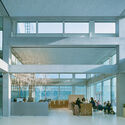
Architecture Classics: Petroperú Building / Walter Weberhofer + Daniel Arana - Interior Photography, Kitchen, FacadeArchitecture Classics: Petroperú Building / Walter Weberhofer + Daniel Arana - Interior Photography, Facade, CityscapeArchitecture Classics: Petroperú Building / Walter Weberhofer + Daniel Arana - Exterior Photography, Facade, CityscapeArchitecture Classics: Petroperú Building / Walter Weberhofer + Daniel Arana - Image 4 of 5Architecture Classics: Petroperú Building / Walter Weberhofer + Daniel Arana - More Images+ 10

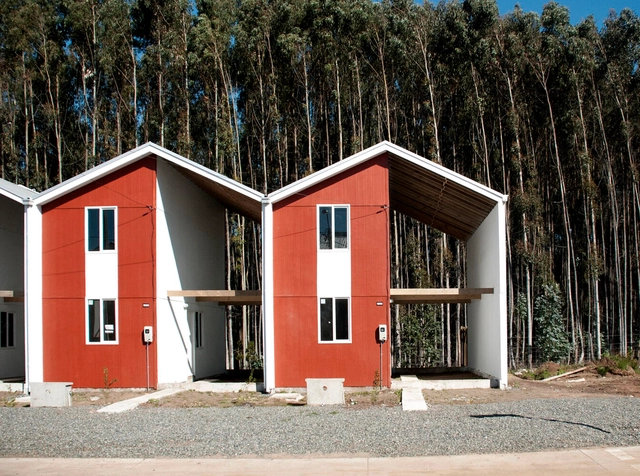
"Traditional Construction Is Doomed To Disappear:" Interview With the Portuguese Office Summary

 | Sponsored Content

Contemporary challenges and developments in technology inevitably trigger changes in the way we design and build our cities. SUMMARY, one of ArchDaily's Best New Practices of 2021, is a Portuguese architecture studio focused on the development of prefabricated and modular building systems. Striking a balance between pragmatism and experimentalism, the firm develops prefabricated solutions in order to respond to a driving challenge of contemporary architecture—to speed up and simplify the construction process. Founded in 2015 by the architect Samuel Gonçalves, a graduate of the School of Architecture of the University of Porto, the studio has presented at prominent events such as the 2016 Venice Biennale. We talked with Samuel about the firm's practical experience in prefabrication and modulation, as well as their experiments and forays into research.

"Traditional Construction Is Doomed To Disappear:" Interview With the Portuguese Office Summary - Image 1 of 4"Traditional Construction Is Doomed To Disappear:" Interview With the Portuguese Office Summary - Image 2 of 4"Traditional Construction Is Doomed To Disappear:" Interview With the Portuguese Office Summary - Image 3 of 4"Traditional Construction Is Doomed To Disappear:" Interview With the Portuguese Office Summary - Image 4 of 4Traditional Construction Is Doomed To Disappear: Interview With the Portuguese Office Summary - More Images+ 19

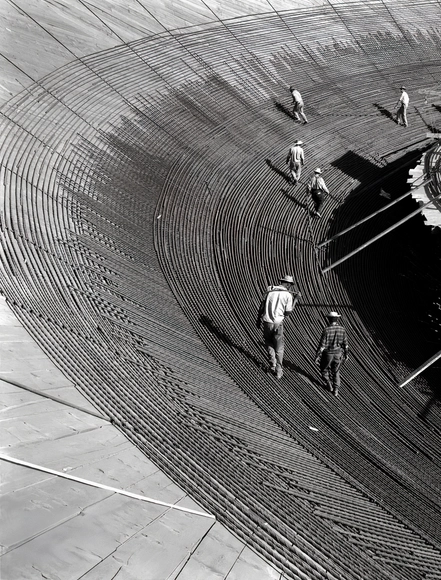
From Handcrafted Stone to 3D Printing: The Technological and Material Evolution of Gaudí's Sagrada Familia

A masterpiece is often defined as the most remarkable work in an artist's career, one which highlights the height of their techniques and ideals. The Mona Lisa by Leonardo da Vinci; Michelangelo's Pietá; the Beatles' Sgt. Pepper's Lonely Hearts Club Band album. There are many examples, which are not always unanimously agreed upon. But what if what many consider to be the masterpiece was started by someone else, the credited creator didn't live to see its completion, and almost all of its documentation was destroyed? Catalan architect Antoni Gaudí and his world-famous Temple Expiatori de la Sagrada Família are examples of these complications. From a highly crafted stone construction to the most modern 3D printing techniques and high strength concrete, numerous technologies were and continue to be incorporated in the project's construction.

How to Structure Buildings as Bridges

Metaphorically, building bridges equates to creating new opportunities, connections, and paths. The first bridges likely formed naturally with logs falling across rivers and natural depressions, though humans have also been building rudimentary structures to overcome obstacles since prehistory. Today, technological advances have made it possible to erect bridges that are both impressive and sculptural, playing a key role in transportation and connectivity. Usually needing to overcome large spans, with few points of support, bridges can be quite difficult to structure. But when is the bridge more than a connection between two points, instead resembling a building with a complex program? How can these 'bridge houses' be structured?

Concrete Houses in Spain: Exploring Cement's Sustainability Potential

Subscriber Access | 

Concrete Houses in Spain: Exploring Cement's Sustainability Potential - Image 1 of 4Concrete Houses in Spain: Exploring Cement's Sustainability Potential - Image 2 of 4Concrete Houses in Spain: Exploring Cement's Sustainability Potential - Image 3 of 4Concrete Houses in Spain: Exploring Cement's Sustainability Potential - Image 4 of 4Concrete Houses in Spain: Exploring Cement's Sustainability Potential - More Images+ 26

It's no secret that concrete has one of the highest CO2 emissions of all building materials, making it a focal point for architects looking to innovate and experiment with it as a way to optimize its production and application in construction while decreasing its environmental impact. This exploration of elements such as concrete's thermal inertia, which could serve to make buildings more energy efficient, as well as its durability, which guarantees a long-lasting, zero- maintenance structure even in the most extreme of climates. The ultimate goal is to create luminous living spaces with natural ventilation while simultaneously exploring the possibility of reusing frameworks as a way of cutting costs and streamlining the building process.

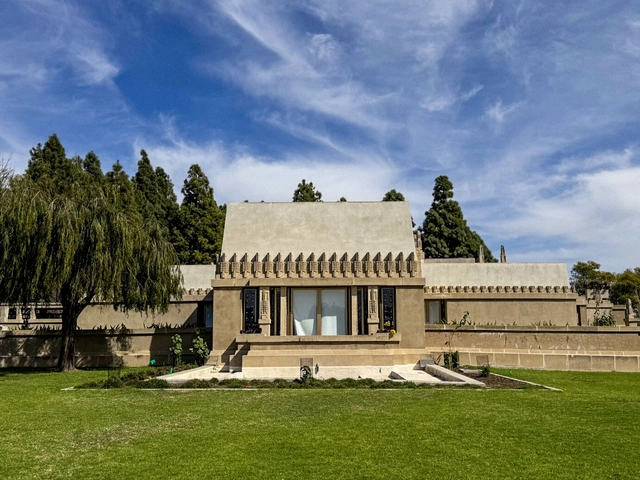
Concrete Architecture: 20 Outstanding Projects in Mexico

Subscriber Access | 

Concrete Architecture: 20 Outstanding Projects in Mexico - Image 1 of 4Concrete Architecture: 20 Outstanding Projects in Mexico - Image 2 of 4Concrete Architecture: 20 Outstanding Projects in Mexico - Image 3 of 4Concrete Architecture: 20 Outstanding Projects in Mexico - Image 4 of 4Concrete Architecture: 20 Outstanding Projects in Mexico - More Images+ 18

Concrete, a material commonly used in the construction industry, is made of a binder combined with aggregates (or gravels), water, and certain additives. Its origins reach back as far as Ancient Egypt, when the construction of large structures created the need for a new kind of material: one which was liquid, featured properties of natural stones, could be molded, and communicated a sense of nobility and grandeur. 

Enishi Resort Villa / N MAEDA ATELIER + Chiasma Factory + Atelier KAI Architects + A.S.Studio + Atelier SHARE

Enishi Resort Villa / N MAEDA ATELIER + Chiasma Factory + Atelier KAI Architects + A.S.Studio + Atelier SHARE - Exterior Photography, Hotels, Facade, Stairs, HandrailEnishi Resort Villa / N MAEDA ATELIER + Chiasma Factory + Atelier KAI Architects + A.S.Studio + Atelier SHARE - Exterior Photography, Hotels, Facade, Fence, Handrail, StairsEnishi Resort Villa / N MAEDA ATELIER + Chiasma Factory + Atelier KAI Architects + A.S.Studio + Atelier SHARE - HotelsEnishi Resort Villa / N MAEDA ATELIER + Chiasma Factory + Atelier KAI Architects + A.S.Studio + Atelier SHARE - HotelsEnishi Resort Villa / N MAEDA ATELIER + Chiasma Factory + Atelier KAI Architects + A.S.Studio + Atelier SHARE - More Images+ 64

Penghu, Taiwan

Botanic Museum Cafeteria / arche708

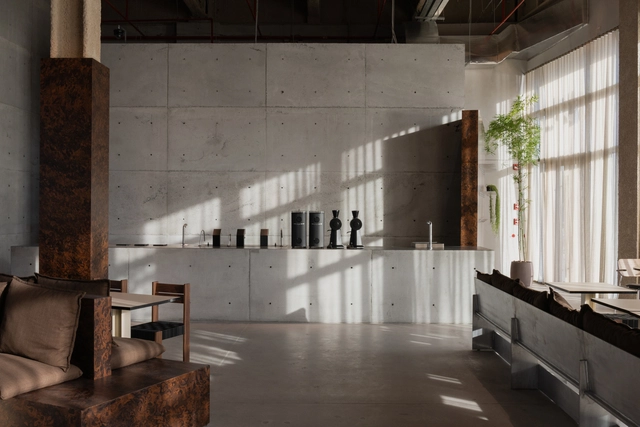
Botanic Museum Cafeteria / arche708 - Interior Photography, Coffee Shop, Table, Lighting, SinkBotanic Museum Cafeteria / arche708 - Interior Photography, Coffee Shop, LightingBotanic Museum Cafeteria / arche708 - Interior Photography, Coffee Shop, Kitchen, ChairBotanic Museum Cafeteria / arche708 - Interior Photography, Coffee Shop, Stairs, Table, ChairBotanic Museum Cafeteria / arche708 - More Images+ 19

창원시 진해구, South Korea
  • Architects: arche708
  • Area Area of this architecture project Area:  200
  • Year Completion year of this architecture project Year:  2018
  • Manufacturers Brands with products used in this architecture project
    Manufacturers:  Eagon, FeeLux, GodoST, Lisquare, Modern lighting

MD Apartment / Studio Saransh

MD Apartment / Studio Saransh - Interior Photography, Houses, Kitchen, Beam, CountertopMD Apartment / Studio Saransh - HousesMD Apartment / Studio Saransh - Interior Photography, Houses, BeamMD Apartment / Studio Saransh - Interior Photography, Houses, Kitchen, Facade, Countertop, TableMD Apartment / Studio Saransh - More Images+ 30

Ahmedabad, India
  • Architects: Studio Saransh
  • Area Area of this architecture project Area:  67
  • Year Completion year of this architecture project Year:  2019
  • Manufacturers Brands with products used in this architecture project
    Manufacturers:  BFT Automation, Flos, Kohler, Siemens

South lake House / Estúdio Cláudio Resmini

South lake House / Estúdio Cláudio Resmini - Interior Photography, Houses, Kitchen, Facade, Table, Lighting, ChairSouth lake House / Estúdio Cláudio Resmini - HousesSouth lake House / Estúdio Cláudio Resmini - Interior Photography, Houses, Door, FacadeSouth lake House / Estúdio Cláudio Resmini - Interior Photography, Houses, Table, ChairSouth lake House / Estúdio Cláudio Resmini - More Images+ 66

Brasilia, Brazil
  • Area Area of this architecture project Area:  1200
  • Year Completion year of this architecture project Year:  2018
  • Manufacturers Brands with products used in this architecture project
    Manufacturers:  Kabala móveis Indústria e comércio, Marmoraria Alvorada

Metalworkers’ Union Headquarters / Gustavo Penna Arquiteto e Associados

Metalworkers’ Union Headquarters / Gustavo Penna Arquiteto e Associados - Institutional BuildingsMetalworkers’ Union Headquarters / Gustavo Penna Arquiteto e Associados - Institutional BuildingsMetalworkers’ Union Headquarters / Gustavo Penna Arquiteto e Associados - Institutional BuildingsMetalworkers’ Union Headquarters / Gustavo Penna Arquiteto e Associados - Institutional BuildingsMetalworkers’ Union Headquarters / Gustavo Penna Arquiteto e Associados - More Images+ 22

  • Area Area of this architecture project Area:  6855
  • Year Completion year of this architecture project Year:  2010
  • Manufacturers Brands with products used in this architecture project
    Manufacturers:  B&M Consultoria em Esquadrias, Isolar, Oppus Acústica, Protherm