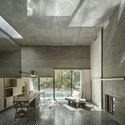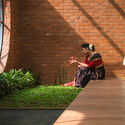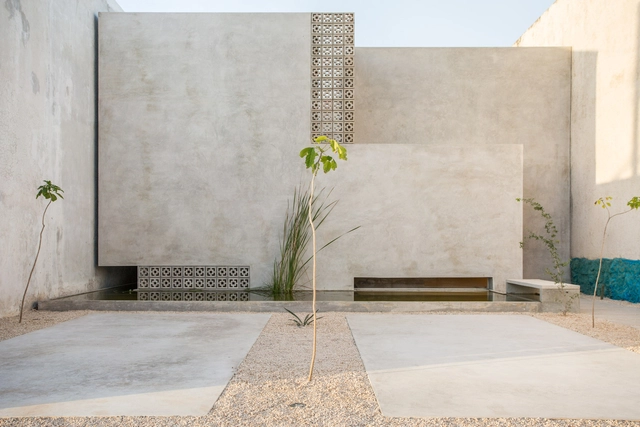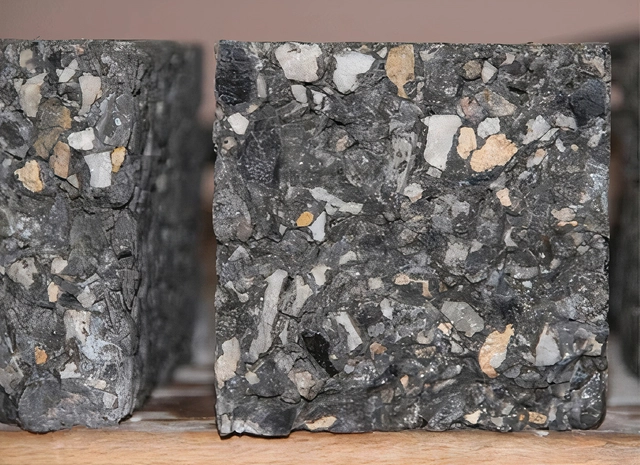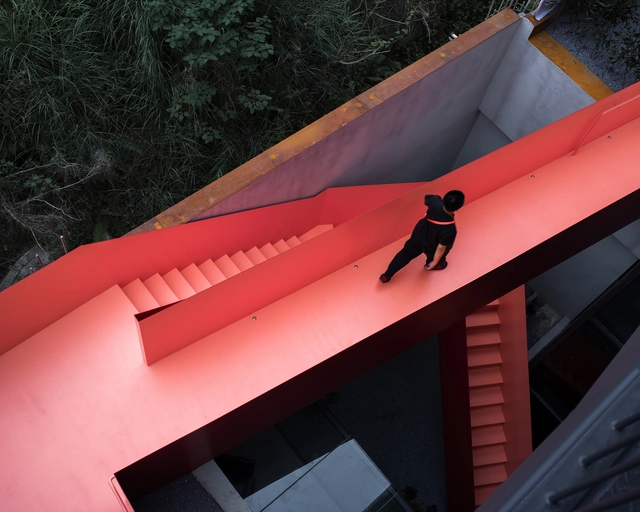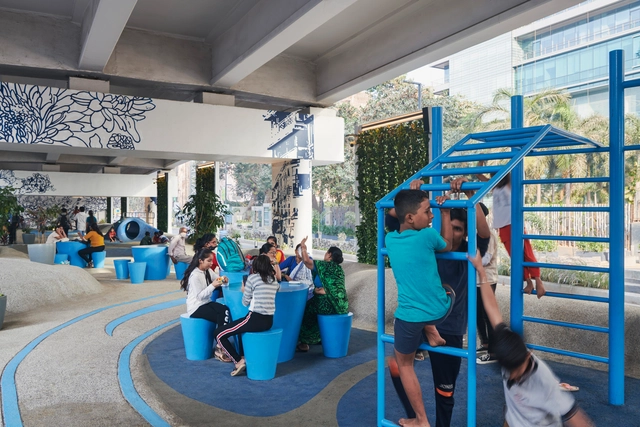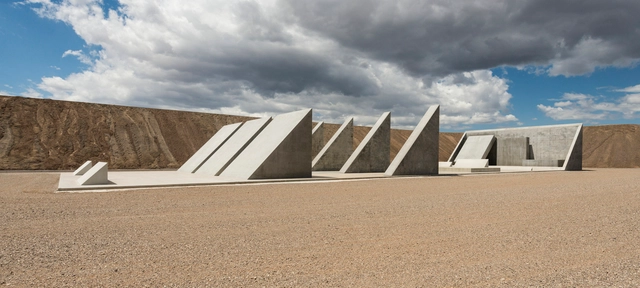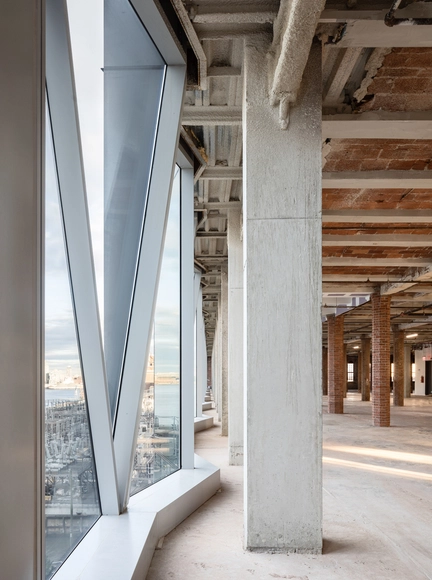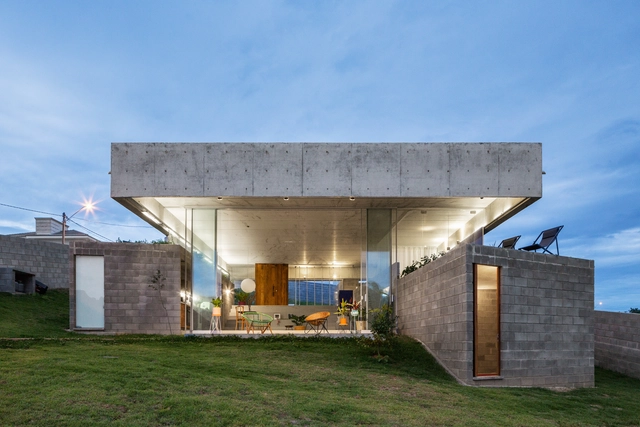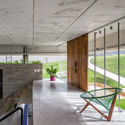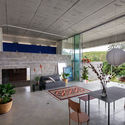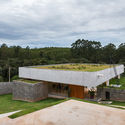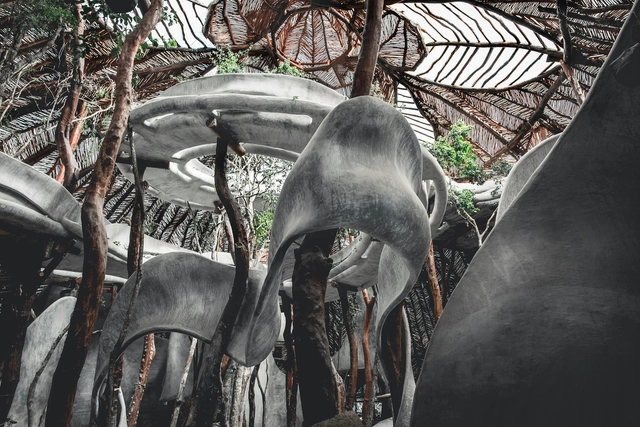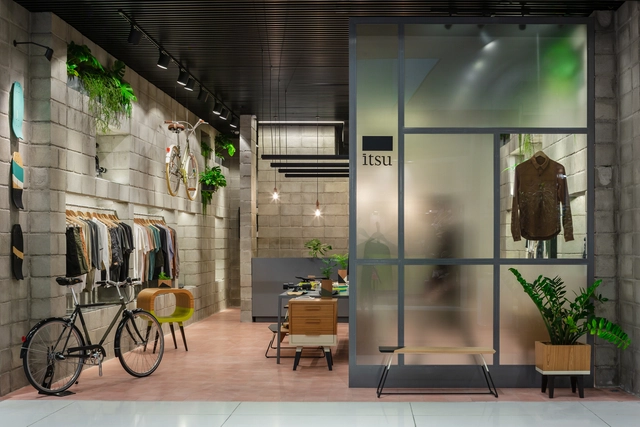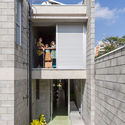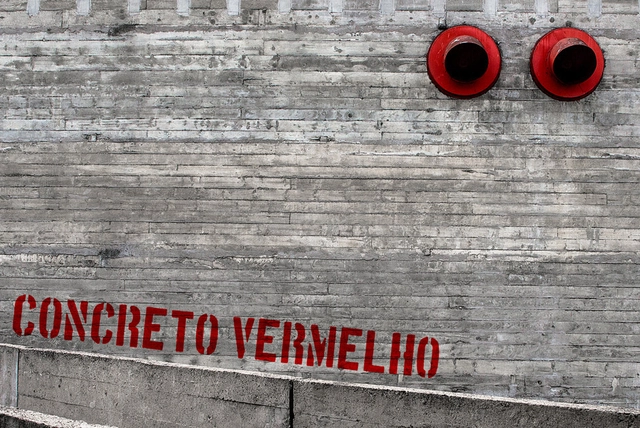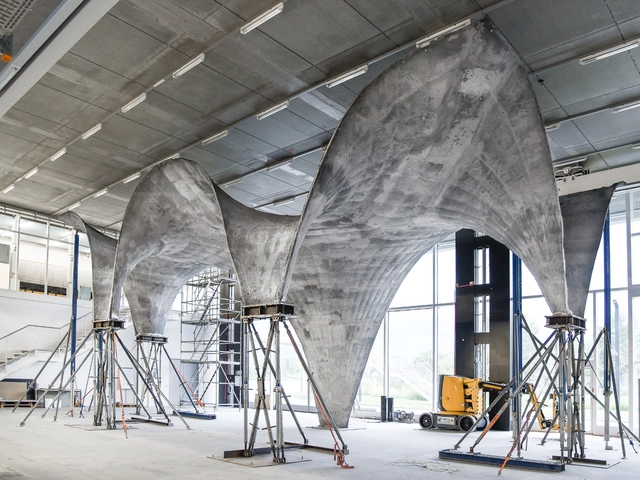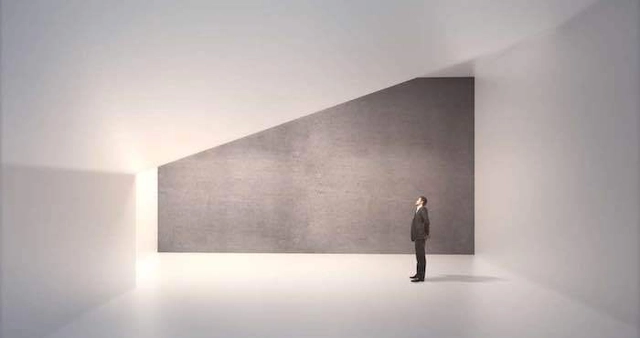
HSG Learning Center / Photo by Roland Halbe. Image Courtesy of Holcim
The need to reduce the construction industry's carbon footprint and its reliance on virgin natural resources is the most pressing issue facing the sector. It is therefore extremely important to foster innovation that can improve existing building materials and make them environmentally friendly, in order to successfully tackle its sizable carbon footprint and close the material loop.
Concrete, for example, has been used since the times of the ancient Romans and has proven to be a durable, strong, affordable and versatile building material. Today, it is the most widely used man-made resource in the world. However, its production methods raise environmental concerns: firstly, due to the high consumption of natural resources such as sand and gravel; and secondly —and more importantly— because of the CO₂ emissions associated with the production of its key ingredient: cement.
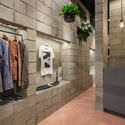
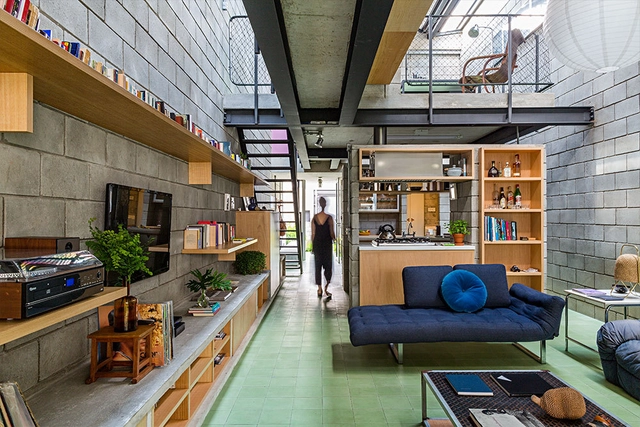
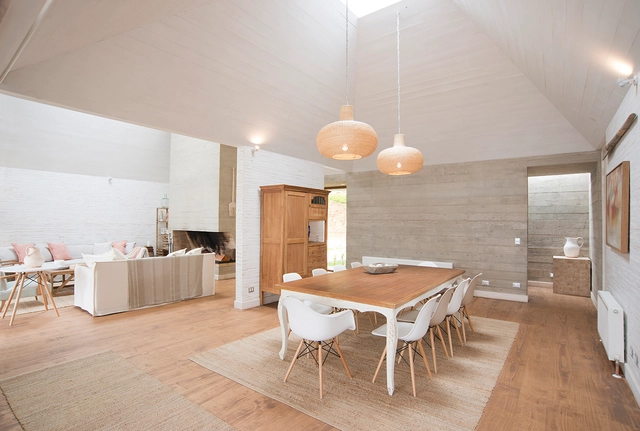
Today, we are increasingly aware of the environmental harm caused by building with concrete. One approach to using it more sustainably is to repurpose existing buildings, exposing their structural elements and integrating concrete into the surface. While concrete can sometimes give off an austere or overly cold vibe for a residential space, wood provides an alternative to soften this impression, transforming what might seem industrial into a warm and inviting home environment. By doing so, they can impart distinct qualities to the same space through the interplay of their textures and colors, evoking different sensations in occupants. There are various ways to explore the interaction between these materials, and we illustrate some of these possibilities through six Brazilian apartment examples.
Designer pools bring status to luxury homes and five-star hospitality spaces. But adding the cooling, calming, energizing, and environmental benefits of a hyper-local water body to a residence can far outweigh the cost of installation. With a range of long- and short-term landscaping options possible, meanwhile, luxury is available, whatever the budget.
Most pools are built below ground to retain unobstructed visuals above. While all in-ground pools start off the same way – with excavation, then connecting the plumbing and filtration systems – the main difference is in the construction of the pool’s basin. The simplest and quickest method is to lower a pre-fabricated reinforced plastic pool or pre-cast concrete basin into the cavity, before connecting the pipework and backfilling the recess with sand. But this is only suitable for off-the-shelf pools with simple geometries. In order to make the most efficient use of all available space, bespoke pool shapes and sizes are best achieved by pouring or spraying concrete into a rebar or timber frame.
The use of pigmented concrete in Latin American architecture is growing - and influencing contemporary architectural expression. This can be seen in recent built works ranging from the INES Innovation Center designed by Pezo von Ellrichshausen in Chile to the Teotitlán del Valle Community Cultural Center by PRODUCTORA in Mexico.
The Monadnock Building in Chicago began construction in 1891 and is still in use today. The building features a somber facade without ornamentation and a colossal height - at the time - of 16 floors. It is considered the first skyscraper built in structural masonry, with ceramic bricks and a granite base. To support the entire load of the building, the structural walls on the ground floor are 1.8 meters thick, and at the top, 46 centimeters. One hundred and thirty years later, this construction system remains common and allows for the erection of taller buildings with much thinner walls, accomplishing even new architectural works economically and rationally. But what is structural masonry about, and how can designers use it in architectural projects? And for what kinds of buildings is this system most suitable?
From the pre-Columbian period of the Americas –during which cultures such as the Olmec, Maya, Purepecha, and Mexica (Aztec) thrived– to the modern era where architecture has been influenced by social movements and even natural disasters, Mexican architecture showcases a valuable architectural expression, with its own unique voice and distinctive characteristics. Nobel Literature Laureate Octavio Paz argued that architecture is an incorruptible witness to history. Likewise, the materials used to shape it have acted as protagonists of that history, enduring in many cases over time and evolving thanks to the generations of architects who have contributed to it, from different perspectives.
To trace a timeline, it is possible to take as a starting point pre-Hispanic architecture, which exhibited a diversity of nuances due to Mexico's vast territorial extension. This allowed diverse cultures to find their niche and develop their characteristic architectural styles. Subsequently, the era of Spanish colonization, which itself drew influence from Islamic architecture, represented a noteworthy turning point in architectural development. This phase endured until the advent of Mexican Independence in the 19th century. In turn, this marked the initiation of social and cultural movements, both during and after the Mexican Revolution in the early 20th century.
https://www.archdaily.com/1005554/materials-that-define-the-contemporary-mexican-architectural-aestheticEnrique Tovar
Concrete has enormous resistance to compressive stress, but it is a fragile material in terms of tension, which occurs when forces are applied in opposite directions of a structure, tending to separate the parts. This is why the incorporation of steel into concrete –which provides high levels of strength when stretched– has made so-called reinforced concrete the world's most widely used construction method. In other words, reinforced concrete combines the intrinsic advantages of its two components (concrete and steel reinforcement) to produce an extremely robust, versatile, and practical material. These steel reinforcements, in addition to reinforcing concrete, can also be used in art installations, facades, and even interiors.
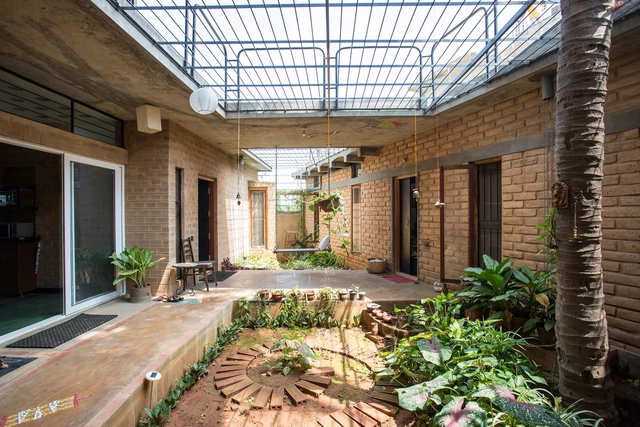
There is something very attractive about the combination of lush vegetation and exposed concrete roughness. This is what the book Concrete Jungle: Tropical Architecture and Its Surprising Origins, published by Gestalten, proposes to investigate. The publication offers a reading on modern "tropical architecture", presenting houses located between the Tropics of Cancer and Capricorn and their relationships with their cultural, constructive, and environmental origins. It features several projects and architects, from the 1950s to the present day, tracing a multifaceted panorama that includes residential buildings located in regions as distinct as Brazil, Mexico, India, and Kenya.
Materiality is a determining factor in shaping the character and experience of a building. Playing with the aesthetic and tactile qualities of materials, the design process encompasses their analysis, selection, and arrangement to create purposeful and sensory-rich spaces. Alongside textures and patterns, exploring materiality also involves the study of color possibilities. The versatile role of color in architectural materials extends beyond mere aesthetics, as it can broaden design opportunities and influence emotional responses, functionality, cultural relevance, and environmental performance.
Even though each material has its distinctive inherent color, the addition of artificial or natural pigments can modify them in favor of the project’s identity. Delving into the debate on maintaining raw aesthetics or changing a material’s natural hues, we showcase various projects to study the differences between using natural versus artificial pigmentation of glass, concrete, brick, stone and wood.
In the face of a climate emergency, various fields are under pressure to reformulate their operations and actions, and architecture is no exception. After all, the built environment and the construction industry are responsible for a considerable percentage of carbon gas emissions into the atmosphere. Rethinking and restructuring the construction chain - from design to execution - is the order of the day for construction professionals.
ArchDaily and VELUX have joined forces to provide you with an exclusive coverage of the highly anticipated UIA World Congress of Architects 2023. Watch Sebastian Peck from KOMPAS VC and Liz Gilligan from Material Evolution explain a revolutionary low-carbon cement produced from industrial waste, and how can it help to decarbonize architecture by reducing a building's carbon footprint by 85%.
Oulu City Council has approved the AALTOSIILO restoration proposal by Skene Catling de la Peña. The concrete structure will be restored and reimagined as a multi-media performance, exhibition space, and “Tar Bar.” The 525 sqm Silo used to be used for storing woodchips and will now become a digitized communication point to connect the building with its surroundings. Now nearing its 100th anniversary, the proposal aims to at least double its lifespan.
Water scarcity is one of the most stressful situations that one could ever endure. And yet, in India, a country that holds 18% of the total world population with only 4% of its water resources, this is a recurring struggle with notable numbers of Indian households having to manage water scarcity on a daily basis.
The yearly water cycle is a tough one, ranging from one extreme to another. Harsh monsoons and flood seasons turn into insufferable droughts, making it increasingly difficult to control and retain water resources. While most large-scale actions focus on consequences to agricultural and production sectors, the result is also recognizable at an individual household level. Therefore cumulative small-scale actions are relevant gateways for citizens (? people, designers) to mitigate the issue.
Henning Larsen has just revealed the design for Smyril Line's new headquarters and ferry terminal in Torshavn, the capital of the Faroe Islands. The building pays homage to traditional Faroese fishing boats and the historic Eastern harbor while embracing the picturesque backdrop of abundant landscapes and open seas. The new headquarters serves three functions: a ferry terminal, an office building, and a logistics center.
Concrete, second only to water, is the most consumed material worldwide due to its structural strength, ease of handling, and versatility. Comprised of cement, sand, gravel, and water, it is extensively used in construction projects of various scales. However, even this resilient material can deteriorate over time, necessitating maintenance or, in severe cases, demolition. Abrasion and erosion are factors that can adversely affect the appearance of concrete, remove its protective layer, create a rough surface, and potentially lead to structural issues. These challenges are particularly critical in large and complex construction sites, where any irregularities or unevenness can result in significant losses and complications for architects, engineers, and contractors.
Due to its ability to mold and create different shapes, concrete is one of architecture's most popular materials. While one of its most common uses is as a humble foundation, its plasticity means that it is also used in almost all types of construction, from housing to museums, presenting a variety of details of work that deserves special attention.
Check out this collection of 40 projects that highlight the use of concrete. Impressive!
Brutalism is an architectural style that originated in the 1950s and became popular in the 1960s. Its name comes from the French "béton brut," which means "raw concrete," as this material is one of the most characteristic elements of the style. Its main features are the apparent use of concrete, offering visuals where natural texture and tonality are the protagonists of the buildings. Brutalist buildings often have an austere and massive aesthetic, with simple and repetitive geometric shapes. The use of industrial materials and innovative construction techniques is also common in brutalism.
Videos
Help an essential global industry decarbonise
The Innovandi Open Challenge is a global programme which brings together tech start-ups and the world’s leading cement and concrete companies to help accelerate the next wave of innovations to achieve our net zero mission.
The Global Cement and Concrete Association (GCCA) and its members understand the key role that innovation will play in unlocking a net zero future for concrete –the world’s most used material after water– which is essential to building the sustainable world of tomorrow.